The Significance of the Ancient Tombs in Wanju's Sangun-ri: A Glimpse into the Mahan Culture
- Original source
- blog.naver.com


The Sangun-ri tombs in Wanju speak volumes about the heart of Mahan culture.
The Mangyeong River today serves as a lifeline connecting Wanju, Jeonju, Iksan, and Gunsan,
but in ancient times, it was a vital hub for people, goods, technology, and culture.
The expansive plains and hills along the river provided an ideal environment for agriculture and settlement,
while the waterway acted as a highway for communication with other regions.
There is a place that vividly showcases the richness of the ancient Mangyeong River basin.
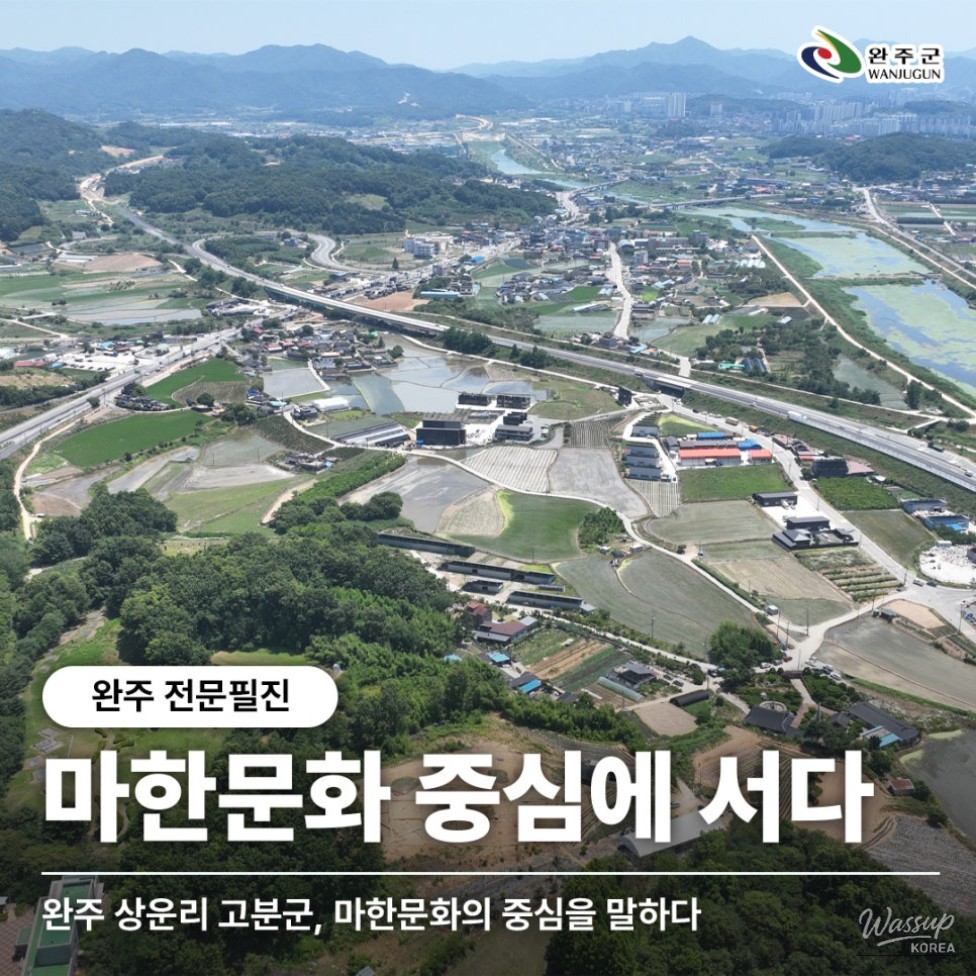
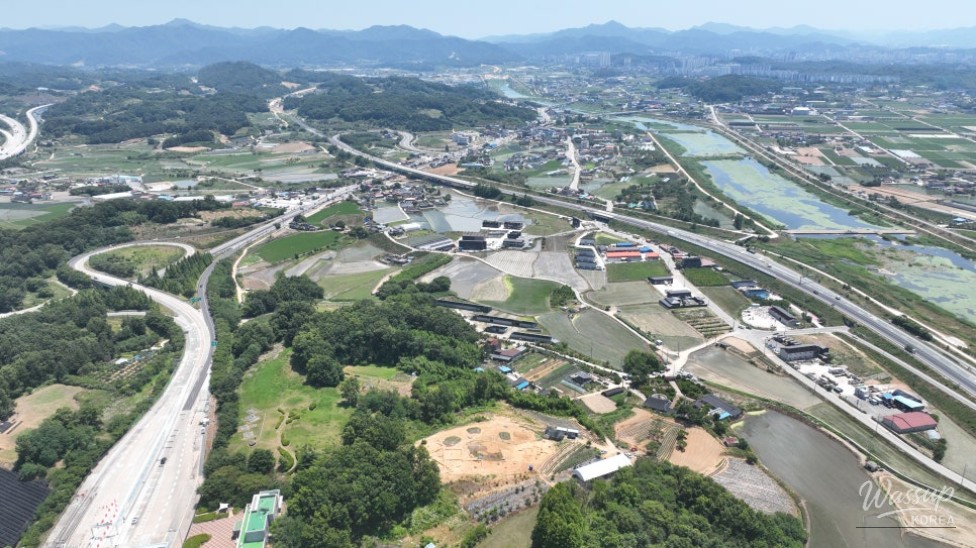
It is the Sangun-ri area in Wanju County. Interestingly, this site was not initially excavated for academic purposes.
The existence of the Sangun-ri site came to light during a preliminary survey for the construction of the Iksan-Jangsu expressway.
Subsequent excavations were conducted ahead of the construction of the Wanju Interchange,
leading to the revelation of the Mahan society buried beneath the ground through rigorous investigation by Jeonbuk National University Museum.
The Sangun-ri tombs are a representation of the true nature of the Mahan society that thrived in the Mangyeong River basin.
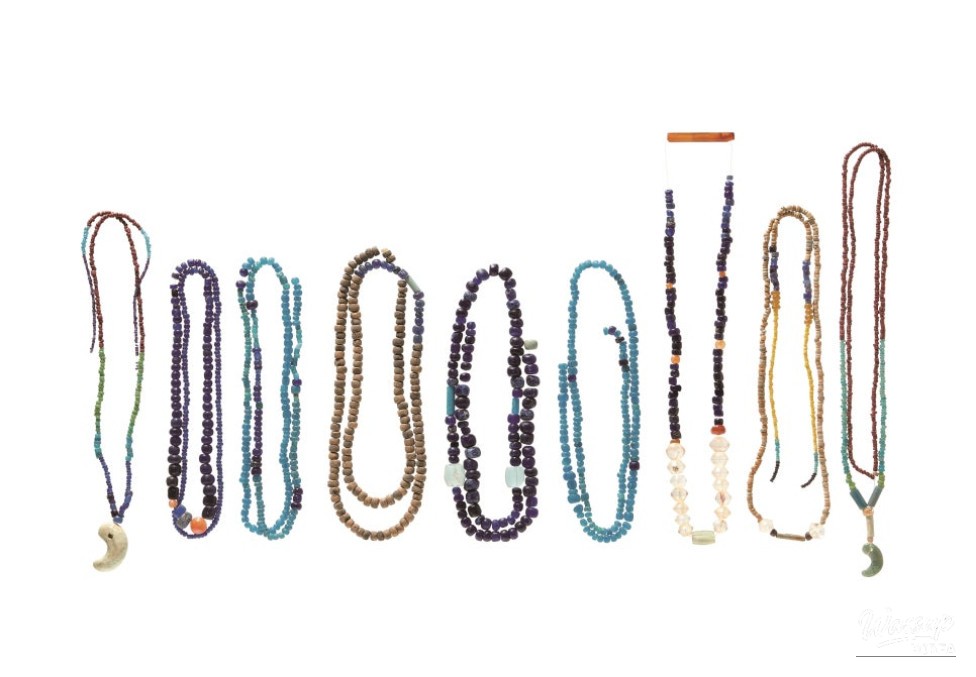
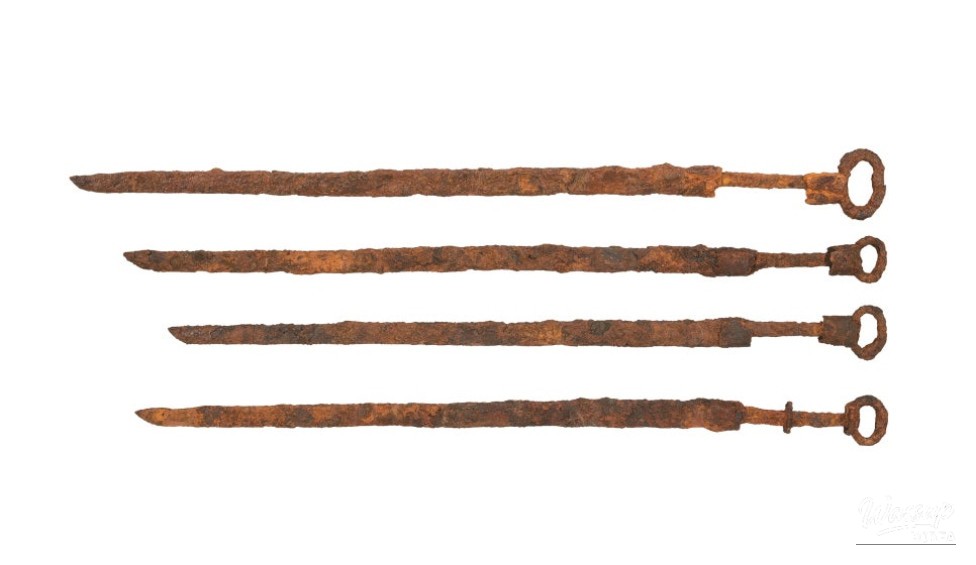
Designated as a provincial cultural heritage site in 2022, this area has yielded large-scale burial mounds, iron artifacts, jewelry, horse gear,
and tools used for iron production.
We often look at tombs and focus first on their size or the treasures they contain.
However, in archaeology, tombs hold meanings that extend beyond merely being burial sites.
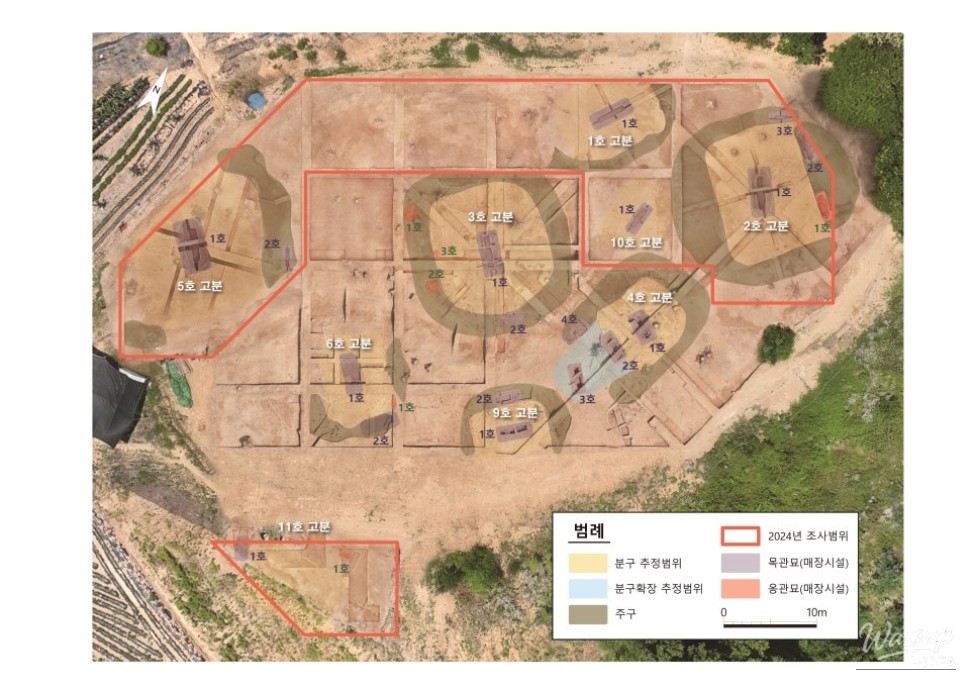
The burial mounds of Sangun-ri are characterized by earth mounds topped with various burial facilities and surrounded by ditches.
The evidence of multiple individuals interred over time suggests that this site was a treasured space for the memory and traditions of a specific group.
The presence of iron processing tools and various iron weapons and farming implements further indicates that the Wanju area was
a center of advanced iron production technology and substantial social power.
In essence, the Sangun-ri tombs are not just ancient graves but a dynamic site reflecting iron production, exchange,
social order, and burial culture of the Mahan community.
The Sangun-ri tombs stand as an icon of Mahan burial mounds.
This is not merely a metaphor but is evident in their overwhelming scale.
Over 30 burial mounds have revealed a staggering 163 burial facilities, including 116 clay coffins, 38 stone coffins, and 9 wooden coffins.
Considering the number and density of burial facilities found at a single site,
Sangun-ri ranks among the largest Mahan burial sites in the country.
The quantity of artifacts unearthed is also astonishing.
More than 300 pottery pieces, over 500 iron items, and around 6,000 jade artifacts have been excavated from this site.
Notably, the diverse jade jewelry, including 23 pieces of curved jade, vividly illustrates the aesthetic sensibilities of the Mahan people.
Historical texts from the 'Records of the Three Kingdoms' mention that Mahan people adorned their clothing with beads but did not regard gold and silver as treasures,
making Sangun-ri a tangible testament to this account.
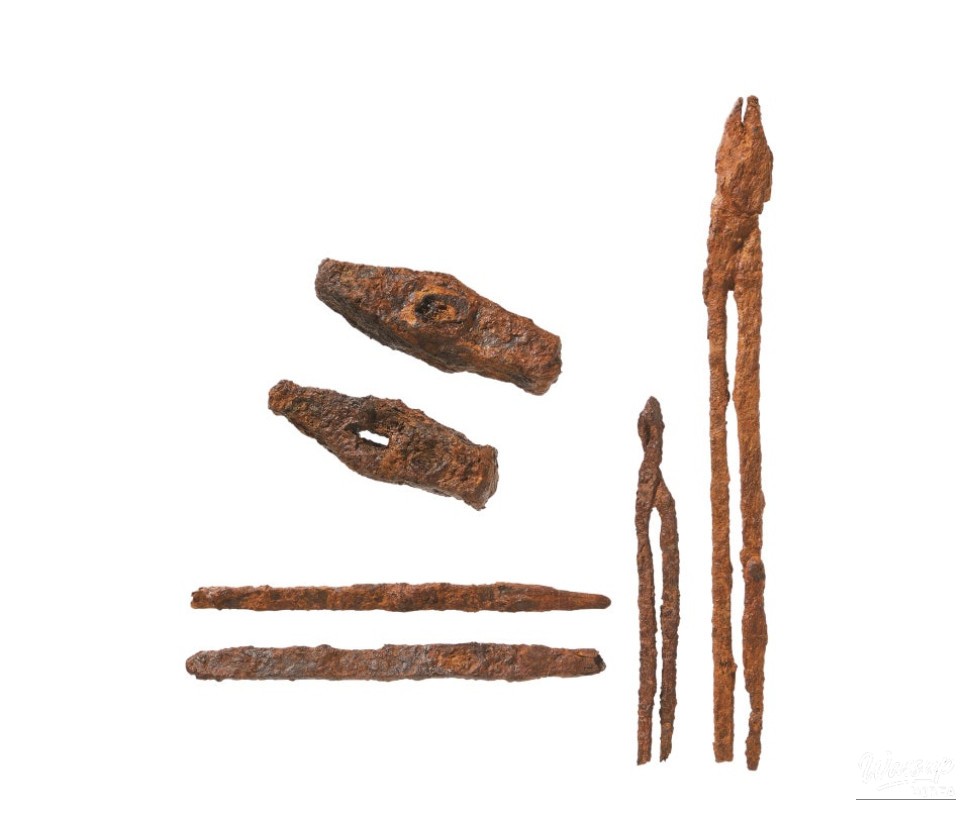
The most remarkable aspect of the Sangun-ri site is undoubtedly the iron artifacts.
While other Mahan sites yield only dozens of iron objects, Sangun-ri has produced over 500.
Among them, the tools used for making and processing iron are particularly noteworthy.
In regions known for iron production, such as Gaya or Silla, only 1 to 3 sets of such tools are typically found per site.
However, Sangun-ri has revealed a large variety of tools, including hammers, tongs, saws, and anvils.
This suggests that the Mahan political entity based in Sangun-ri was directly involved in the production and processing of iron,
and possibly supplied iron to surrounding Mahan states.
The overwhelming quantity of iron artifacts found is crucial evidence that the power centered around Sangun-ri was among the leading Mahan political entities in the Mangyeong River basin.
The true value of the Sangun-ri tombs shines even brighter when viewed in conjunction with surrounding sites.
Recently, the National Wanju Cultural Heritage Research Institute excavated the Wonsangun tombs,
located just 50 meters from the existing Sangun-ri tombs.
Here, an additional 9 burial mounds, wooden coffins, and stone coffins have been confirmed.
The continuous construction of large burial mounds in the Sangun-ri area indicates that
Wanju's Yongjin-eup was not a fleeting site of brilliance but has sustained a rich culture as the center of Mahan society for many years.
We refer to the Sangun-ri area as the 'center of Mahan culture in the Mangyeong River basin' not just to boast about a great kingdom.
The archaeological materials buried beneath the earth provide a dense testament to the remarkable growth and development of Mahan society.
Mahan was not merely a transitional history before being absorbed by Baekje,
but a proud chapter of our history with its own production capabilities, networks, and culture.
And Wanju is a treasure trove that fully preserves the essence of Mahan.
As we gaze at the gently flowing waters of the Mangyeong River today,
we recall the Mahan people who farmed along its banks and forged iron in the heat of the flames 1,600 to 1,800 years ago,
and we remember the rich stories that lay hidden beside the Wanju Interchange, often overlooked.





Source :https://blog.naver.com/wanjugun/224413070532
More from Walking





No comments yet.