Exploring the Historic Yeonpung Martyrdom Site in Goesan
- Original source
- blog.naver.com



[ Yeonpung Martyrdom Site ]
A Must-Visit Place in Goesan County
At the center of Yeonpung-myeon, there is a Catholic holy site surrounded by a wide lawn and a pine forest.
Today, I will introduce Yeonpung Martyrdom Site, commonly known as Yeonpung Holy Site. It is the place where believers were executed during the Shinyu Persecution in 1801, and the Catholic Church has maintained it as a holy site since 1974.
Even if you are not a believer, it is a great place for a quiet walk while reflecting on history, and I visited it along with Yeonpung Confucian Academy.
Yeonpung Holy Site is the burial place of Saint Luke Hwangseokdu, one of the 103 Korean Catholic saints.
Saint Hwangseokdu was born in 1813 in Byeongbanggol, Yeonpung, and was martyred in 1866 during the Byeongin Persecution at Galmaemot in Boryeong, along with Bishop Dablue.
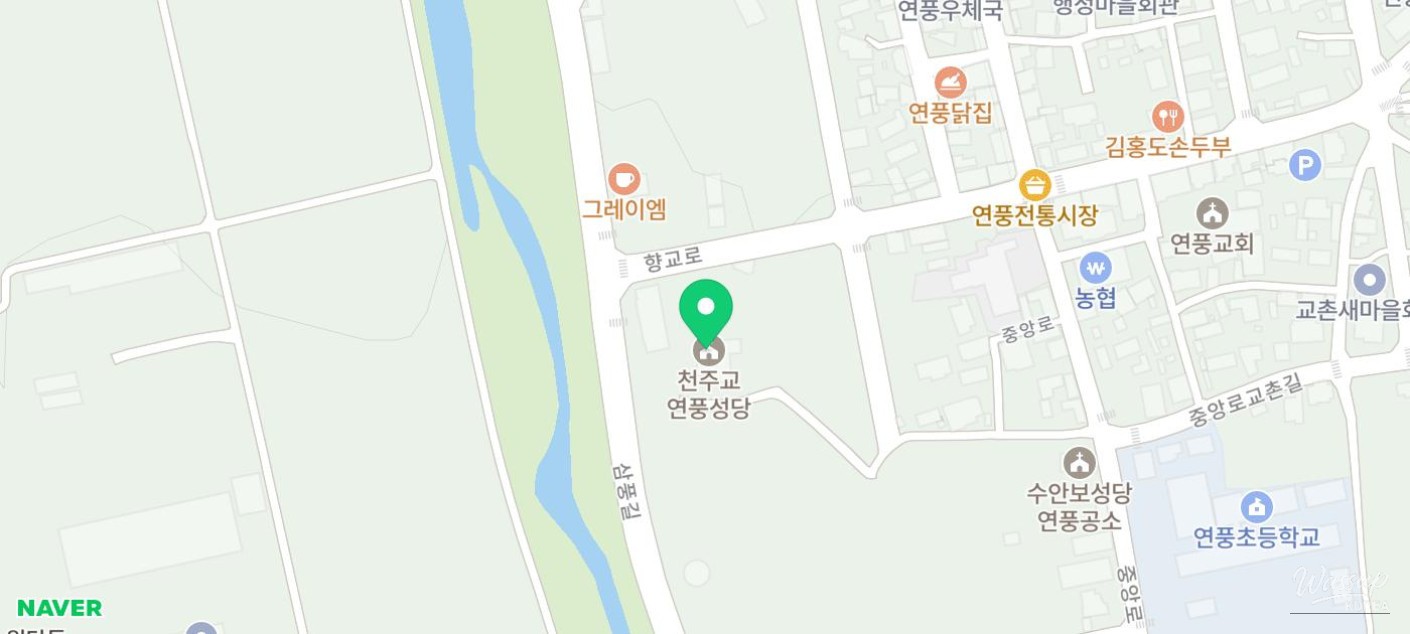
Within the holy site, there is a cathedral, a pilgrimage center, the Way of the Cross, a stone of execution, the old local government office, and five saint statues, allowing visitors to naturally complete a circuit by following the designated route on the map.
In front of the holy site, there is a spacious parking lot, making it convenient for visitors who arrive by car.
When I visited, it was raining, but there were still quite a few cars parked.
The parking lot leads directly to the entrance of the holy site, making the route simple.
A sign at the entrance indicates that the site is open from 9:30 AM to 5:30 PM, so plan your visit accordingly.
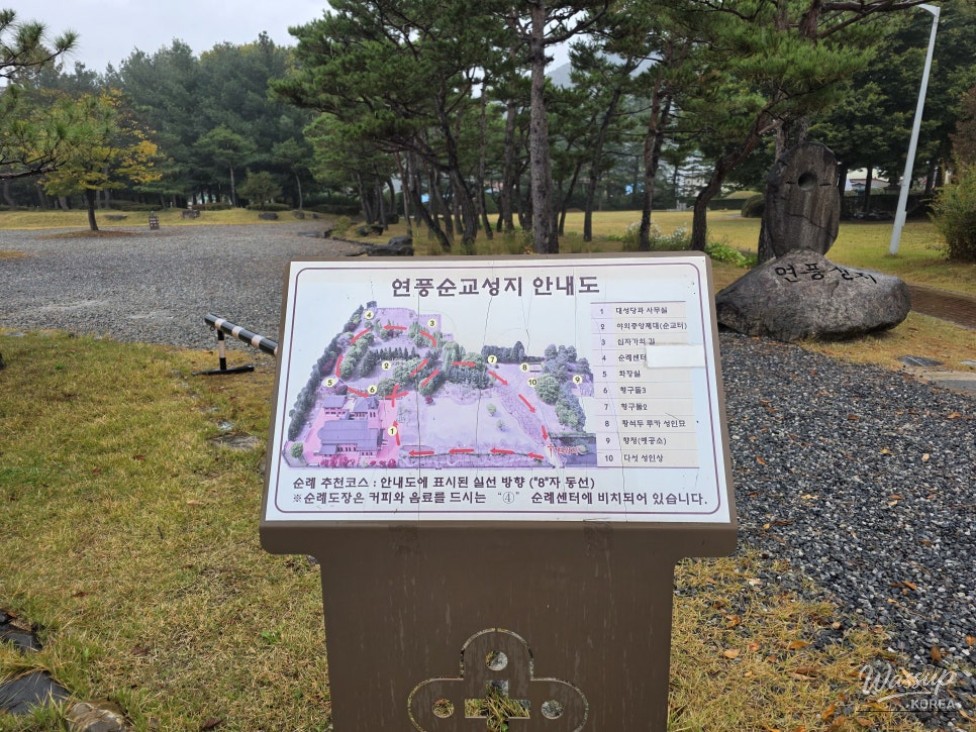
Inside the entrance, a wide path stretches between the pine trees, with an information sign on the left.
The map near the entrance indicates key locations, including the cathedral, office, outdoor altar, Way of the Cross, pilgrimage center, restrooms, the stone of execution, the grave of Saint Hwangseokdu, the old local government office, and five saint statues.
Following the red arrows on the map, the recommended pilgrimage route is shaped like the number '8'. The pilgrimage stamp can be obtained at the pilgrimage center, where coffee and drinks are available.
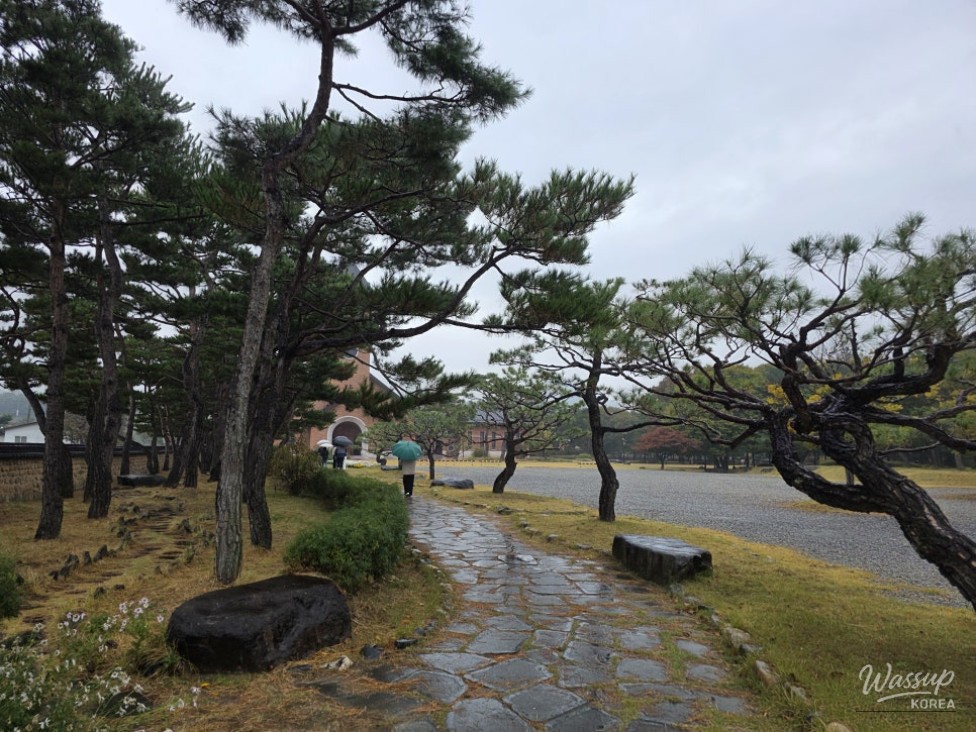
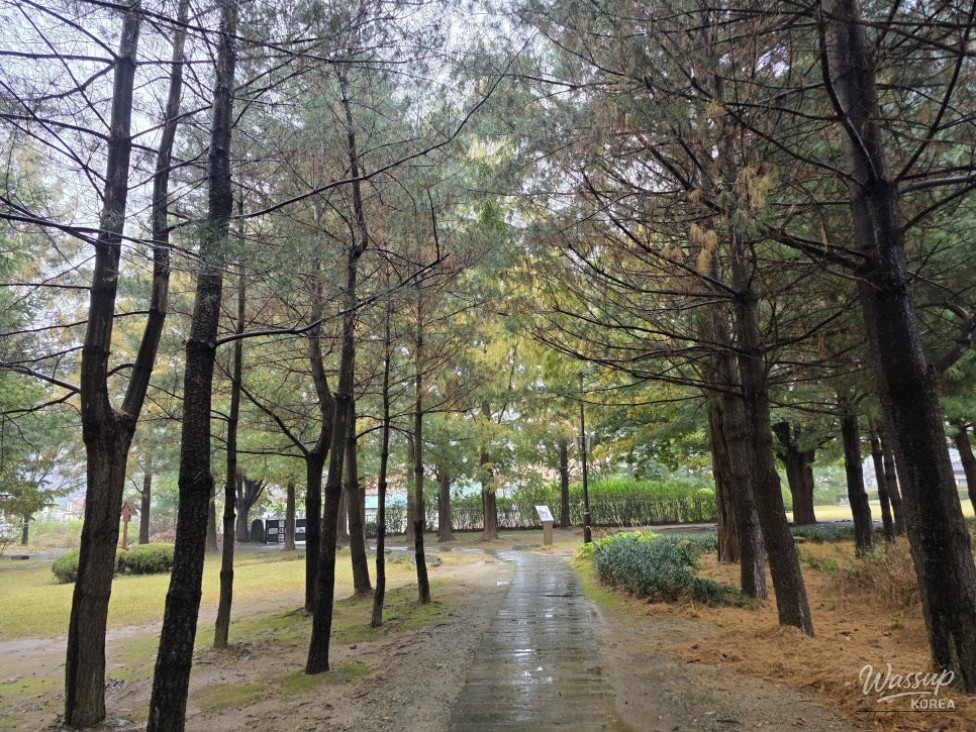
As you start walking, you will encounter a stony path lined with pine trees. The winding pines and expansive lawn give it a garden-like feel rather than just a holy site.
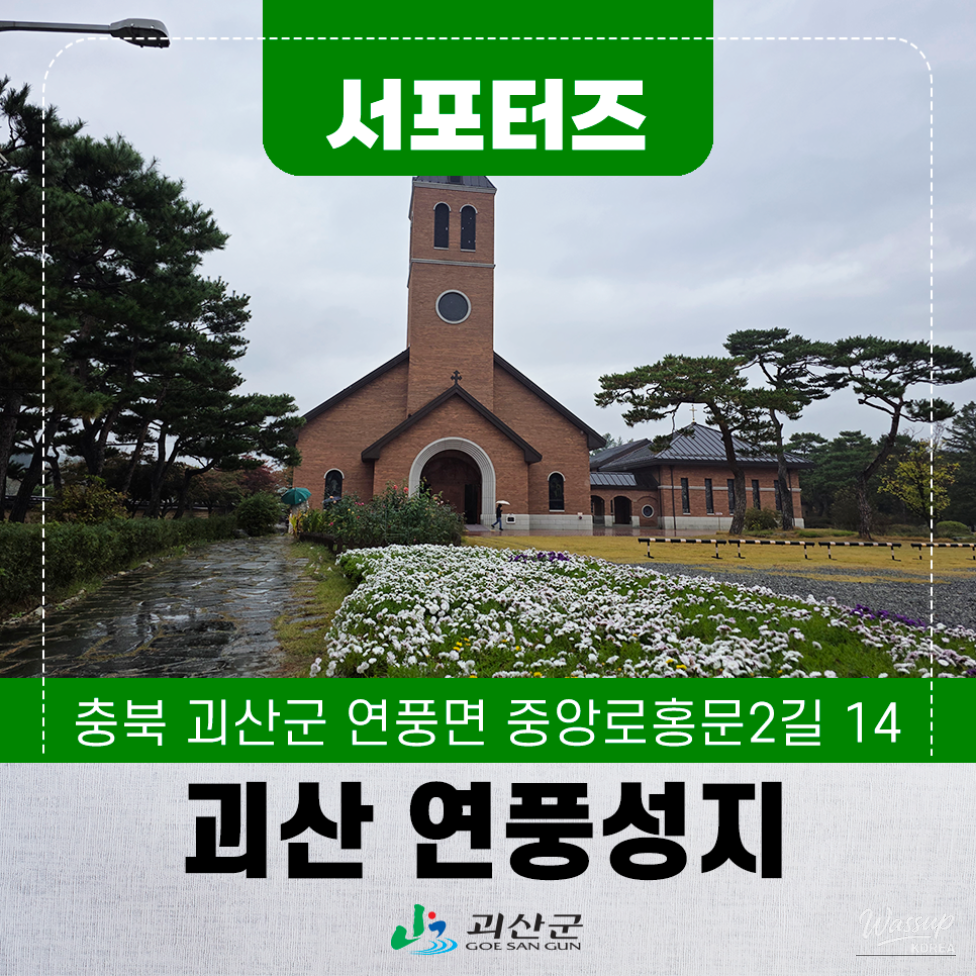
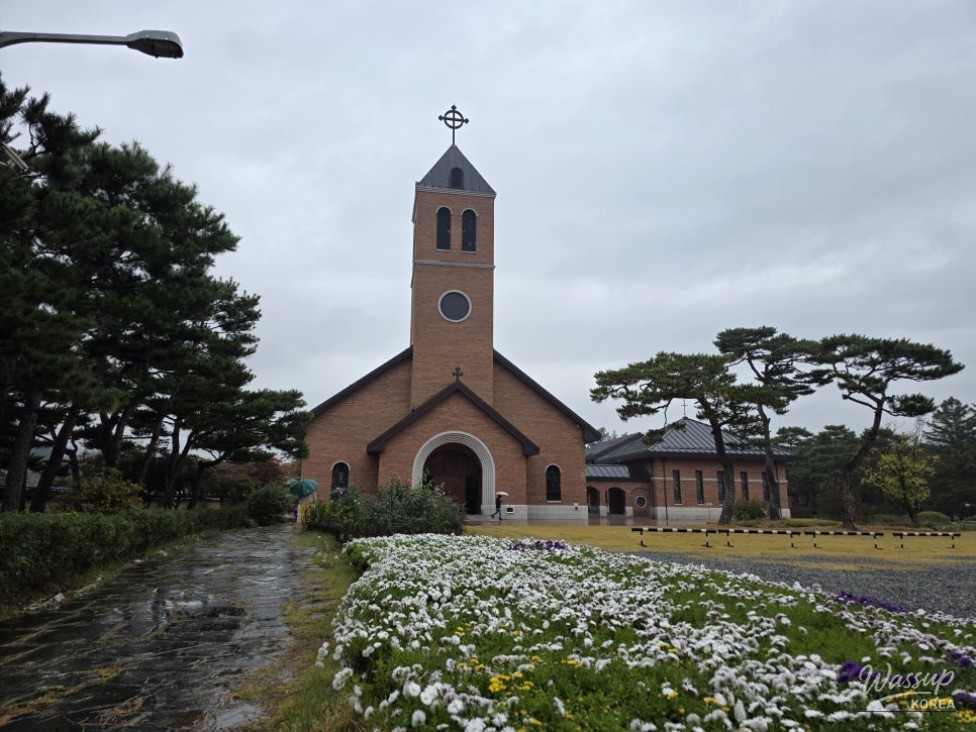
At the end of the stone path stands a cathedral built of red bricks. The cross atop the tall steeple and the round window look neat, and the flowerbed in front is filled with white blooms.
Even under the cloudy sky, the warm color of the bricks makes for a picturesque scene representing Yeonpung Holy Site.
Next to the cathedral, there is a white statue of the Virgin Mary, and colorful stained glass windows adorn the walls.
The arched corridor and the lawn create a peaceful space for quiet contemplation.
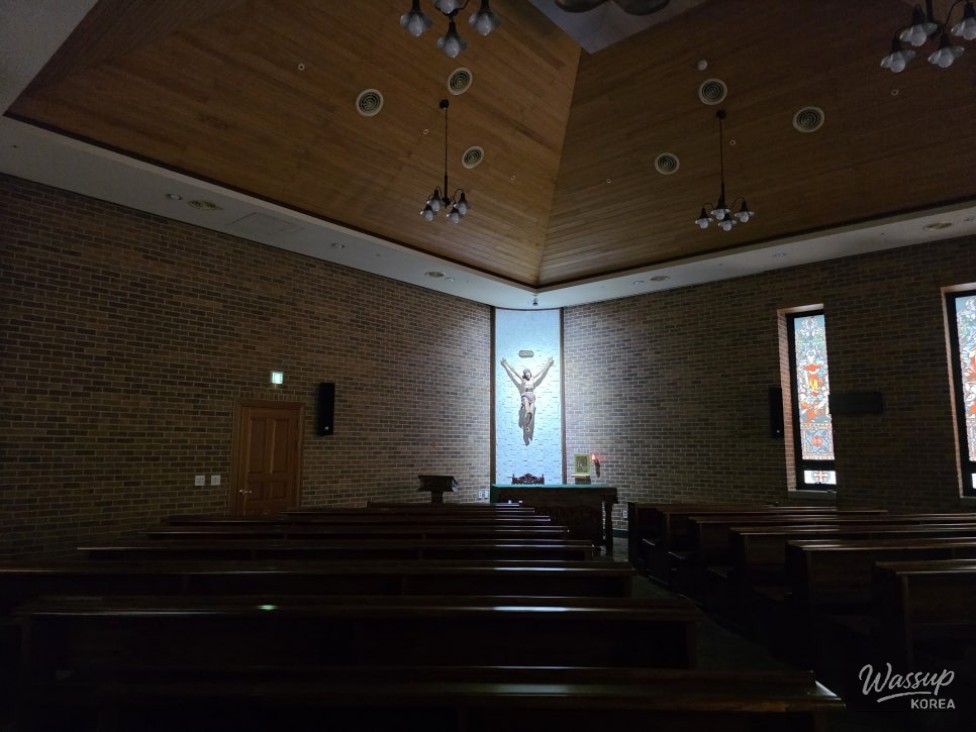
Inside the cathedral, the wooden ceiling and brick walls create a serene atmosphere, with light illuminating the crucifix behind the altar.
The soft light entering through the stained glass is calming, making it a great place to sit and reflect for a moment.
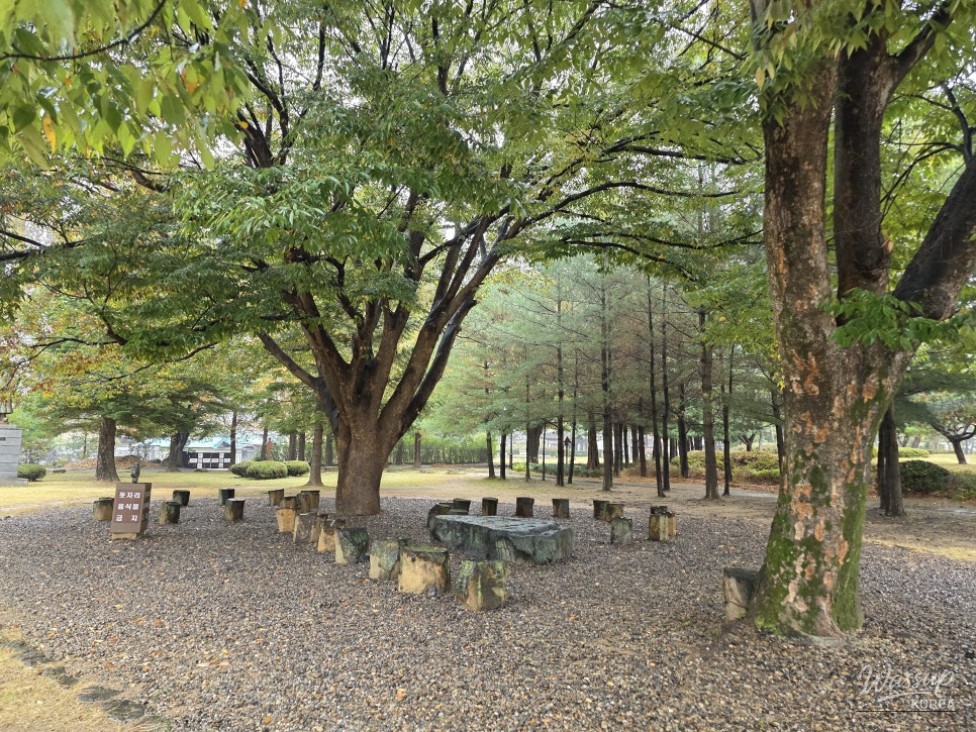
As you exit the cathedral and walk around, you will find a resting area with a stump-shaped bench and stone table under a large tree, perfect for a short break during your pilgrimage.
One side of the lawn features a statue of a scholar wearing a traditional hat and robe, reminding visitors of the persecution history during the late Joseon Dynasty.
The tall trees surrounding the statue provide a great backdrop for photographs.
Inside the holy site, there is a walking path among the tall trees, creating a tranquil atmosphere for meditation.
The well-maintained path is suitable for walking with elderly individuals as well.
A significant feature of the holy site is the stone of execution. According to the sign, this stone was used as a tool for execution during the persecutions, where a rope was tied around the neck of believers and pulled from the opposite side.
This stone is the second of its kind discovered at Yeonpung Martyrdom Site, with holes of different sizes drilled on both sides.
Standing close to it, one can feel the pain of that era.
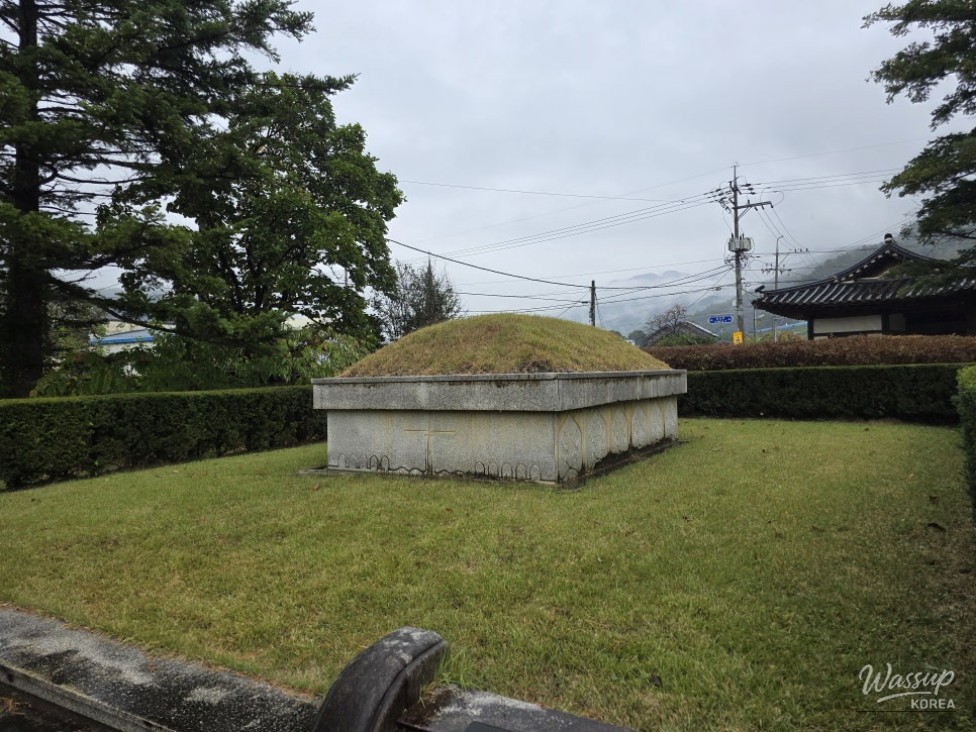
The grave of Saint Hwangseokdu is surrounded by a low wall, with a stone tablet engraved with details of his life.
Having been born in Yeonpung and martyred in 1866, it is particularly meaningful that his grave is located in his hometown.
The holy site also features an old hanok building known as the local government office, which was initially built in 1691.
During the Japanese occupation, it was used as a police station and has served as a Catholic church since 1963, embodying the local history and faith.
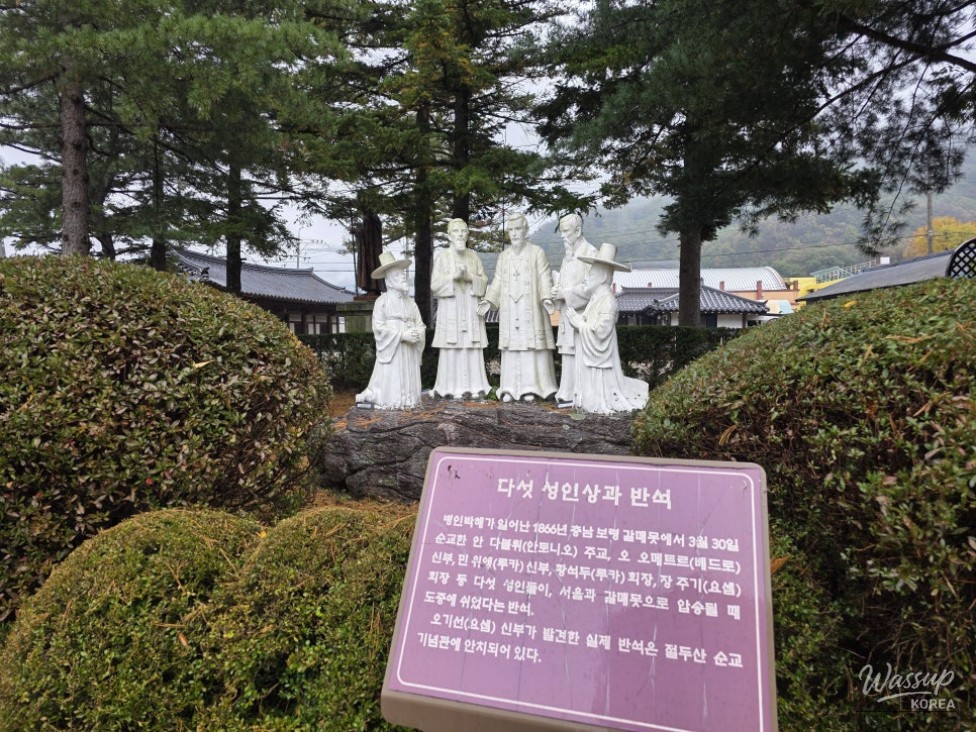
Lastly, there are five saint statues commemorating the five martyrs who were executed in 1866.
After exploring Yeonpung Holy Site, consider visiting Yeonpung Confucian Academy nearby.







Source :https://blog.naver.com/goesan-gun/224457891407
More from Travel





No comments yet.