Administrative Integration of Daegu and Gyeongbuk: Current Status and Key Contents of the Special Law
- Original source
- blog.naver.com


The administrative integration of Daegu and Gyeongbuk is a key regional issue being discussed.
What direction is this integration being pursued, and what does the special law entail?
Let’s take a look at the current status and main contents.
What progress has been made in the administrative integration of Daegu and Gyeongbuk?
The goal is to merge Daegu Metropolitan City and Gyeongsangbuk-do into a new entity called 'Daegu-Gyeongbuk Integrated Special City'.
This aims to expand local autonomy and self-governance while establishing a foundation for balanced development between Daegu and Gyeongbuk.
The special law for the administrative integration of Daegu and Gyeongbuk passed the National Assembly's Administrative Safety Committee meeting on February 12, 2026.
Currently, Daegu and Gyeongbuk are working together to process the bill in the legislative judiciary committee.
They aim for the integrated special city to launch by July 2028 and are discussing amendments to the bill to align with this timeline.
However, this is not a confirmed launch date but rather a goal dependent on the passage of the bill and subsequent procedures.
The core of the special law focuses on strengthening local autonomy and balanced development.
What contents are included in the special law?
During the review by the National Assembly's Administrative Safety Committee, 256 out of the original 335 clauses were reflected, with 135 new clauses added, totaling 391 clauses.
Key directions include enhancing the status and autonomy of the integrated special city, balanced development including northern Gyeongbuk, and strengthening the powers and autonomy of cities, counties, and districts.
The law also supports the gradual transfer of powers from central administrative agencies and the delegation of tasks to special local administrative agencies, enabling regions to autonomously implement policies.
In Gyeongbuk, a notable aspect is the development foundation reflecting regional characteristics.
Through various exemptions in fields like culture, tourism, agriculture, forestry, and fisheries, the law aims to utilize local resources and improve income bases and living conditions in rural areas.
Regarding the integrated new airport and future industries, the law includes exemptions for military facility relocation projects, support for areas around military airport relocations, and designation of international logistics special zones.
The integrated special mayor will have the authority to request the Minister of Land, Infrastructure and Transport to designate new national industrial complexes around the airport, supporting the development of infrastructure in surrounding areas.
However, the exemption clause for preliminary feasibility studies related to the new airport was not included in the bill that passed the Administrative Safety Committee.
The law also includes provisions for designating global future special zones to foster advanced industries and new growth areas.
In the cultural and tourism sector, the law supports historical cultural resources like Silla, Gaya, and Confucianism, the creation of a global center for Korean Wave history and culture, and the designation of cultural industry promotion zones.
It aims to preserve and utilize Gyeongbuk's historical cultural resources and connect them to cultural content and tourism industries.
The administrative integration of Daegu and Gyeongbuk is still in the stage of legislative review and subsequent procedures.
The exemptions and support contents included in the bill may also change during the final review process.
As the legislative process unfolds, we will observe how changes related to balanced development, strengthening of autonomy, and the lives of city and provincial residents are concretized.
Images:
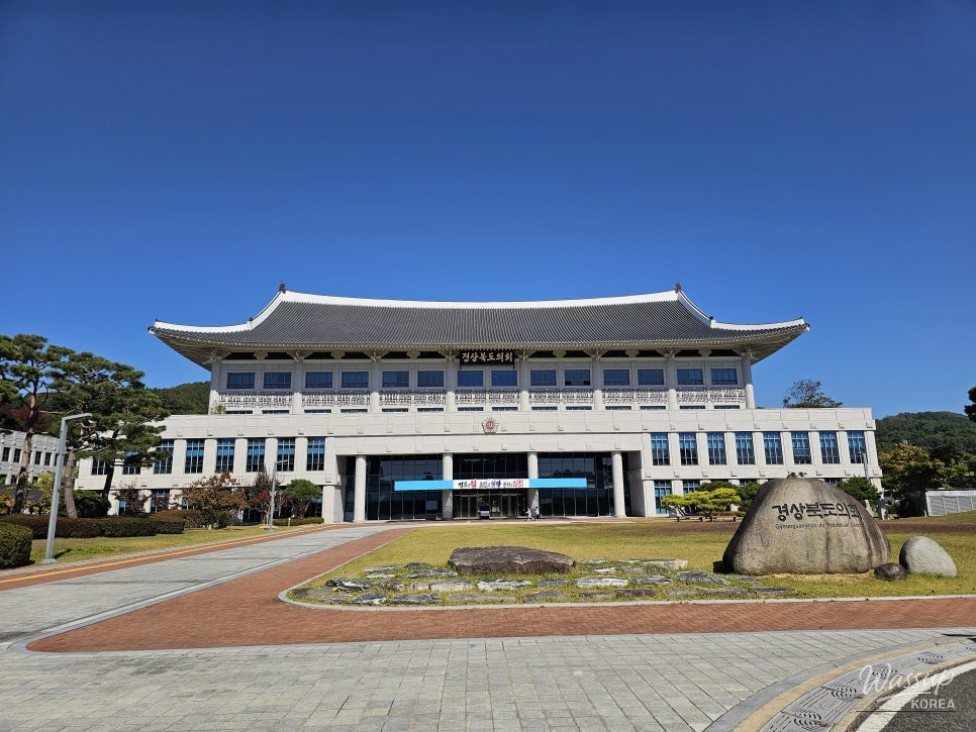


Source :https://blog.naver.com/gyeongbuk_official/224441080719
More from Place





No comments yet.