Exploring Heungwon: A Historical Cultural Space Amidst Nature
- Original source
- blog.naver.com


[Reporter: Kim Won-deuk]
Heungwon, the tomb of Heungseon Daewongun, is a historical cultural space where dense forest paths meet the royal tombs of the Joseon Dynasty.
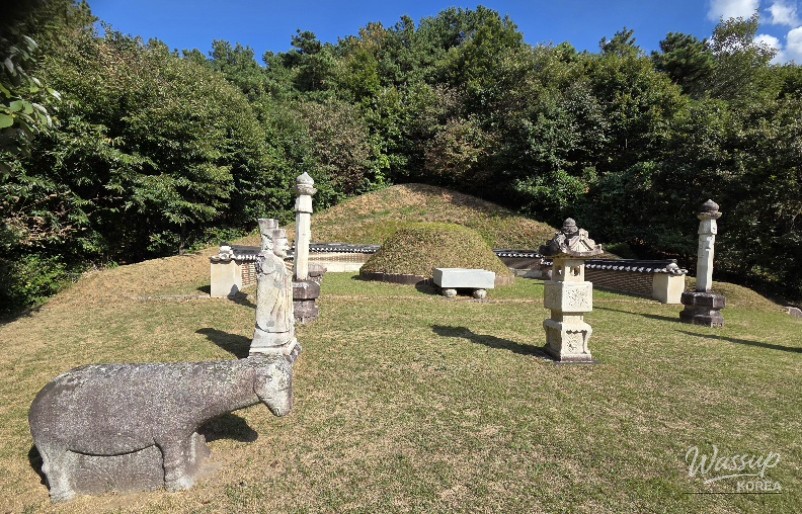
Located in Changhyeon-ri, Hwado-eup, Namyangju-si, Gyeonggi-do, Heungwon is the burial site of Heungseon Daewongun Lee Ha-eung (1820–1898), the father of King Gojong, the 26th king of Joseon. Designated as Gyeonggi-do Cultural Heritage No. 48 on October 10, 1978, Heungwon offers a glimpse into the historical remnants and natural beauty of the late Joseon period.
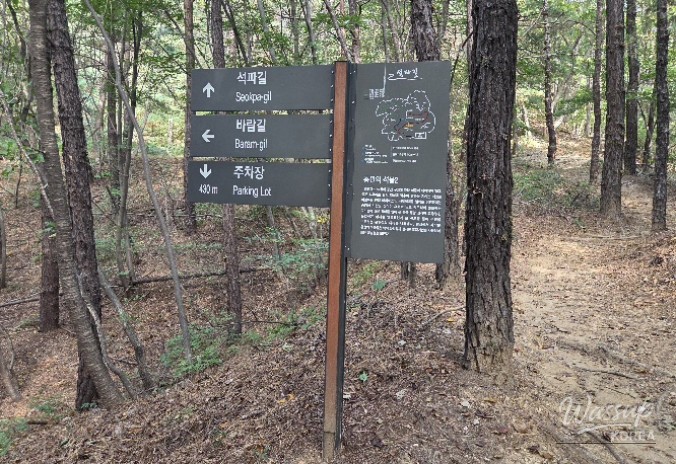
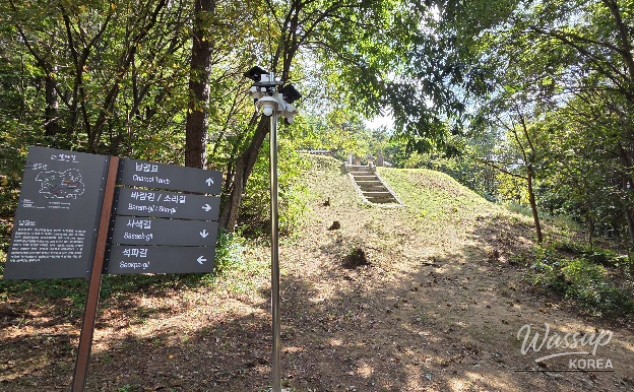
As you enter the Heungwon forest path, you will find signs indicating the various trails, such as 'Stone Path', 'Wind Path', 'Contemplation Path', and 'Sound Path'. The parking lot is conveniently located next to the Hwado Waterworks. Upon stepping onto the deck walkway leading to the mountainside, a lush forest path unfolds.
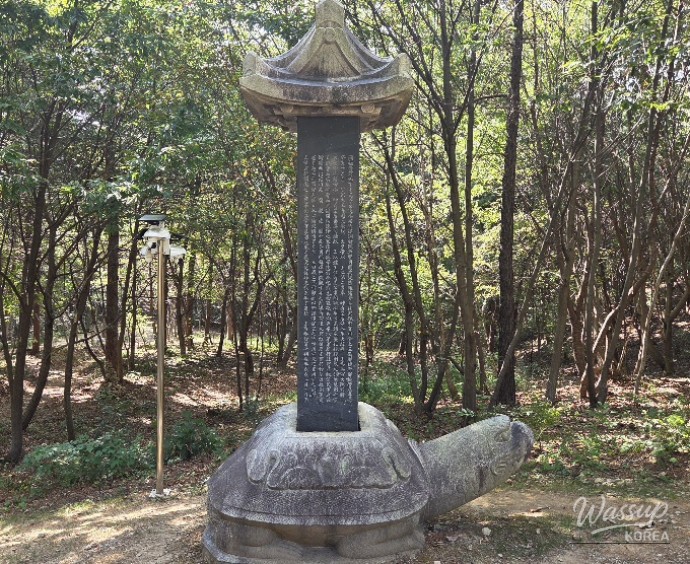
Walking along the forest path allows visitors to escape the urban noise and enjoy the tranquility of nature. Informative signs about Heungwon's history and cultural heritage help visitors gain a better understanding of the site.
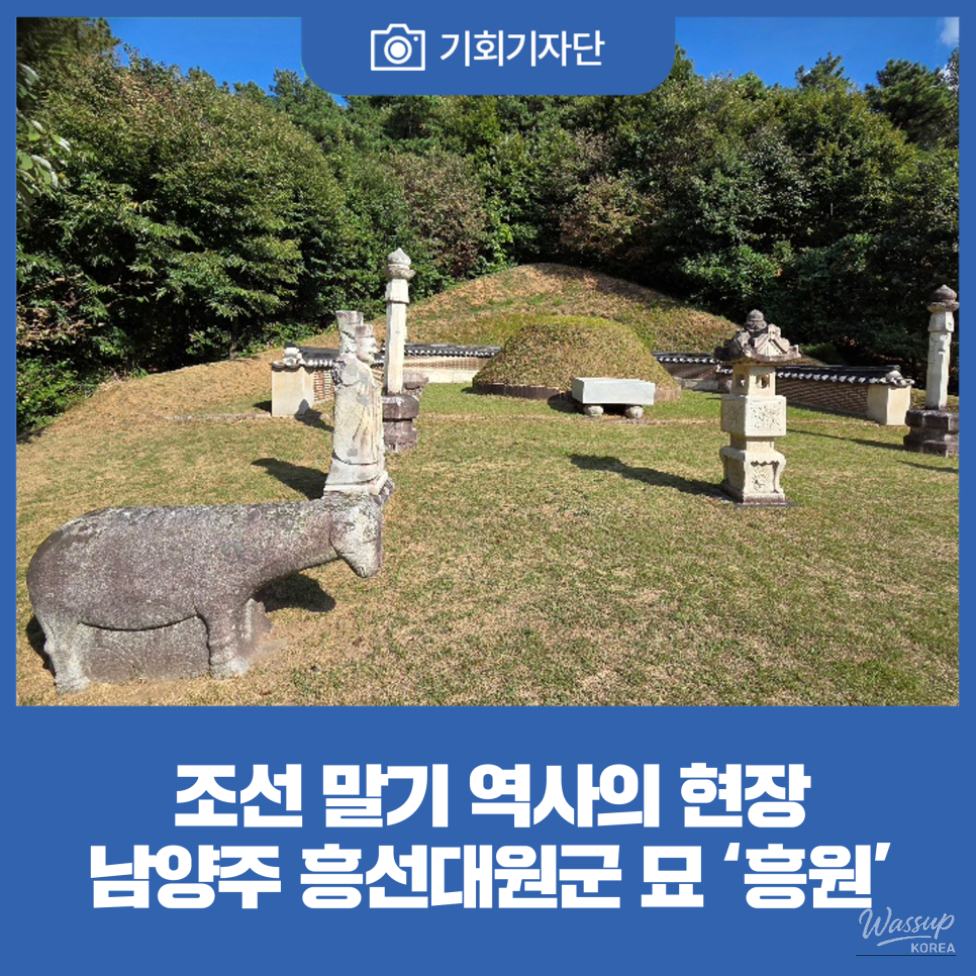
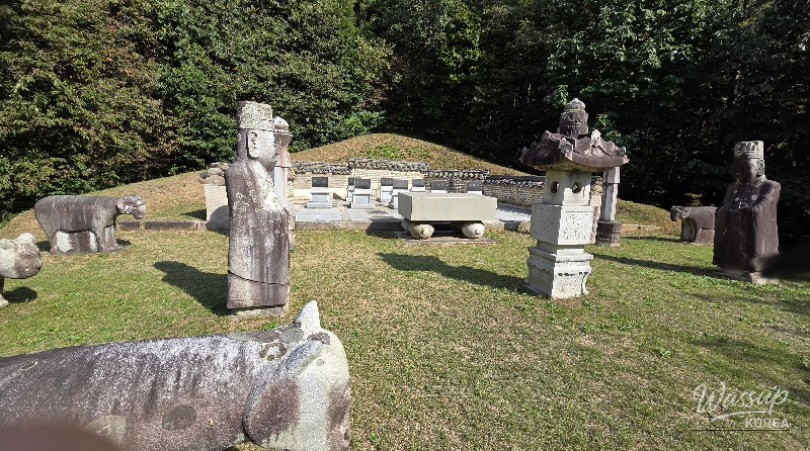
Upon entering the tomb area, you will notice the grassy mound and surrounding stone artifacts. In front of the mound, there are stone statues and lanterns, with scholar stones and stone horses placed nearby, reflecting the characteristics of a traditional royal tomb. The combination of the stone artifacts and the surrounding forest creates a serene yet solemn atmosphere.
Heungseon Daewongun Lee Ha-eung played a pivotal role during the turbulent times of the late Joseon Dynasty. After his son Gojong ascended the throne in 1863, he took charge of national affairs on behalf of the young king. He abolished the Daewon-gun system to strengthen royal power and restored the functions of the State Council and the military. He also implemented reforms in political and social systems, including the abolition of Confucian academies and the introduction of the Ho-po system.
However, the financial burdens from the reconstruction of Gyeongbokgung Palace and the refusal of diplomatic relations with Western powers had significant impacts on society. During this time, Joseon faced conflicts with Western powers, such as the Byeongin Yangyo and Sinmi Yangyo, amidst rapidly changing international circumstances. While some praised Heungseon Daewongun for strengthening royal authority and pushing for reforms, others criticized him for failing to adequately respond to the shifting global landscape.
Heungseon Daewongun passed away in 1898. Initially buried in Gongdeok-ri, Goyang-gun (now part of Mapo-gu, Seoul), he was relocated to Daedeok-ri, Paju in 1908, and finally settled in Changhyeon-ri, Hwado-eup, Namyangju-si in 1966. Today, Heungwon is well-maintained, harmonizing with the surrounding lush forest.
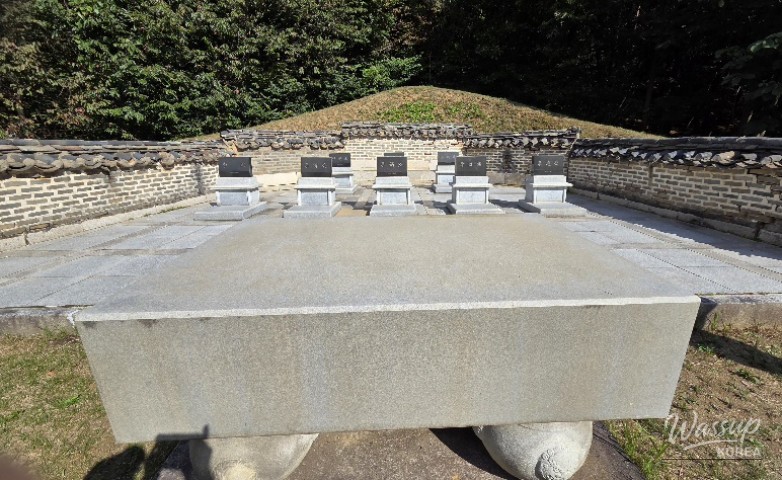
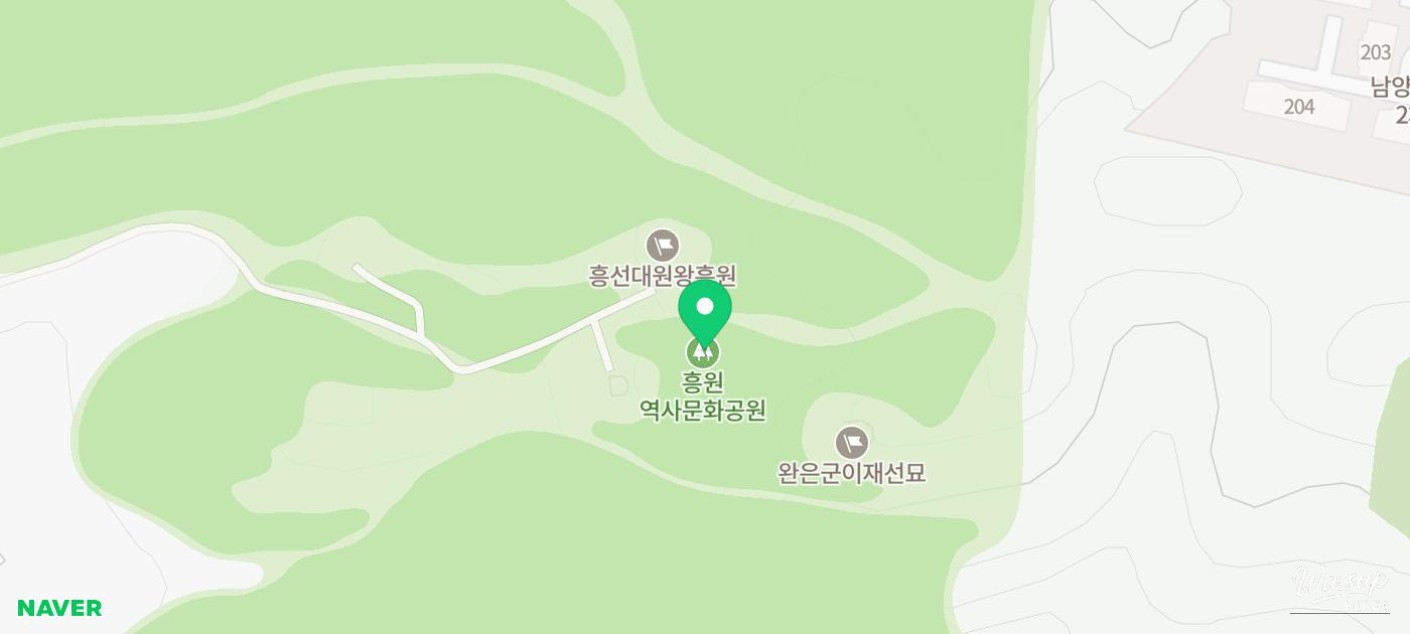
Approximately 100 meters from Heungwon lies the 'Heungchinwang Family Tomb', known for being the burial site of royal family members, including Heungchinwang Lee Jae-myeon, the eldest son of Heungseon Daewongun.
Inside the site, several grave markers are lined up within a low fence, with a grassy mound located at the back. This historical space, alongside Heungwon, allows visitors to reflect on the lineage and history of the Joseon royal family.
In 2018, Gyeonggi-do received a donation of about 126,903 square meters of land from Lee Cheong, the fifth descendant of Heungseon Daewongun. Starting in 2021, facilities such as parking lots and restrooms were established, and the surrounding paths were improved. On October 10, 2023, Heungwon was opened to the public as a historical cultural park, where visitors can walk along four trails: Wind Path, Contemplation Path, Stone Path, and Sound Path, experiencing both history and nature.
Heungwon is not just a space for viewing the tombs of historical figures; it is a historical cultural space where one can reflect on the political and social changes of the late Joseon period and enjoy nature in the dense forest paths. As autumn deepens, consider walking the forest paths of Heungwon with family and encountering a scene from our history.

Source :https://blog.naver.com/gyeonggi_gov/224440083976
More from Place



No comments yet.