Exploring the Green Wetlands: A Journey through Gochang Ungok Wetland Ecological Trail
- Place
- Ungok Wetland Ecological Trail
- Region
- Jeollabuk-do
- Original source
- blog.naver.com



Walking in the green wetlands
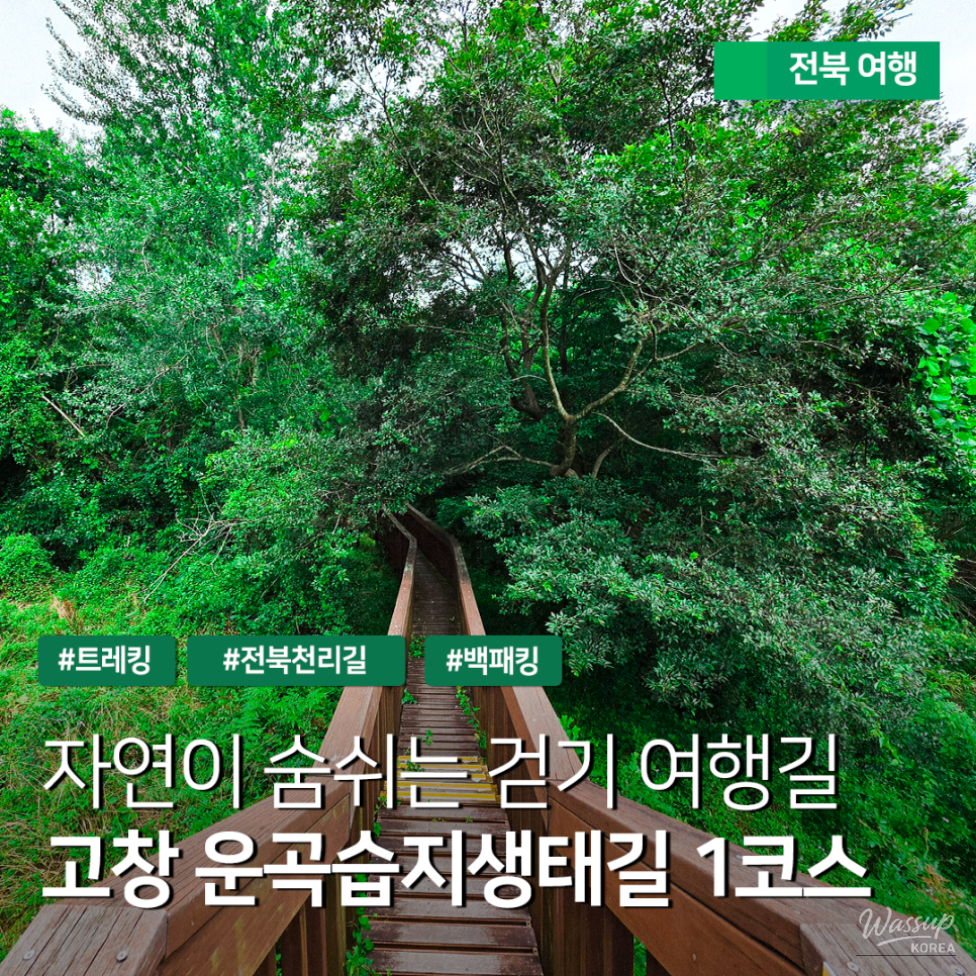
Gochang Ungok Wetland Ecological Trail Course 1
In Jeonbuk, there are many beautiful paths where you can walk alongside the sea, rivers, mountains, fields, and lakes, encountering the region's nature and culture.
The 'Jeonbuk Cheonri-gil' connects walking paths across 14 cities and counties in Jeonbuk, categorized into coastal paths, riverside paths, mountain paths, and lakeside paths. This time, I explored Course 1 of the Gochang Ungok Wetland Ecological Trail, which belongs to the mountain path category.
This course is approximately 3.6 kilometers long and takes about 1 hour and 30 minutes to complete. It starts from the Ungok Wetland Visitor Center, passing through the Gochang Dolmen Site and the Ungok Wetland, leading to an ecological pond, an ecological dome, a bird observation deck, and the Ungok Wetland Promotion Center. The ability to experience both cultural heritage and ecological environments makes this a particularly attractive walking trail.
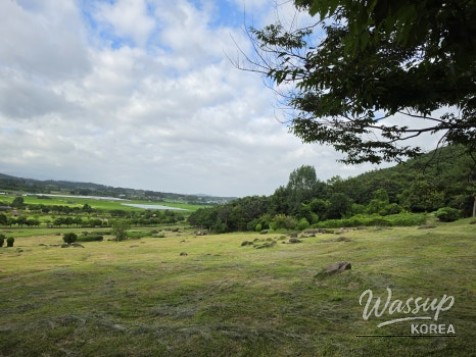
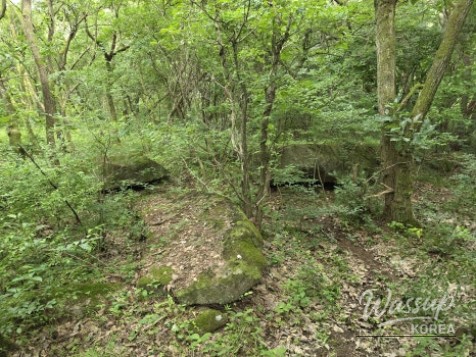
As I began my walk following the sign for 'the way to Ungok Wetland' from the visitor center, I was captivated by the scenery even before entering the wetland. Large and small dolmens clustered along the wide hillside.
The Gochang Dolmen Site, along with the dolmen sites in Hwasun and Ganghwa, was designated a UNESCO World Heritage Site in 2000, representing a precious cultural heritage of Korea. Walking among the dolmens scattered across the vast grassland, I felt as though I was tracing the footsteps of people who lived here 3,000 years ago.
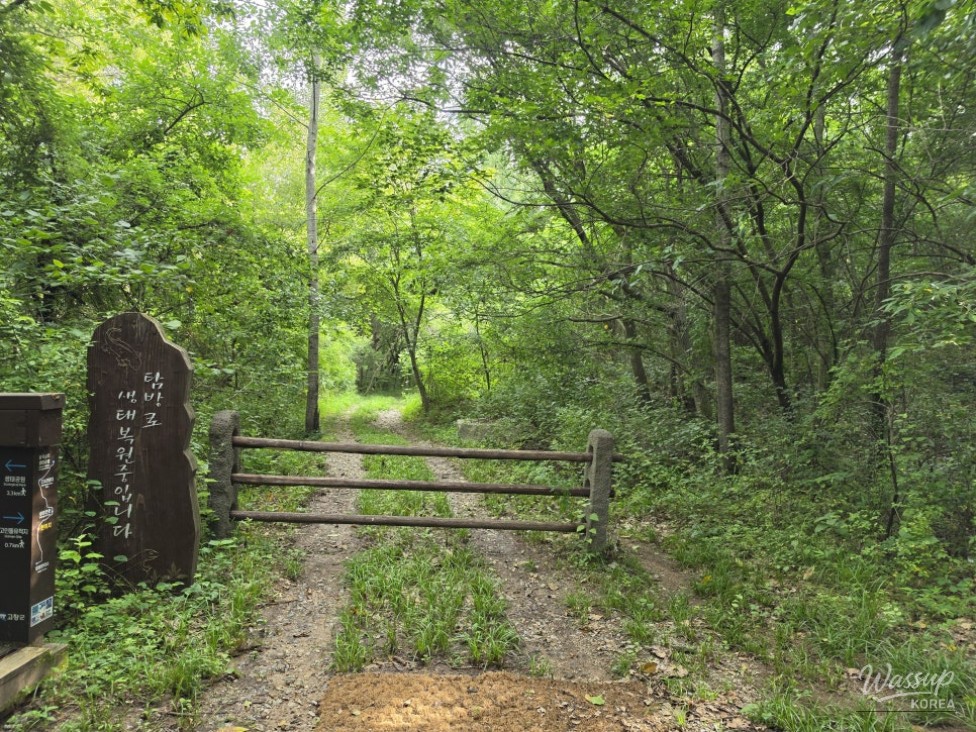
Continuing along the path marked 'the way to Ungok Wetland,' I soon found myself surrounded by rich green nature.
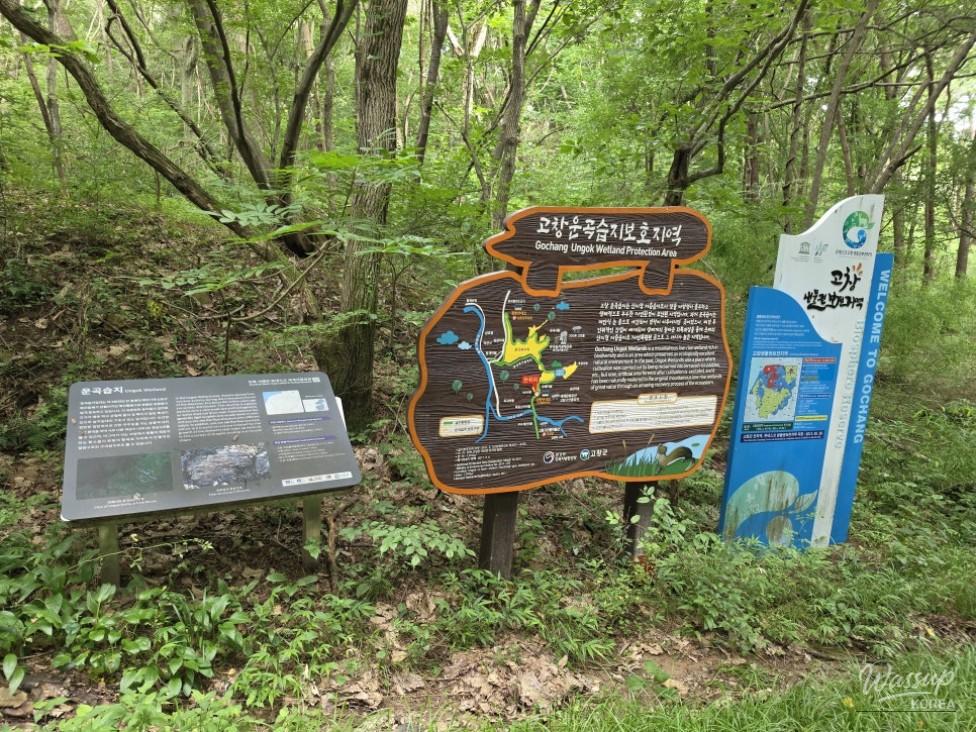
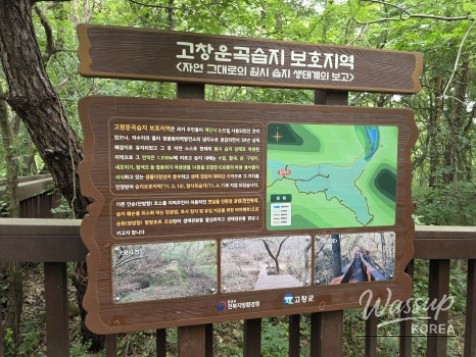
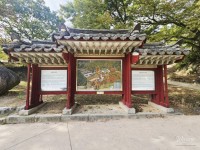
As I walked along the dirt path past the sign labeled 'Gochang Ramsar Wetland,' I encountered an information board explaining the Ungok Wetland. This wetland is a lowland area with rich biodiversity and well-preserved natural environments. Interestingly, it was not a pristine wetland untouched by human hands from the beginning.
In the past, it was a farming area with terraced rice paddies, but after farming ceased, human interference diminished, allowing the wetland ecosystem to recover naturally over time.
Thus, walking in the Ungok Wetland felt like an ecological journey, observing not just the beautiful nature but also the process of nature's self-restoration.
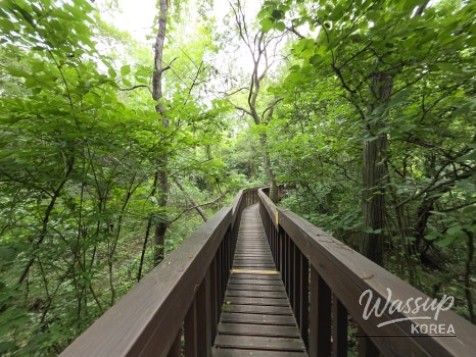
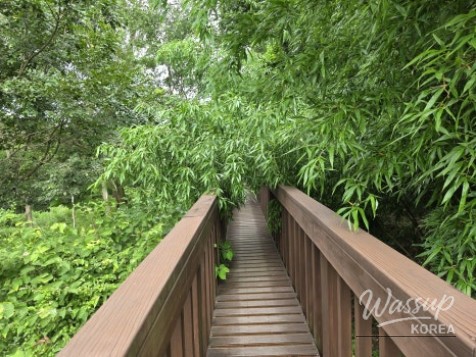
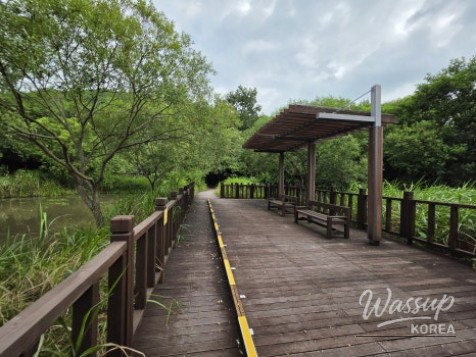
As I entered the main trail of the Ungok Wetland, the atmosphere changed completely. A narrow deck path was constructed to minimize ecological damage, leading deep into the forest. The dense growth of trees and grasses on both sides made me feel as if I were stepping into a small jungle.
Everywhere I looked was green. The lush greenery was refreshing to my eyes. I passed through areas where bamboo grew like a tunnel and spots where moss-covered trees created unique landscapes. Observing various plant life up close, including willow trees and crow's foot, was also enjoyable.
Wetlands often have standing water or consistently moist soil. In Ungok Wetland, I could easily spot trees with roots submerged in water. The indistinct boundary between water and forest created a scene unique to Ungok Wetland that is hard to find on regular walking paths.
Along the trail, I also encountered the 'First Rice Paddy Restoration Site.' This area once had terraced rice paddies that were cultivated but fell into disrepair after farming stopped. Restoration efforts are underway to preserve the wetland's ecological environment.
Since 2016, they have been restoring certain sections of the rice paddy embankments annually, contributing to wetland conservation and biodiversity. After the restoration, the habitat for fireflies and freshwater snails has improved, highlighting the importance of even a small embankment in the wetland ecosystem.
This is what makes Ungok Wetland feel even more special. It is not just a place to passively observe nature but a living ecological education site where one can witness how to revive and protect a damaged environment.
While I didn't see any wildcats, I did encounter their traces. Ungok Wetland is home to various wildlife, including otters and wildcats, which are known to inhabit this area. Recognized for its rich biodiversity and ecological value, it has been designated as a wetland protection area and Ramsar Wetland.
As I walked, I found several unidentified black droppings on the deck, which were said to be from wildcats. They often leave droppings in visible places to mark their territory. Even though I didn't see a wildcat, just knowing that wildlife exists somewhere in this forest was a thrilling realization.
I also came across the remains of an old homestead where a couple raised cattle in the late 1970s. Now, only traces remain in the lush nature, but it was striking to see a place that once served as a human living space returning to the wild.
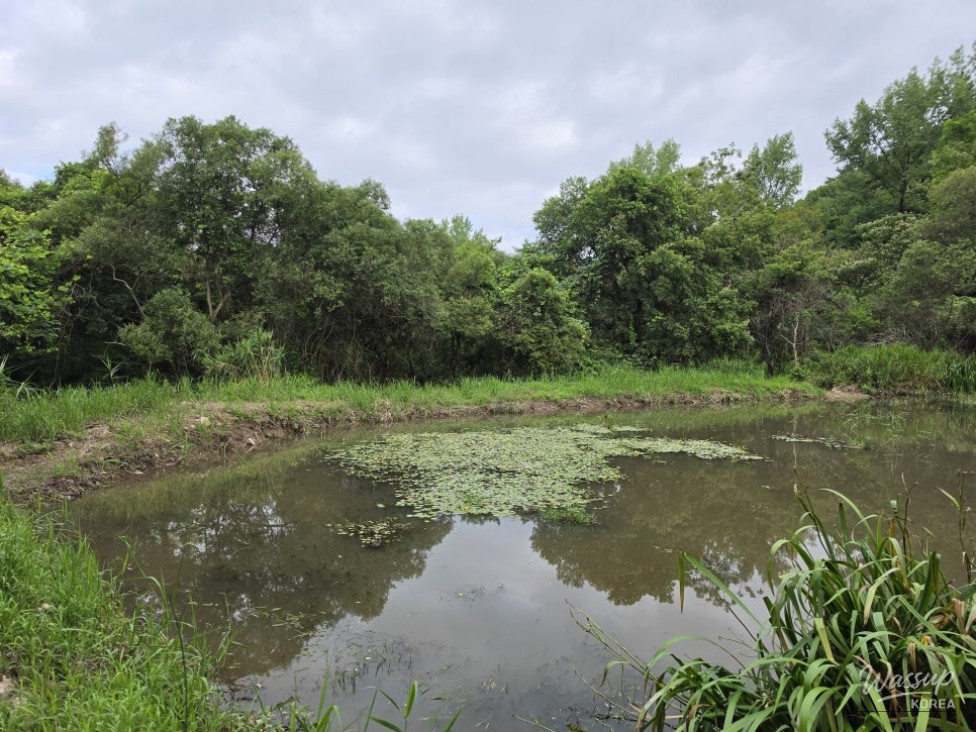
At the ecological pond, small yellow flowers bloomed on the water's surface. Despite their simplicity, they harmonized beautifully with the wetland scenery.
There are benches along the trail for resting. Sitting on a bench, feeling the mountain breeze from the forest, I naturally slowed my pace. The small stream looked so clear that I wanted to dip my hands in, and I enjoyed listening to the sounds of nature filtering through the trees.
Ungok Wetland is a place where, rather than rushing to see something, you discover more the slower you walk and the closer you observe your surroundings.
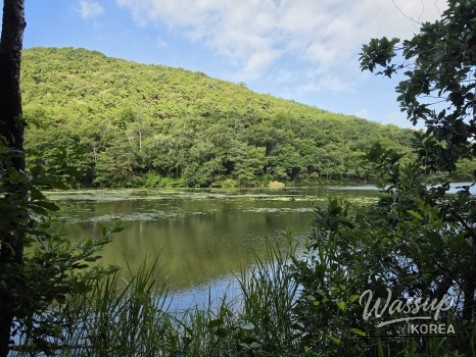
At the end of the course, there is a bird observation deck that overlooks the Ungok Reservoir. Suddenly, my view opened up between the trees, revealing a tranquil reservoir surrounded by mountains like a picturesque landscape. Here, you can observe various birds, including the white-cheeked pintail and mallard.
Even though binoculars were set up, I was disappointed not to see any birds on the day I visited. Nonetheless, the serene scenery of the Ungok Reservoir embraced by green mountains made it a place where I wanted to linger.
At the restroom in the Ungok Ramsar Wetland Ecological Park, I could also stamp my Jeonbuk Cheonri-gil passport. Such small certifications during a walking journey add another layer of enjoyment.
On the way to the Ungok Ramsar Wetland Promotion Center, I saw the excavation site of the dolmen remains. However, since I visited on a Monday, the promotion center was closed, which was a bit disappointing.
As I returned to the Ungok Wetland Visitor Center along the same path, I reflected on how in just 3.6 kilometers, I encountered dolmen culture from 3,000 years ago, remnants of terraced rice paddies, a self-restoring wetland, and traces of wildlife that still call this place home.
The Gochang Ungok Wetland Ecological Trail is more than just a pleasant walking path; it is a place where you can feel the restorative power of nature up close. Walking along the narrow deck path through the green forest, observing trees rooted in water, discovering traces left by wildcats, and pausing in front of the Ungok Reservoir created a unique journey.
This experience was not just a trip to seek out nature but a cautious entry into the realm of nature, which is the greatest charm of the Gochang Ungok Wetland Ecological Trail.
<Gochang Ungok Wetland Ecological Trail>
◆ Course 1: 3.6 km / Mountain Path / 50 minutes to 1 hour 30 minutes
Ungok Wetland Visitor Center - Ecological Pond - Ecological Dome - Bird Observation Deck - Ungok Wetland Promotion Center















Source :https://blog.naver.com/jbgokr/224398253422
More from Place



No comments yet.