Exploring Pyeongtaek's Intangible Heritage Education Center
- Original source
- blog.naver.com


[By Choi Kyung-sook]
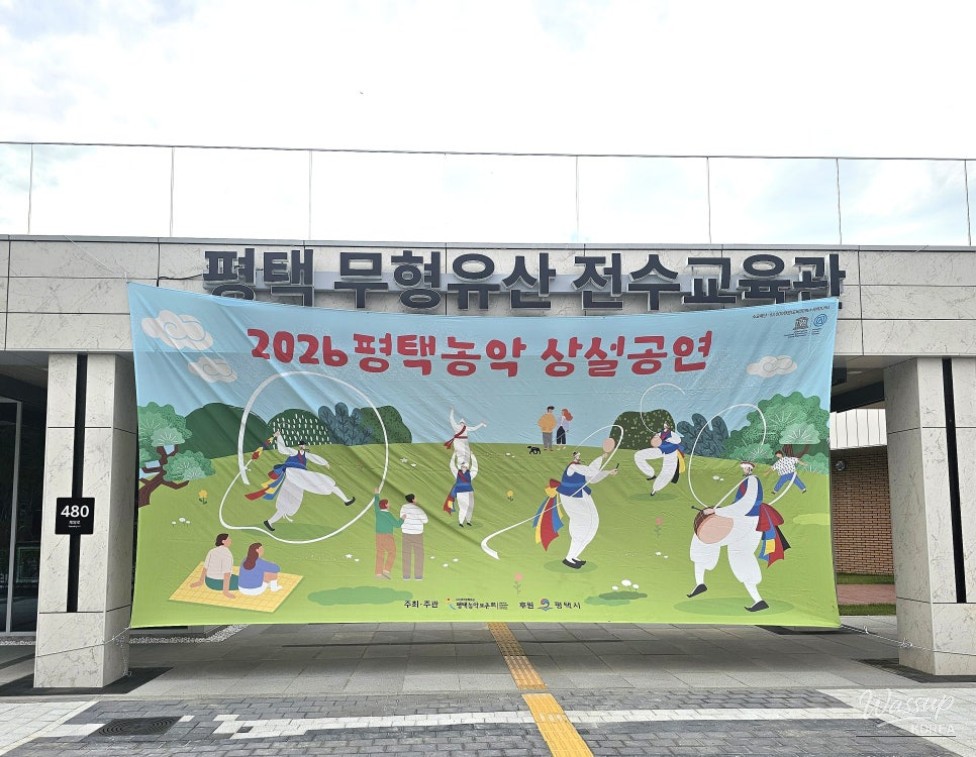
Have you heard about the Pyeongtaek Intangible Heritage Education Center that opened in March this year? It is a newly established space aimed at preserving and transmitting our local intangible heritage, including Pyeongtaek Nongak. As autumn arrived, I learned that there would be regular performances at the center, so I decided to visit.
The Intangible Heritage Education Center, a space for preserving and transmitting local intangible heritage ⓒ Choi Kyung-sook
I was a bit worried about the outdoor performance schedule in case of rain, but the day turned out to be a beautiful sunny autumn day, which heightened my anticipation for the show. Initially, I planned to just watch the performance, but upon arrival, I discovered an exhibition on the second floor featuring embroidery and wood carving, so I decided to explore that first.
A showcase of traditional culture, with embroidery and wood carving on display
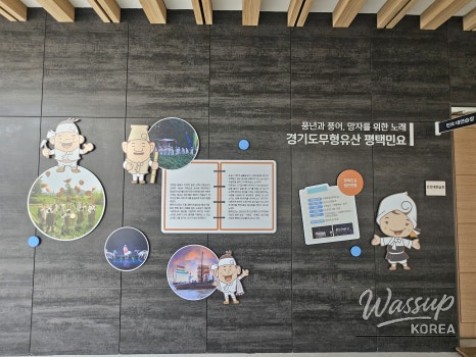
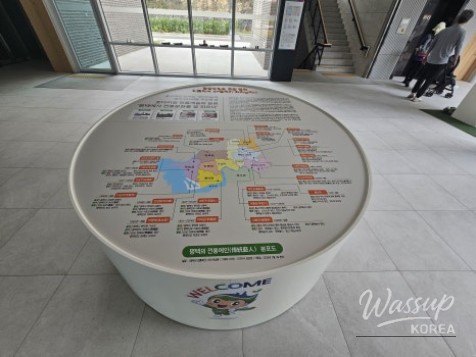
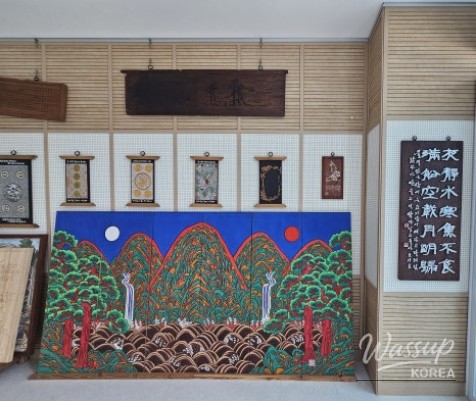
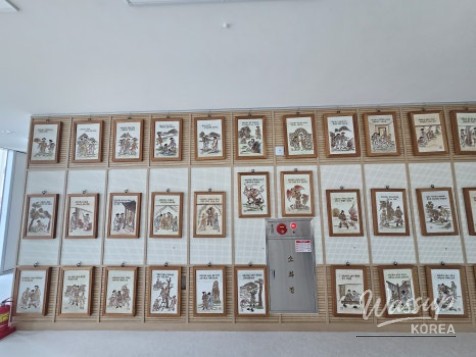
Upon arriving at the education center, I found the first floor equipped with practice areas for Nongak and folk songs, adorned with various photos and descriptions of Nongak performances. Peeking into the practice area, I saw the performers diligently preparing for the day’s show. It’s worth noting that citizens can usually try out the instruments here.
At the education center, you can learn detailed information about Pyeongtaek folk songs and Nongak. ⓒ Choi Kyung-sook
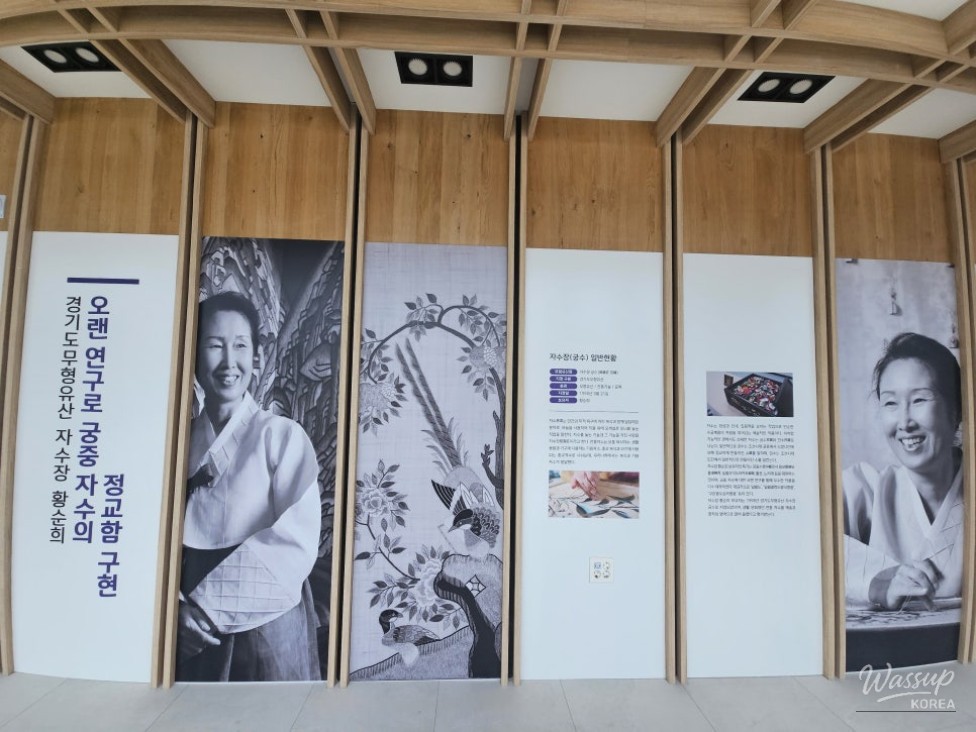
As I ascended to the second-floor exhibition area, I encountered a space dedicated to the embroidery and wood carving, both recognized as intangible cultural heritage of Gyeonggi Province. In the embroidery section, I was captivated by the works of Hwang Soon-hee, who has achieved remarkable precision in royal embroidery through years of research.
The exhibition showcasing the stunning embroidery by Hwang Soon-hee ⓒ Choi Kyung-sook
Unfortunately, photography was prohibited, making it impossible to share these exquisite embroidery pieces in my article. The time and care invested in each stitch conveyed a profound sense of artistry, drawing me closer to admire the works.
Hwang Soon-hee is renowned for her royal embroidery, reproducing motifs like dragons and phoenixes, which has elevated traditional embroidery into the realms of art and creativity. While larger pieces were impressive, I found the delicate flower embroidery on a small thimble and box to be particularly beautiful.
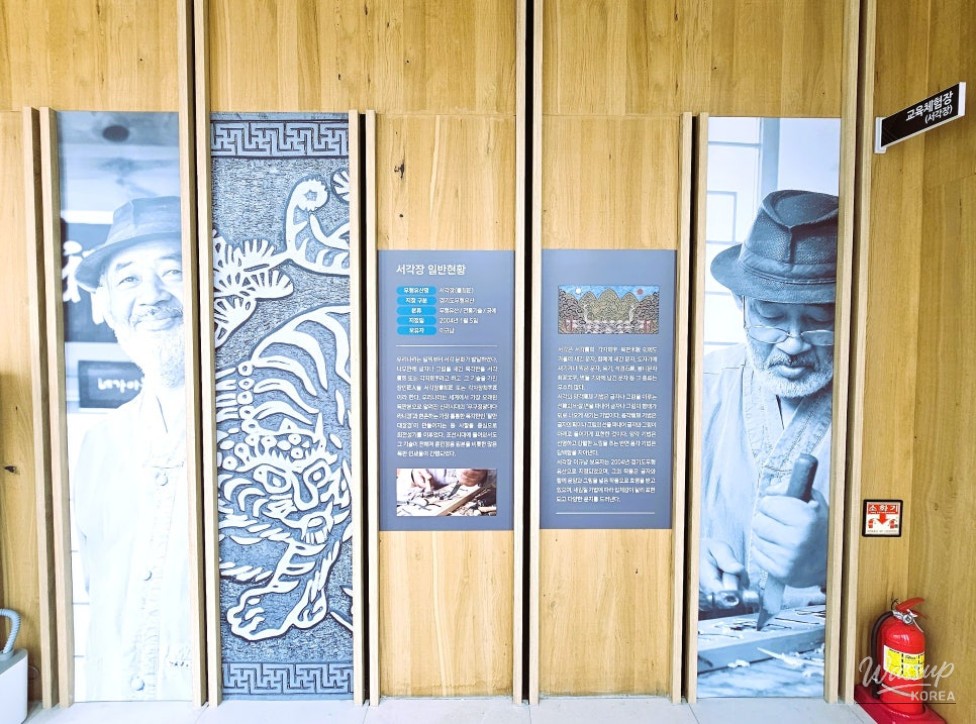
Next, I encountered the works of Lee Gyu-nam, a woodcarver who showcases pieces engraved with letters, patterns, and illustrations. ⓒ Choi Kyung-sook
In the next exhibition area, I explored the works of Lee Gyu-nam, known for his woodcarvings. As many know, Korea boasts the oldest woodblock print, the 'Mugujonggwang Daedaranigyeong' from the Silla period, and the 'Palman Daejanggyeong', renowned for its exquisite woodblocks.
Lee Gyu-nam has presented a variety of expressions in his works and was designated as an intangible cultural heritage of Gyeonggi Province in 2004. The exhibition featured a wide array of pieces, from Greek mythology to biblical themes.
Visitors can view a diverse range of works, from small items to large masterpieces, in the wood carving exhibition. ⓒ Choi Kyung-sook
As I slowly observed the completed works, I felt a renewed appreciation for traditional craftsmanship, especially in this fast-paced era. The education center is not merely a place for displaying works but a space for learning and continuing traditional culture through education. Those interested should check out related programs.
Enjoying traditional cultural experiences while waiting for the performance
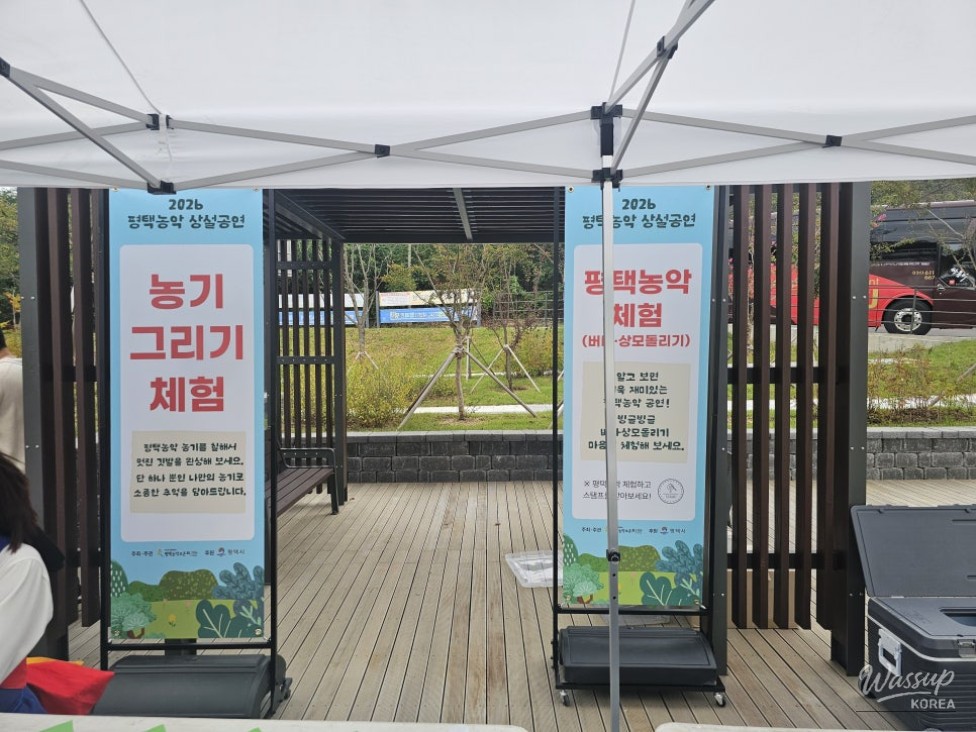
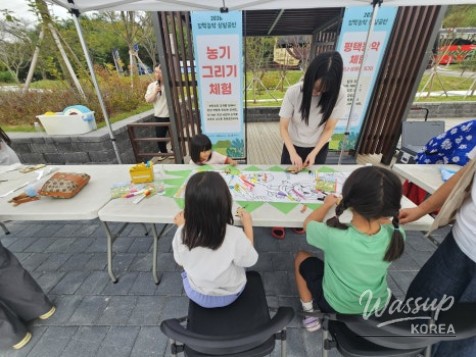
There are experiential programs available for the audience waiting for the Nongak performance. ⓒ Choi Kyung-sook
After exploring the exhibition, I realized it was almost time for the performance. As I stepped outside to the performance area, I was pleasantly surprised by the variety of activities available. On one side, a Pyeongtaek Nongak experience program was underway, and they were renting out lovely picnic sets for families to enjoy while waiting for the show.
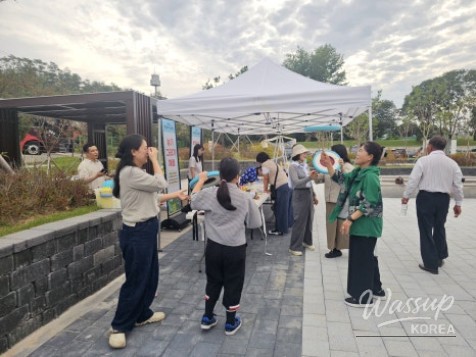
Visitors engaged in various experiential activities ⓒ Choi Kyung-sook
Especially the elderly were enjoying learning to spin the Sangmo and Bune from experts, sharing laughter as they struggled to master the skills. Meanwhile, children were busy dressing the Pyeongtaek Nongak mascots, 'Pyeongi' and 'Sori', in colorful outfits.
The waiting time for the performance transformed into a joyful opportunity for people of all ages to engage with traditional culture. During this time, a professional host provided explanations about Pyeongtaek Nongak.
Pyeongtaek Nongak is a representative form of Korean Nongak, recognized for its historical, artistic, and traditional values, and inscribed as a UNESCO Intangible Cultural Heritage. While the lively performances of Pyeongtaek Nongak are famous for their fast-paced rhythms, the fun of Bune and Mudong plays should not be overlooked.
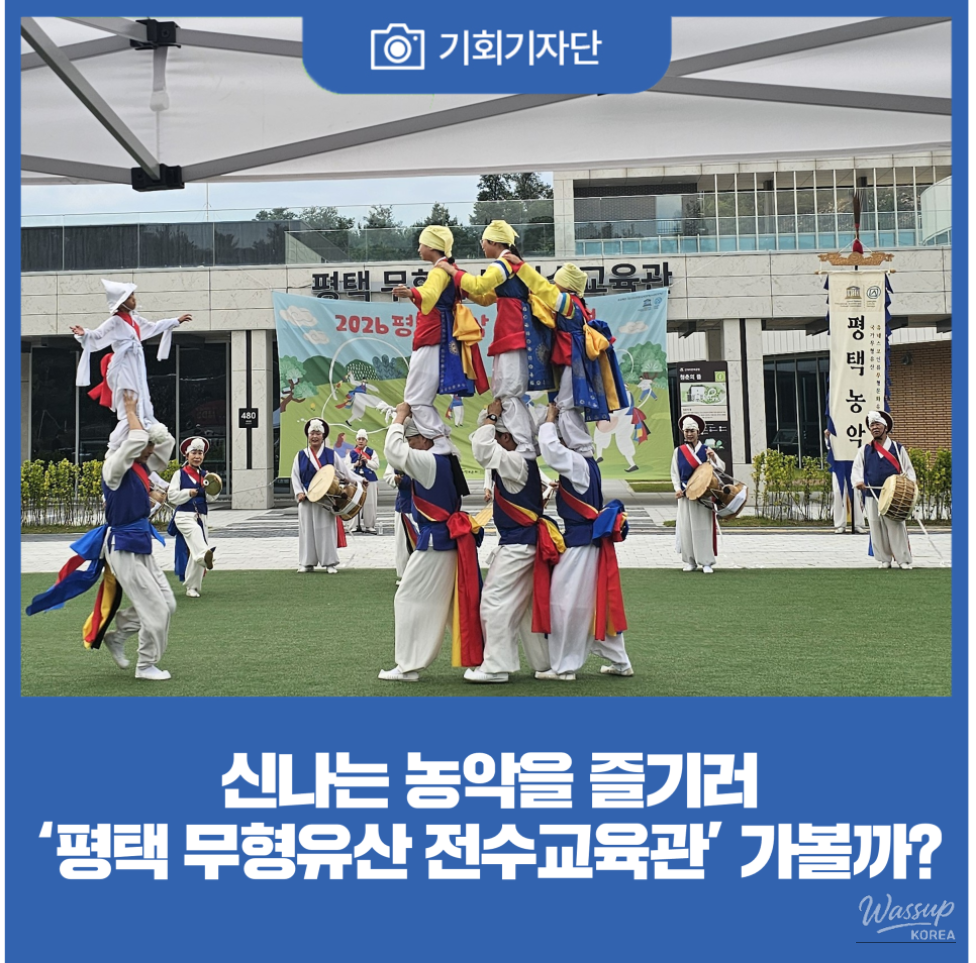
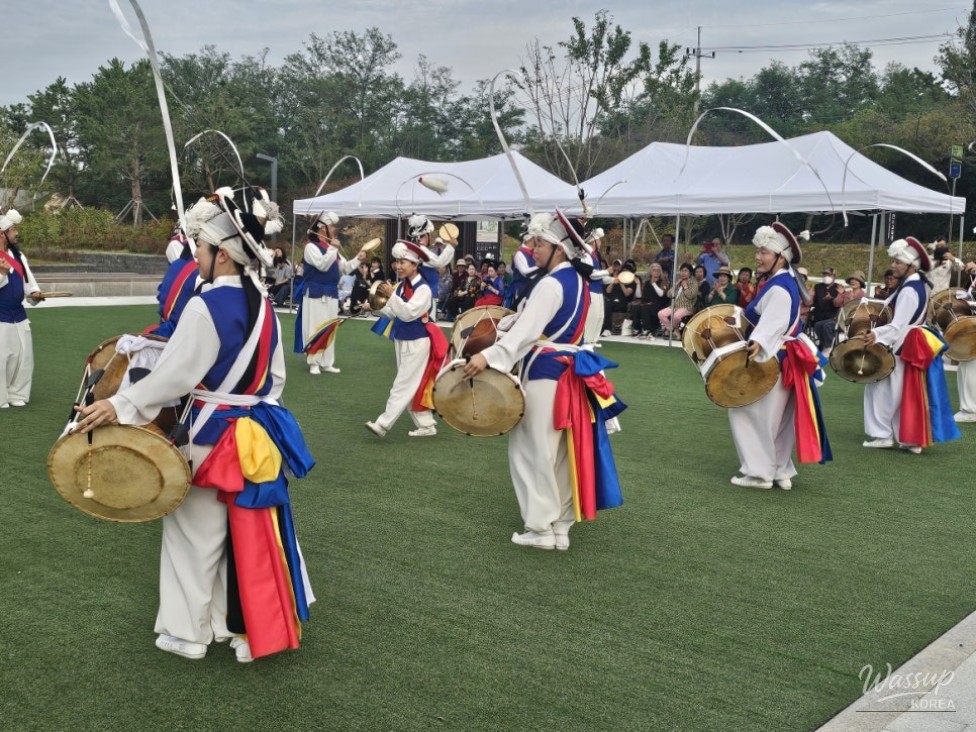
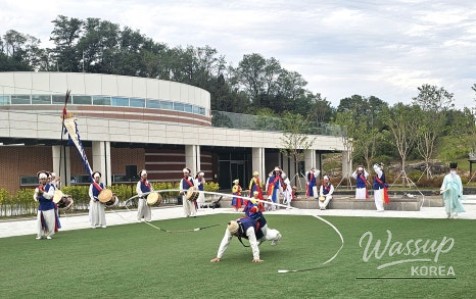
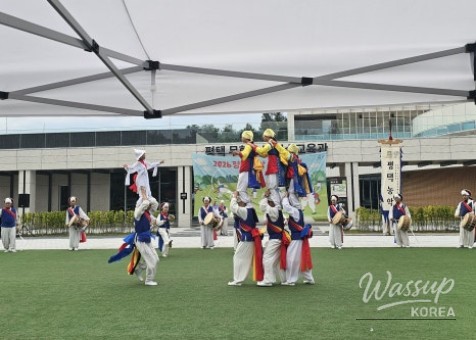
The performance finally began. As the powerful rhythms filled the air, the atmosphere shifted dramatically from the earlier lighthearted experiences. The lively beats quickened the performers' movements, drawing the audience's attention and increasing applause and cheers.
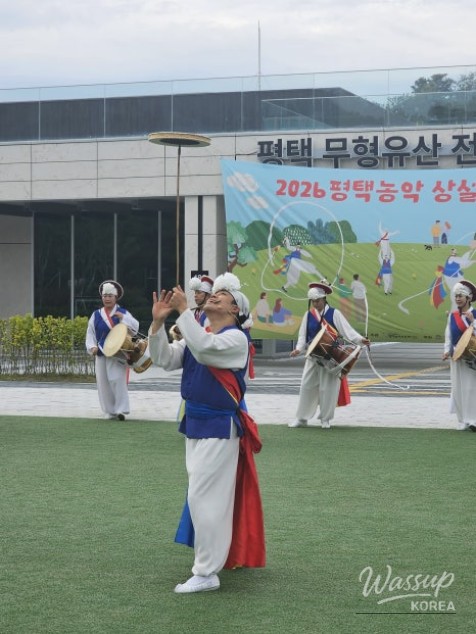
Pyeongtaek Nongak performance featuring 'Bune' and 'Mudong' plays ⓒ Choi Kyung-sook
Particularly, the sight of the long Sangmo spinning vigorously and the Bune soaring high, along with the Mudong and adults forming towers by climbing on each other's shoulders, was breathtaking to witness in person. The dynamic movements unfolding before my eyes had me holding my breath in awe.
The unique rhythms and dynamic movements of Nongak are undeniably different when experienced live compared to seeing them in photos or reading about them. As the play continued, the audience became increasingly engaged, adding cheers and creating a harmonious atmosphere between performers and spectators.
Traditional culture can sometimes feel distant and outdated, but the variety of exhibitions and experiential programs available allowed both the elderly and children to engage with it naturally. The experience of witnessing long-standing traditional techniques in the exhibition, participating in hands-on activities in the courtyard, and finally feeling the living tradition through the Nongak performance made for a truly meaningful time.
If you're planning an outdoor outing in this pleasant weather, why not consider visiting the Pyeongtaek Intangible Heritage Education Center? Exploring the exhibition, engaging in outdoor activities, and watching a performance could make for a fulfilling day on the weekend.


Source :https://blog.naver.com/gyeonggi_gov/224414108369
More from Place




No comments yet.