Exploring Haewoojae: A Unique Museum Experience
- Original source
- blog.naver.com


[Reporter: Yoo Hyun-seok]
Upon first hearing the name 'Doo Museum,' I thought it would just be a quick stop to entertain the kids. However, my perspective changed the moment I saw the mural at the entrance of the Haewoojae Cultural Center. The phrase 'It's poop!' was inscribed like an old tale, indicating that this was not just a place for bathroom humor, but a serious space addressing culture and history. To cut to the chase, despite being free to enter, we spent half a day there, and my child couldn't take their eyes off the exhibits.
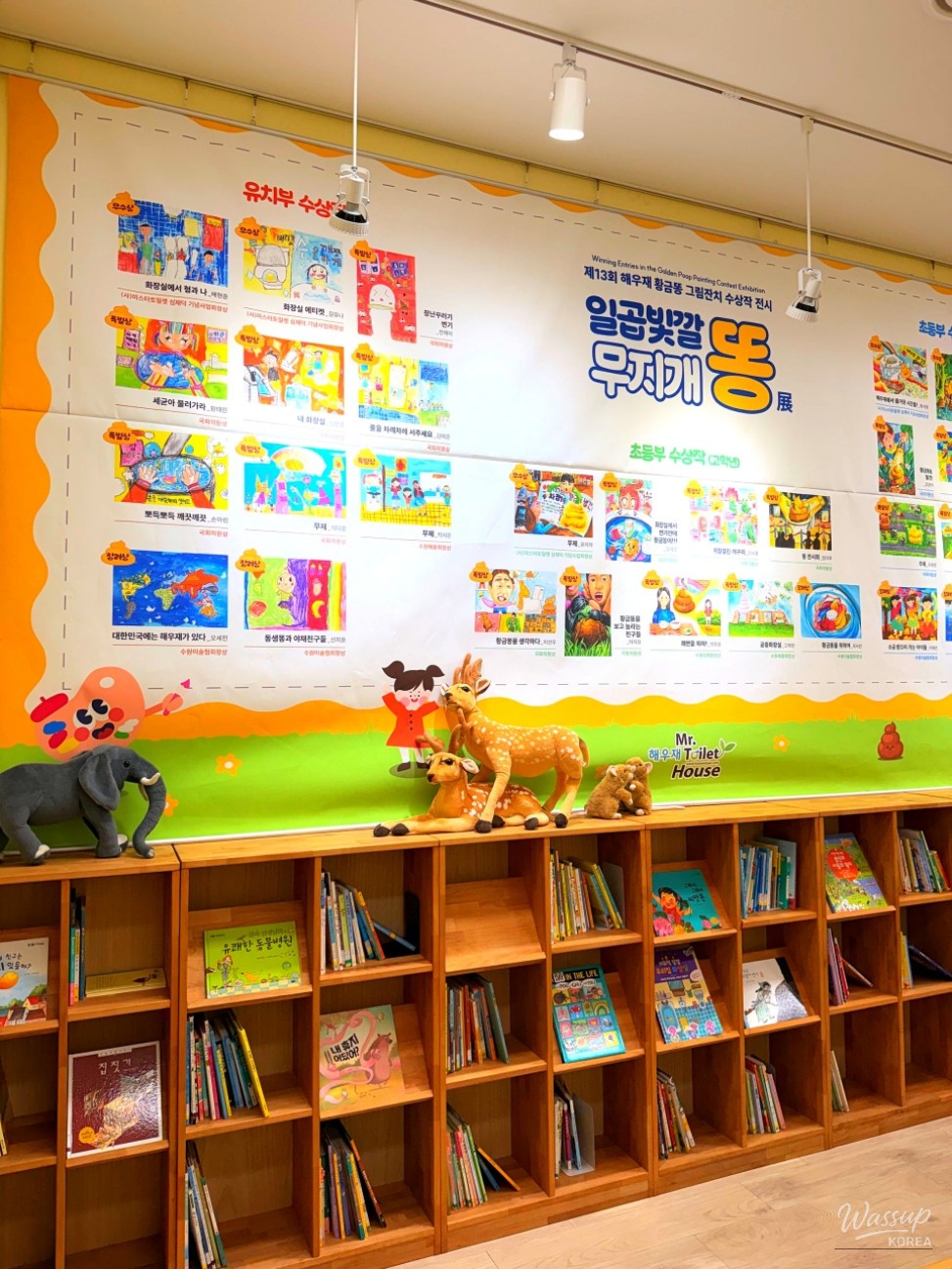
The Haewoojae Cultural Center is one of the larger free museums in Suwon. It consists of two buildings, Haewoojae and the Haewoojae Cultural Center, separated by a road. On the first floor of the Cultural Center, there is a 'Doo Library,' showcasing award-winning works from the 'Golden Poop Drawing Contest' created by children. The walls were filled with drawings about toilet etiquette and golden poop characters made by kids from preschool to elementary school, which captivated my child as they reminisced about their own drawings. There were also stuffed animals like deer and elephants on the bookshelves, making it a great spot for photos. The center provides stroller and wheelchair rentals, and has a baby lounge, making it family-friendly.
As we ascended to the second floor of the Cultural Center, we encountered an archway shaped like a smiling face. To enter the experience hall, we had to pass through a pink-lipped door, which excited my child, who exclaimed, 'Mom, this really looks like a mouth!' The center's meticulous signage about food restrictions and photography gave a well-organized impression.
Inside the experience hall, there was a section titled 'Good Poo, Bad Poo,' displaying four types of feces: healthy golden poop, soft brown poop, hard poop, and watery poop, each accompanied by miniature toilets. The interactive structure allowed us to lift the lids and discover models inside. Interestingly, I found myself reading more about the health information than my child, realizing that this was educational content about health indicators rather than just a funny theme.
Crossing over to the main exhibition hall of Haewoojae, the atmosphere changed dramatically. A scaled-down model of a traditional Joseon-era toilet was on display, explaining the differences between 'collection toilets' and 'ash toilets' with real models. Artifacts like chamber pots and plum blossom molds were also exhibited, adding a sense of authenticity that transcended a mere experience hall.
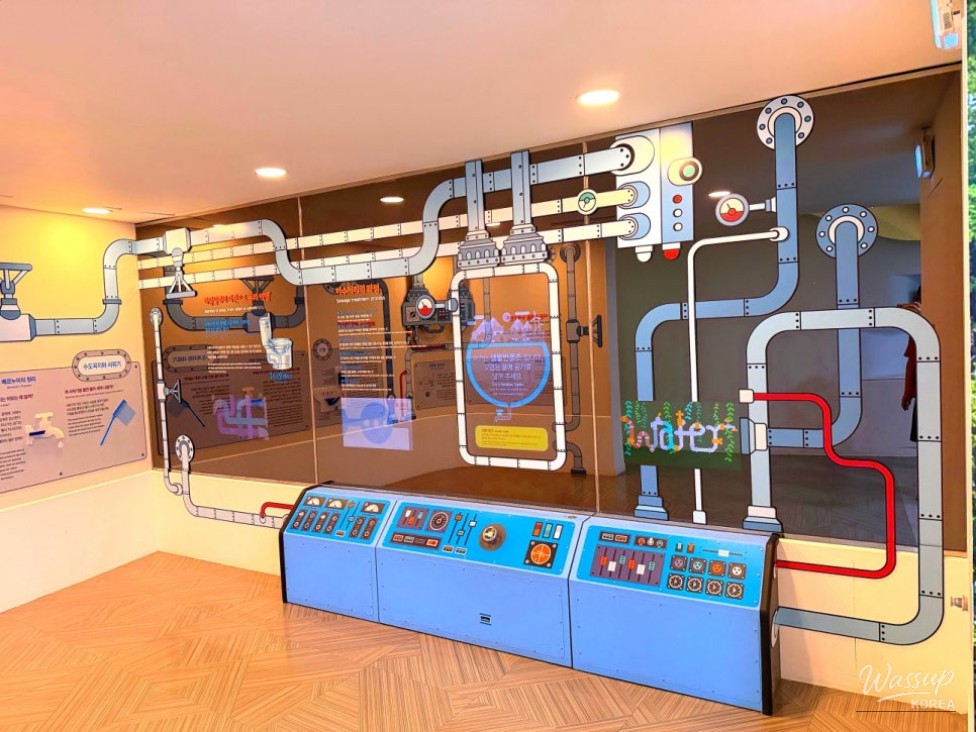
Next, we explored an exhibit demonstrating how wastewater is purified through pipe structures, titled 'From the Toilet to Nature: The Journey of Poop.' This section covered biological reaction tanks and the Bernoulli principle of faucets and showers, which seemed to engage adults more than children. The blue control panel added to the feeling of being in a small control room.
The corner my child enjoyed the most was undoubtedly the 'Golden Poop Laboratory.' This lab-themed space was filled with beakers and test tubes, and there was a stamping station. Step-by-step descriptions like 'Preserved in Rapid Freezing' and 'Secondary Impurity Removal' were paired with fun characters, allowing my child to immerse themselves as if they were a researcher. We came without high expectations, but this corner alone made the visit worthwhile.
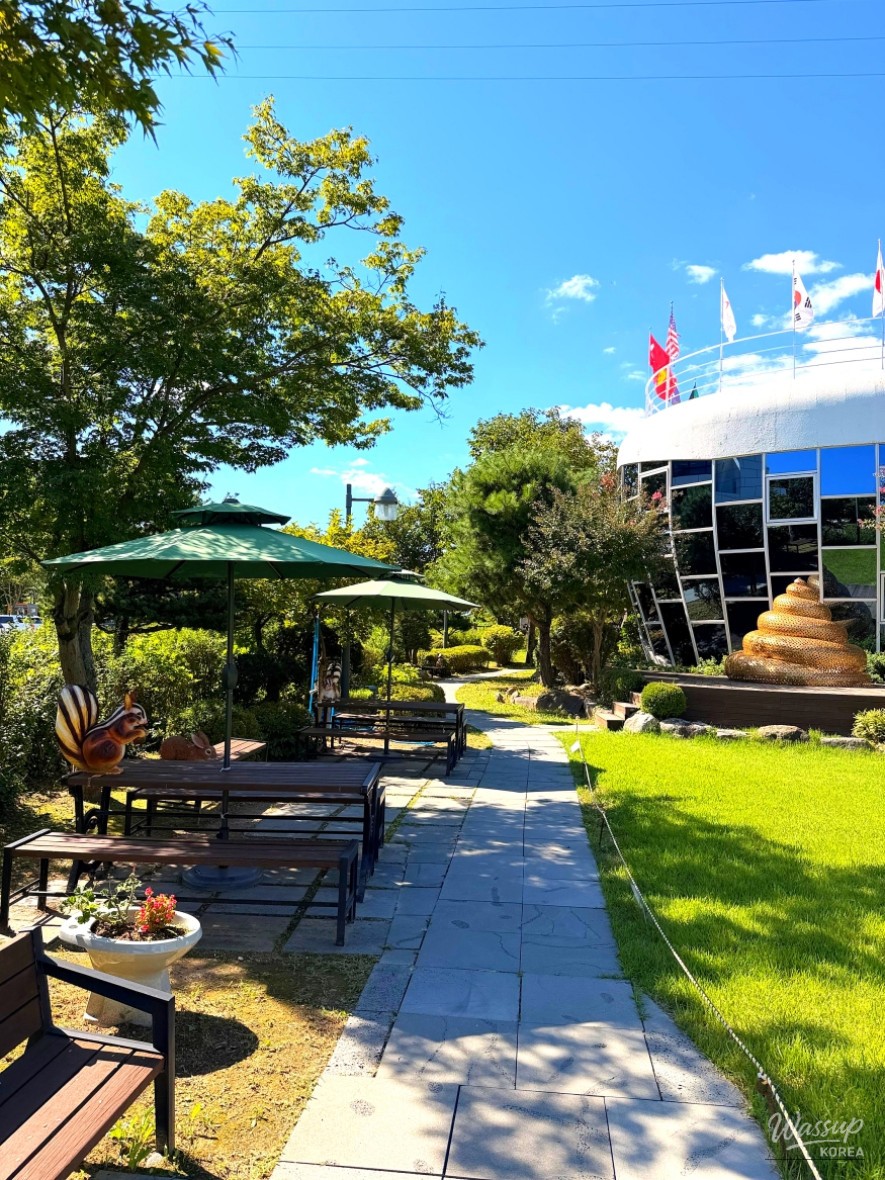
Looking down from above, the building resembles a toilet. Haewoojae is already famous for its unique toilet-shaped architecture. Outside, a spacious garden unfolds, featuring a large golden poop sculpture that serves as a popular photo spot. With benches, parasols, and sculptures of squirrels and rabbits, it was a great area for my child to play and for us to take a break.
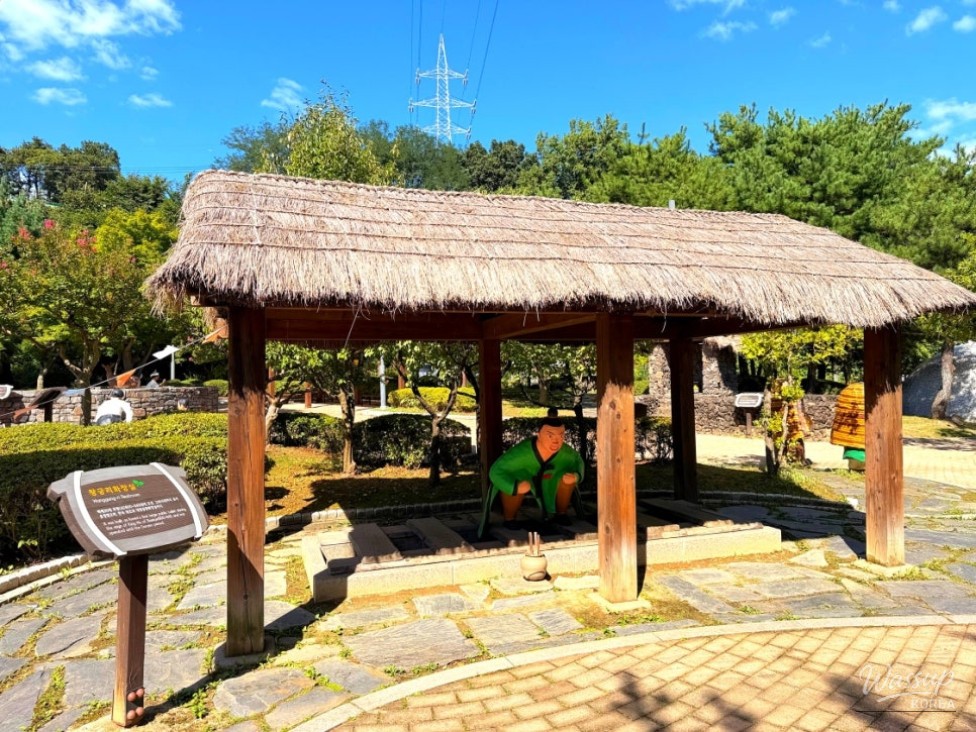
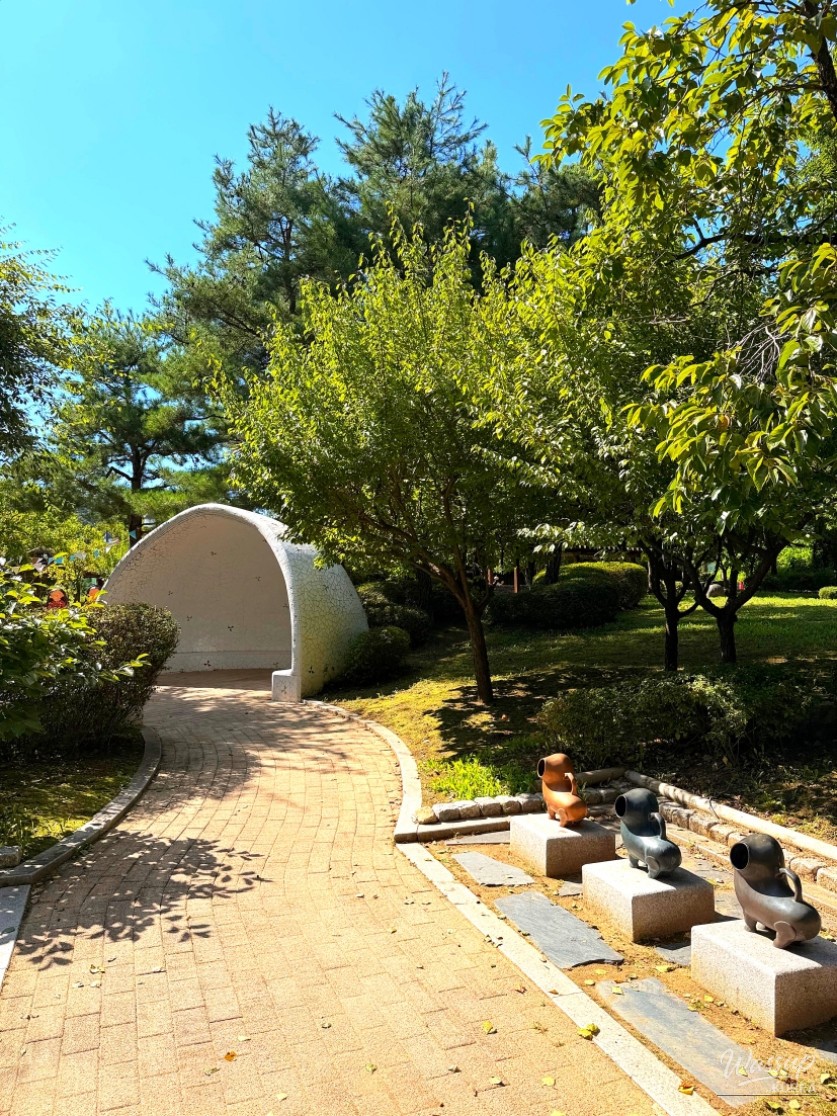
Beyond the garden lies the Toilet Culture Park, where a model of a Baekje-era royal palace toilet is recreated under a thatched-roof pavilion, complete with human figures, giving the impression of stepping into a time machine. Further along, a series of mobile toilet models are lined up alongside a white arch structure. At this point, my initial light-hearted perception of the 'Doo Museum' completely vanished, replaced by the realization that this was a historical space reflecting a person's belief that transformed the entire city's toilet culture.
Images from Haewoojae:







Source :https://blog.naver.com/gyeonggi_gov/224424583770
More from Place



No comments yet.