Exploring Eco-Friendly School Meals in Gyeonggi Province
- Original source
- blog.naver.com



[By Kim Jung-kyun]
Even now, children are diligently studying in numerous schools across Gyeonggi Province. But where do the ingredients for their school meals come from, and what processes do they undergo? Until now, we haven't closely examined the school meals provided to children. However, through the Gyeonggi Province Opportunity Reporter Group's fam tour, we had the chance to explore the Gyeonggi Agricultural and Fishery Promotion Agency, the Gyeonggi Eco-Friendly Agricultural Product Distribution Center, the Gyeonggi Organic Culture Experience Center, and the eco-friendly banana farm, Cheonghyu-won in Pyeongtaek. This experience allowed us to take a closer look at the journey of eco-friendly school meals in Gyeonggi Province.
Connecting Farmers and Children through Eco-Friendly School Meals
The first stop was at the Gyeonggi Agricultural and Fishery Promotion Agency, where we learned about the province's eco-friendly school meal policies. The significance of Gyeonggi's school meal support goes beyond simply providing excellent ingredients for children; it also broadens the market for farmers producing eco-friendly products, thereby increasing farm income and supporting local agriculture. We also learned that the policy not only reduces the use of pesticides to protect the environment but also helps lower carbon footprints.
We confirmed the eco-friendly school meal policies at the Gyeonggi Agricultural and Fishery Promotion Agency. Through the eco-friendly excellent agricultural product school meal support project, our children are enjoying healthier meals, with various programs, including support for Gyeonggi rice.
At first glance, the term 'eco-friendly school meals' might suggest that only certified organic products are used. However, the supported items include not only eco-friendly agricultural products but also G-mark and GAP certified products. Gyeonggi Province provides 30-50% support for agricultural product supply prices for schools wishing to participate, and 15-30% for processed foods. For rice, the difference between the school supply price and the government grain sales price is supported, making it a thoughtful policy that considers both children's healthy dining and stable markets for local producers.
From Inspection and Logistics to School Tables
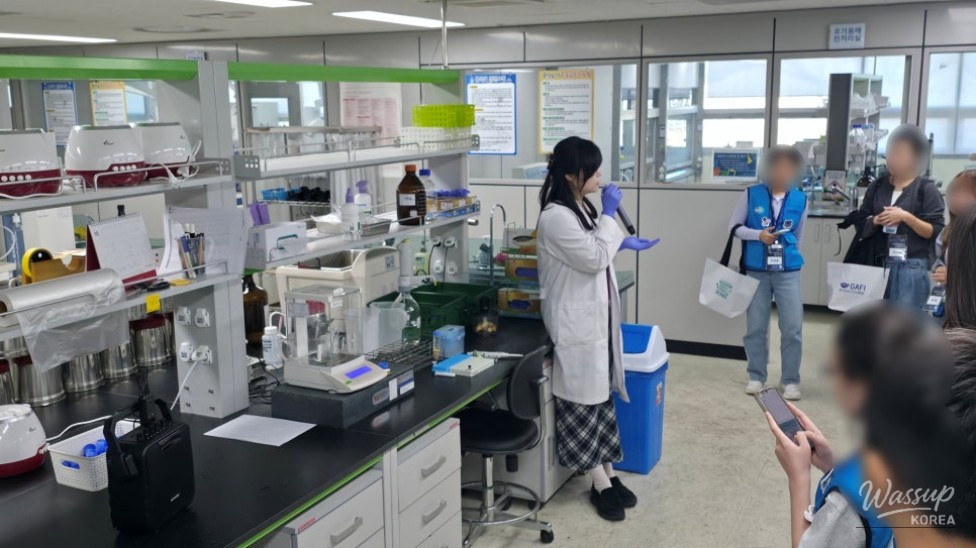
After hearing about the overall policies and current status, we toured the safety inspection center and logistics site at the Gyeonggi Eco-Friendly Agricultural Product Distribution Center. At the inspection center, we learned about the safety checks for meal ingredients and the processes involved. Rather than relying solely on the label 'eco-friendly,' the ingredients undergo thorough inspections three times to ensure their safety. Thanks to these safety management procedures, children in Gyeonggi can enjoy healthier meals.
To ensure safe ingredient supply, safety inspections are conducted three times.
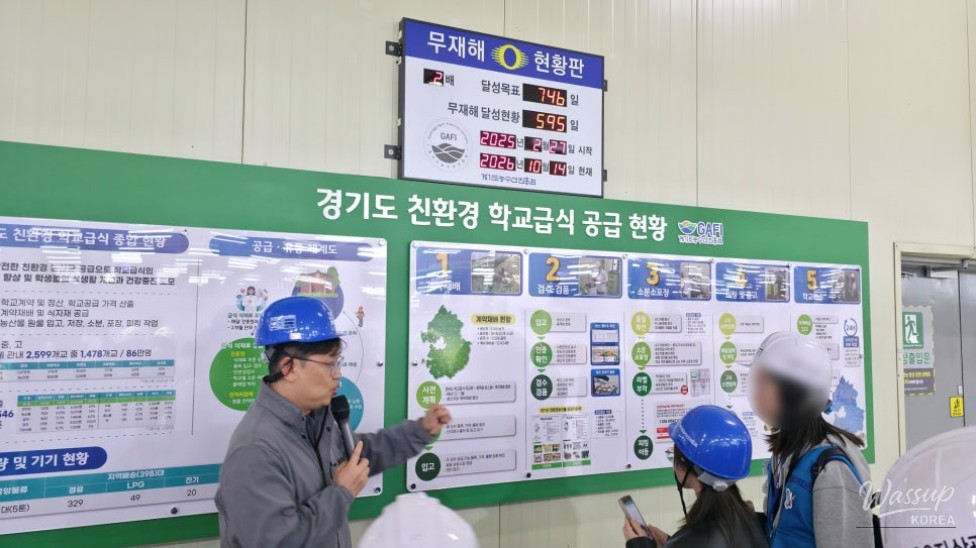
The vast logistics center collects agricultural products and supplies them to schools across Gyeonggi Province.
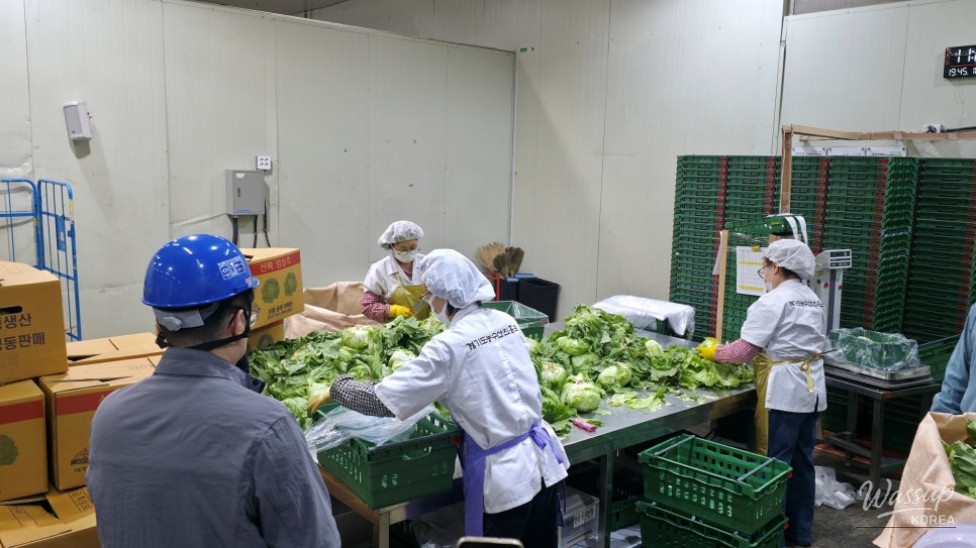
Orders are divided according to each school's requirements at the logistics center.
We also visited the logistics facility at the Gyeonggi Eco-Friendly Agricultural Product Distribution Center. The spacious logistics area appeared quiet, but it turns out that agricultural products mainly arrive in the late afternoon. Many staff members work from 3 PM until midnight. Eco-friendly agricultural products from various regions arrive here, undergo inspection, and are sorted according to school orders before being delivered. It’s a true early morning delivery system, and seeing the meticulous steps from contracts to inspections, sorting, and delivery has strengthened our trust in the process.
Meeting Producers at Market Gyeonggi and Pyeongtaek
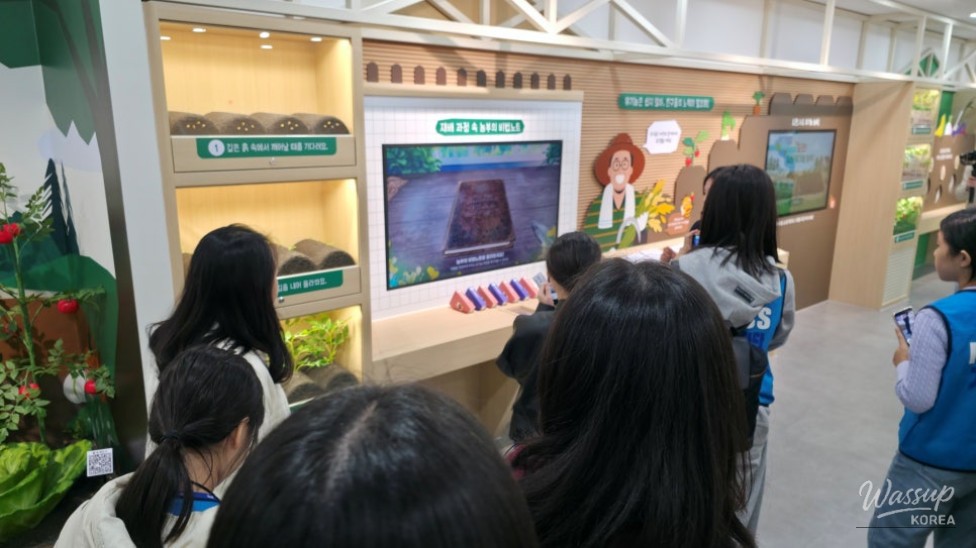
Next, we explored the Gyeonggi Organic Culture Experience Center next to the Gyeonggi Eco-Friendly Agricultural Product Distribution Center. The programs are well-structured to explore not only eco-friendly agricultural products but also the broader eco-friendly ecosystem. Opened in June this year, it is a place that many have yet to visit. If you have young children, I highly recommend visiting together. The center features a direct sales market where you can experience exhibitions and purchase local agricultural products with confidence.
At the banana farm in Pyeongtaek, we learned that growing eco-friendly crops is not an easy task.
Despite this, 600 banana trees were thriving in a large greenhouse.
I was surprised to see bananas growing in Pyeongtaek, something I never imagined.
In the afternoon, we visited an eco-friendly agricultural farm in Oseong-myeon, Pyeongtaek, where a vast greenhouse was home to bananas, pitaya, and dragon fruit. While I had heard that bananas could grow in South Korea due to climate change, I never imagined it would be in Pyeongtaek. The tall banana plants and clusters of green bananas seemed almost surreal. Watching the banana harvest was a special experience, but what left a lasting impression were the stories of the producers striving to cultivate eco-friendly agricultural products.
A Day Exploring Gyeonggi's Eco-Friendly School Meals
Products grown using eco-friendly methods may take longer to grow or be smaller in size compared to those grown with pesticides or chemical fertilizers, making it difficult for them to receive fair treatment in the market. However, the dedication of producers who continuously work to ensure that quality ingredients reach our tables and protect the environment where these ingredients are produced was truly impressive. Given the significant price difference between conventional and eco-friendly products, I hope that Gyeonggi's support for eco-friendly school meals continues in the future. I felt firsthand that eco-friendly school meals could serve as a catalyst for maintaining and growing eco-friendly agriculture in Gyeonggi Province.






Source :https://blog.naver.com/gyeonggi_gov/224448848040
More from Place


No comments yet.