Celebrating Intangible Heritage at the 28th Gyeonggi-do Intangible Heritage Festival
- Original source
- blog.naver.com



[Reporter Han Je-woo]
Every autumn, a festival celebrating the beauty and excitement of tradition takes place across Gyeonggi-do. This year, I attended the 28th Gyeonggi-do Intangible Heritage Festival at the Gapyeong Culture and Arts Center, where I discovered the precious intangible heritage of the region.
The festival ran from October 16 to 18 under the theme "The Beauty and Excitement of Gyeonggi, Together as One." Attendees could enjoy performances, exhibitions, demonstrations, and hands-on programs featuring the bearers and transmitters of Gyeonggi-do's intangible heritage.
Intangible heritage refers to cultural assets such as crafts, traditional techniques, music, dance, games, and rituals that possess historical and artistic value, even if they are not physically visible. This form of heritage is meaningful as it is passed down through the hands, movements, sounds, and memories of people.
The festival showcased various performances from regions like Icheon Turtle Play, Gyeonggi Geommu, Gyeonggi Songseoryulchang, Yangju Nongak, and Toegye-won Sandai Play, highlighting the diverse forms of traditional arts developed in different areas.
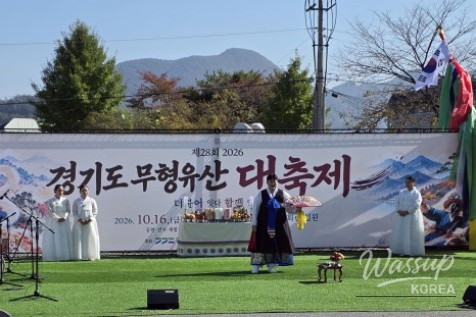
On the morning of the 17th, I visited the festival and was greeted by the sounds of the Siheung Gunja Bongseonghwangje, a representative ritual in southern Gyeonggi honoring King Kim Bu and the Hong and Ahn families. This ritual embodies local traditions and community culture, praying for peace and safety through its ceremonies.
The lively performance of Gwangmyeong Nongak followed, bringing the outdoor stage to life. This traditional music, originating from the Gwangmyeong region, has evolved into a vibrant performance centered around the Pankut. The infectious rhythms and dynamic movements of the performers transformed the outdoor space into a lively gathering.
In addition to performances, the festival featured an exhibition on traditional techniques, allowing visitors to appreciate the craftsmanship that connects the past, present, and future. The theme of the exhibition was "Questioning the Reason for Old Beauty," conveying the message that beauty lies not just in age but in the skills, wisdom, and hearts of those who preserve these traditions.
A unique aspect of this festival was the introduction of Polish traditional culture through the 2026 Gyeonggi-Poland Cultural Exchange Exhibition, marking Poland's first participation in this festival. It allowed attendees to compare and experience traditional crafts from different regions.
Hands-on experience stations offered visitors the chance to engage with intangible heritage through various programs featuring local specialties from Gapyeong, enriching their understanding of traditional culture.
On October 17, a significant event took place: the inaugural "Gyeonggi-do Intangible Heritage Transmission and Memory Day" ceremony, coinciding with UNESCO's International Day of Intangible Cultural Heritage. This day was designated to honor and promote the transmission of intangible heritage, featuring speeches, awards for contributors, and a dedication performance.
The closing performance, "Binari-rang," was particularly impressive, showcasing a collaboration of different traditional art forms. It symbolized respect and gratitude towards past transmitters while hoping for the continuity of traditions into the future.
The 28th Gyeonggi-do Intangible Heritage Festival was a celebration of traditional performance, craftsmanship, and cultural exchange. It highlighted that the value of intangible heritage lies not only in preservation but in revitalizing the accumulated wisdom and artistic spirit for future generations.




Source :https://blog.naver.com/gyeonggi_gov/224448173521
More from Place


No comments yet.