Exploring Cheongju: A Historical Walk through Cultural Heritage
- Original source
- blog.naver.com



If you've enjoyed a meal on Seongan-gil and are looking for a café to visit, consider taking a stroll towards Cheongju's Cheoldang-gan and Central Park.
In the heart of a familiar street, you'll find over a thousand years of Buddhist heritage, ancient ginkgo trees, and stories from different religions intertwined.
The Cheongju course of the Chungbuk Eoulri-gil also includes these two spots, making it a historical walking path you can explore without traveling far from Seongan-gil.
1. What is the Cheongju Eoulri-gil?
The Chungbuk Eoulri-gil connects local religious and cultural heritage sites such as temples, churches, and Confucian academies, aiming to foster understanding of different cultures and beliefs.
The Chungbuk Eoulri-gil consists of four paths: the Path of Empathy, the Path of Grace, the Path of Rest, and the Path of Words.
The course centered around Cheongju's old downtown is known as the 'Path of Empathy.' It's not just for those who follow a specific religion; anyone curious about Cheongju's history and culture will find it interesting.
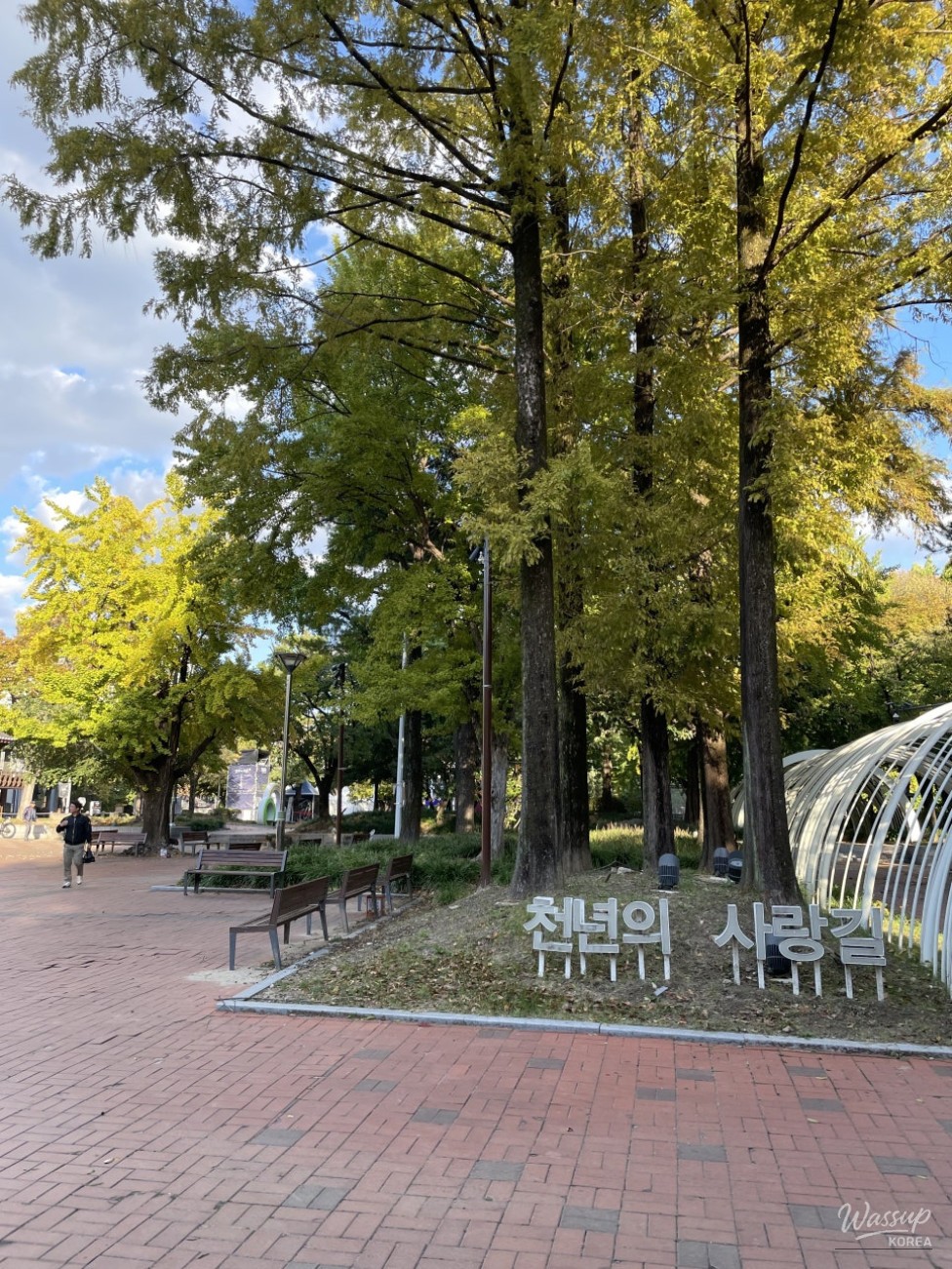
Eoulri-gil: Tapdong Yanggwan → Seowon-dong Cathedral → Cheongju First Church → Central Park → Yongdu Temple Cheoldang-gan → Cheongju Hyanggyo → Yonghwasa
You don't have to cover the entire route at once. If you're short on time, you can start by exploring the sections around Cheoldang-gan and Central Park, which are close to Seongan-gil.
Today, I'll introduce a walking route that connects these two locations with your visit to Seongan-gil.
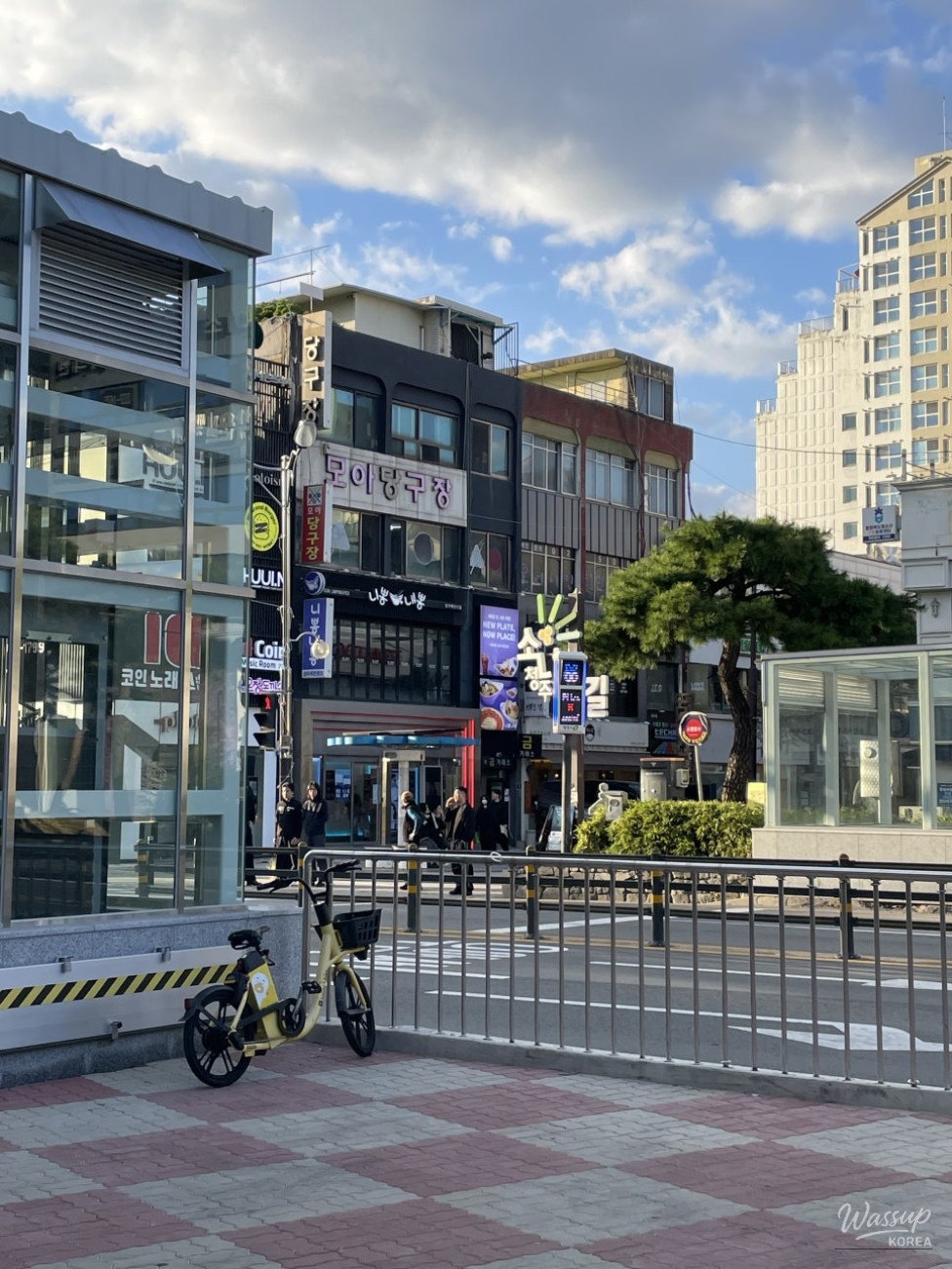
2. Why is Cheoldang-gan located in the middle of Seongan-gil?
Cheoldang-gan might come to mind as a meeting place for many people. It used to attract larger crowds during the days of the nearby Young Plaza.
Its official name is 'Cheongju Yongdu Temple Cheoldang-gan,' and it is a national treasure built in 962 during the Goryeo Dynasty.
The term 'Yongdu Temple' refers to the site where the temple once stood. Although it is now a bustling street filled with shops and people, the remnants of the temple remain in the form of Cheoldang-gan.
So, what was the purpose of the Cheoldang-gan? It served as a tall pole where a flag called 'dang' was hung during rituals or ceremonies at the temple. The stone pillars on either side support the Cheoldang-gan.
When taking photos, pay attention not only to its towering appearance but also to how the pole is constructed. It may look like a single long iron pole, but it is actually made up of cylindrical iron segments stacked together. Originally, there were 30 segments, but only 20 remain today.
The third segment from the bottom has inscriptions detailing its construction and history, making it a heritage site that tells us when and why it was erected.
It's fascinating to think that traces of a thousand years ago coexist in a square where people gather today. Including photos of the joint sections of the iron segments and the stone pillars alongside a picture of the whole Cheoldang-gan helps to illustrate its structure better.
3. Central Park: A Multifaceted Space of Faith, Resistance, and Education
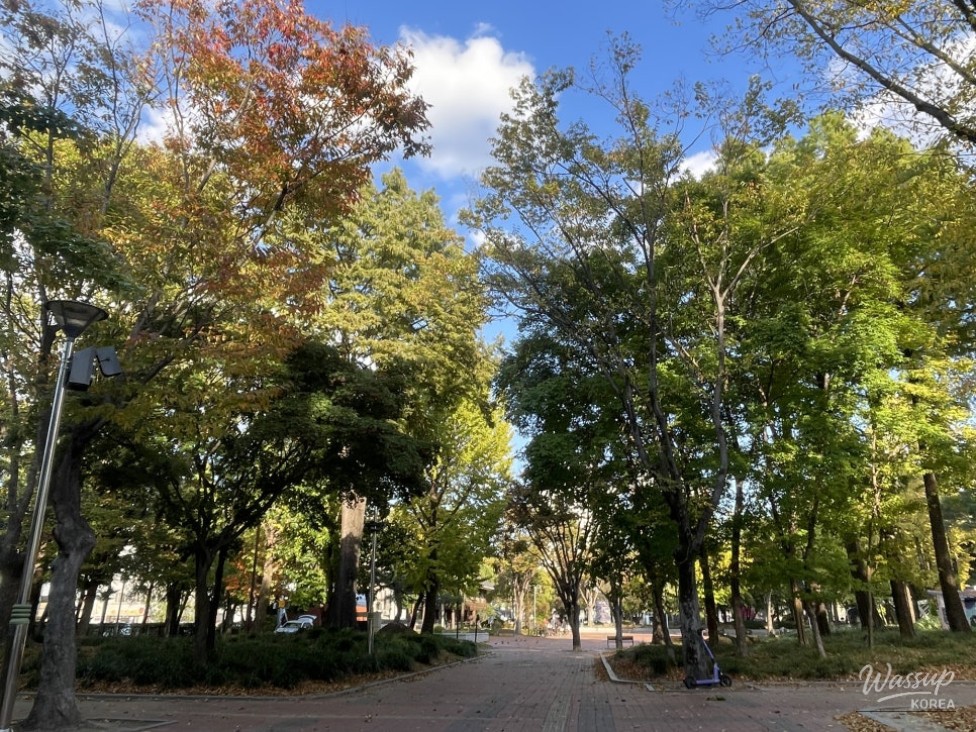
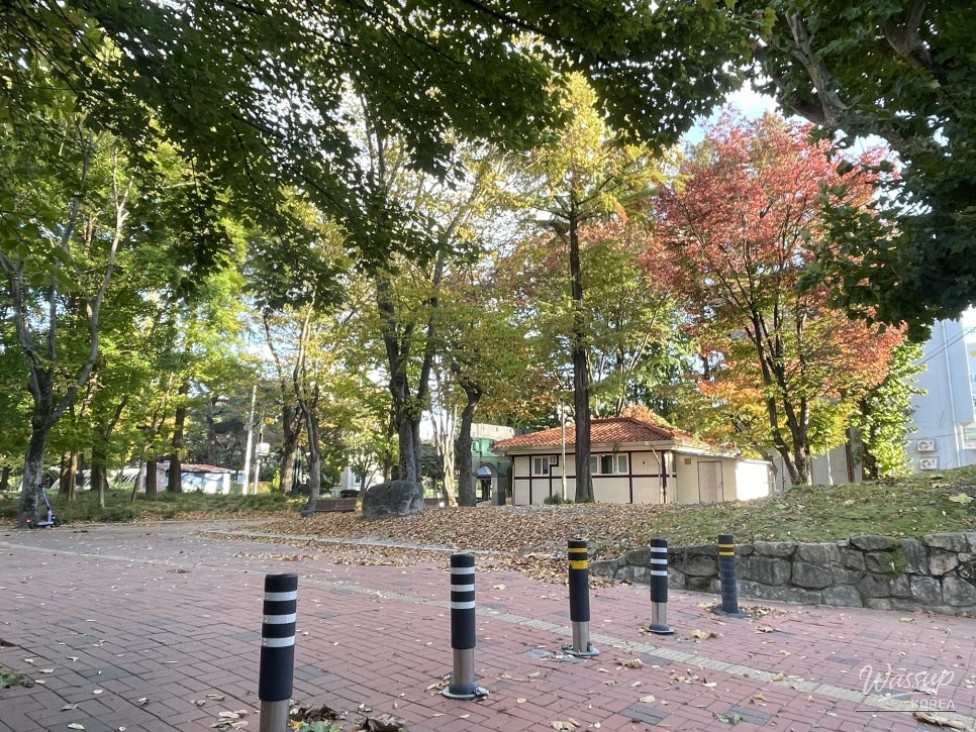
Walking from Cheoldang-gan along the alley to Central Park, you'll encounter a different scenery from the bustling shopping street.
Especially, many people visit Central Park for the famous Jjoljjol Hotteok, a local delicacy!
It's less than a five-minute walk from Cheoldang-gan. This city park allows you to relax under the trees while being a place where various historical legacies converge.
While Cheoldang-gan represents Buddhist heritage, you might wonder why Central Park is included in the Eoulri-gil.
This is because it holds the history of Catholic martyrs and stories of resistance fighters and monks. I learned about this through the Eoulri-gil for the first time.
There is a memorial honoring martyrs related to the Cheongju Garrison, as well as a stone commemorating Jo Heon and Yeonggyeong, who participated in the recapture of Cheongju Castle during the Imjin War.
Jo Heon led the resistance fighters, while Yeonggyeong, a monk, led the monks in their efforts. Walking through Central Park allows you to reflect on how people from different backgrounds contributed to the region's history.
Even if you don't feel obligated to learn extensively, simply knowing that Central Park holds such significance as a Cheongju resident makes it feel quite special.
The meaning of 'coming together' that Eoulri-gil conveys becomes more tangible in places like this. It's not just about visiting different religious buildings in succession; it's a path that allows you to explore the lives of people who have been connected within the same city.
4. The Path of Empathy: A Diverse Integration
In fact, walking a bit further to visit Cheongju Hyanggyo or Yonghwasa isn’t too much of a burden.
Especially during the famous Musimcheon Cherry Blossom Festival, Yonghwasa is often included in the itinerary. I believe that even for those who are not religious, the atmosphere of the temple during autumn feels different.
Whether Confucianism, Buddhism, Protestantism, or Catholicism, if we view them through the lens of a culture that harmoniously integrates these different religions, it can lead to a rich walking experience.
If you're curious to learn more, you can utilize the audiobook available on the official Eoulri-gil website. It provides content explaining the heritage related to Cheoldang-gan and Mangsunru, which is great for when the information on the signs feels lacking.
I also explored the area after watching a video on YouTube, and I found several places that felt familiar.
If you're driving, you can park in one of the parking lots around Seongan-gil and think of walking between the two locations. Each parking lot has different fees and hours, so be sure to check the entrance information.
While shopping and enjoying delicious food on Seongan-gil is great, this time, take a moment to slow down and observe the places you've passed by. Understanding why Cheoldang-gan stands where it does and what stories Central Park holds will give you a fresh perspective on familiar Cheongju.










Source :https://blog.naver.com/cbkb21/224458892123
More from Travel




No comments yet.