The Legacy of Park Sang-jin: A Beacon of Independence
- Original source
- blog.naver.com


As the saying goes, a nation that forgets its history has no future. The freedom and peace we enjoy today are built upon the blood and sweat of our patriots who fought valiantly against Japanese colonial rule.
During the Japanese occupation, many independence activists emerged. Among them was Park Sang-jin, a significant figure who organized the secret armed group, the Korean Liberation Association, during one of the darkest and harshest periods, laying the groundwork for armed resistance.
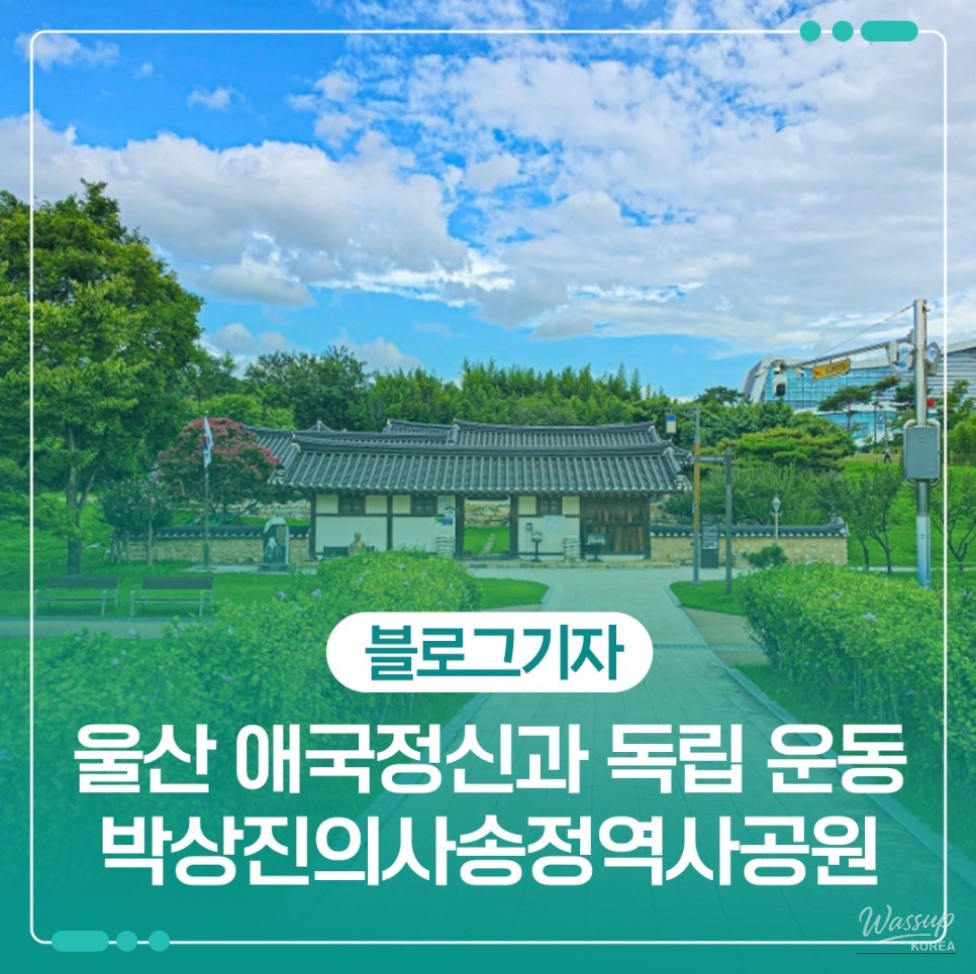
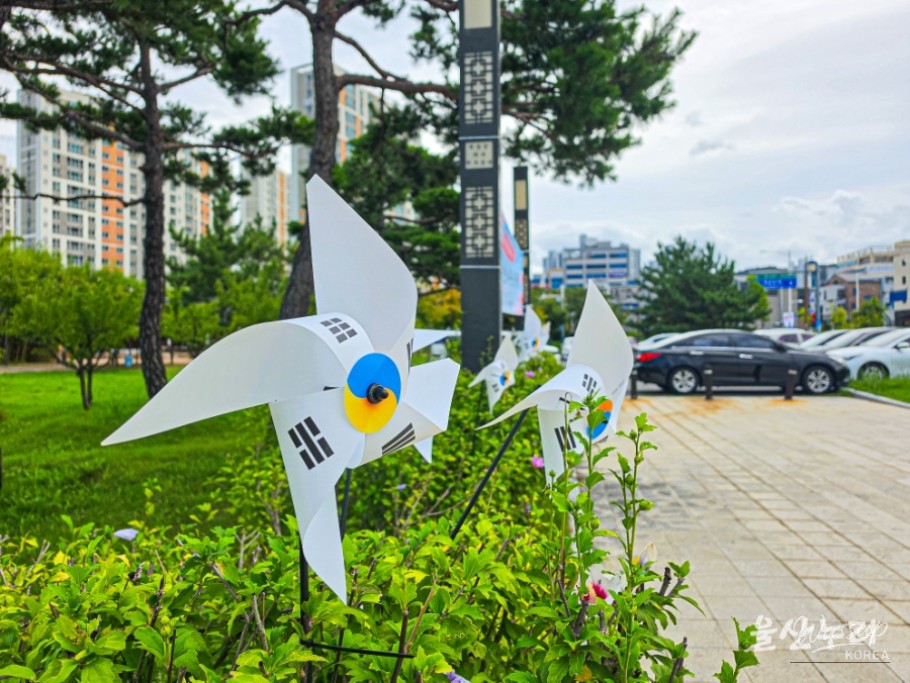
Park Sang-jin, a great independence activist from Ulsan, is commemorated at the Park Sang-jin Songjeong Historical Park, which was established to preserve his noble patriotism and the historical value of the independence movement for future generations. Nestled in the heart of a new city surrounded by large apartment complexes and modern urban landscapes, the park features traditional hanok architecture and lush greenery.
The Park Sang-jin Songjeong Historical Park serves as a living educational space for history.
This park was developed amidst the extensive land development in the Songjeong area to establish a local identity and preserve valuable historical assets, centered around the birthplace of Park Sang-jin. It has been designated as a cultural heritage site in Ulsan.
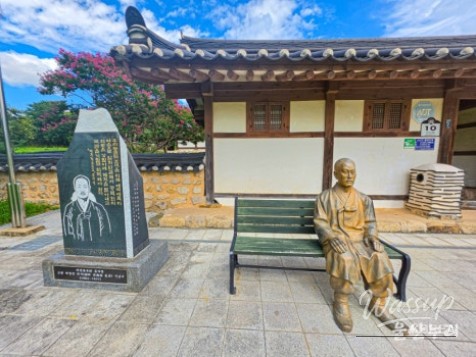
This location is not only where Dr. Park was born and raised but also a historical site used for secret meetings and activities during the independence movement.
Although it faced threats of destruction during urban development, it was restored through the efforts of citizens and local government, preserving its current form.
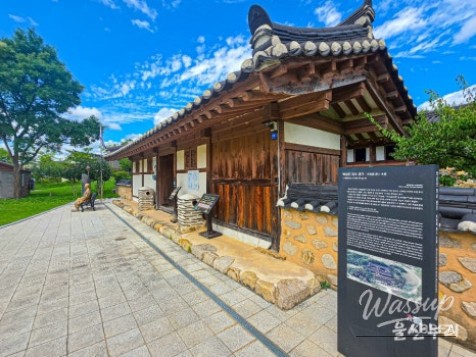
The birthplace of Dr. Park retains the charm of a traditional southern Korean yangban house from the late Joseon period. The main house where his family lived, the shrine for their ancestors, and the sarangchae (guesthouse) where Dr. Park and his comrades discussed national affairs and strategized for the Korean Liberation Association are all well-arranged.
Standing briefly in the space of Dr. Park's birthplace, one can feel the vast wealth and peaceful life he enjoyed as a yangban. He selflessly offered his family's wealth for the independence movement.
Ultimately, the entire family experienced immense trials, embodying the concept of 'noblesse oblige' through Dr. Park's remarkable sacrifice.
The Park Sang-jin Memorial Exhibition Hall systematically records and preserves the life of Dr. Park and the history of the Korean Liberation Association's independence movement. It showcases records from his childhood, where he pursued learning, to his decision to abandon a comfortable life to become an independence activist.
The exhibition includes the founding process of the Korean Liberation Association, handwritten letters, notebooks, seals, and items used by independence activists, enhancing the sense of presence.
Animated videos reconstructing Dr. Park's life and events, such as the Gyeongju tax wagon incident, further enhance immersion.
In this exhibition hall, we will take time to summarize the stories and events related to Dr. Park Sang-jin.
Dr. Park studied Confucianism deeply from a young age, entering the school of Huh Wi, a prominent figure and independence leader of the time, where he learned about patriotism.
His encounter with Huh Wi became a decisive moment that led Dr. Park to dedicate his entire life to the independence movement.
Recognizing the need for modern knowledge, Dr. Park moved to Seoul to study law and economics at Yangjeong School. He excelled academically and passed the judge's exam, becoming a judge at the Pyongyang District Court.
However, during this time, Korea lost its sovereignty to Japan in the Gyeongsul Treaty. Even his mentor, Huh Wi, was captured and died in prison.
Dr. Park refused to serve as a judge under Japanese rule, believing he could not judge his fellow countrymen in a country that had fallen.
After resigning from his position, Dr. Park traveled between Manchuria and Korea to lay the groundwork for the independence movement.
At Daegu Dalseong Park, he united the Joseon Restoration Association and the Punggi Liberation Association to establish the Korean Liberation Association, where he assumed the role of commander.
This association became the only secret armed independence movement organization with a nationwide network under the brutal Japanese rule.
Dr. Park's energetic activities were met with relentless pursuit by Japanese police, leading to the arrest of key members and the disintegration of the organization. He was captured while visiting his hometown after hearing news of his mother's illness.
Even in prison, he maintained his integrity against brutal torture and coercion, but he was executed at the young age of 38 in Daegu Prison.
At the execution site, he left a poignant poem expressing that while it is natural for a man to be born or die, it is regrettable to depart without restoring the country.
Dr. Park's armed resistance and organizational capabilities became a bridge to the later armed struggles of the Korean Provisional Government and the Korean Independence Army.
Within the Park Sang-jin Songjeong Historical Park, there are also traditional educational buildings that were at risk of demolition due to urban development.
However, recognizing their historical value as a space for Confucian learning, they were safely relocated and restored within the park.
The buildings showcase the elegance and neatness of traditional hanok architecture. One of these buildings, Yangjeongjae, was a place where local scholars gathered to read scriptures and discuss learning.
These educational buildings are the ideological foundation where Dr. Park nurtured his patriotism and scholarly spirit as a young scholar.
The presence of these buildings in the park makes it feel like a journey through time from the Joseon era to modern times.
The Park Sang-jin Songjeong Historical Park is a living historical site where the passionate life and noble spirit of Dr. Park, who sacrificed everything for the armed independence movement during the Japanese occupation, still resonate.
Walking through the yard of Dr. Park's birthplace, nestled quietly among the modern apartment complexes, reminds us that the freedoms we enjoy today are not to be taken for granted.
This place also poses a heartfelt question to us living today: 'What are you living for?'
It is hoped that more citizens and students will visit this site to deeply engrain Dr. Park's resolute spirit and noble patriotism in their hearts.
Source :https://blog.naver.com/ulsan_nuri/224403513990
More from Place

No comments yet.