Exploring the Hamann Watermelon Exhibition Hall
- Original source
- blog.naver.com


By Lee Sang-hyun, 15th SNS Reporter
Hamann Watermelon Exhibition Hall
1599 Wolchon-ri, Gunbuk-myeon, Hamann-gun, Gyeongnam
When we think of summer, one of the first fruits that comes to mind is watermelon. Hamann is quite famous for its watermelons!
I visited the Hamann Watermelon Exhibition Hall, where you can see everything from the long history of cultivation to the process of growing watermelons and various exhibits all in one place.
The Hamann Watermelon Exhibition Hall is located in Gunbuk-myeon. A brightly blooming hibiscus tree greets you at the entrance.
Although it is not very large, the exhibition is free to enter and filled with informative content, making it a perfect spot for a casual visit.
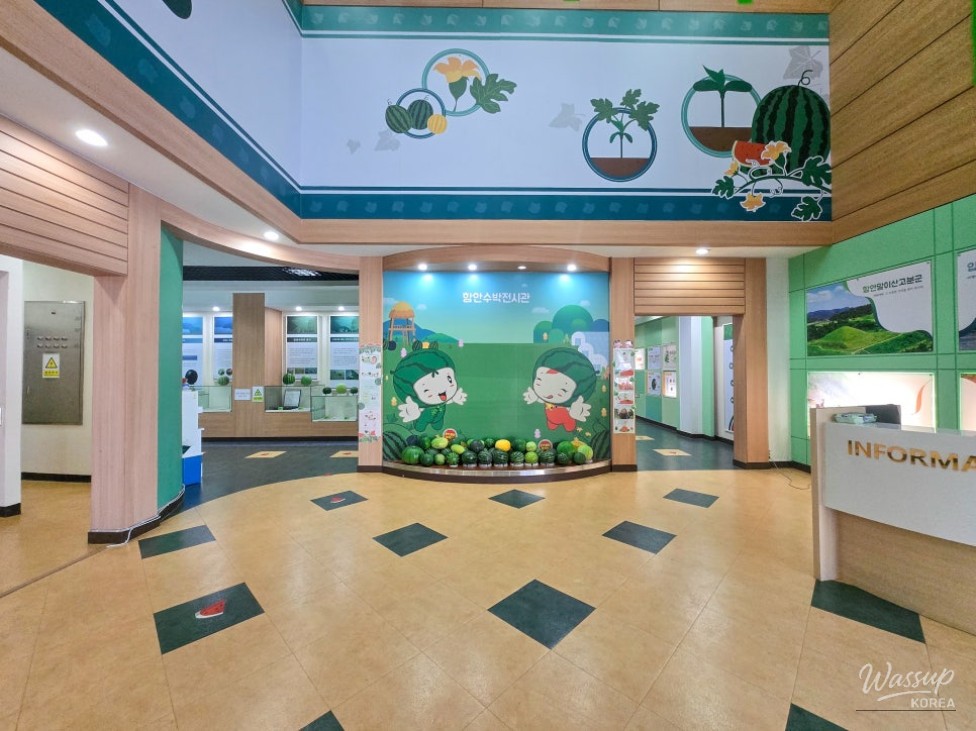
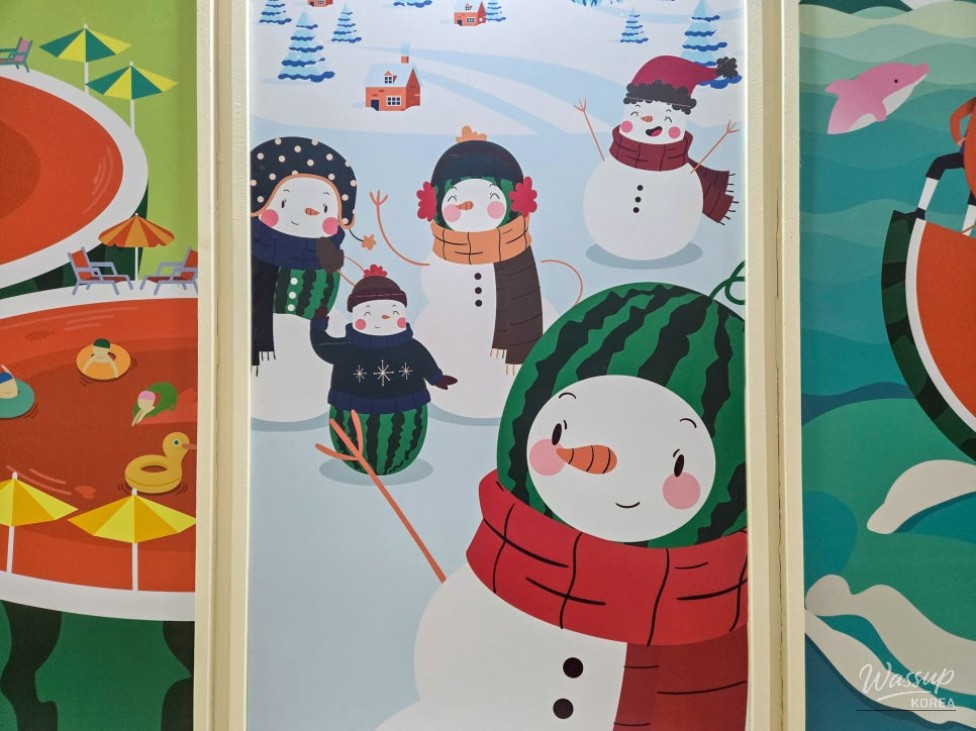
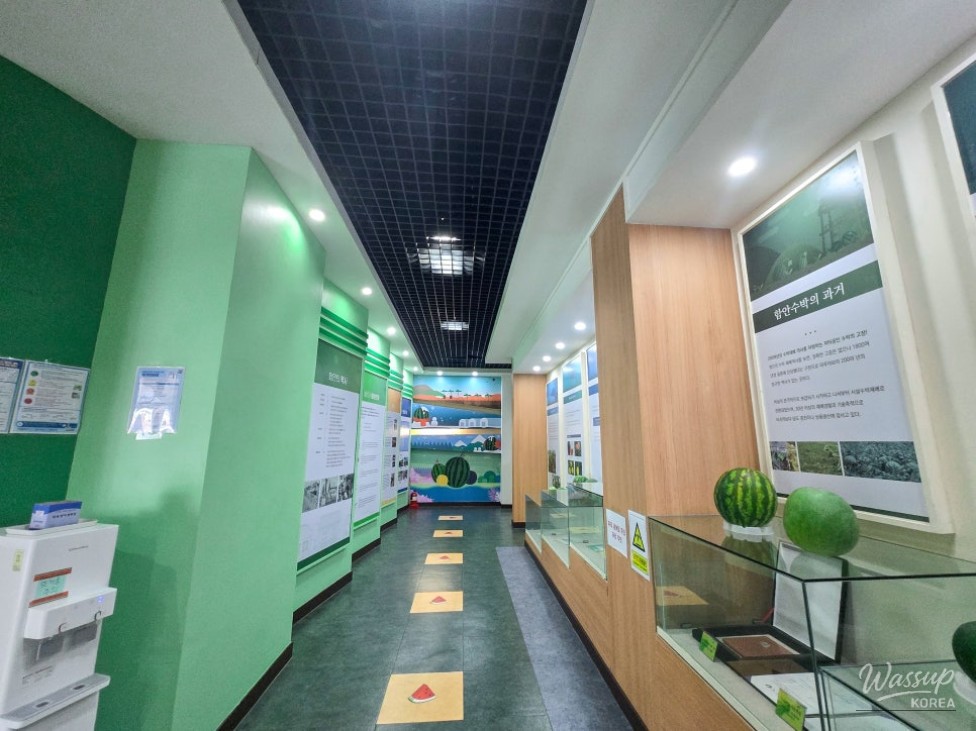
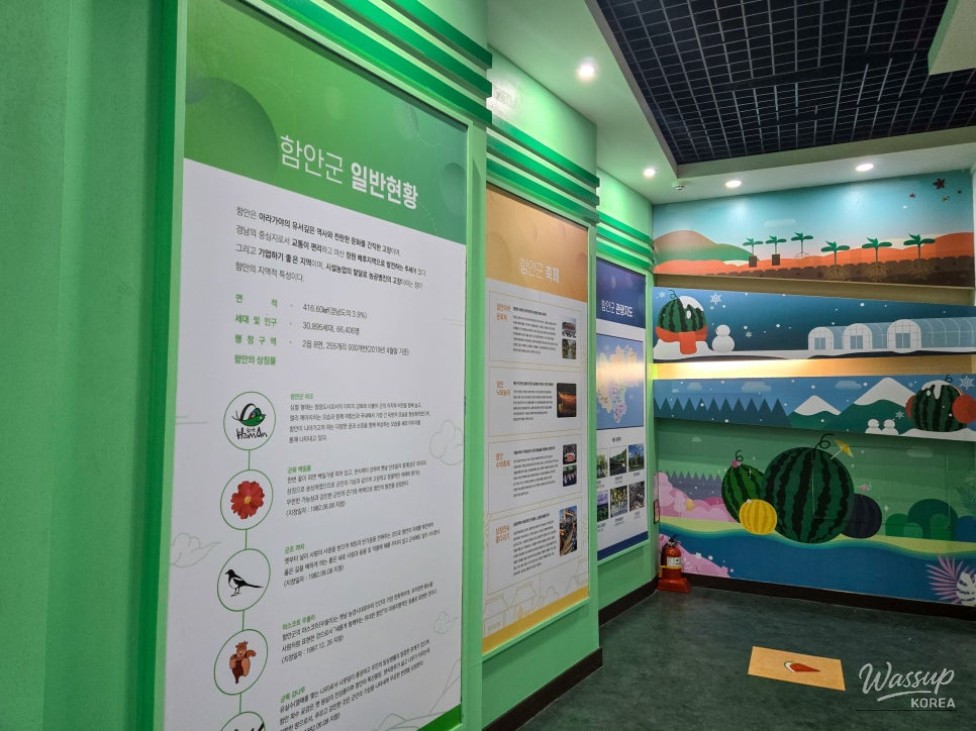
Upon entering, the charming green decor featuring watermelons catches your eye. The walls and decorations are adorned with watermelon characters, creating a bright and cute atmosphere, especially enjoyable for families with children.
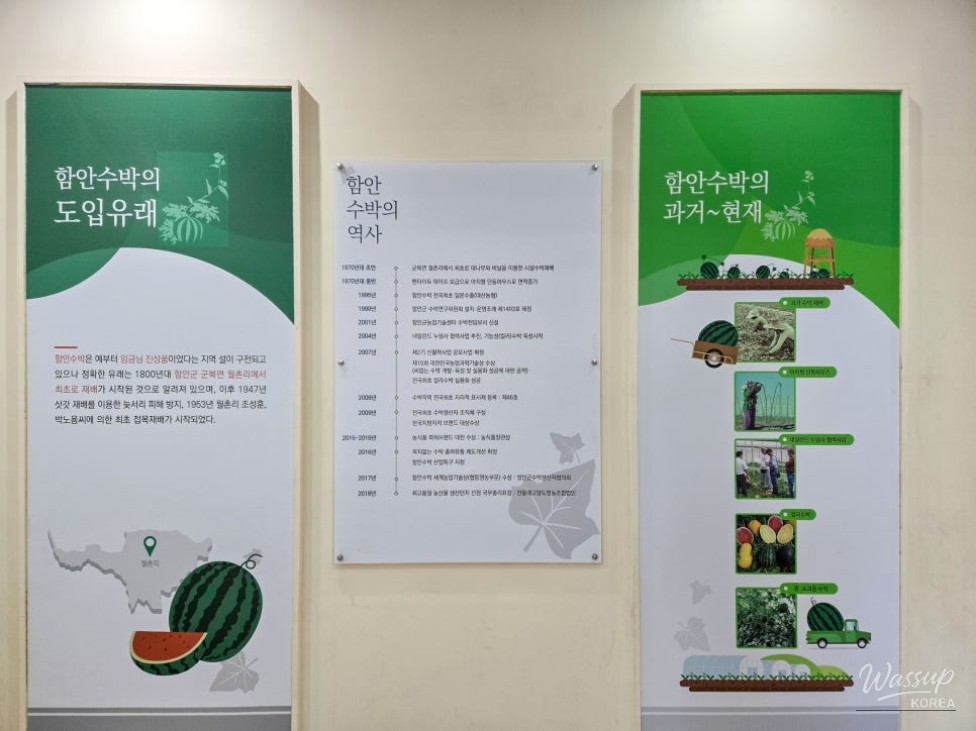
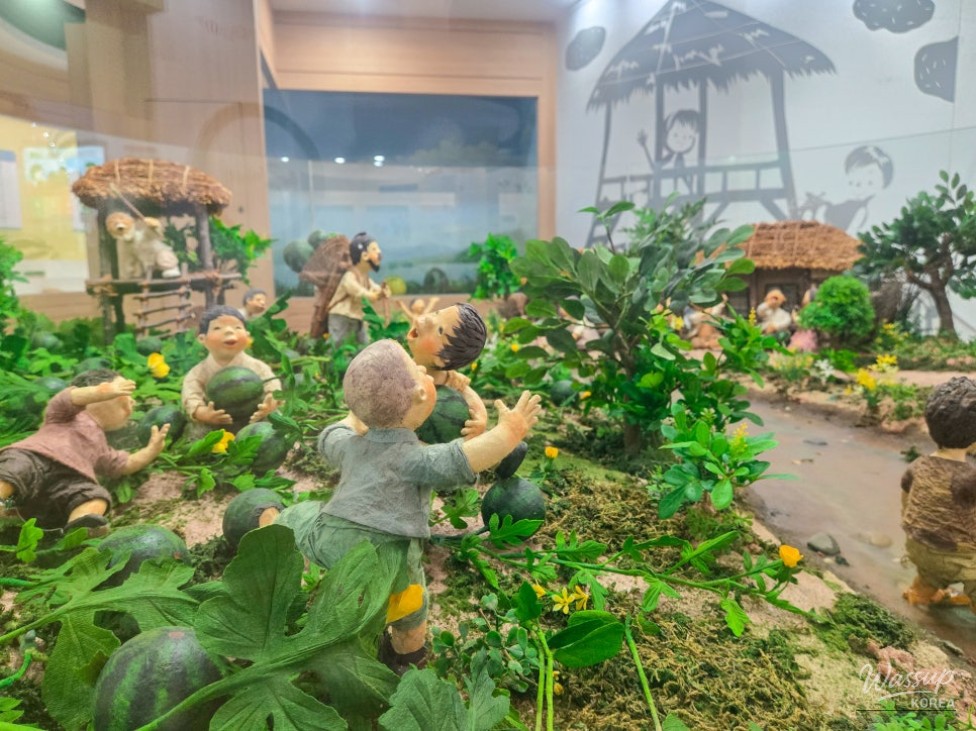
First, let’s take a look at the history of Hamann watermelons. It is known that watermelons have been cultivated in Hamann since the 1800s, giving it a cultivation history of over 200 years.
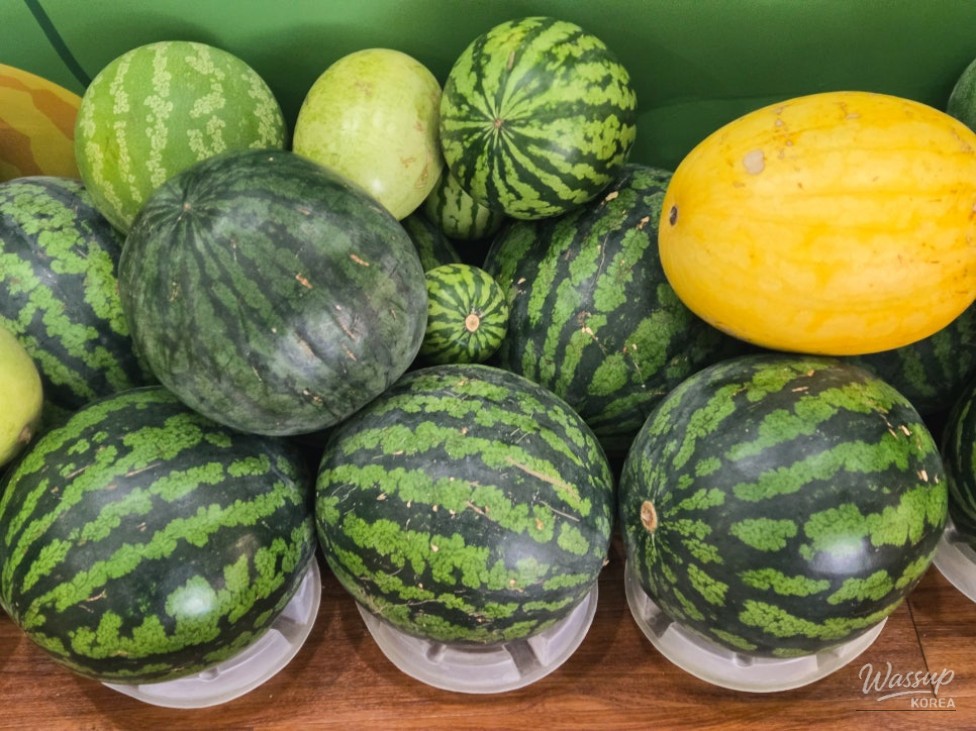
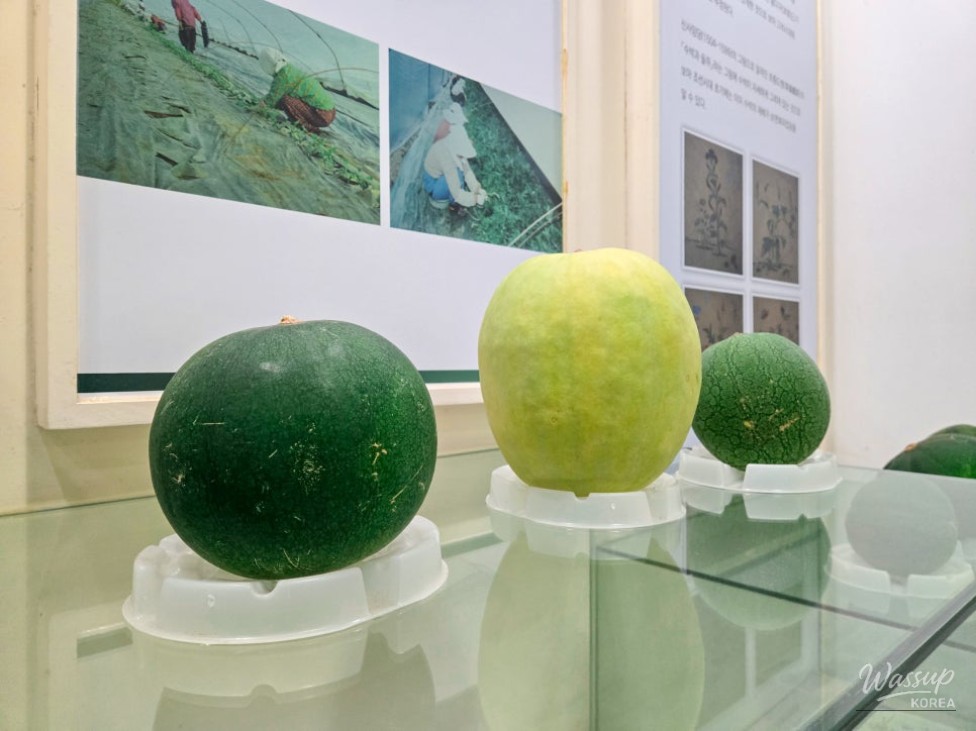
You can see familiar watermelons on display, but there are also unique colors and patterns that you might not expect. The size difference between mini and large watermelons is fascinating.
The local environment has played a role in making watermelons Hamann's representative specialty. The fertile land and mild climate around the Namgang and Nakdong rivers, combined with years of accumulated cultivation techniques, have established it as a major watermelon production area.
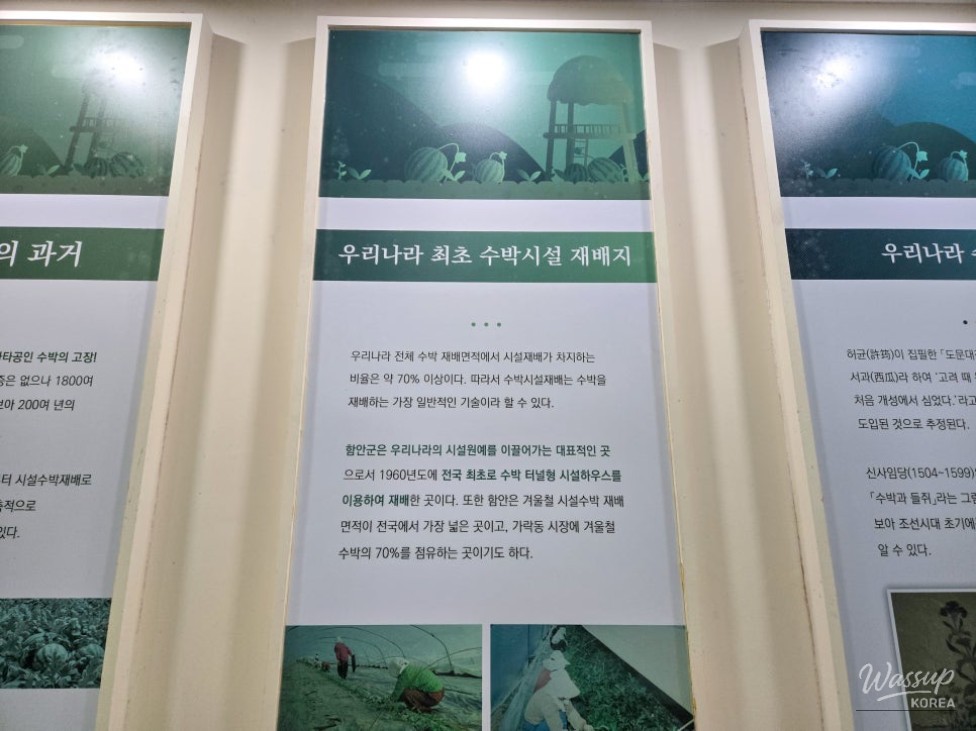
In 1960, Hamann became the first region in the country to use tunnel-type greenhouses to cultivate watermelons. With advancements in cultivation technology, watermelons are now produced even in winter, which was surprising to me, as I had thought watermelons were only a summer fruit.
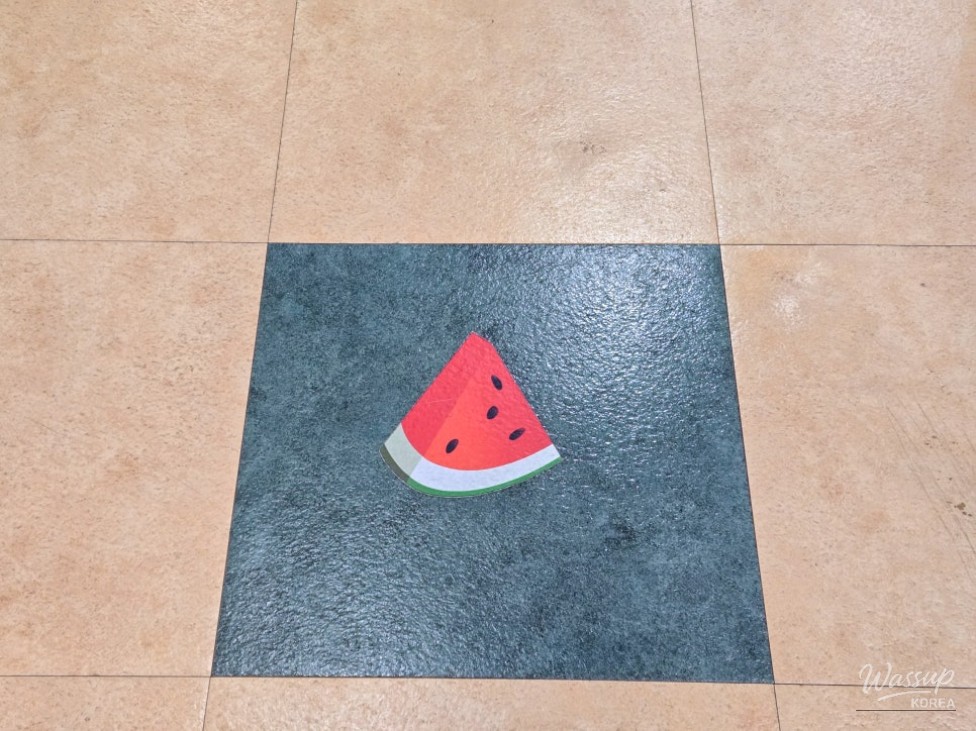
On the floor, there are small watermelon stickers guiding you to the next exhibition space, which I found to be a delightful idea.
Hamann has consistently researched and developed cultivation techniques to improve watermelon quality. The unique crisp texture and high sweetness are part of the results of these efforts.
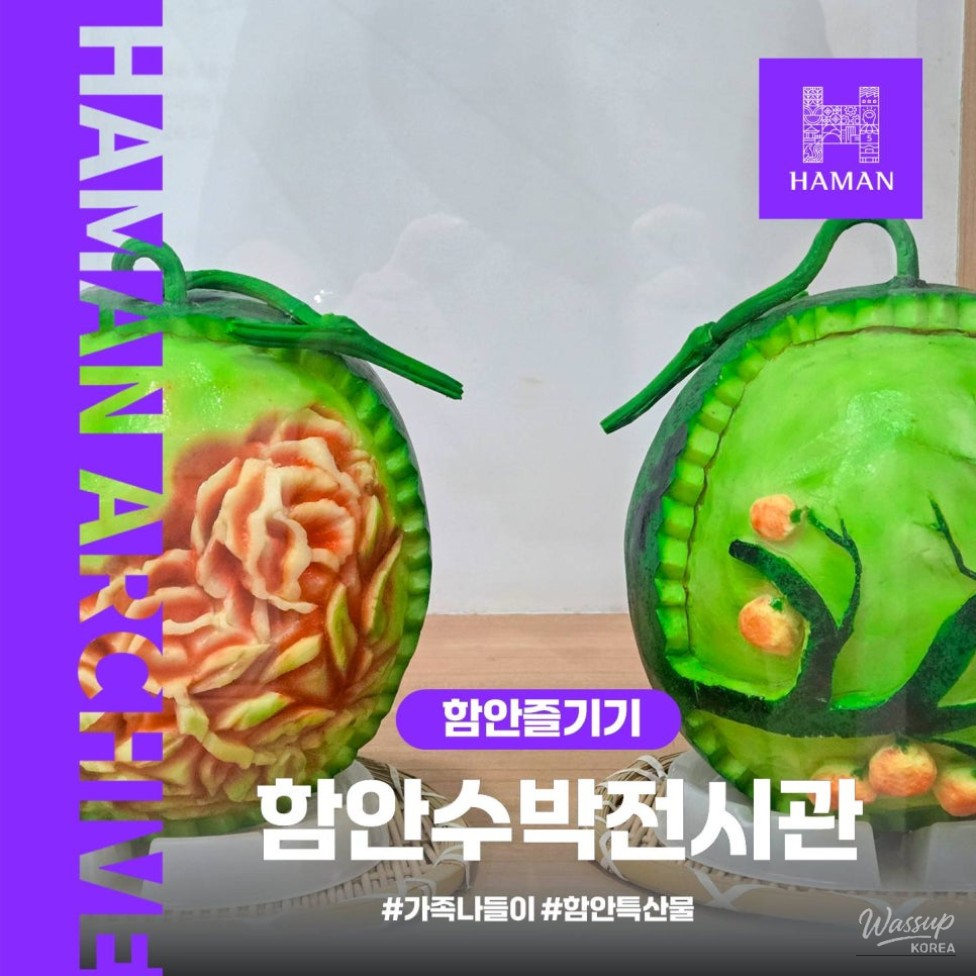
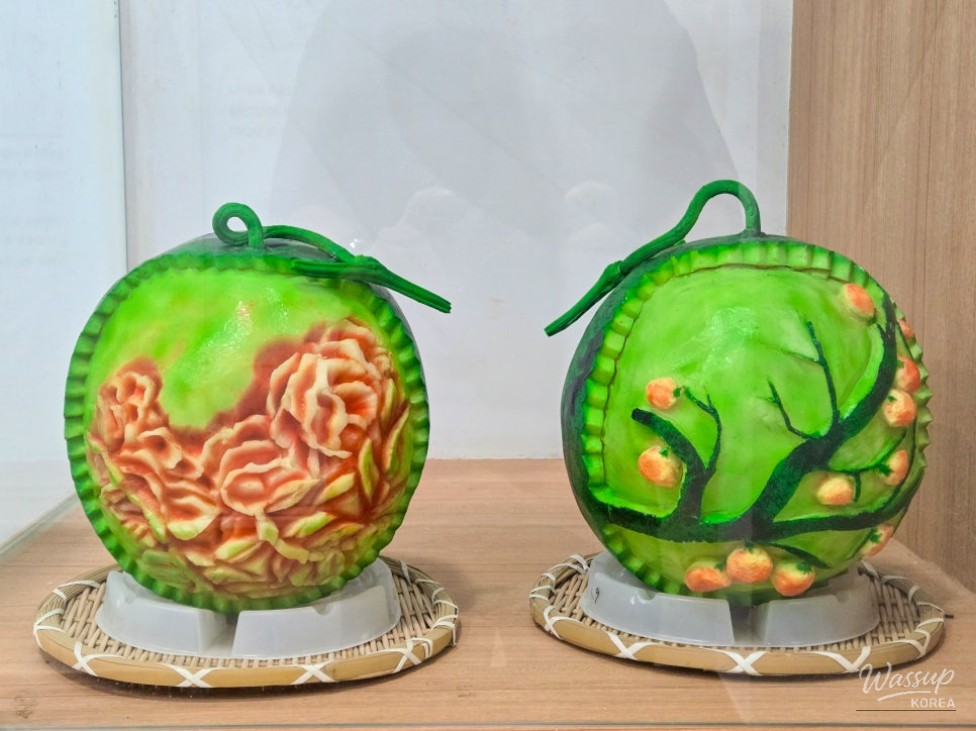
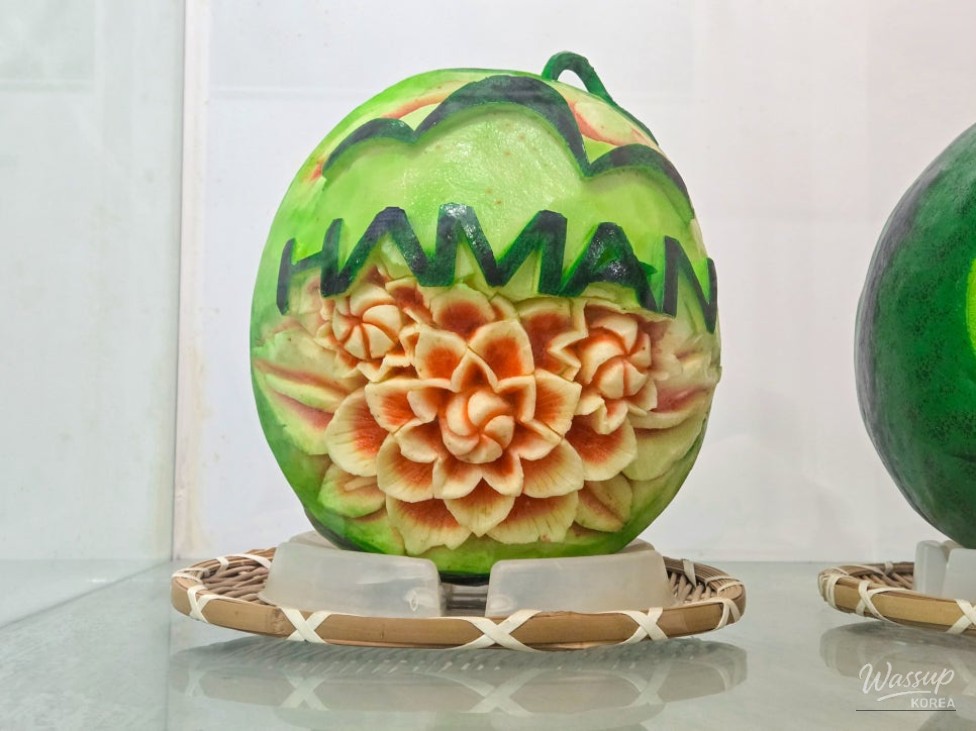
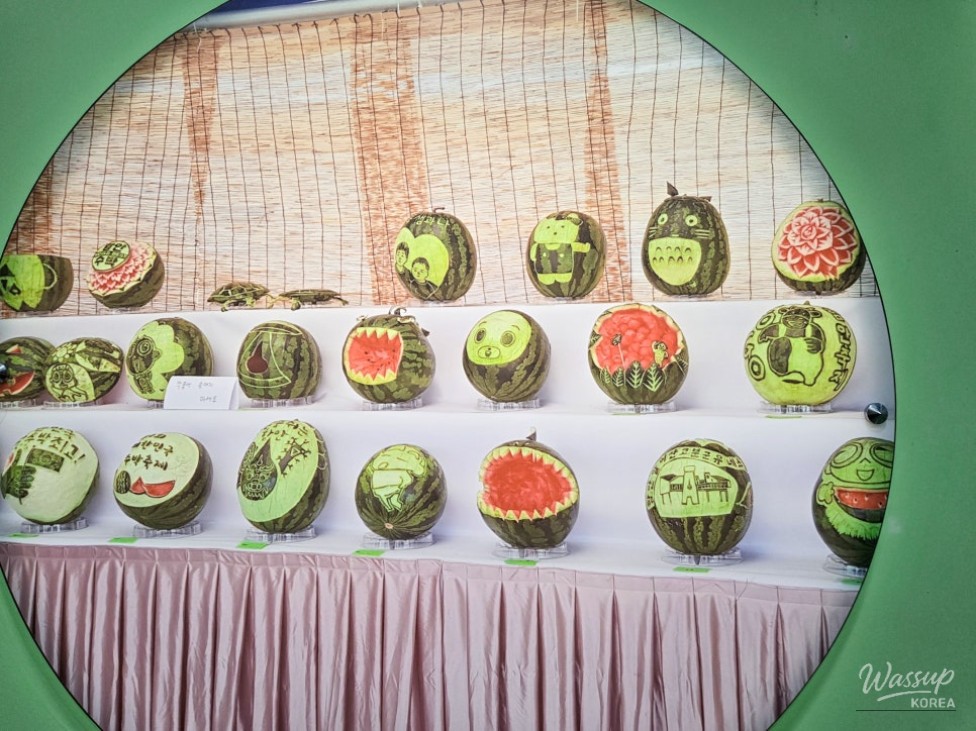
Personally, I was particularly drawn to the sculptural works made from watermelons. The delicately carved pieces resembling flowers were displayed, making me question if they were indeed watermelons.
Hamann also hosts a watermelon festival. The festival held this May was a global event, offering a variety of attractions, including a watermelon contest, selection of the largest watermelon, watermelon punch sharing, and discounted sales, allowing visitors to fully enjoy watermelons. Photos of the exhibited watermelons were also on display.
It truly showcases that watermelon is Hamann's representative specialty.
My curiosity about the watermelon exhibition hall led me to visit, and I never imagined there would be so many interesting stories behind it.
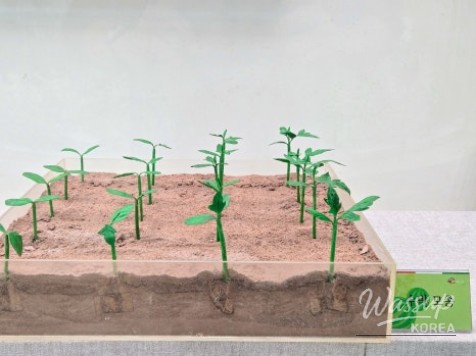
You can see the process from a small sprout growing into a stem, blooming flowers, and eventually producing watermelons. The models made it easier to understand than just reading about it, and there were videos and interactive spaces set up, making it great for families to explore together.
I made sure to capture some watermelon-themed moments in photos! Don’t forget to take a picture!
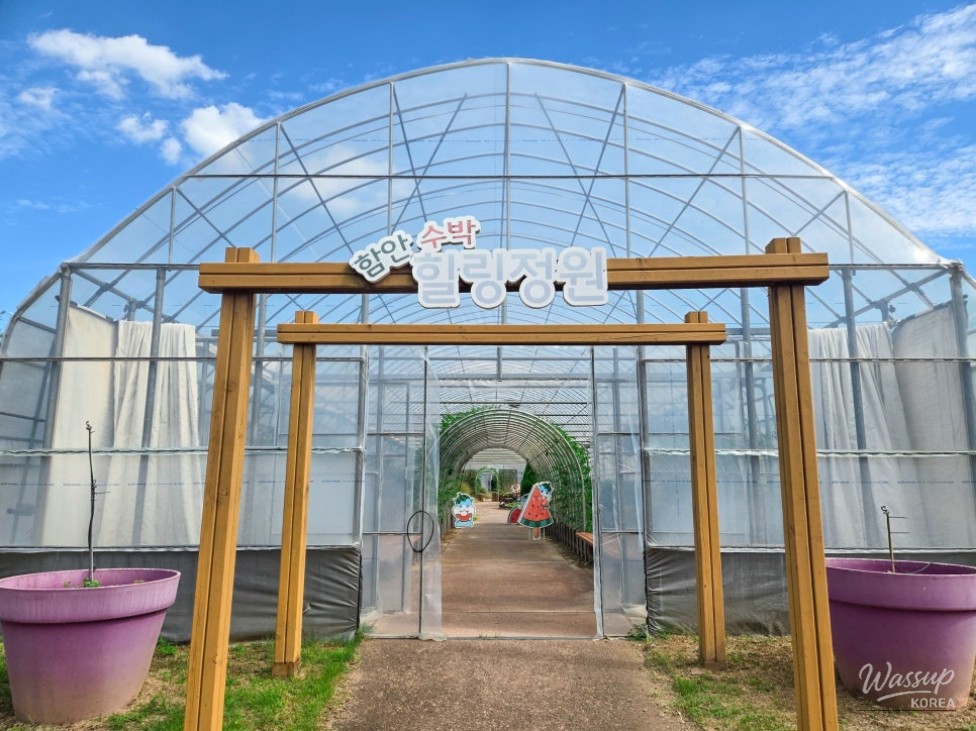
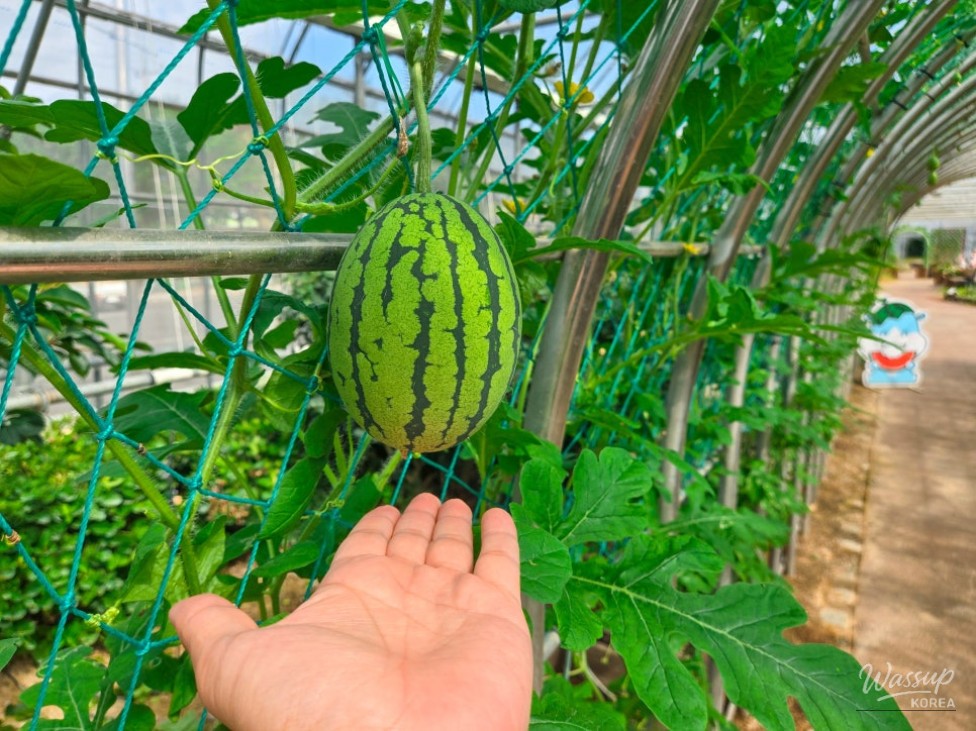
In the outdoor healing garden, you can also see actual watermelons growing.
Getting a close look at watermelons is a rare experience, and there’s also a cute photo zone featuring a hippo. Isn’t the watermelon the size of my palm just adorable?
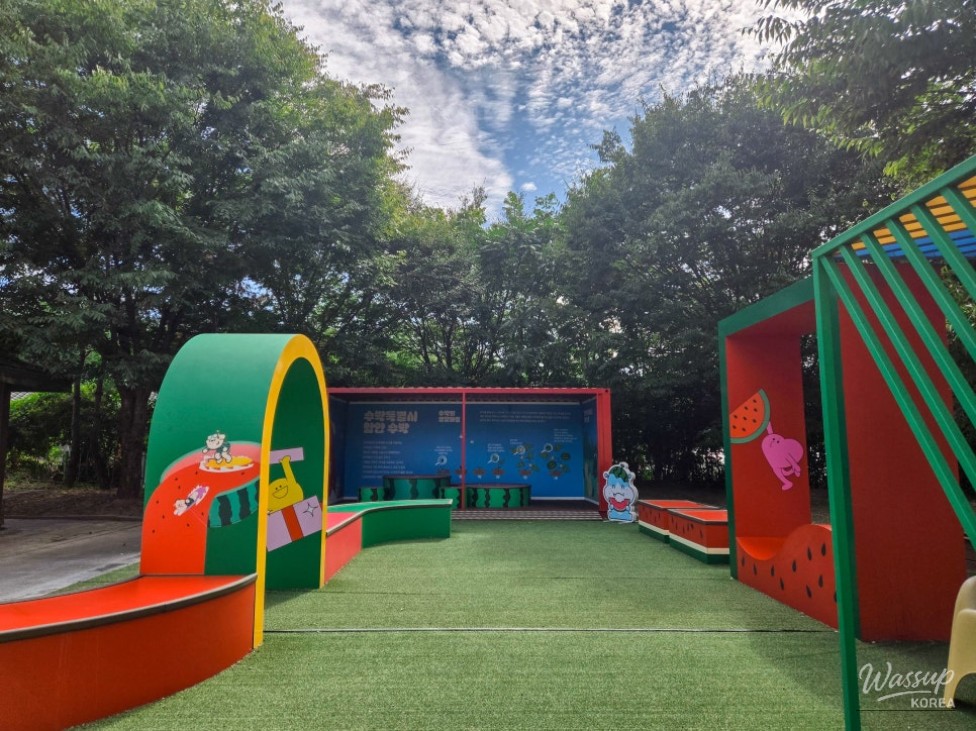
Finally, I visited the watermelon resting area. As the name suggests, it’s a space decorated with a watermelon theme that naturally attracts attention. After exploring the indoor exhibits, healing garden, and resting area, I felt completely immersed in Hamann watermelons.
The watermelon exhibition hall is filled with various stories and attractions! I believe it will make for an enjoyable trip to Hamann.






Source :https://blog.naver.com/arahaman/224420344484
More from Place






No comments yet.