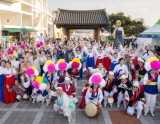
The Majestic 500-Year Heritage of Gijisi Juldarigi
- Place
- Gijisi Juldarigi Museum
- Region
- Dangjin-si, Chungcheongnam-do
- Address
- 충청남도 당진시 송악읍 안틀모시길 11
- Coordinates
- 36.8961622787994, 126.694763260437
- Original source
- blog.naver.com



The Gijisi Juldarigi Museum in Dangjin, South Chungcheong Province, showcases a unique traditional tug-of-war that has been recognized worldwide.
This tradition is:
- ✔ Designated as National Intangible Cultural Heritage No. 75
- ✔ Listed as a UNESCO Intangible Cultural Heritage of Humanity.
With the upcoming Gijisi Juldarigi Festival, we visited the museum to learn about the origins, production process, and traditional rituals of this tug-of-war.
Knowing about it beforehand enhances the festival experience, so we have compiled some interesting stories and viewing points.
The Gijisi Juldarigi has a history of approximately 500 years. It originated in the village of Gijisi in Dangjin to overcome disasters and pray for good harvests and peace.
One of the most remarkable features of Gijisi Juldarigi is its enormous ropes:
- The female rope has a diameter of 1 meter, a length of 100 meters, and weighs 20 tons.
- The male rope has a diameter of 1 meter, a length of 200 meters, and weighs 40 tons.
Thousands of participants pulling the ropes create a spectacular scene, which is the highlight of the festival.
Before the tug-of-war, traditional rituals are performed:
- ✔ Dangje: Praying for the village's peace at the Noodle Peak mountain spirit.
- ✔ Yongwangje: Wishing for abundant water and good harvests at the Daedong Well.
- ✔ Market Prayer Ceremony: Praying for prosperous trade at the marketplace.
This unique traditional ritual blends Confucianism, Buddhism, and folk beliefs.
The massive rope is made over the course of a month, beginning with:
- Collecting straw, previously gathered by villagers but now purchased from farms.
- Twisting smaller ropes to create 210 pieces of 100-meter-long ropes.
- Setting up traditional tools for twisting the ropes.
- Weaving 70 strands of smaller ropes to create three medium ropes.
- Twisting the three medium ropes to complete a large rope with a diameter of over 1 meter.
- Creating the ends of the ropes in a loop form to distinguish between the female and male ropes.
- Attaching various strands to allow participants to hold and pull the ropes.
- Organizing the completed ropes for use during the event.
After completing the ropes, they are dragged approximately 1 km to the event site, where the male and female ropes are connected, marking the beginning of the tug-of-war.
It is believed that if the upper village wins, the country will be peaceful, while victory for the lower village signifies a good harvest.
The Gijisi Juldarigi Festival is more than just a tug-of-war; it is a celebration of traditional culture and folklore.
During the festival, you can witness:
- ✔ Traditional rope-making demonstrations
- ✔ Traditional rituals like Dangje and Yongwangje
- ✔ The tugging procession
- ✔ The large-scale tug-of-war event
- ✔ Various folk experience programs
Key viewing points include:
- The tugging procession, where a massive rope is pulled by many people, creating a breathtaking sight.
- The moment the male and female ropes are connected, which holds significant ceremonial meaning.
- The highlight of the festival, where thousands participate in the tug-of-war.
- Traditional rituals like Dangje and Yongwangje, showcasing community participation.
Visiting the Gijisi Juldarigi Museum before the festival helps you understand the rope-making process, the structure of the ropes, the history of the tug-of-war, and the stories behind the rituals, making the festival even more enjoyable.
Experience this rare tug-of-war culture that has been preserved for 500 years. We recommend taking the time to feel the strength of our traditional culture and the meaning of community at the upcoming Gijisi Juldarigi Festival.


Source :https://blog.naver.com/dangjin2030/224219516323
More from Travel


No comments yet.