Influenza Alert and Vaccination Schedule for Fall 2023
- Original source
- blog.naver.com


By Choi Kyung-sook
As the cool breeze begins to blow, autumn has swiftly approached. With the heat of summer fading away, we welcome the fall with open arms. However, this year, we have received some unwelcome news a bit earlier than usual: an influenza outbreak alert.
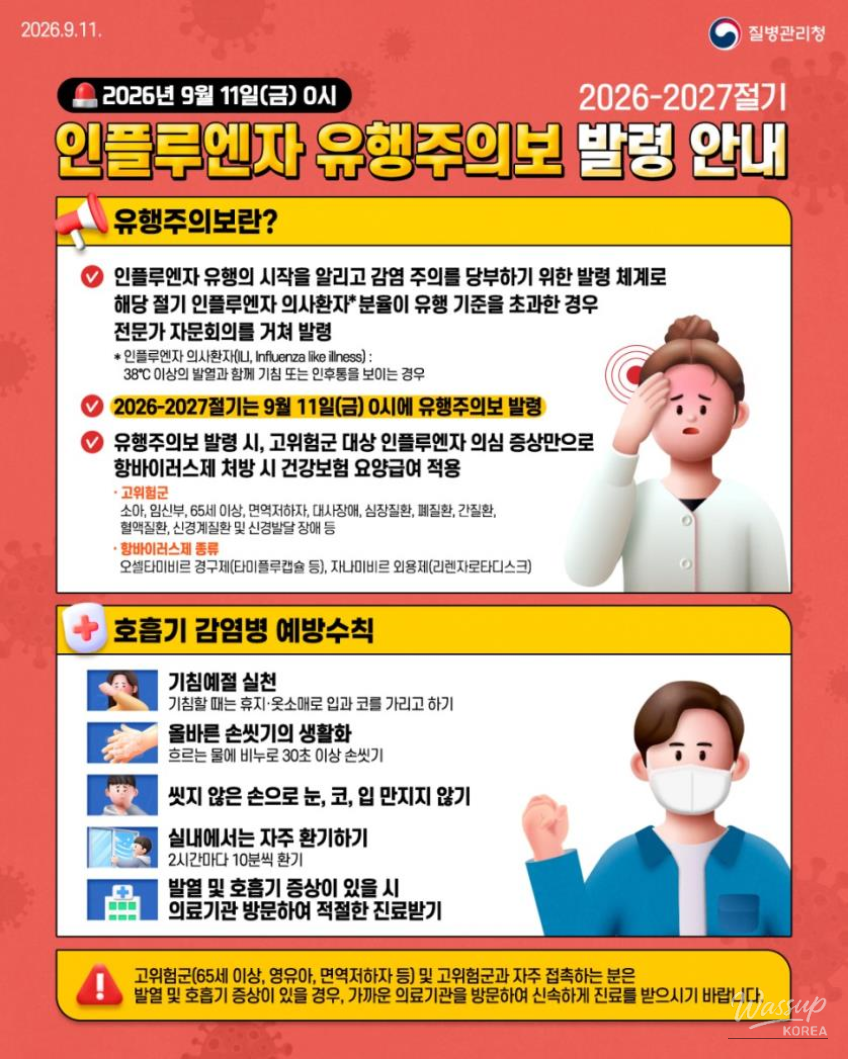
The Korea Disease Control and Prevention Agency (KDCA) issued an influenza outbreak alert on September 11, 2023. The alert signals an earlier-than-usual onset of influenza, prompting the Gyeonggi Province to encourage residents to participate in vaccinations and adhere to respiratory infection prevention guidelines. Particularly concerning this year is the rapid increase in suspected influenza cases among infants and school-aged children. With more outdoor activities and outings planned for the fall, families with children should check vaccination schedules in advance to ensure their health this winter.
In Gyeonggi Province, the increase in influenza cases is notable. The rate of suspected influenza patients per 1,000 outpatient visits rose from 6.4 in week 33 to 21.2 in week 36. Among age groups, children aged 7 to 12 had the highest rate at 46.4 per 1,000, followed by those aged 1 to 6 at 39.0 and 13 to 18 at 24.2. Given the potential for infection spread in communal settings like schools and daycare centers, more vigilant preventive measures are essential for children and adolescents.
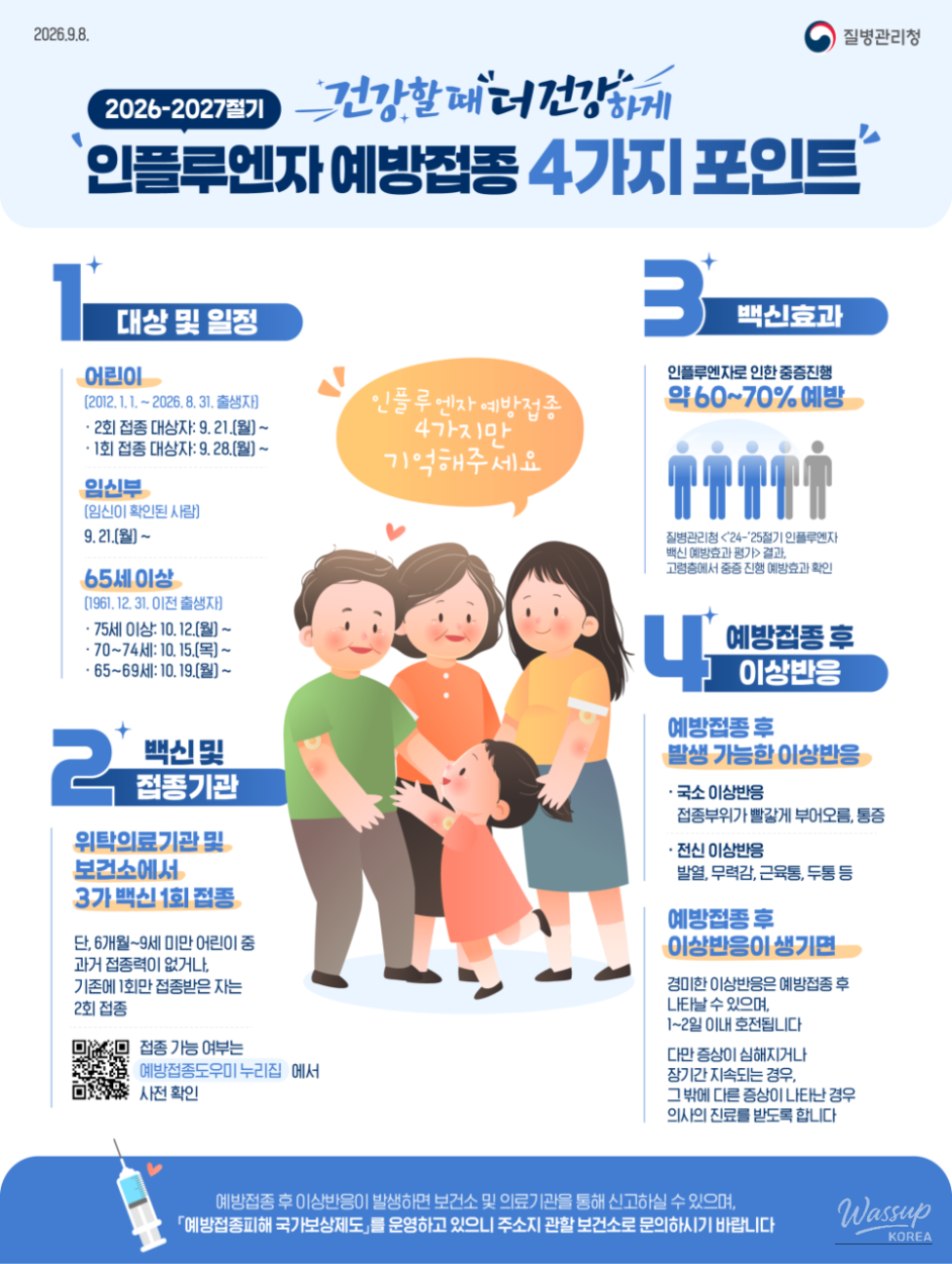
This year, influenza vaccinations will begin on September 21. The eligibility for national vaccination support for children has been expanded to include those up to 14 years old. Originally, vaccinations for children requiring one dose were set to start on September 28, but this has been moved up to September 21. Consequently, all children aged 6 months to 14 years and pregnant women can receive the national influenza vaccination starting September 21. Parents should verify the vaccination schedule for their eligible children.
Vaccination for seniors aged 65 and older will also proceed in phases based on age. Children aged 6 months to under 9 years who have never received an influenza vaccine or have only had one dose will require two doses. High-risk groups, including immunocompromised individuals, can begin vaccinations on October 6 after consulting with healthcare professionals.
Where can vaccinations be received? Eligible individuals can receive vaccinations for free at designated medical institutions or health centers, regardless of their address. There are approximately 23,000 designated medical institutions nationwide, and the nearest vaccination sites can be confirmed through the KDCA's vaccination assistance website.
This fall, not only will influenza vaccinations be administered, but COVID-19 vaccinations will also commence. The COVID-19 vaccination schedule for the 2026-2027 season will run from October 12, 2023, to June 30, 2027. Eligible recipients include seniors aged 65 and older, immunocompromised individuals aged 6 months and older, and residents of high-risk facilities. It is recommended that seniors receive both the influenza and COVID-19 vaccinations simultaneously.
In addition to vaccinations, it is crucial to maintain everyday preventive measures against respiratory infections. These include washing hands with soap for over 30 seconds, covering mouths and noses with tissues or sleeves when coughing or sneezing, wearing masks if experiencing respiratory symptoms, avoiding touching the face with unwashed hands, and ensuring regular ventilation indoors. While these practices may seem basic, they are essential, especially in communal environments like schools.
This autumn, let's prepare for a healthy winter by checking vaccination sites in advance and adhering to basic hygiene practices.

Source :https://blog.naver.com/gyeonggi_gov/224420701400
More from Place

No comments yet.