Celebrating Community Efforts in Sustainable Agriculture Waste Management
- Original source
- blog.naver.com


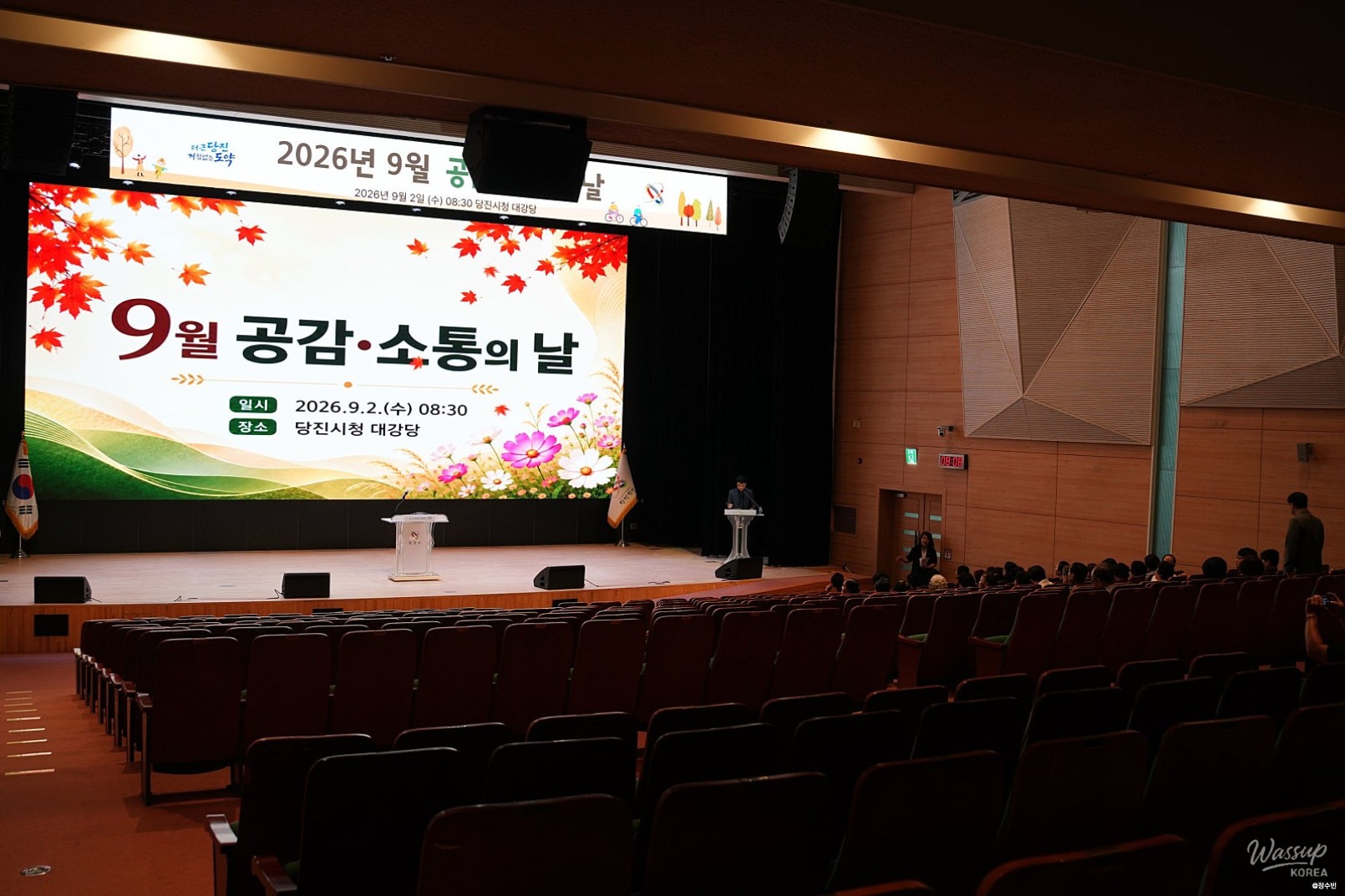
On September 2nd, a 'Day of Empathy and Communication' event was held at the Dangjin City Hall.
The event began with the singing of the national anthem and a moment of silence for the fallen patriots, followed by the reading of the public service charter.
Attendees reflected on their responsibilities as public servants and the significance of serving the citizens in a calm and respectful atmosphere.
A clean rural community created by residents
The Jagae 1-ri village in Myeoncheon-myeon won the Minister's Award for the Agricultural Waste Collection Competition.
A clean rural landscape does not appear overnight.
After the harvest, villagers gather agricultural waste such as plastic and empty pesticide containers, separating and disposing of them correctly.
This consistent effort is essential for maintaining a pleasant rural environment.
The 'Day of Empathy and Communication' event celebrated the meaningful achievements of villages that have continued these efforts.
On this day, representatives from the Jagae 1-ri village and Dangjinpo 1-ri village in Godae-myeon attended to share in the joy of their awards.
In particular, the Jagae 1-ri village received the Minister of Climate, Energy, and Environment Award, recognizing the value of their resource recycling activities.
The award was especially significant as it acknowledged the residents' efforts to protect the rural environment in less visible areas.
The Agricultural Waste Collection Competition involved 711 villages across five cities and counties.
Conducted by the Korea Environmental Corporation's Chungcheong Headquarters, the competition targeted villages in the coastal regions of Chungcheongnam-do, including Dangjin, Seosan, Boryeong, Seocheon, and Taean.
The evaluation period lasted from November 1, 2025, to May 31, 2026, for a total of seven months.
This evaluation was meaningful as it assessed ongoing activities from the off-season to the peak agricultural season, rather than just a one-time collection of waste.
The assessment included a quantitative evaluation of 75 points for actual waste collection and 25 points for evaluating the management of collection sites and educational activities for residents.
The selection was based not only on the quantity of waste collected but also on how systematically the waste was managed and whether residents understood proper disposal methods.
Agricultural waste such as plastic and empty pesticide containers can easily be left unattended in fields or around villages if not collected in a timely manner.
Improper disposal can lead to soil and air pollution, and during dry periods, it can increase the risk of wildfires.
Thus, collecting and properly disposing of agricultural waste at the village level is crucial not just for cleaning but for maintaining the living environment, safety, and resource recycling in rural areas.
The Jagae 1-ri village's achievement highlights that solving rural environmental issues cannot be accomplished by administrative efforts alone.
When residents empathize with the need and take action, real changes in the village environment can occur.
This award signifies that the agricultural waste issue is a shared challenge that rural communities must tackle together.
The recognition of Jagae 1-ri and Dangjinpo 1-ri villages is a testament to the power of community collaboration in creating a cleaner environment.
The clean roads and fields of the village are not merely the result of someone else’s cleaning efforts but a record of the time residents have dedicated to maintaining their living environment.
We hope this award will inspire more villages to engage in agricultural waste collection and proper disposal practices.

Source :https://blog.naver.com/dangjin2030/224400827899
More from Travel



No comments yet.