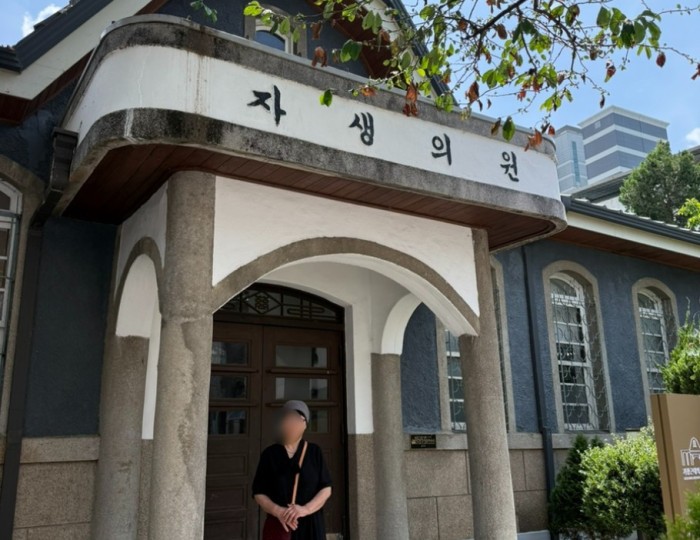
The Daemam Lee Tae-jun Memorial Hall: A Tribute to a National Hero



SNS Reporter Je Jin-soo, 14th Term
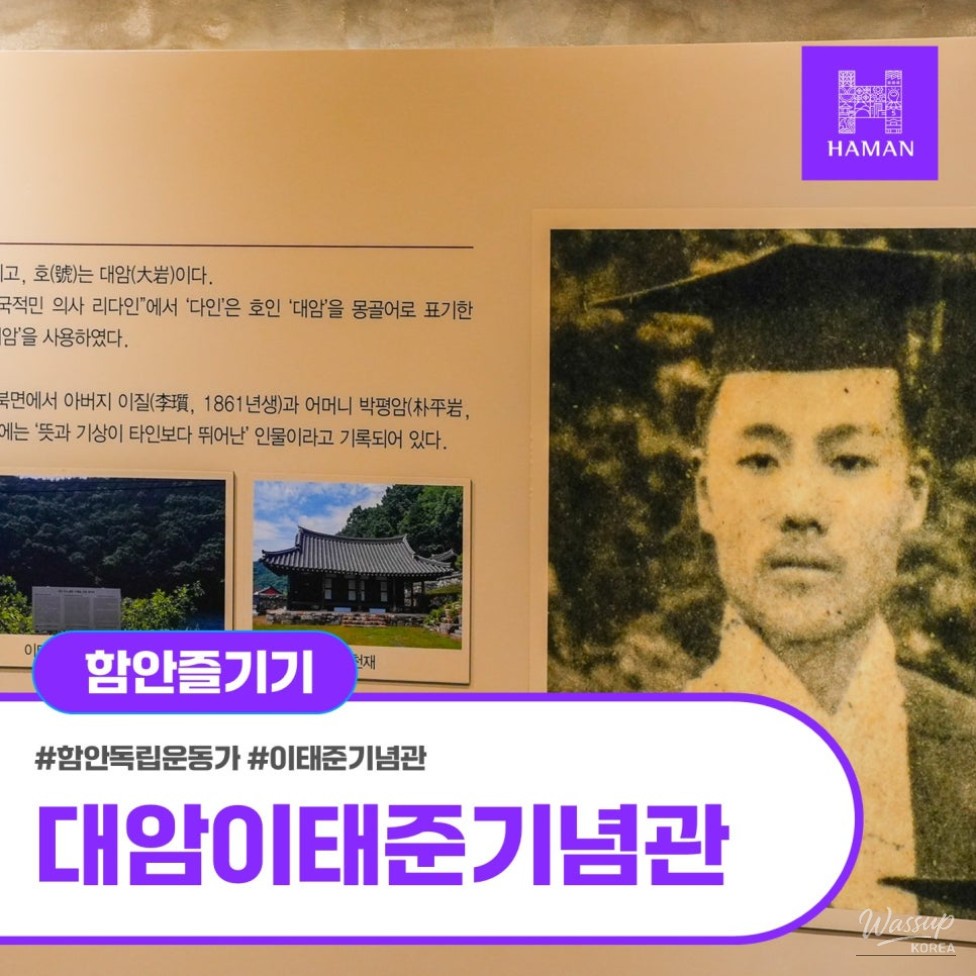
Daemam Lee Tae-jun Memorial Hall
50, Jidu 2-gil, Gunbuk-myeon, Ham-an, Gyeongnam
The Daemam Lee Tae-jun Memorial Hall is a space dedicated to honoring the life and achievements of Lee Tae-jun, an independence activist and physician known as 'the Divine Doctor' in Mongolia. Visitors can explore various exhibits that highlight his contributions to the independence movement, medical service, and humanitarian spirit, allowing for a deeper understanding of his life.
Additionally, the area surrounding the memorial hall features a neatly arranged independence park and walking paths, providing an opportunity for leisurely strolls alongside the exhibits. It is a meaningful place where history and nature converge. The hall operates from 9 AM to 6 PM, with regular closures on Mondays.
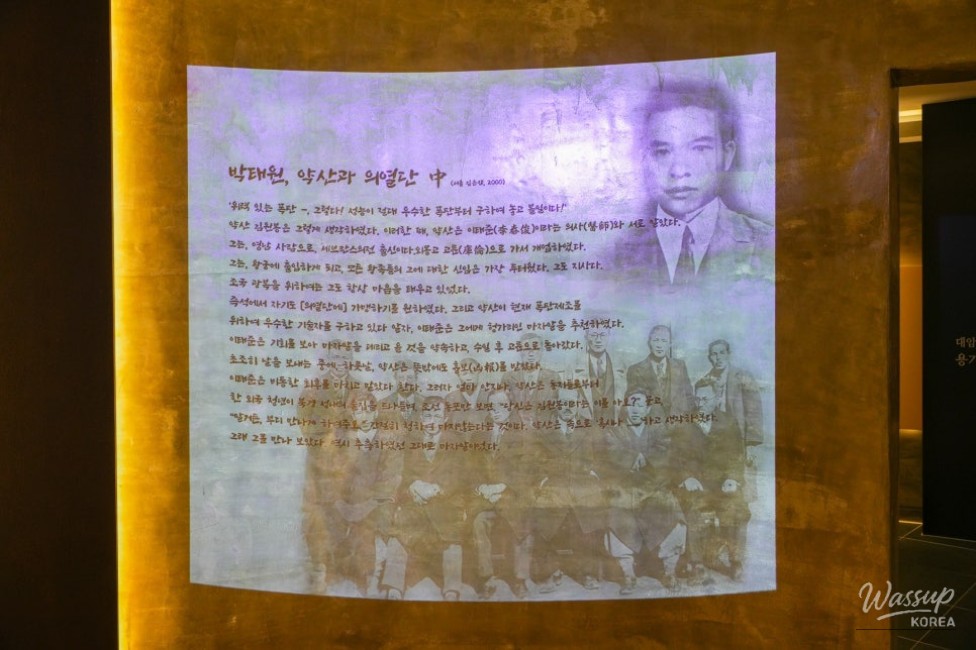
When Lee Tae-jun was born, Korea was in a tumultuous period marked by increasing foreign influence following the opening of ports in 1876 and the Imo Incident in 1882. Growing up in this context, he pursued medicine and honed his skills under the guidance of Kim Pil-soon. He also formed a connection with Ahn Chang-ho and became involved in the independence movement.
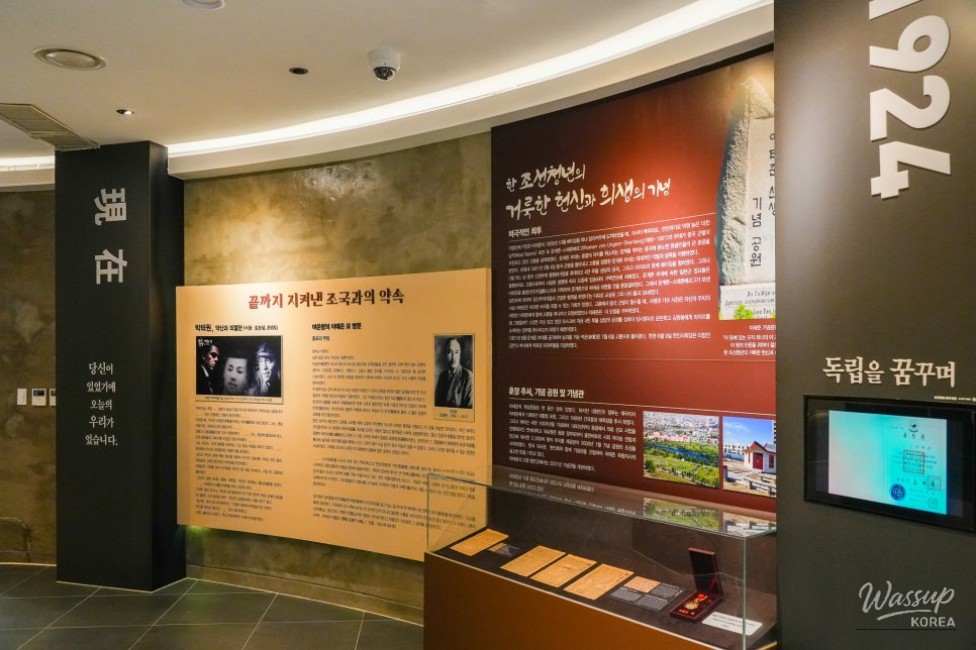
As you follow the exhibits, you can trace Lee Tae-jun's life from his birth to his later years, showcasing his dedication as a physician and his efforts as an independence activist for his country. This journey provided a profound opportunity to appreciate his life and spirit.
The exhibition space organizes the history of significant independence movements, such as the assassination of Ito Hirobumi and the 105 Incident, chronologically, allowing visitors to understand how the independence movement evolved over time. Various figures and key events from the independence struggle are systematically introduced, enriching our understanding of the history and significance of Korea's independence movement.
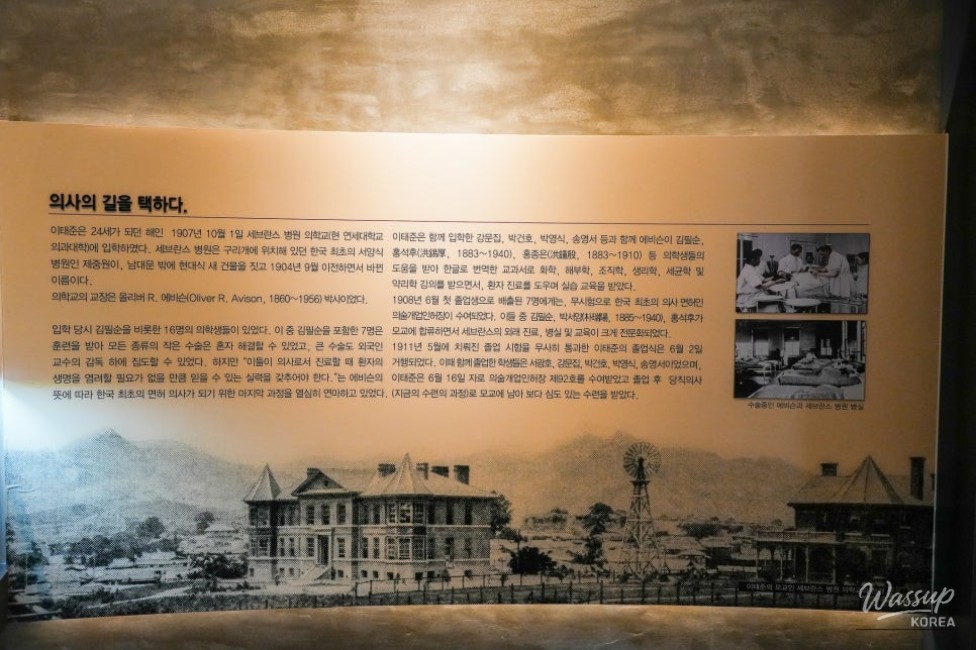
You can also delve into the process through which Lee Tae-jun chose the path of medicine. At 24, he enrolled in Severance Medical School, learning medicine under the mentorship of Evison. He participated in translating medical textbooks into Korean, contributing to the advancement of medicine in Korea.
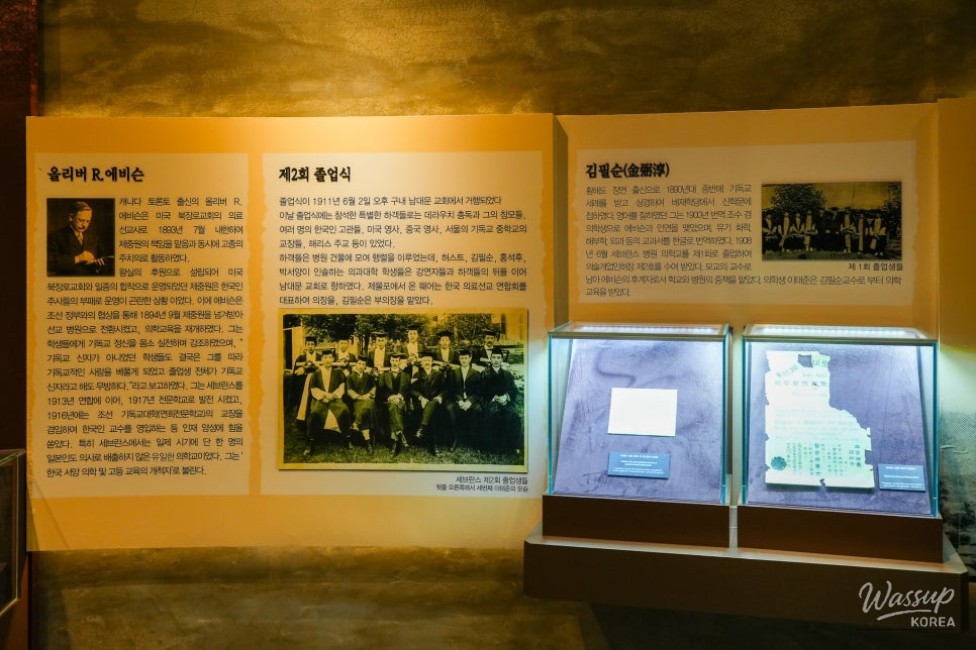
Korea's first Western-style hospital, Jejungwon, and its medical school marked the beginning of Western medical education. Evison played a crucial role in establishing modern hospitals, laying the foundation for medical education that would lead to Severance. This process of introducing Western medicine to Korea and establishing Western-style hospitals was also highlighted.
We also explored Oliver Evison, who established the framework for Western medical education in Korea and enabled the training of Korean physicians through medical education.
After 30 years of diplomatic relations between Korea and Mongolia, Lee Tae-jun became a symbolic figure of friendship between the two nations. Photographs capturing his medical activities at the Yonsei Friendship Hospital in Mongolia provide insight into how these efforts continued.
Viewing photographs and videos from that turbulent era allowed us to vividly feel the confusion and changes experienced by people at that time, reinforcing the notion that historical events are not mere records but are deeply connected to real lives.
During the Japanese occupation, Lee Tae-jun supported independence activists, fulfilling his role as a medical professional and contributing to various activities for his country's independence, especially by expanding his efforts abroad.
Reflecting on those memories allowed us to revisit the circumstances and significance of that time, deeply appreciating the efforts and sacrifices of those who dedicated themselves to independence.
Maps indicate Lee Tae-jun's movements and activity areas, allowing us to retrace his journey.
Remembering his steadfast commitment to his homeland, we recognize that his life transcended personal journeys and was rooted in responsibility and conviction towards his nation and people.
Through the display of medals awarded to Lee Tae-jun and a framed portrait, we could see how his contributions and achievements are honored even today.
The video presentations also vividly depict his life, showcasing how he kept his promise to his homeland until the end.
After visiting the memorial hall, we reflect on the life of Lee Tae-jun, who devoted himself to the independence of his country and the practice of humanitarianism.
The Daemam Lee Tae-jun Memorial Hall offers a space to reflect on the significance of medical activities and the independence movement, allowing us to understand the footprints of a man who dedicated himself to his country and its people.
If you wish to spend a meaningful time learning history in Ham-an, I highly recommend a visit.









Source :https://blog.naver.com/arahaman/224299413962
No comments yet.