Exploring the Urban Regeneration Paths of Yeongcheon



Walking through the urban regeneration paths of the old town, you can feel a different atmosphere than usual.
As you slowly wander through the alleys and streets, a sense of familiarity arises, as if you have been a resident of that city for a long time.
Previously, while walking the urban regeneration paths of Yeongcheon, including Wansan Healing Road, Wansan Love Road, and Wansan Byeolmuri Road, I was able to fully appreciate these charms.
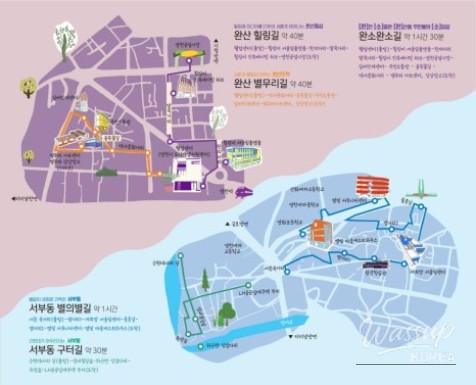
This time, I explored Seobudong's 'Byeol-ui Byeol Road' and 'Guteo Road' by referencing the Yeongcheon Urban Regeneration Support Center's website.
Upon examining the guide map, I found that the two paths are not connected and are located in opposite directions.
After walking them, I realized that the scenery and atmosphere of the two paths were distinctly different.
Let me introduce the two courses, each with its own unique charm.
First, I headed towards Guteo Road, adjacent to the forest and river.
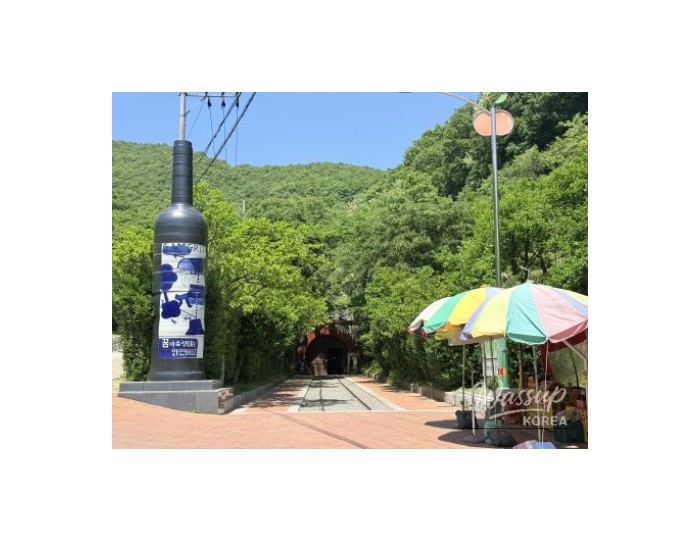
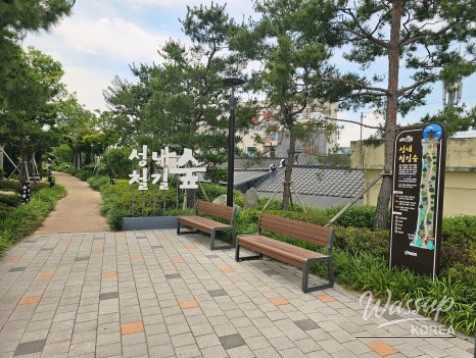
Recently, many regions have been actively creating parks using abandoned railway tracks, so I first visited Seongnae Railway Forest before the starting point of Guteo Road.
Seongnae Railway Forest is small yet well-maintained, which I found appealing.
Taking a moment to pause and breathe deeply, I felt a sense of relaxation.
However, I was a bit disappointed that the section of the railway forest was shorter than expected.
At the end of the railway forest, there is a pavilion. The view of the Geumho River from the pavilion was incredibly beautiful.
I also saw many people riding bicycles along the riverside, likely connected to the nearby bike paths.
With vehicles passing on the surrounding roads and trains passing by, I could see various landscapes all at once.
Next, I moved on to find the Hageun-chan stepping stones. On the right side of the path, there was a neatly arranged forest.
If it weren't for the signpost, I might have passed by without noticing that this was Yujeong Forest.
Yujeong Forest was very quiet and peaceful, creating a cozy atmosphere that felt like a hidden gem.
Looking at the river view beyond the willow trees and the bench nestled in the forest, I naturally thought of enjoying a cup of coffee.
It was a perfect space to sit and relax for a while.
Yujeong Forest also has swing chairs. The gentle sway made it a great spot to take a break while enjoying the surrounding scenery.
Right in front of the forest lies the Hageun-chan stepping stones, adding a playful element to the otherwise monotonous river view.
I stepped across the stones one by one, even stretching my arms out in the middle of the river, feeling like a child again.
After taking a sufficient break, I set out again.
The path of modern history began right in front of the Seongnae Railway Forest, where the straight railway extended far into the distance.
Now, I moved on to Byeol-ui Byeol Road in Seobudong.
Entering Guteo Road, I passed the rotary called Seomun Yukgeori.
From there, the road continued into Byeol Street.
Initially, seeing the name 'Byeol Street', I imagined that every wall would be adorned with star decorations.
In reality, there were star paintings and decorations scattered throughout the alleys, making it fun to discover them as I walked.
The alleyways branched out in various directions, which might feel like a maze to first-time visitors.
I also checked the map multiple times as I slowly navigated my way.
As I walked along the road, I came across the Yeongcheon Lifelong Learning Center. Its large and well-organized building was impressive.
I hope it continues to develop into a space where citizens can enjoy various learning opportunities.
Before heading to Chungheon Road, I tried to find the New Hope Community Center marked on the map.
Following the provided address, I only found an empty lot, making it difficult to confirm the exact location.
It's advisable to check with the relevant organizations before visiting, as the facility may have moved or the map information may have changed.
Chungheon Road was relatively easy to find, as the Chungheon Tower was immediately visible at the entrance.
Chungheon Tower Park had displays introducing the modern historical culture map of Yeongcheon and notable figures from the region.
While there were various historical materials on display, I was particularly impressed by the two informational materials that provided an overview of Yeongcheon's modern spaces and figures.
After exploring Byeol Street, I found it challenging to clearly identify the Byeolbit Community Center and Byeolbit Village Guesthouse.
Facilities may have moved or project plans may have changed, so it's a good idea to inquire with the relevant authorities regarding their current status.
Although I couldn't confirm the exact locations of some facilities, I felt a sense of pride just from searching for the places listed on the guide map.
Even though I am not a citizen of Yeongcheon, walking through the alleys made me feel a sense of familiarity, as if I had lived here for a long time.
After exploring Byeol Street a bit more, I also visited Cheongnyangsa Temple.
Curious about the name 'Pogyo-dang', I found the temple to have a quiet and cozy atmosphere that provided a sense of comfort.
Guteo Road and Byeol-ui Byeol Road in Seobudong are urban regeneration paths with distinct charms.
On Guteo Road, you can encounter natural landscapes where the railway forest, Geumho River, Yujeong Forest, and stepping stones come together.
On Byeol-ui Byeol Road, you can observe the daily lives of Yeongcheon residents and traces of modern history along the alleys.
While quickly visiting well-known tourist spots is nice, taking the time to walk through old alleys and discover the stories of the city is also a special experience.
If you want to experience both quiet forest paths and charming alleyways, I recommend walking the Guteo Road and Byeol-ui Byeol Road in Yeongcheon Seobudong.



Source :https://blog.naver.com/gyeongbuk_official/224351723565
No comments yet.