Exploring the Cultural Heritage of Gochang



Gochang: A Land of UNESCO World Heritage
Gochang is not only home to the UNESCO World Heritage sites of dolmen ruins, Seonunsa Temple, and Mujang Fortress, but it also boasts traditional pavilions and historic houses that have preserved their charm over the years.
Among these treasures, Seoktanjeong Pavilion, located in Heungdeok-myeon, Gochang-gun, stands out for its understated beauty, embodying the spirit of scholars for centuries.
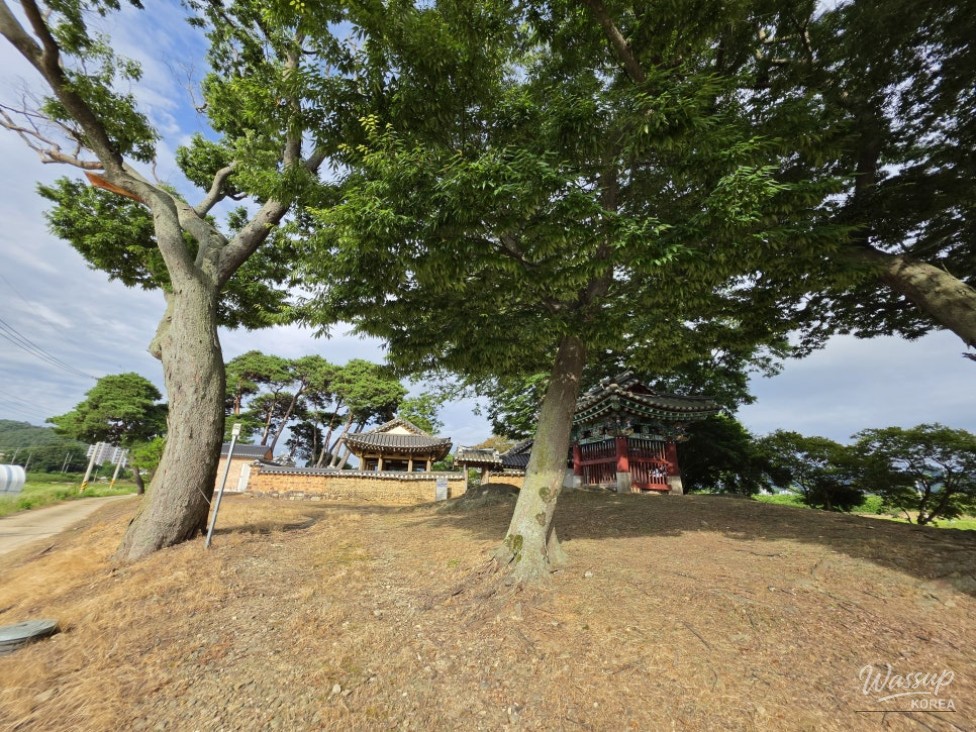
Upon first encountering Seoktanjeong, the ancient zelkova and pine trees caught my eye. The massive trees, with their thick roots exposed, stood like guardians that have watched over this place for hundreds of years, while the stone walls and old trees surrounding the pavilion seemed to silently observe the changing seasons, recording the passage of time.
The tranquility found here is hard to come by in urban settings. The only sounds filling the air were the rustling leaves and distant birdsong from the rice paddies. This is a place where the longer you stay, the deeper its charm becomes.
Constructed in 1581 for the purpose of scholarship, Seoktanjeong was built by scholar Seoktan Yu-un (1547-?) who returned to his hometown after serving in the capital. It served as a space for studying and teaching future generations, embodying the ideals of learning and character development.
Over the years, Seoktanjeong has undergone several renovations, yet it remains a cultural heritage site that conveys the spirit of the scholars of that era. An inscription notes, "Seoktan Yu-un declined the king's summons to focus on teaching and research," reflecting the integrity and principles pursued by Joseon scholars.
The true allure of Seoktanjeong lies not just in the pavilion itself but in the surrounding landscape. The pines along the walls stretch their branches gracefully, while the ancient broadleaf trees provide a wide shade over the pavilion.
The landscape shaped by time is far more beautiful than any man-made garden. Beyond the walls, lush rice fields spread out, and when the cool breeze blows, the rice sways like waves. It is easy to understand why scholars sought solace and dedicated themselves to study in this serene setting.
Seoktanjeong exemplifies the architectural features of Joseon-era pavilions. It consists of three rooms in the front and three on the sides, with a ondol (heated) room at the center surrounded by a wooden floor.
The elevated floor at the back features a unique fireplace, a design not commonly seen in other pavilions. Inside, the layout allows for open views of the surrounding nature from any angle. Each pillar bears the marks of time, showcasing the beauty of natural wood rarely found in modern architecture.
The natural colors of the wood, rather than ornate decorations, enhance its charm as the years pass.
Behind Seoktanjeong lies Sangpungru, a pavilion built in 1981 for clan gatherings. Its name signifies the pursuit of noble ideals and proper cultural pursuits, reflecting the essence of the space where scholars refined their intellect and character.
Conversely, Yeongwolheon, meaning "Pavilion for Welcoming the Moon," evokes the spirit of scholars who sought tranquility in nature. The descendants' desire to honor their ancestors' teachings is palpable here.
In front of Sangpungru stands a monument detailing the life of Seoktan Yu-un, while the entrance to Seoktanjeong features a shrine and several memorial stones honoring his legacy.
Seoktanjeong is a space where scholars once explored the value of life amidst nature, and it harmoniously integrates with the surrounding pines and fields to create a cultural landscape.
Visiting Gochang, one should take a moment to pause and appreciate Seoktanjeong, experiencing the whispers of history beneath the ancient trees.
Source :https://blog.naver.com/jbgokr/224373692635
No comments yet.