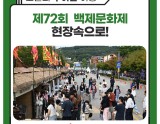
Exploring Byeokgolje: The Venue for the Gimje Horizon Festival
- Original source
- blog.naver.com


As the gentle breeze brushes softly against our skin, it comforts us from the heat, signaling the arrival of autumn. During this time, mountains often come to mind before the sea, but in Jeollabuk-do, the plains are the first to emerge. Pushed by the autumn wind, I visited Gimje, famous for its flat terrain, particularly Byeokgolje, where preparations for the Gimje Horizon Festival held in early October were in full swing.
The Byeokgolje, the largest ancient reservoir in Korea, boasts a 2.6 km-long embankment. Its historical significance has earned it designation as Historic Site No. 111. Previously, entry was charged, but it is now free.
Upon entering, I noticed a bike rental station, but it was temporarily closed due to the festival preparations. However, craft experience sessions and traditional hanbok fittings were ongoing without any issues.
At the observatory, I captured the artistry etched into the rice paddies. Visiting during the ripening season allowed me to see a gradient of similar yet distinct colors. I imagined the fields turning completely yellow during the festival.
There are sculptures of the twin dragons and Danya, a female figure. Byeokgolje holds stories of these figures: the Blue Dragon trying to damage the embankment, the White Dragon attempting to stop it, and Danya, who offered herself as a sacrifice to protect the embankment. These narratives add depth to the space, creating a new landscape.
Without explanation, one might not recognize the structure as the Jangsaenggeo, which served as a sluice gate for the embankment. It is an ancient irrigation facility that regulated water flow by inserting wooden boards between two stone pillars.
As I climbed a low hill, the embankment came into view. Built during the Silla period, it has endured through the Goryeo and Joseon dynasties, and even the Japanese occupation, which significantly altered its original form.
The Byeokgolje Agricultural Culture Museum is located at the northern end of Byeokgolje. It exhibits many artifacts related to agricultural culture from the past, showcasing the lives of our ancestors based on agriculture rather than merely displaying farming tools.
Visiting on a weekday allowed for a pleasant viewing experience. I found myself free from the compulsion to absorb vast amounts of information, enabling me to enjoy selective viewing. I hope you, too, can find tranquility by pursuing what you love within a theme.
The Byeokcheon Art Museum, established in honor of painter Na Sang-mok from Gimje, was a delightful discovery during my visit to the Kim Byung-jong Art Museum in Namwon last fall as part of the Jeollabuk-do Art Museum Stamp Tour. Entering this museum felt like stepping back into an art classroom.
The museum is divided into a permanent exhibition hall featuring Na Sang-mok's paintings and a special exhibition hall. Currently, the special exhibition hall showcases sketches of Western landmarks infused with Korean elements by the artist.
The Gimje Horizon Festival, known as a representative festival of Korea, will soon take place. Whenever I travel abroad, I often borrow books related to the destination to enrich my experience. The same applies domestically; having even a bit of information can change how you perceive the festival, the space, and its residents. I hope you enjoy Byeokgolje and the Horizon Festival, carried by the autumn breeze.
Source :https://blog.naver.com/jbgokr/224425681985
More from Place




No comments yet.