A Tranquil Visit to Ulsan's Jeongja Beach in Early Summer
- Place
- Jeongja Beach
- Region
- Buk-gu, Ulsan
- Original source
- blog.naver.com



Before the hustle and bustle of midsummer begins, I visited Jeongja Beach in Ulsan in June, drawn by the allure of the sea.
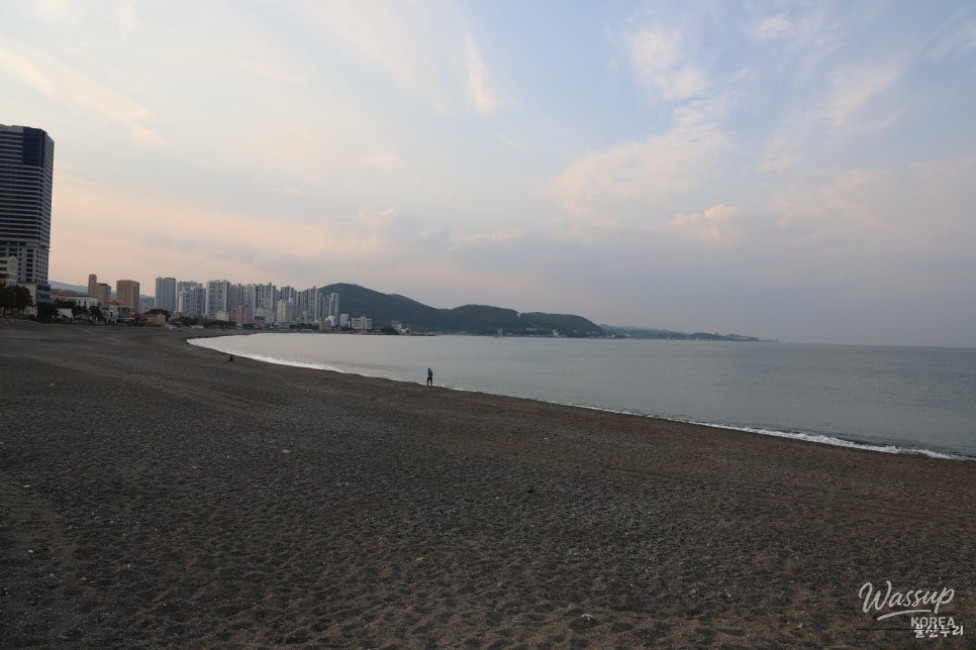
This beach stretches along the East Coast in Ulsan's Buk-gu. Although it will be crowded during the peak summer season, right now, it is just a few anglers and a lone person strolling along the water's edge.
Yet, this simplicity feels more than enough. The sea unfolds in the calm hues of early summer, and the clouds slowly drift toward a pink evening sky.
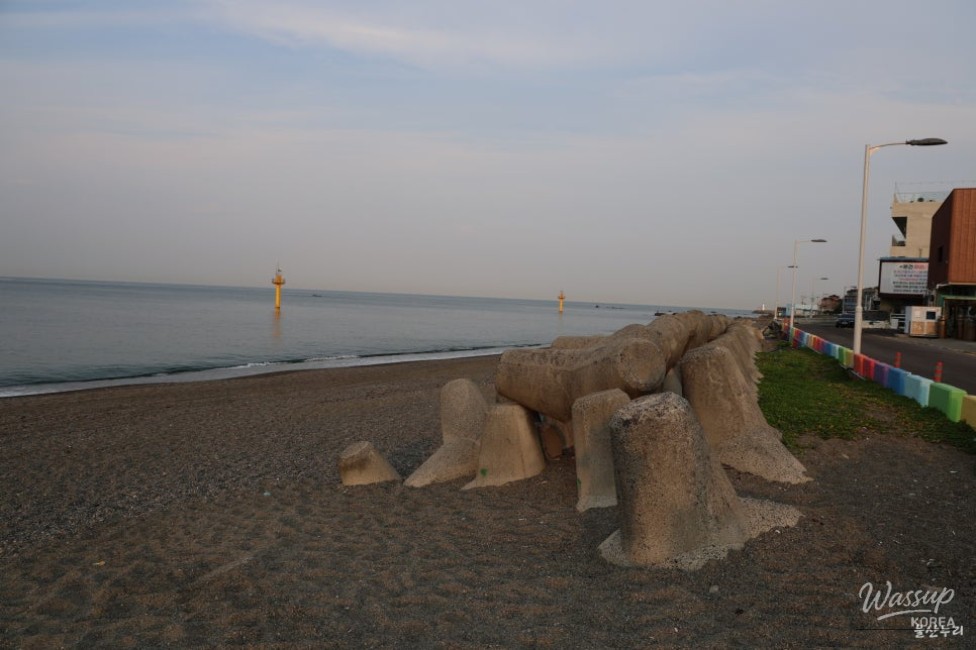
Jeongja Beach is known for its pebbles rather than sand. The large and small rounded stones, smoothed by the waves over time, cover the shore, creating a gentle crunch underfoot with each step.
This experience is entirely different from walking on soft sand. While sand envelops your feet gently, the pebbles seem to announce their presence with every step.
Listening to the sensation of the rounded stones beneath my soles and the sound of my footsteps, I realize that walking carries an abundance of sounds.
The most enduring sound at this beach is undoubtedly that of the waves. As the waves wash over the pebbles and retreat, the sound of stones rolling in the current accompanies it. While the sound of waves on sandy beaches is a crashing 'swoosh,' the waves on pebble beaches hum quietly as the stones gently collide.
Each time the waves come in and pull back, the sound of the sea rolling the pebbles reflects the traces of time that have smoothed these stones over millennia. Even if I stand listening for a while, the same sound never repeats. The sea seems to quietly remind us that there are no identical landscapes or sounds in the world.
Not far from here, at one end of the beach, lies Jeongja Port. Fishing boats are docked beyond the breakwater, with newly constructed high-rises standing against the sunset in the background. The time of this quaint fishing village naturally overlaps with the time of a newly developing city.
A pine tree walkway and observation deck along the coast are also nearing completion. Once the observation deck opens officially this year, a walking path overlooking the East Sea through glass railings will add to the charm of Jeongja Beach.
The name 'Jeongja' is said to originate from a pavilion that once allowed people to rest while overlooking the sea. During the Joseon Dynasty, it served as a space for travelers and locals to take a break, and it was also a place where scholars enjoyed the beautiful coastal scenery.
Jeongja Port, adjacent to Jeongja Beach, has long been a representative fishing harbor of northern Ulsan. Locals have sustained their lives by catching anchovies, squid, abalone, and octopus, with Jeongja Port being well-known as one of Ulsan's anchovy-producing areas.
On one side of the pebble beach, a small tent with a tarp is set up facing the sea. It’s a simple camping experience without a fire or music, just a small resting spot in front of the ocean.
If midsummer beaches are filled with laughter and stories, then this current beach is sufficiently filled with the sounds of the sea. The slow movements of preparing dinner against the backdrop of the waves seem to harmonize beautifully with Jeongja Beach in June.
Today, Jeongja Beach is cherished for its quaint fishing village atmosphere and the untouched scenery of the East Sea, rather than for flashy resorts or large tourist facilities. In the early morning, departing fishing boats awaken the sea, and in the evening, the blend of the crimson sky and ocean captures the attention of travelers.
On my way back, I took a small pebble that had slipped into my shoe and held it in my hand. The smooth, rounded surface polished by countless waves touched my palm. The beach is a place where even rough stones become rounded over time through collisions and friction. During my brief stay, I wondered if we might also set aside our own sharp edges.
Before the summer crowds fill the beach, if you wish to fully hear the sounds created by the waves and pebbles, I recommend taking a walk along Ulsan's Jeongja Beach now.




Source :https://blog.naver.com/ulsan_nuri/224316207270
More from Place



No comments yet.