A Journey Through Time at Haman Daesa-ri: Exploring Ancient Temples and Autumnal Beauty


It feels like just yesterday that the festival celebrating the story of Haman-gun's Ar Gaya took place, but time is flying by. This year's festival held special significance as it commemorated the 2nd anniversary of the Marisan Tumuli being listed as a UNESCO World Heritage Site. Haman-gun offered a diverse range of historical and cultural content blending tradition and modernity. Strolling through the night in Ar Gaya, Haman-gun, I enjoyed the beauty of the World Heritage Site located there in a unique way, both day and night.
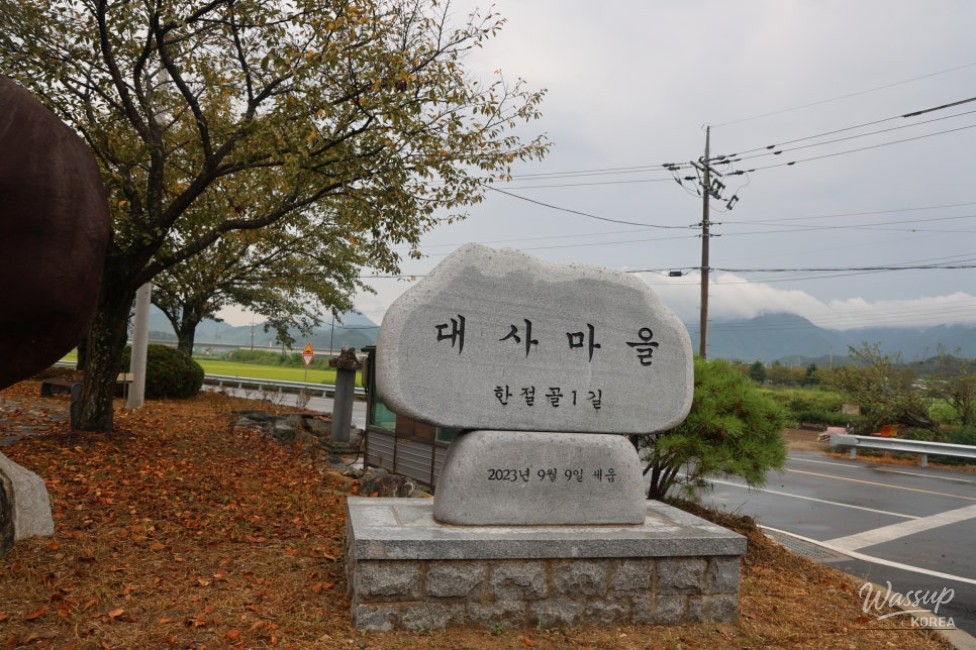
How does nature experience time? We humans often feel that time passes quickly when we look back. Green shoots emerge, filling the landscape with verdant hues, and then the leaves fall once more. This is the entrance to Daesa Village in Haman-gun. From the entrance, the fallen leaves announced the arrival of autumn.
The Haman Daesan-ri Standing Stone Buddha, located in Daesa Village, is designated as National Treasure No. 71. Judging from its overall stiff and rigid posture, unique monastic robes, and stylized concentric oval folds in the clothing, it is presumed to have been created during the Goryeo Dynasty.
Entering the village past the fallen leaves, a lone stone pagoda remains, indicating that a temple once stood here. The pilgrimage path crosses Daesa Bridge to the right, but it is worthwhile to visit the Daesan-ri Stone Buddha (Treasure) located 200 meters to the left.
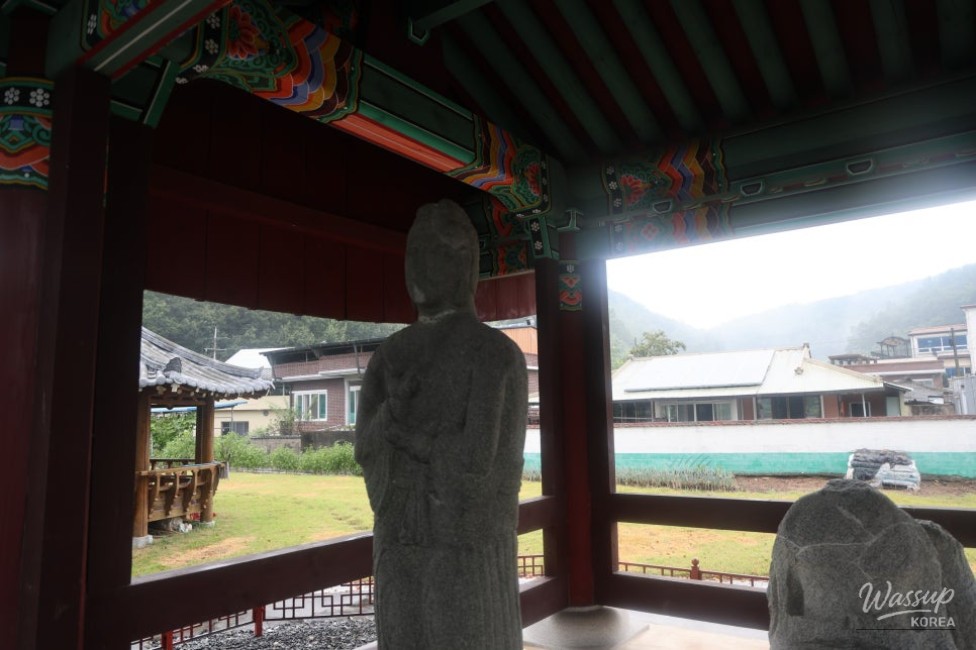
An old tree and a shrine housing the Stone Buddha appear in a space that seems to protect the village. In Gyeongsangnam-do, stone Buddhas in various poses can be easily found at village entrances. One of the stone Buddhas in Haman's tranquil village sits cross-legged, its head severed.
As time passes, some things become unknown. Sometimes, texts disappear, and sometimes objects that once embodied culture also vanish. There are theories that Confucian scholars broke the Stone Buddha's head during the Joseon Dynasty, or that Japanese soldiers severed the head during the Japanese invasion of Korea in the late 16th century.
We cannot know what the area around the Haman Daesan-ri Stone Buddha looked like in the past. However, judging by the sign indicating that it was the site of a temple, it seems that a temple, rather than a village, was once located here.
The two Bodhisattvas of the Haman Daesan-ri Stone Buddha are almost identical, differing only in the shape of their hands. They wear crowns resembling hoods on their heads, and their long faces feature slender eyes, flat noses, and small, thick lips.
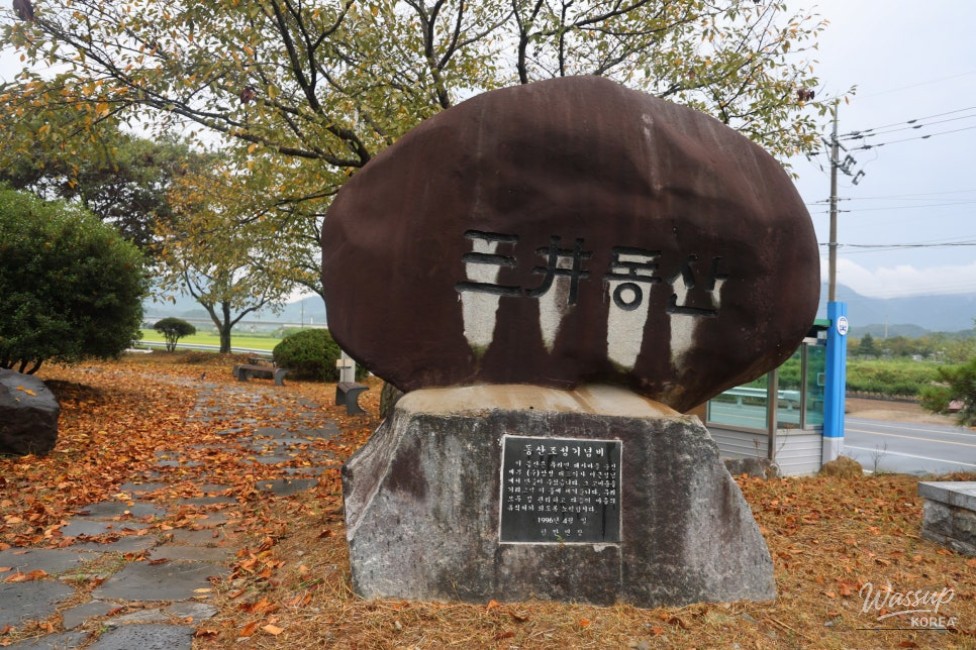
Near the Daesan-ri Stone Buddha, there is a small stele and ambiguous stone statues. The inscription on the marker reads, "The zelkova tree that was planted here at the temple site lived out its natural lifespan, and in its place, two elders from this village, Go Dong-won and Jo Yong-soo, planted a young zelkova tree that is now growing vigorously. Their hearts are commemorated in stone. May it continue to grow strong in the face of fierce rain and wind."
The locals call this place 'Daesa-ri (大寺里)' or 'Hanjeolgol,' meaning 'Big Temple Village,' suggesting that this was once the site of a large temple.
The site of a temple that has disappeared is called a 'saji.' The robes worn by the Daesan-ri Stone Buddha feel thick and heavy, and the oval folds of the clothing starting from the shoulder knots and both knees are commonly seen in localized stone Buddhas of the Goryeo Dynasty.
While famous maple viewing spots across the country have not yet changed their colors, this place was already filled with the atmosphere of late autumn. Doesn't everyone have memories of a brilliant time? Walking through the brilliant memories of Ar Gaya is a great space to meet the beauty of autumn.








Source :https://blog.naver.com/arahaman/224031740899
No comments yet.