Decoding the Sangsaeng Payback: Why You Might Not Have Received It and How to Use It


Did everyone receive their Sangsaeng Payback for September?
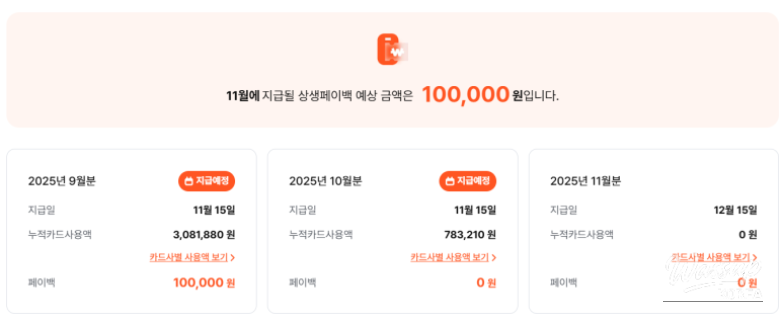
I received ₩100,000 for my September Sangsaeng Payback! (around $75 USD)
The Sangsaeng Payback program refunds 20% of the monthly increase in spending from September to November of '25, compared to your average monthly card spending in '24, in the form of digital Onnuri gift certificates.
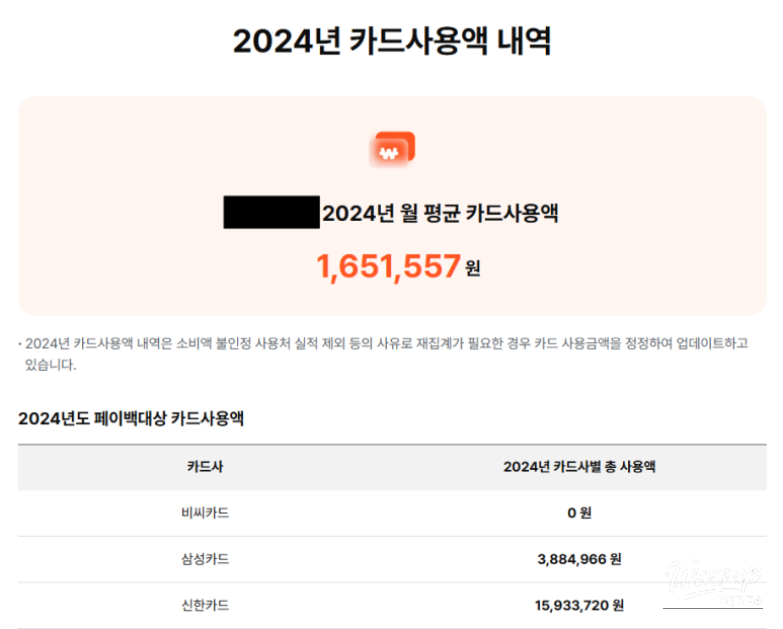
For example, I spent an average of ₩1,651,557 per month in '24 (including corporate card usage, it seems).
But in '25, I used the corporate card a lot as the team's treasurer, so my cumulative amount for September was ₩3,081,880.
So, September '25 cumulative amount: ₩3,081,880
'24 monthly average amount: ₩1,651,557
That means I'll receive 20% of ₩1,430,323, which is ₩286,064, as a digital Onnuri gift certificate on October 15th. (The maximum support is ₩100,000 per month.)
If I meet the requirements in October and November, I'll receive the payback on the 15th of the following month, respectively.
However, many of my acquaintances haven't received it.
Today, I'm going to break down the reasons why you might have received ₩0 for the Sangsaeng Payback, based on what I've learned. I wish I had known this sooner to be less frustrated.
1. The problem is 'Where You Spent It': The Place of Consumption Matters the Most
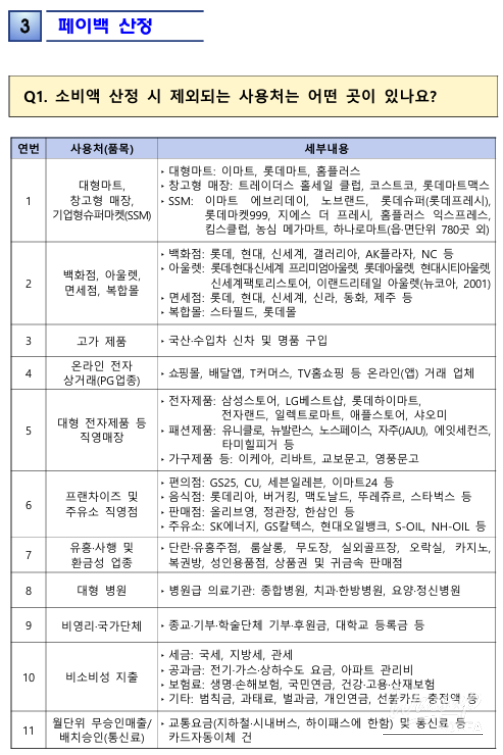
Honestly, I thought I would automatically receive the Sangsaeng Payback once I applied. But there was a variable: certain places of consumption are excluded when calculating spending.
I felt betrayed when I saw the notice I received this time. Places where I thought I was diligently spending were completely excluded from the spending calculation.
Typically, money spent at large supermarkets like Emart, Lotte Mart, Traders, and Homeplus is entirely excluded from spending. Convenience stores, department stores, shopping malls, gas stations, and even automatic payments for communication bills are all excluded.
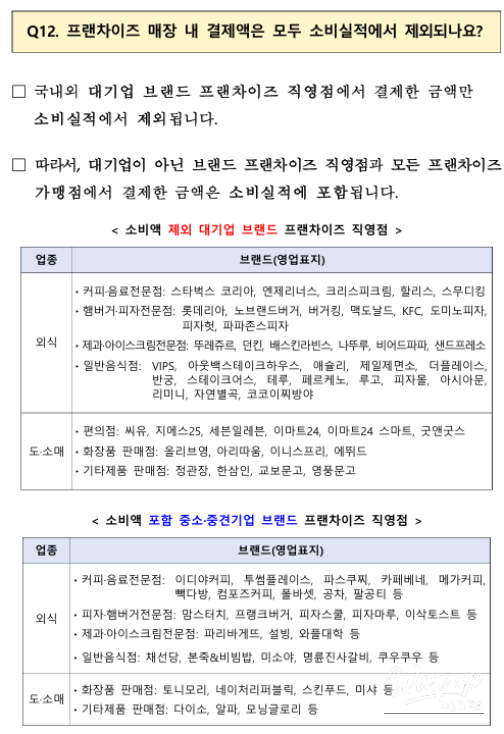
Even franchise stores were a problem. Spending at brand stores we often visit, such as Starbucks, Ediya, Mom's Touch, Burger King, Kyochon Chicken, BHC, Paris Baguette, and Emart24, is all excluded. So, where are we supposed to spend?
You must make direct payments at local small business franchise stores, and large corporate-run franchises are all excluded. In particular, many people mistakenly believe they've spent enough based solely on their card statements.
2. Franchises: 'Directly Managed Stores' Are Not Allowed, but 'Franchise Stores' Are Allowed?
Typically, amounts spent at large franchise directly managed stores are mostly excluded from spending calculations. Especially brands that we use so naturally in our daily lives, such as Starbucks, Ediya, Burger King, Mom's Touch, Paris Baguette, Kyochon Chicken, Krispy Kreme, and KFC, are all included in this rule.
This also applies to convenience stores like Emart24, 7-Eleven, Mini Stop, CU, and GS25, as well as beauty brands like Olive Young, Aritaum, The Face Shop, and Innisfree if they are directly managed by large corporations.
Conversely, franchise stores are recognized.
This ultimately means that where you spend your money is the most important thing. Even if you spend the same ₩300,000, it could be treated as ₩0 depending on where you spent it. Confusingly, the same brand can have both directly managed stores and franchise stores, so you can't simply be relieved by just looking at the name.
It's incredibly complicated, right? Now, you must remember that only spending at local small business franchise stores is recognized as spending.
3. Where Can You Use the Payback?
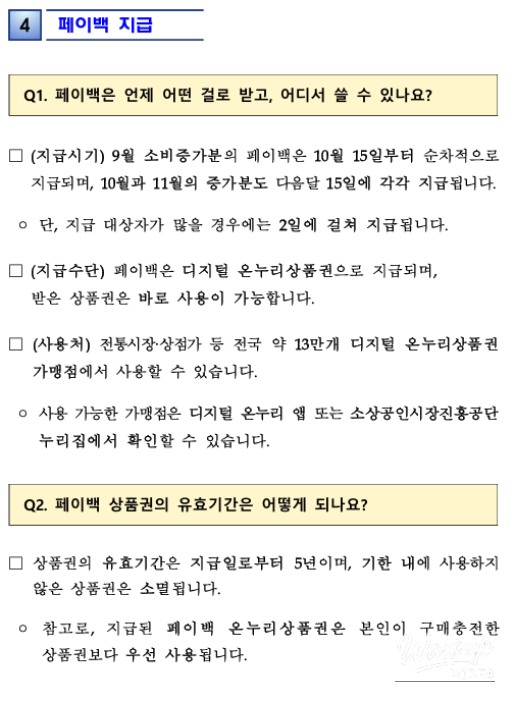
Those who receive the Sangsaeng Payback will receive it in the form of digital Onnuri gift certificates, which can be used immediately.
Where to Use:
About 130,000 digital Onnuri gift certificate merchants nationwide, including traditional markets and shopping districts.
You can check the locations on the Digital Onnuri app or the Small Enterprise and Market Service website.

No comments yet.