Exploring the Cultural Heritage of Goesan
충청북도 괴산군 연풍면 행촌리 590



[ Goesan Travel ]
Must-Visit Places in Goesan County
Goesan's Pungnakheon, Yeonpung Hyangcheong, and Yeonpung Hyanggyo
Among the artists of the Joseon Dynasty, the most approachable figure might be the genre painter Kim Hong-do. Together with Shin Yun-bok, who painted intimate scenes such as those of village schools and wrestling, he represents the era. Born into a common family of the middle class, he is said to have learned art and literature from the famous literati painter Pyoham Kang Se-hwang. During King Jeongjo's reign, he was responsible for all the paintings in the palace and even created royal portraits. Due to his contributions, he was appointed as the governor of Yeonpung and spent three years in Goesan's Yeonpung.
Today, Yeonpung preserves the traces of Kim Hong-do in Pungnakheon, Yeonpung Hyangcheong, and Yeonpung Hyanggyo.
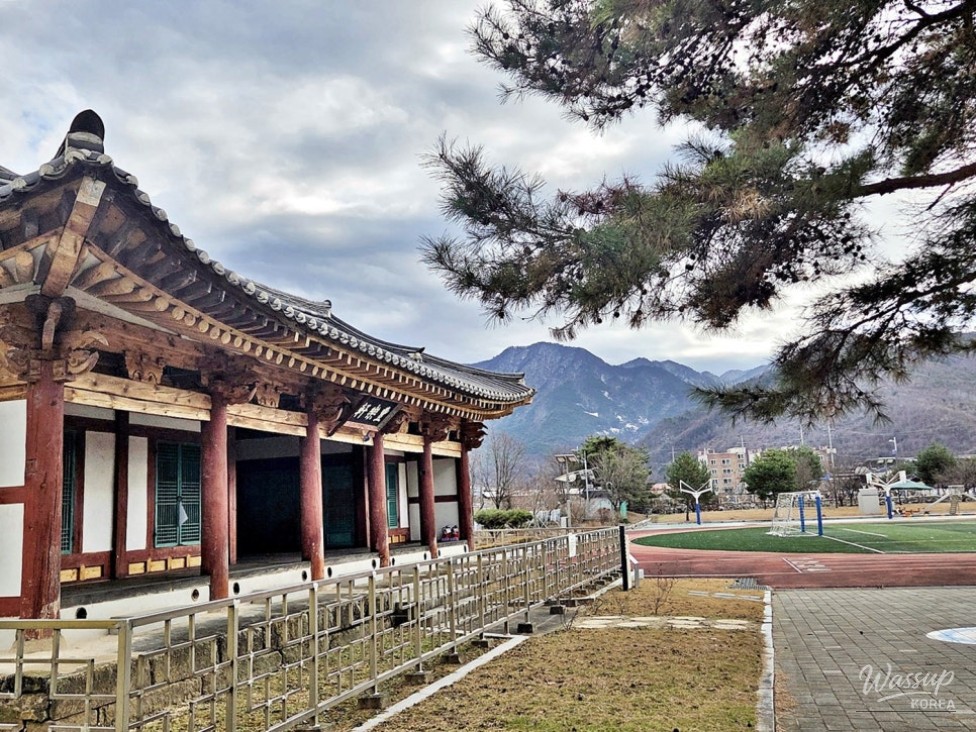
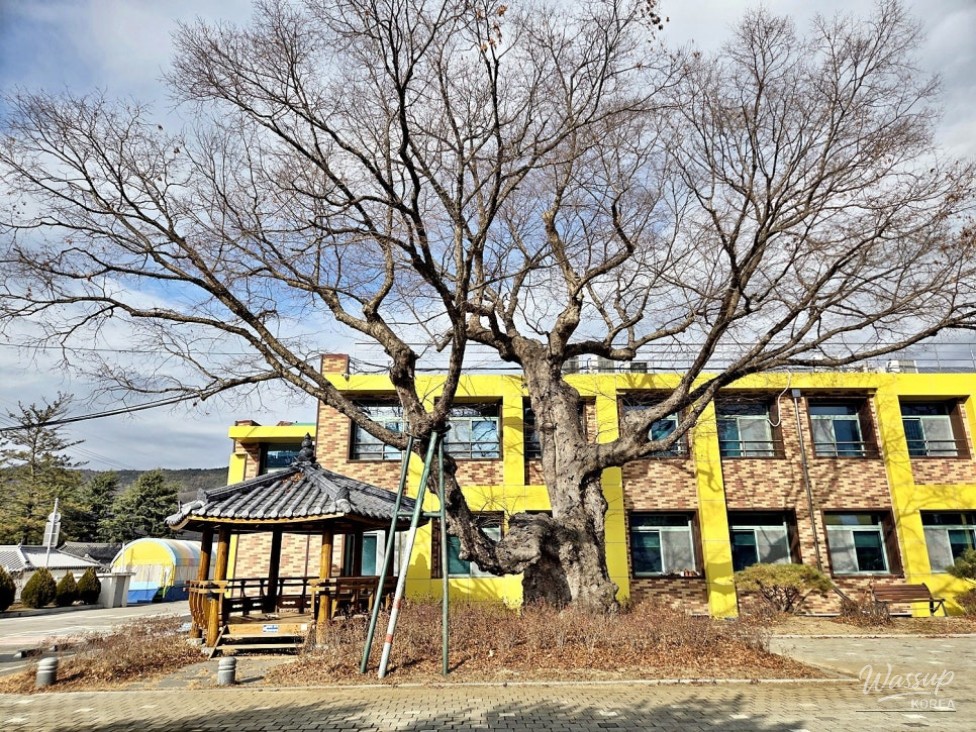
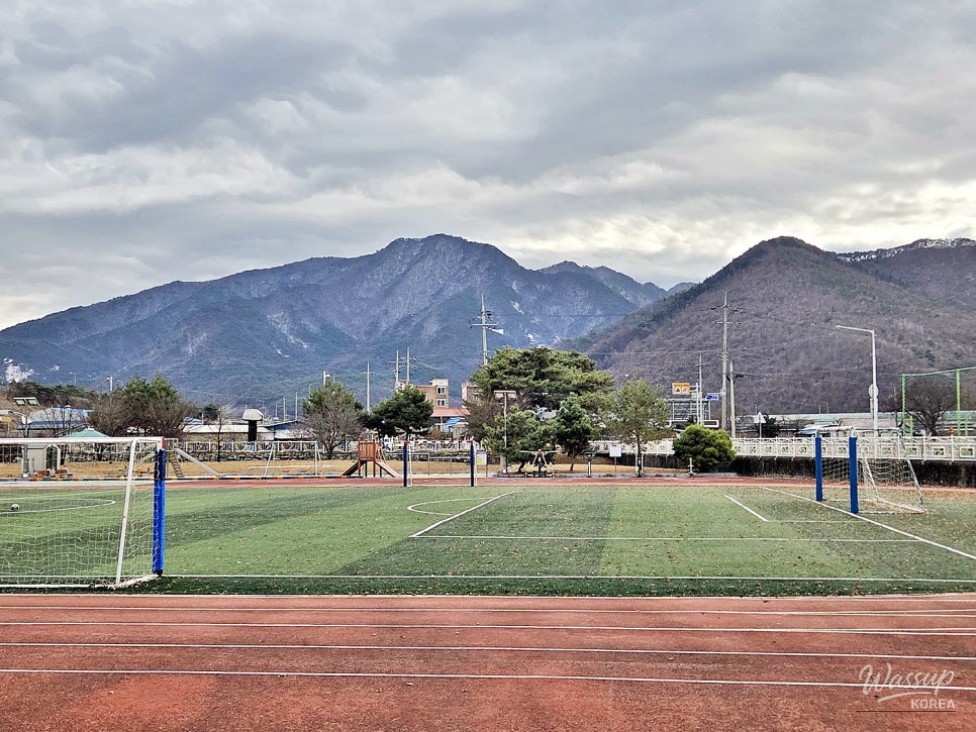
Starting from Pungnakheon, where the legacies of King Jeongjo and Governor Kim Hong-do are found, we embark on a journey to explore the cultural heritage of the Joseon Dynasty. The first site, Pungnakheon, is located within Yeonpung Elementary School, established in 1909, celebrating its 100th anniversary in 2008. Entering through the main gate and passing between the playground and classrooms, we find Pungnakheon at the end. It served as the government office of Yeonpung during the Joseon period. Originally built in 1663 during King Hyeonjong's reign, it was renovated in 1766 during King Yeongjo's reign, receiving its name 'Pungnakheon' with a plaque. There is also a protective tree, aged 300 years, at the entrance.
Along with the cultural heritage of Chungcheongbuk-do, the connection between Governor Kim Hong-do and King Jeongjo is introduced. The building features a large structure with five bays in the front and three on the side, showcasing the architectural style of the Joseon era. It was used as a school building for Yeonpung Elementary School in 1920 and was relocated to its current position after renovations in 1965.
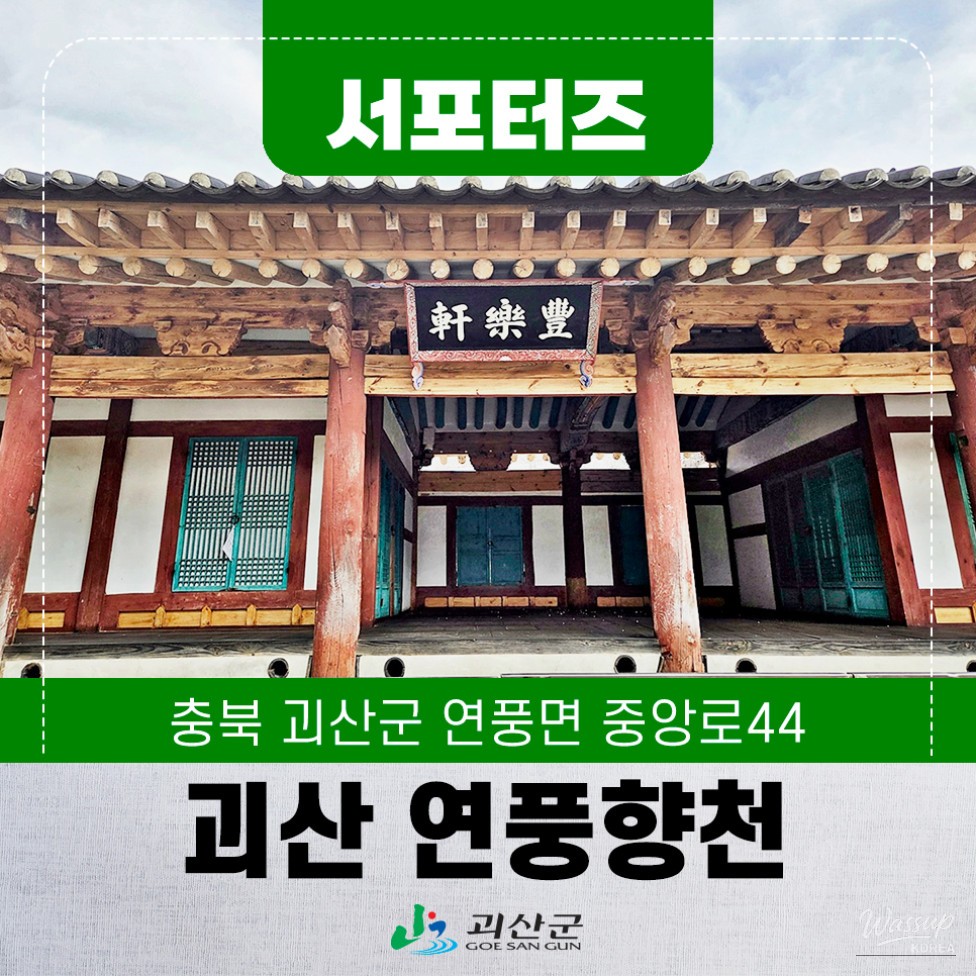
Adjacent to Yeonpung Elementary School, facing it, is Yeonpung Hyangcheong, established to assist local officials in their administrative duties during the Joseon Dynasty. It played a role in regulating local customs and advising on taxation and labor distribution.
Yeonpung Hyangcheong is located just across a one-lane road from Yeonpung Elementary School. However, since the entrance is on the opposite side, it requires a detour. After the annexation of Korea in 1910, it was used by the military police and local police station until it became a Catholic chapel in 1963.
The building is a wooden tile-roofed house with five bays in the front and two on the side, which underwent restoration in 1995. The ondol (Korean floor heating) rooms were restored to their original state, and the roof style was changed from a single to a double eave. It is still used for church services today.
Next on our journey, after Pungnakheon and Yeonpung Hyangcheong, is Yeonpung Hyanggyo. The exploration of cultural heritage that began at Yeonpung Elementary School concludes with a visit to this educational institution from the Joseon era. Starting from the horse stone, we proceed to the marker of Yeonpung Hyanggyo and the Hongsalmun gate.
The educational institution of the Joseon era conducted traditional etiquette education on November 28 at Yeonpung Elementary School. This site, which has a history of 500 years, was first established in 1515 during King Jungjong's reign.
Although it suffered from a fire during the Korean War, destroying the Myeongnyundang and the east and west rooms, it was restored between 1978 and 1979 to take on its current form.
The outer walls, topped with tiles, lead to the outer and inner gates, preserving the dignity and depth of traditional space.
At the end of a long alley inside, the etiquette classroom is located outside the wall, with Myeongnyundang and the east and west study rooms facing each other. The beautiful nature of Goesan, including Joryeongsan, Sinsunam-bong, and Jobong ridge, stretches out, resembling a scene where scholars of the time might have composed poetry about nature.
On a stone platform, the inner gate leads up to the Daejeong shrine. Yeonpung Hyanggyo is always open, but access to the Daejeong shrine, a ceremonial space, is restricted. Nonetheless, the view of the shrine can be seen over the low wall. The beam document written during the restoration in 978 confirms that it was founded by Governor Lee Su-yak in 1628 and rebuilt by Governor Gwak Se-ik in 1664, about 100 years before Kim Hong-do was appointed as the governor of Yeonpung.
Goesan Yeonpung was a central location with a Dongheon and Hyangcheong during the Joseon era, preserving the traces of that time. The history harmonizes with the natural scenery of Joryeongsan Recreational Forest and Suwok Falls. It is recommended as a family getaway during the upcoming winter vacation for historical exploration.
Yeonpung Pungnakheon: 53 Jungang-ro, Yeonpung-myeon, Goesan-gun
Yeonpung Hyangcheong: 44 Jungang-ro, Yeonpung-myeon, Goesan-gun
Yeonpung Hyanggyo: 40-2 Hyanggyo-ro, Yeonpung-myeon, Goesan-gun
No comments yet.