Exploring the Majestic Mitas Temple in Eumseong, South Korea



As you drive along the road from Chungju to Eumseong, a gigantic Buddha statue comes into view, sparking curiosity and naturally drawing you in. This remarkable place is the Mitas Temple in Eumseong, a well-known destination in Chungbuk.
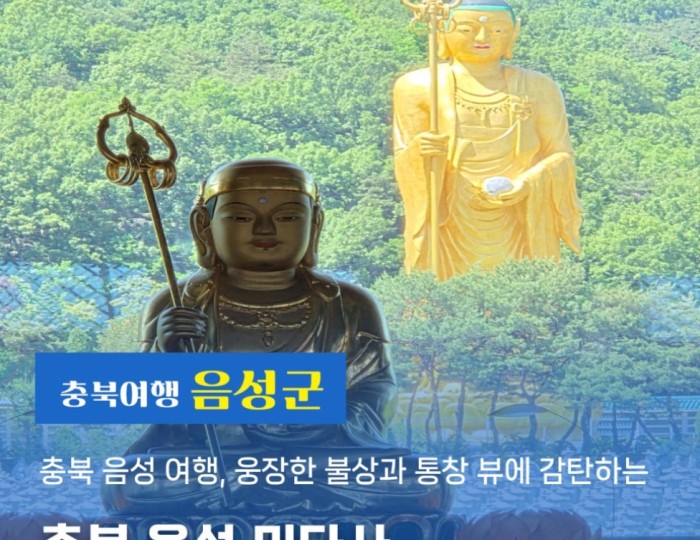
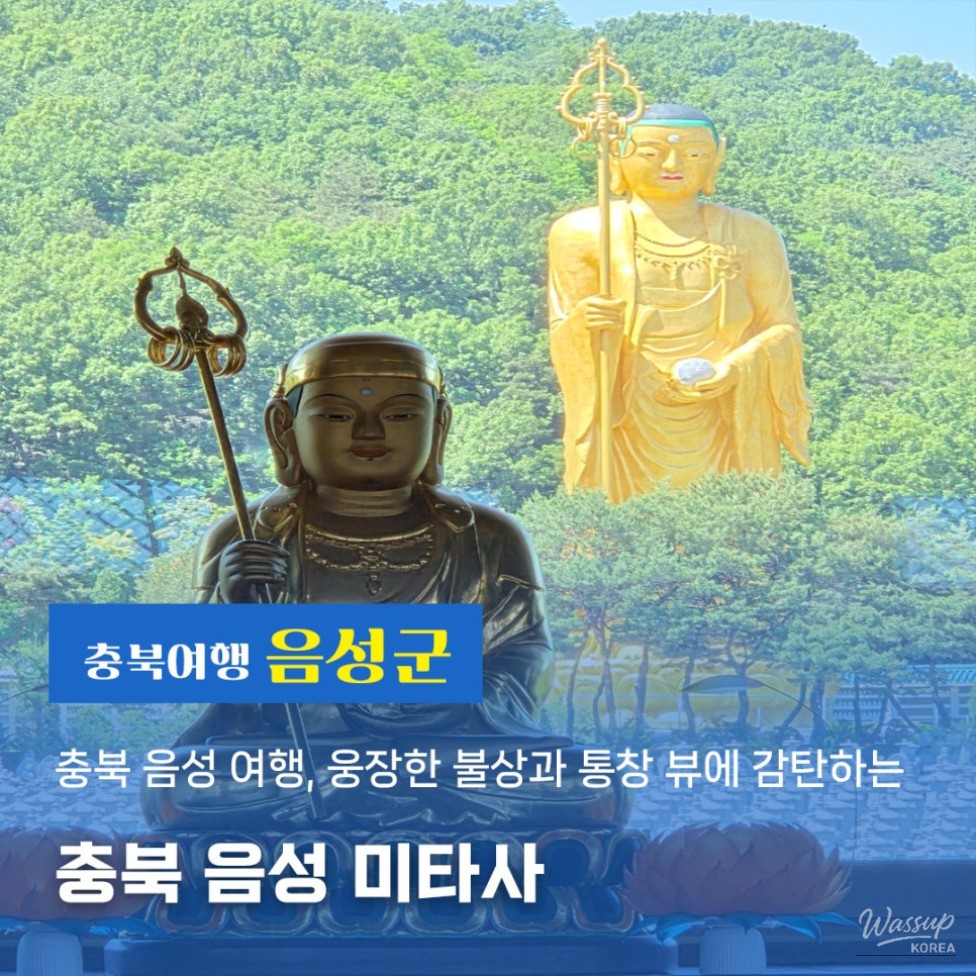
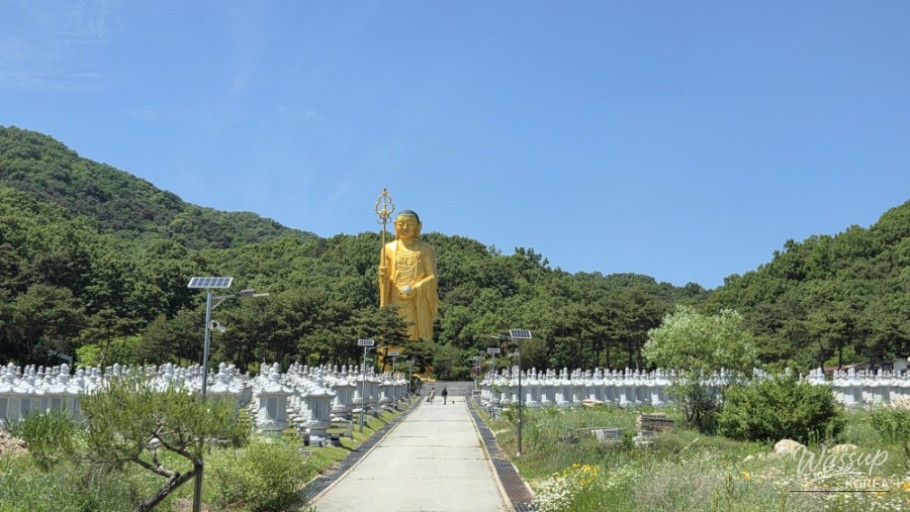
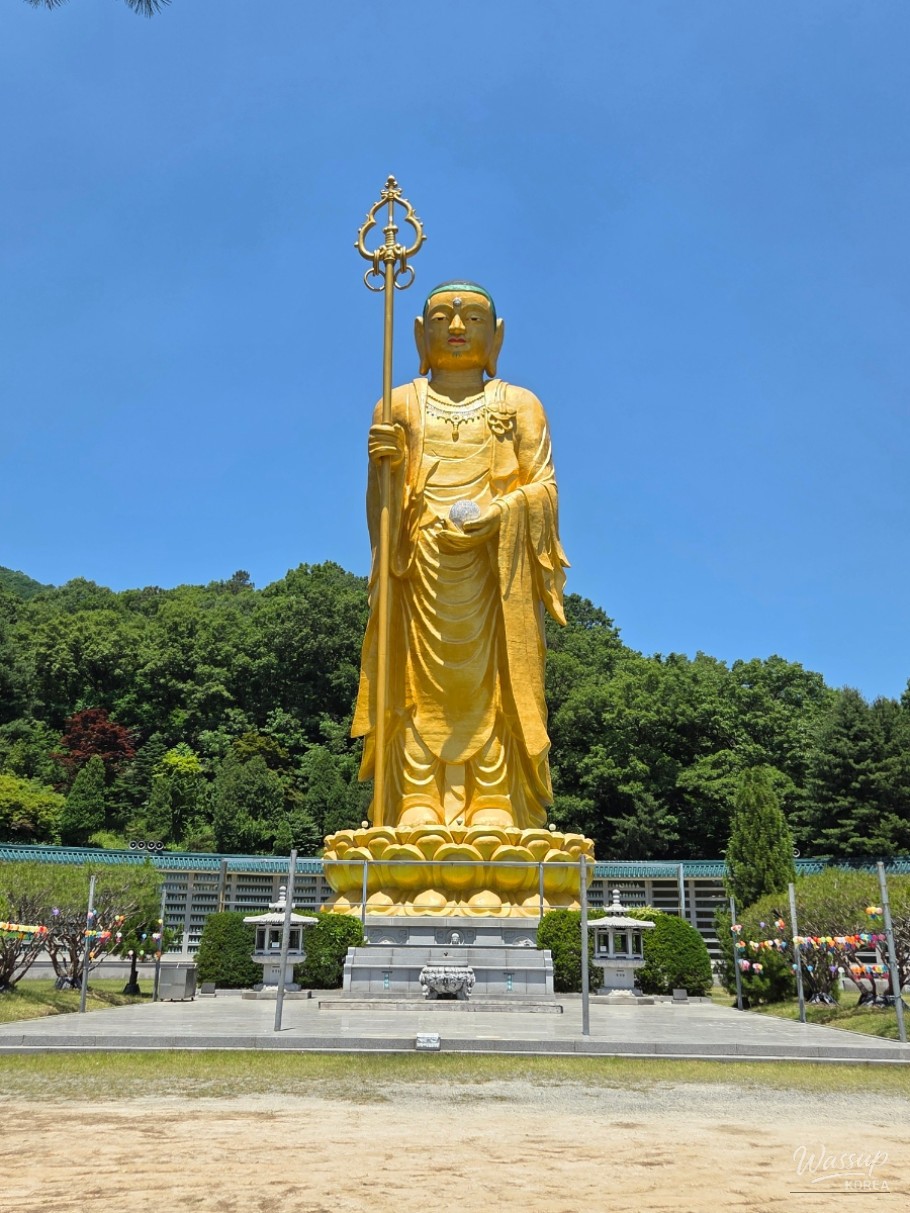
The temple houses the largest statue of the Bodhisattva Ksitigarbha in the East, which conveys its grandeur even from a distance.
Mitas Temple is located on the slopes of Gaseopsan Mountain, with another temple, Gaseopsa, perched on the opposite peak.
Unlike many temples situated deep in the mountains or at their summits, which often have narrow and rugged access roads, Mitas Temple is easily accessible for novice drivers from the entrance gate to the statue of Ksitigarbha.
Despite its considerable size, which includes the main hall and the Ksitigarbha statue, vehicles can drive right up to the temple, with ample parking available nearby, allowing for a comfortable visit.
I began my exploration slowly from the area where the Ksitigarbha statue is located. Let me share my impressions of the temple's structures.
Unlike typical temples that feature a Daeungjeon or Daeungbojeon, Mitas Temple is centered around the 'Gukrakjeon' hall.
In Gukrakjeon, Amitabha Buddha is enshrined as the main deity, flanked by Avalokiteshvara and Mahasthamaprapta Bodhisattvas.
As I walked around the temple, I was reminded of the stories I learned about Ksitigarbha when I first studied Buddhism. Ksitigarbha vowed, "I will not attain Buddhahood until hell is empty, and only after saving all sentient beings will I achieve enlightenment." This selfless commitment to saving others deeply moved me in front of the majestic statue.
Regardless of one's faith, this is a place where anyone can comfortably visit and find peace of mind.
Mitas Temple also has a rich historical background. It was first established during the reign of Queen Jin-deok in Silla and underwent renovations by the great monk Muhak during the Joseon Dynasty. Although it was significantly restored as a national defense temple, it suffered a devastating fire during the reign of King Yeongjo. In the early 1960s, monk Myungan began to rebuild the temple, leading to its current form, which is now renowned for housing the largest Ksitigarbha statue in the East.
Thanks to the kind introduction from the temple staff during my visit, I learned many fascinating stories about Mitas Temple.
Notably, the Ksitigarbha Hall has a unique design that differs from traditional temple atmospheres, making it quite impressive.
The temple is designed with large windows, allowing newcomers to quickly feel at home, and the breathtaking view outside is truly remarkable. The sight of the Ksitigarbha statue through the expansive windows is awe-inspiring.
Another must-see is the 'Ma-ae Yeorae Ipsang,' designated as a cultural heritage site in Chungcheongbuk-do. This intricately carved statue on a natural rock face is believed to date back to the late Silla or early Goryeo period, and its gentle smile brings comfort to those who gaze upon it.
Mitas Temple leaves a strong impression even from a moving vehicle, but once you enter the grounds, it offers the perfect setting for slow contemplation.
With the season of blooming lotus flowers approaching, I plan to visit again when the two lotus ponds in the temple are filled with beautiful white lotus blossoms.
How about taking a quiet stroll while enjoying the serene view of the elegant white lotus flowers alongside the majestic Ksitigarbha statue? If you're looking to find peace of mind over the weekend, I highly recommend visiting Mitas Temple in Eumseong, Chungbuk.
Source :https://blog.naver.com/cbkb21/224321026984
No comments yet.