Exploring the Historic Yeongguksa Temple in Chungbuk
- Place
- Yeongguksa
- Region
- Yeongdong-gun, Chungcheongbuk-do
- Original source
- blog.naver.com


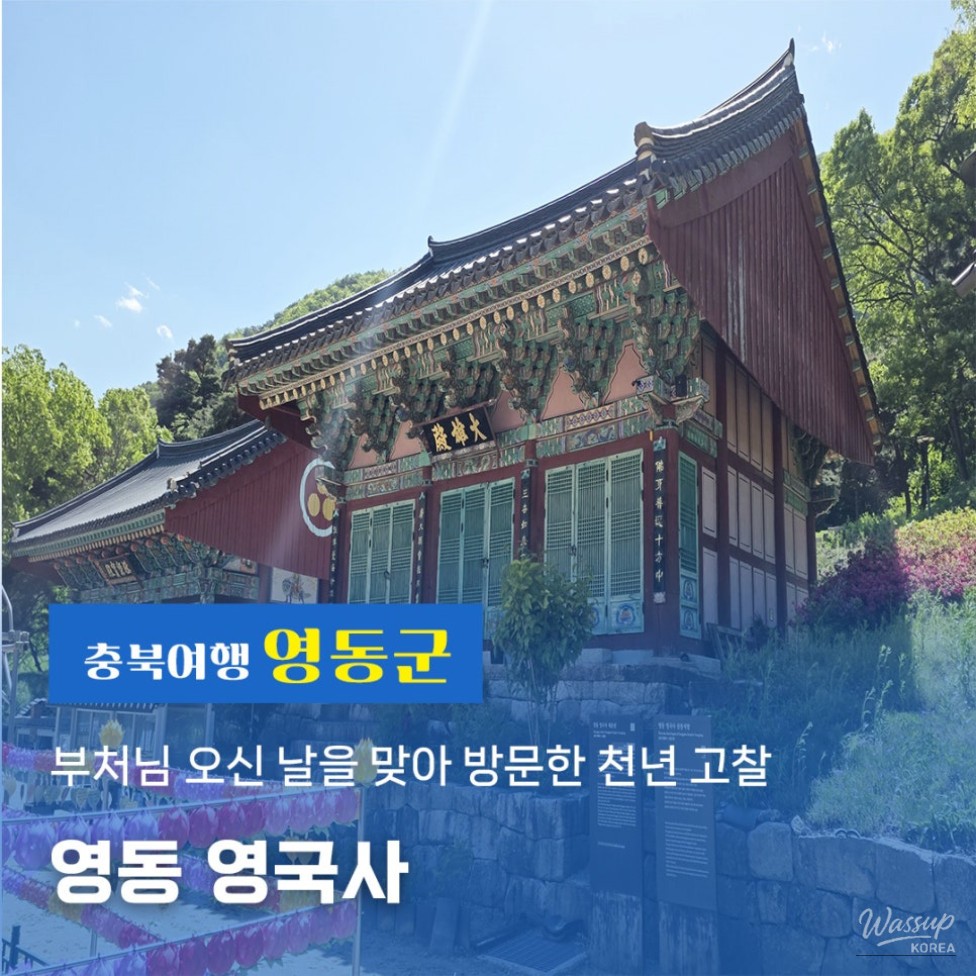
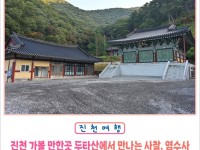
Yeongguksa, located in Yeongdong-gun, Chungcheongbuk-do, is the second traditional temple of Yeongdong.
Nestled at the foot of Cheontae Mountain, Yeongguksa is also famous for its millennium-old ginkgo tree, a natural monument.
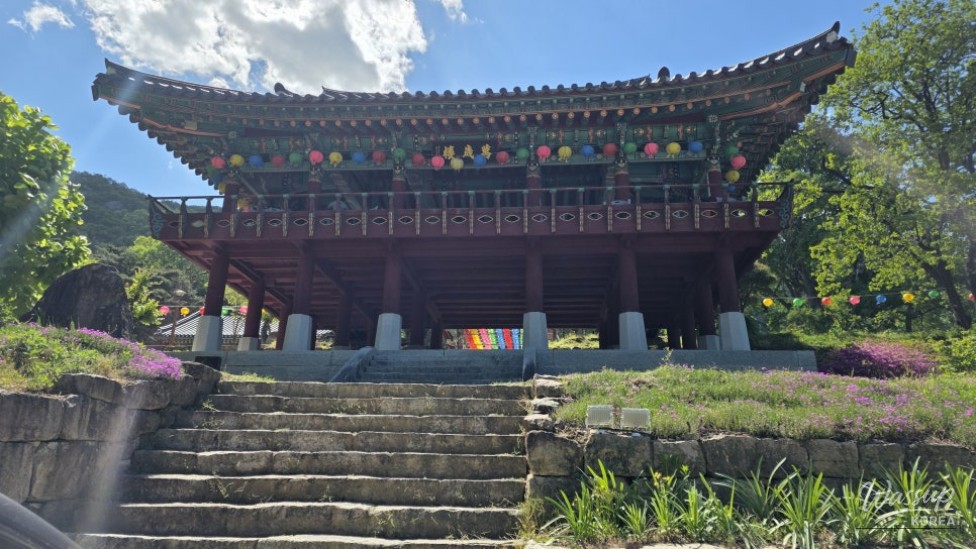
As you venture deep into the winding mountains, you will finally encounter Yeongguksa, where the colorful lanterns and vibrant flowers blend with the blue sky in preparation for Buddha's Birthday, creating an otherworldly atmosphere.
It is said that during the late Unified Silla period, the great monk Uicheon of Goryeo renamed this temple from its original name, Gukcheongsa.
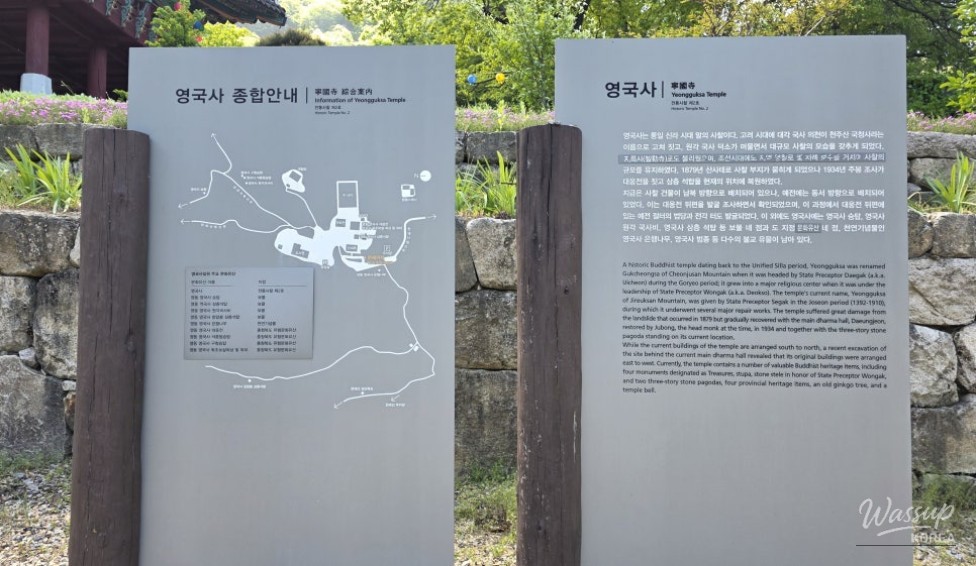
Originally oriented east-west, it is now positioned north-south, facing east.
After being buried by a landslide in 1879, the main hall was rebuilt in 1934, and the three-story stone pagoda was restored to its current location.
Climbing the stairs beneath the Manseru, you will find a dazzling world filled with lanterns.
The three-story stone pagoda you encounter is a national treasure, believed to have been built in the late 9th century during the late Silla period.
Yeongguksa is home to four treasures, including the monk's stupa, the Won-gak Guksa monument, and the three-story pagoda at Mangtabong, all designated as treasures.
Next to the three-story pagoda, there is a Bodhi tree.
The Bodhi tree is significant as it is said that Buddha attained enlightenment under it, hence it is also referred to as the holy tree.
The fruits of the Bodhi tree are used to make prayer beads.
The main hall of Yeongguksa was restored in 1934 and dismantled and rebuilt in 1980.
It was founded by Won-gak Guksa during the reign of King Beopheung or King Munmu of Silla, and it became Yeongguksa when Goryeo's King Gongmin prayed for national peace here.
The national treasure, the Won-gak Guksa monument, is located here.
Inside the main hall, you can see a seated statue of Sakyamuni Buddha as the main deity, with Guanyin Bodhisattva on the left.
The altar is a place of prayer for national peace, prosperity, and world peace.
Next to the main hall is the Geukrakbojeon.
Its vibrant and beautiful dancheong (traditional decorative painting) suggests it was built not long ago, adorned with tiles inscribed with the spirit of Buddhism.
In Geukrakbojeon, the three Buddhas are enshrined, centered around Amitabha Buddha.
The interior of the wind plate on the side of the roof also showcases beautiful dancheong.
Climbing the stairs between the main hall and Geukrakbojeon leads to the ancient site of Yeongguksa.
Archaeological excavations conducted in 2003 and 2005 unearthed various artifacts.
Following the circular stepping stones laid like a bridge at the ancient site leads to the Samsunggak.
From in front of Samsunggak, you can overlook the grounds of Yeongguksa.
The area around the three-story pagoda is filled with the wishes of the faithful.
Next to the Manseru, there is a large stone basin carved from rock.
Though there are no explanations, it carries the weight of many years.
At the entrance to the investigation office, you can find information about temple stays, memorial services, and lantern registrations at Yeongguksa.
This is a glimpse into the history of the millennium-old temple, Yeongguksa, revisited in a beautiful season.
The ginkgo tree at Yeongguksa, a natural monument, is especially famous in autumn for its golden leaves.
Estimated to be over a thousand years old, it stands 31 meters tall with a circumference of over 11 meters, requiring six adults to embrace it, although access is restricted.
Consider reading the writings of those who love the Cheontae Mountain ginkgo tree.
Various hiking trails connect around Yeongguksa.
This Buddha's Birthday, visiting Yeongguksa and hiking Cheontae Mountain will surely replenish your spirit in May.
Source :https://blog.naver.com/cbkb21/224287305662
More from Travel


No comments yet.