Exploring Goeisan: A Journey to Bongseojae



[ Goeisan Travel ]
Must-Visit Places in Goeisan County
In search of Bongseojae, a place where nature and history breathe together.
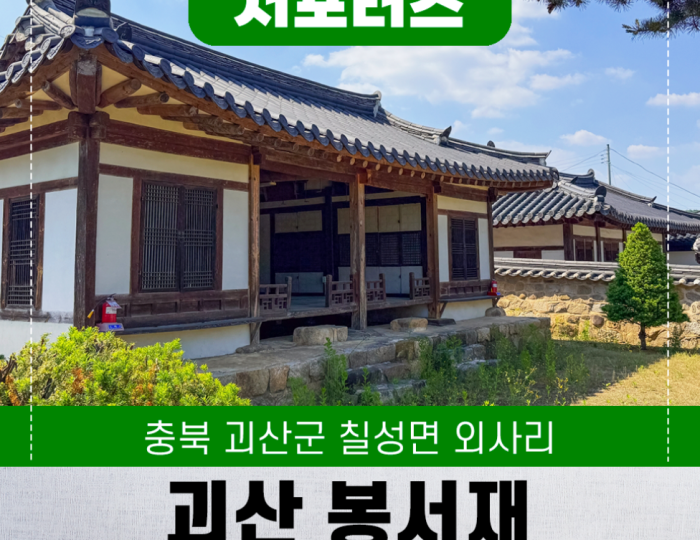
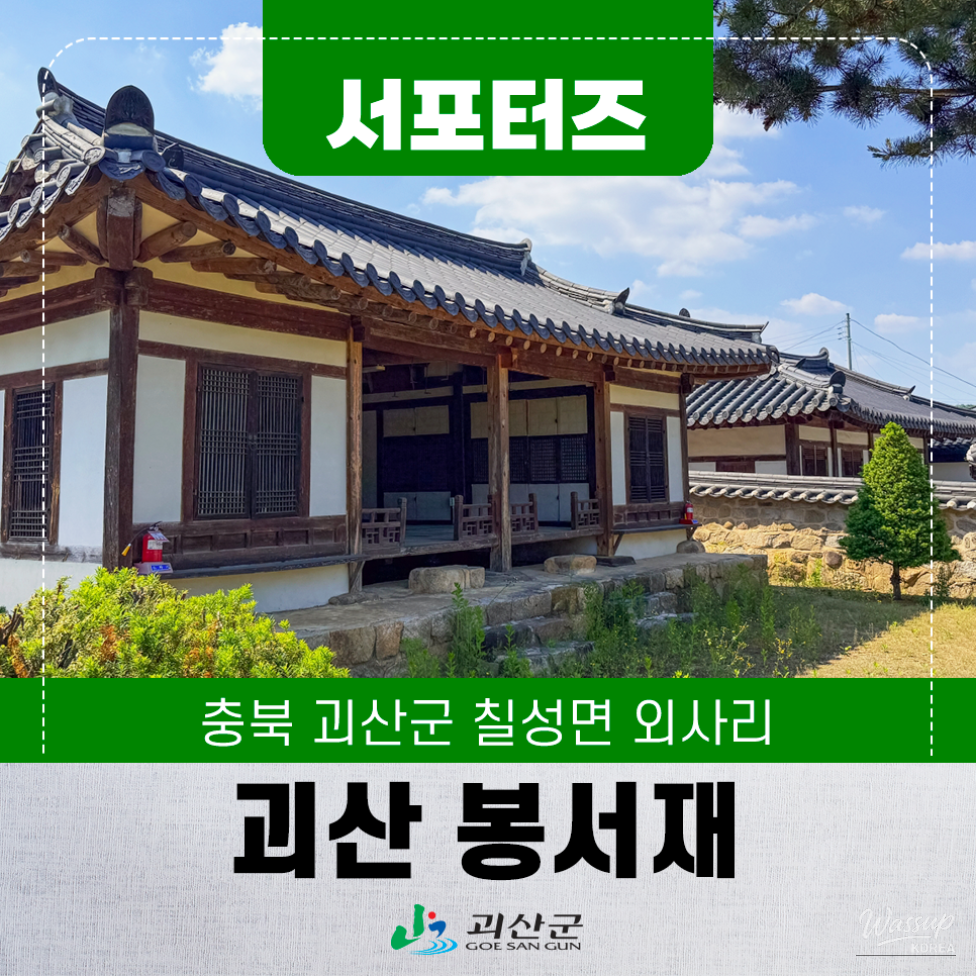
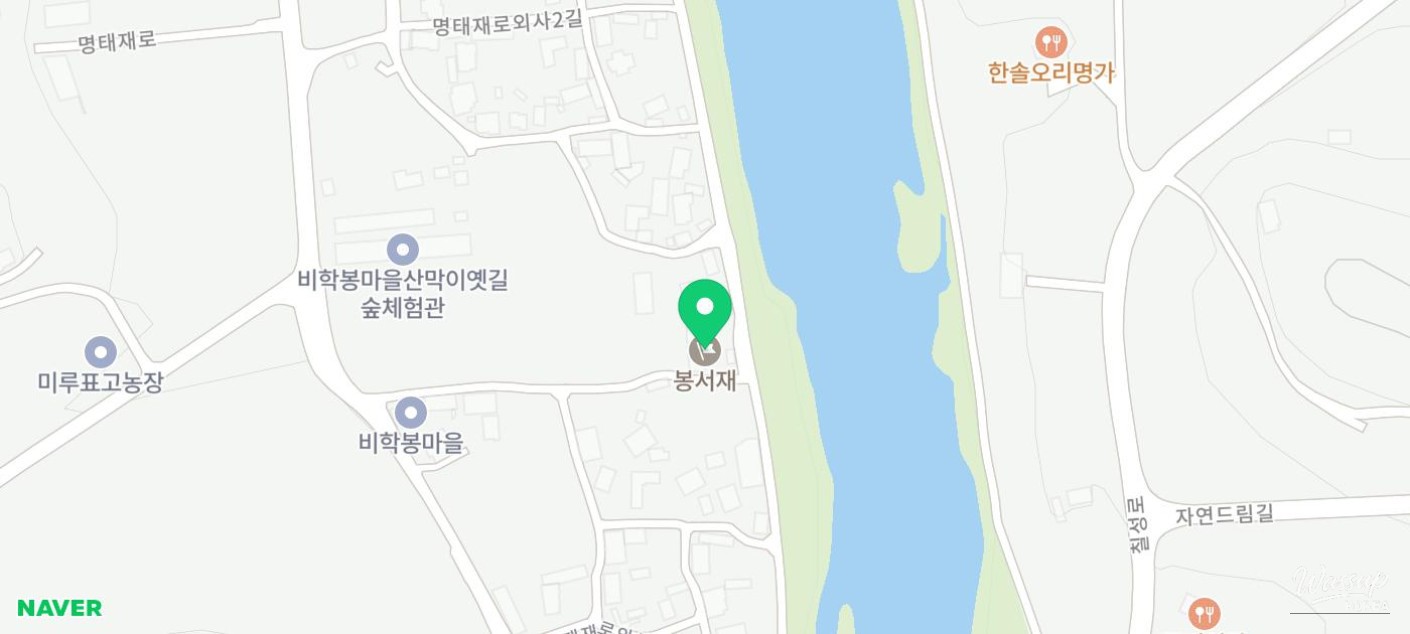
Bongseojae (槐山 鳳棲齋) is a traditional building from the Joseon Dynasty located in Oesari, Chilseong-myeon, Goeisan-gun, Chungcheongbuk-do. It is designated as Cultural Heritage Material No. 21 of Chungcheongbuk-do, preserving its significance as a historical site.
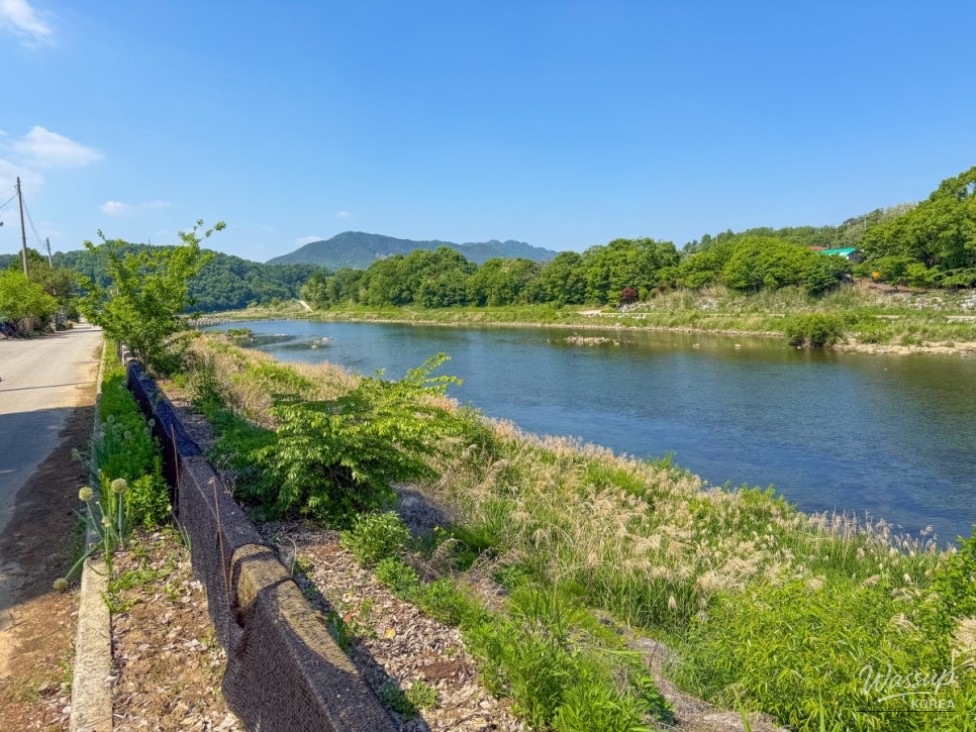
Next to Bongseojae flows a clear and calm river known as Dalcheon, where the greenery along the riverbank reflects beautifully on the pristine water surface.
As you walk further along the river, a massive zelkova tree stands tall, welcoming visitors like a guardian of the village. Its roots are firmly planted on a large rock, and its lush branches have provided shade to countless visitors for many years.
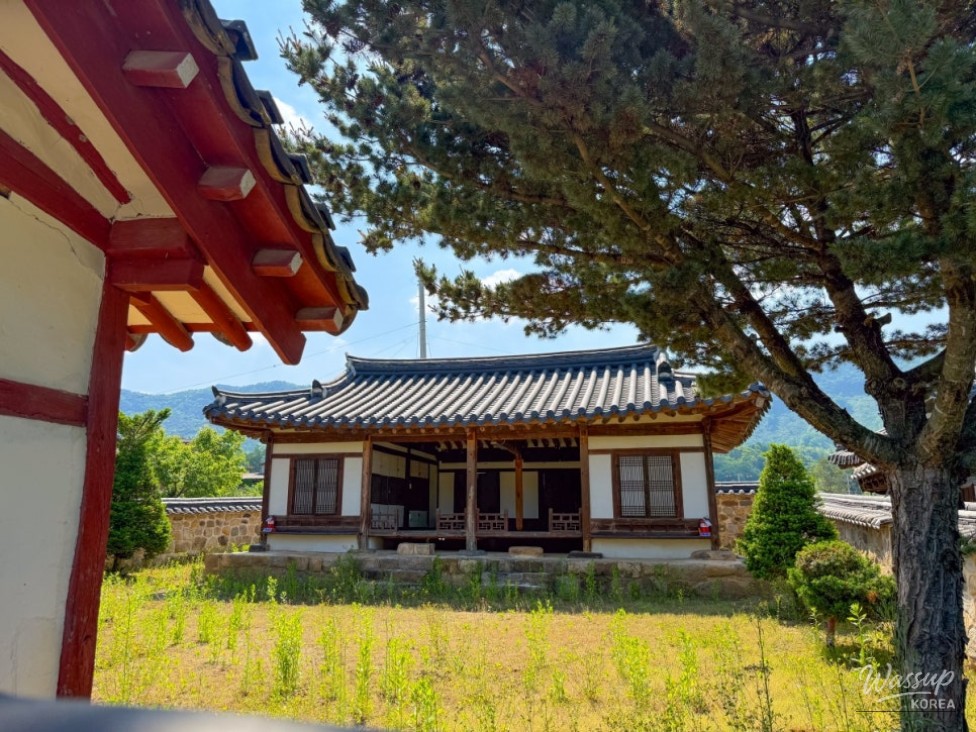
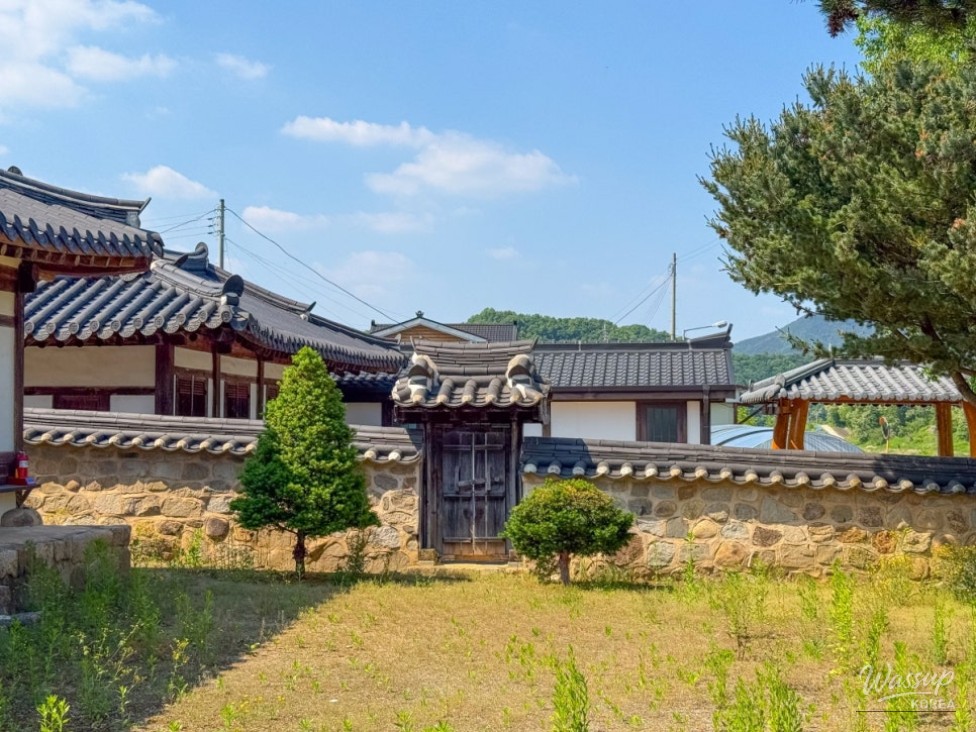
The traditional stone wall, made of round and flat natural stones stacked with mud and topped with tiles, enhances the warmth of the traditional hanok. Beyond the wall, a building with red pillars and white walls stands out, complemented by a pine tree that adds an Eastern aesthetic.
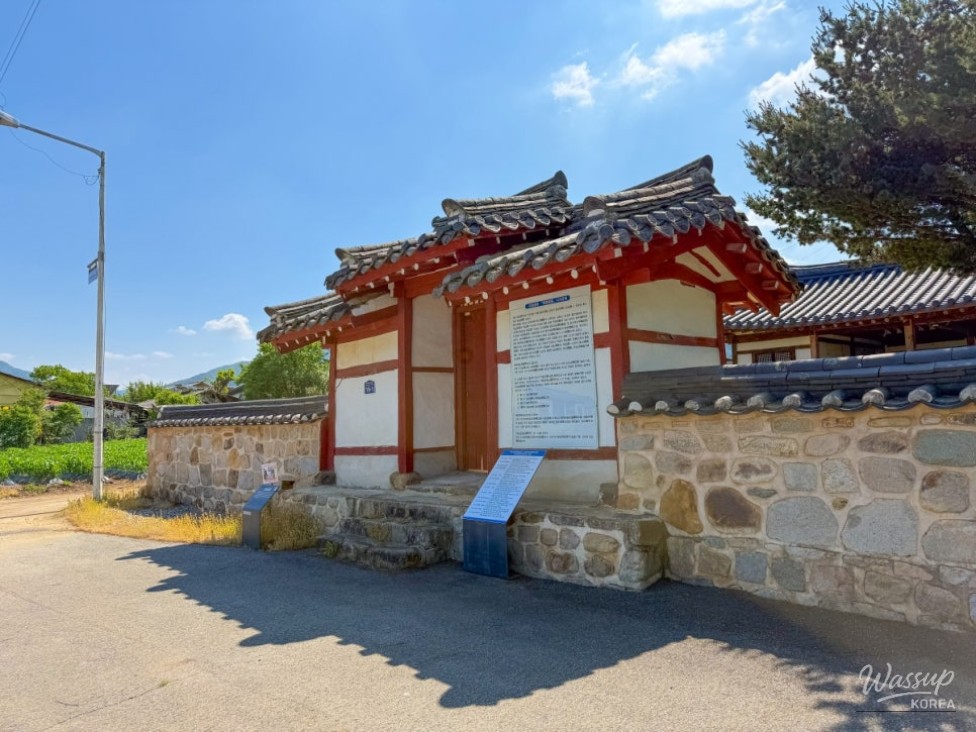
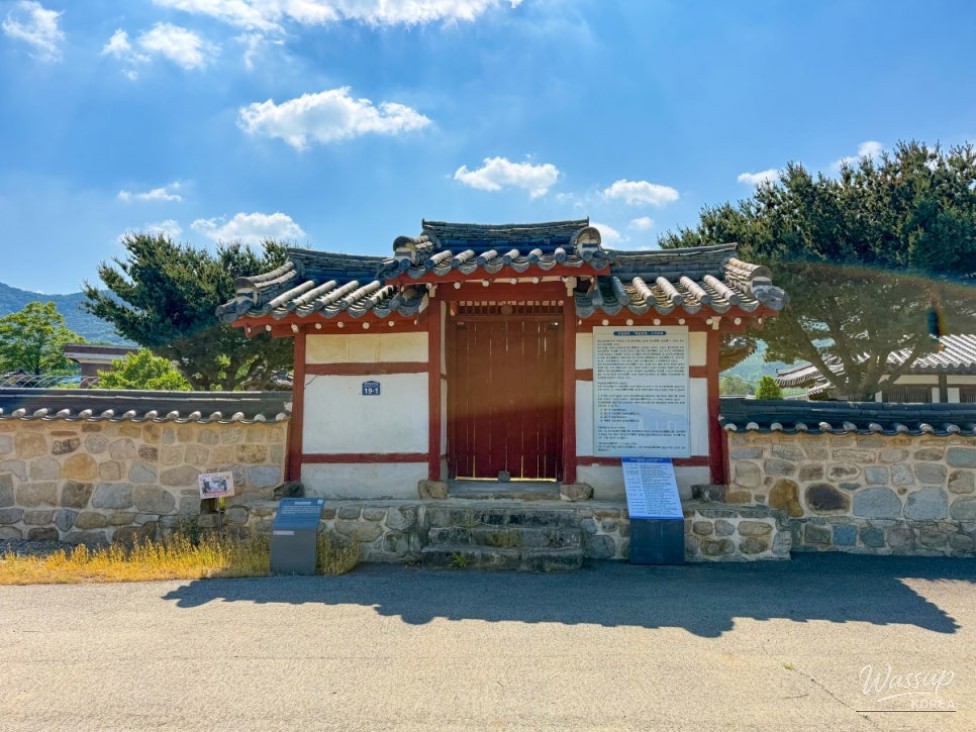
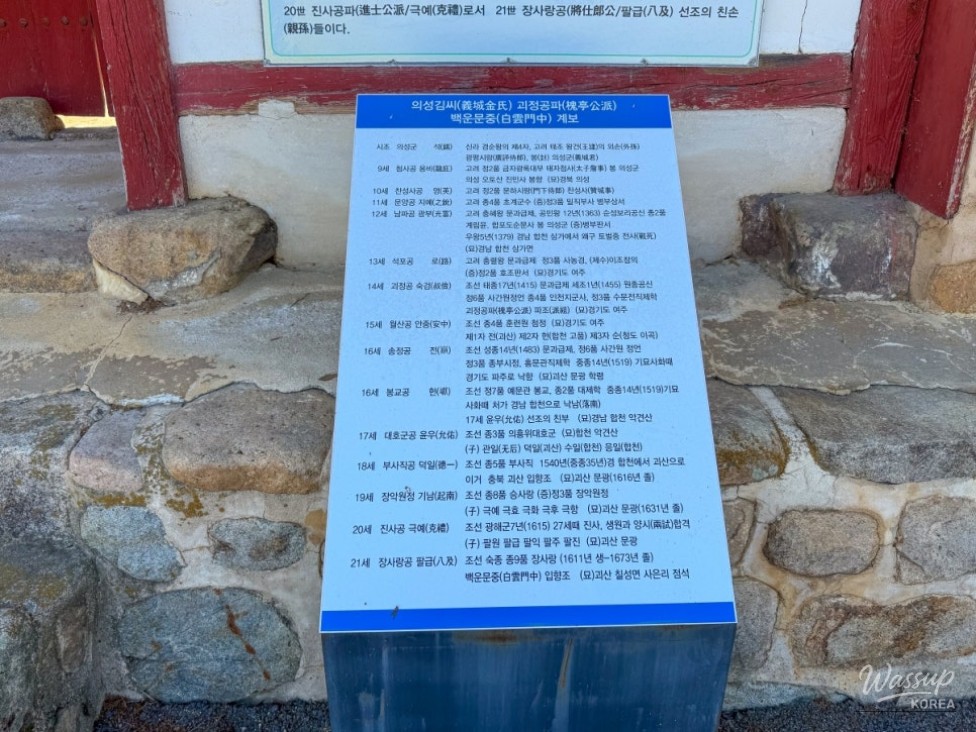
The red gate, serving as the main entrance to Bongseojae, is firmly closed, adding to the mystery of the interior. On the right wall of the gate, there is a sign detailing the history and origin of Bongseojae, along with a cultural heritage designation plaque.
The sign outlines the genealogy of the Uiseong Kim clan, with the founder being Kim Seok, the fourth son of King Gyeongsun of Silla, who helped establish the Uiseong Kim family line. The first ancestor of the Baegun lineage, Kim Jang-sarang, is noted to have settled in Oesari over 400 years ago.
Additionally, there is a small side door on the side of Bongseojae, likely used for discreet entries and exits by family members. The old wooden door, darkened by time, and the neatly placed tile roof blend beautifully with the stone wall, leaving a lasting impression.
Bongseojae has served as a residence for the Uiseong Kim clan while also functioning as a school. Established in 1778 by Kim Jeon, who served as the chief of the Hongmungwan, it was also known as Baegun Seodang, used as a school for local children. It underwent restoration in 1915 and was used as a school during the establishment of Oesari Elementary School in 1944. Today, it primarily serves as a residence.
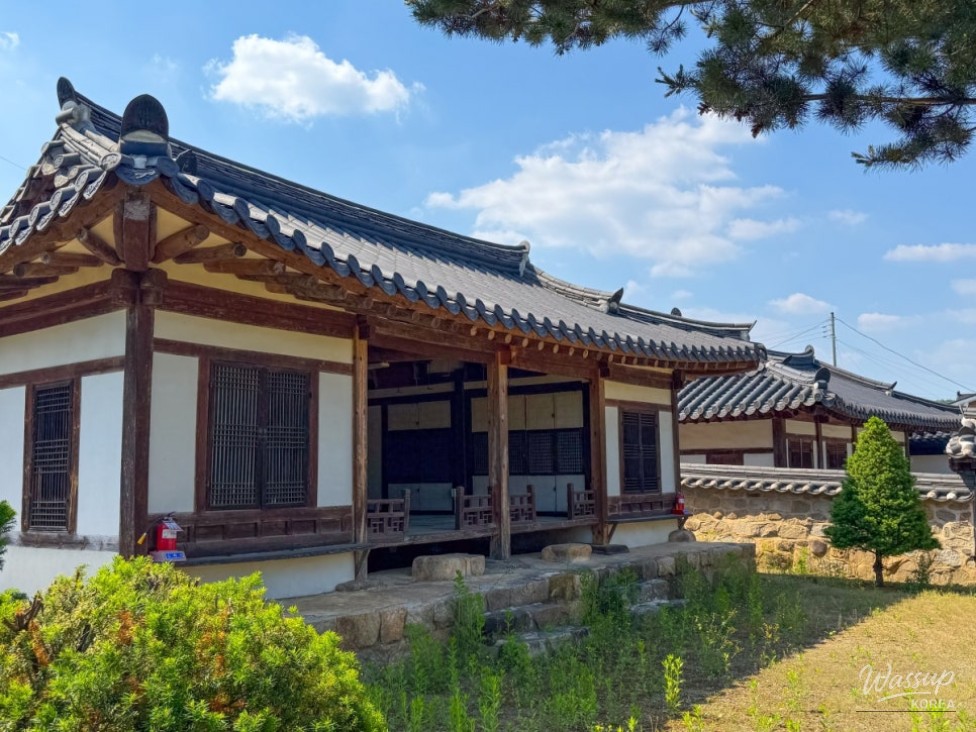
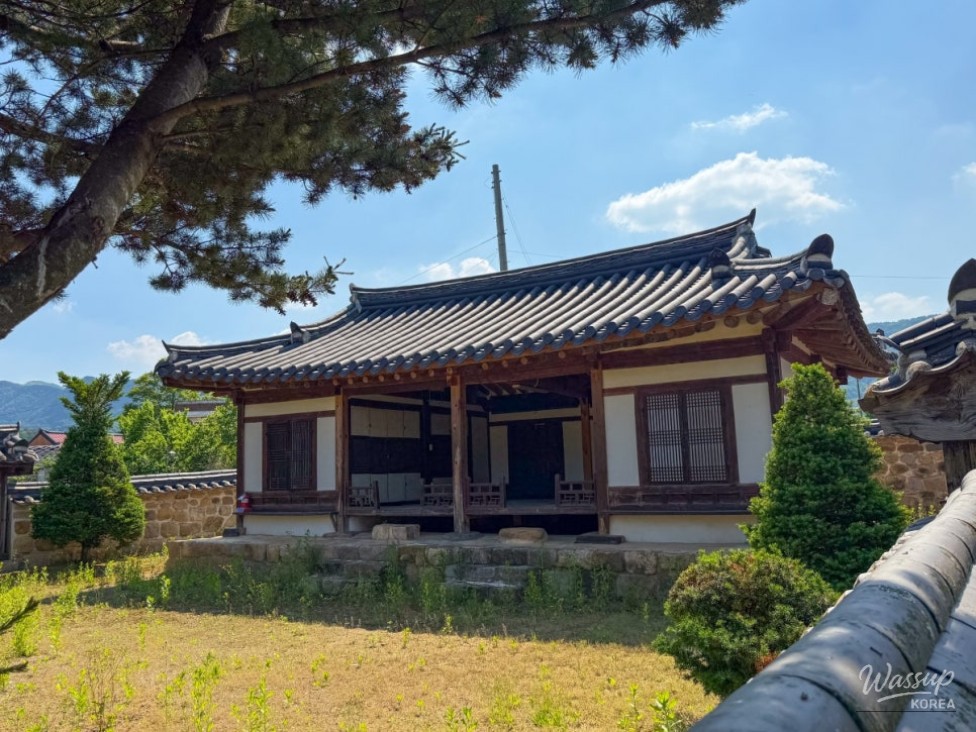
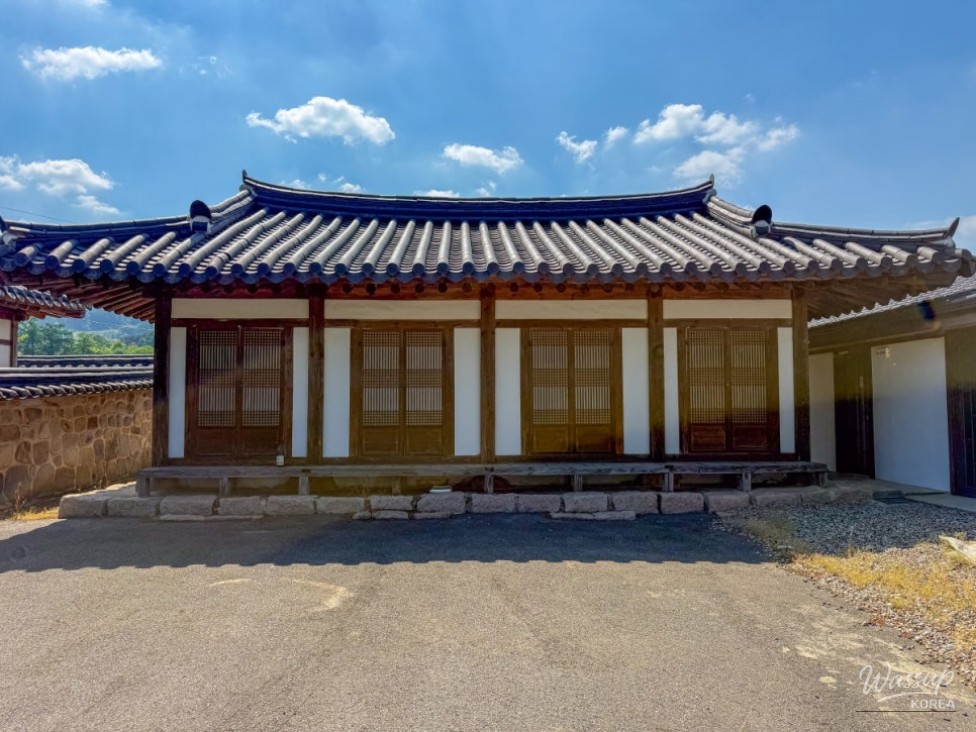
The structure consists of four rooms at the front and two at the side, with a large open hall in the center and ondol rooms on either side.
The building is supported by a solid stone foundation, with square pillars rising above. An open wooden porch allows breezes to flow freely. Inside, a folding door with a lattice pattern highlights traditional design, allowing for an expansive space during summer by lifting the door.
Flanking the building are well-maintained fragrant trees and a low chimney, enhancing its vintage charm.
Adjacent to Bongseojae is a long auxiliary building that supports the main structure. This building features four front rooms, with white walls and closely arranged wooden doors, giving a very neat and tidy impression.
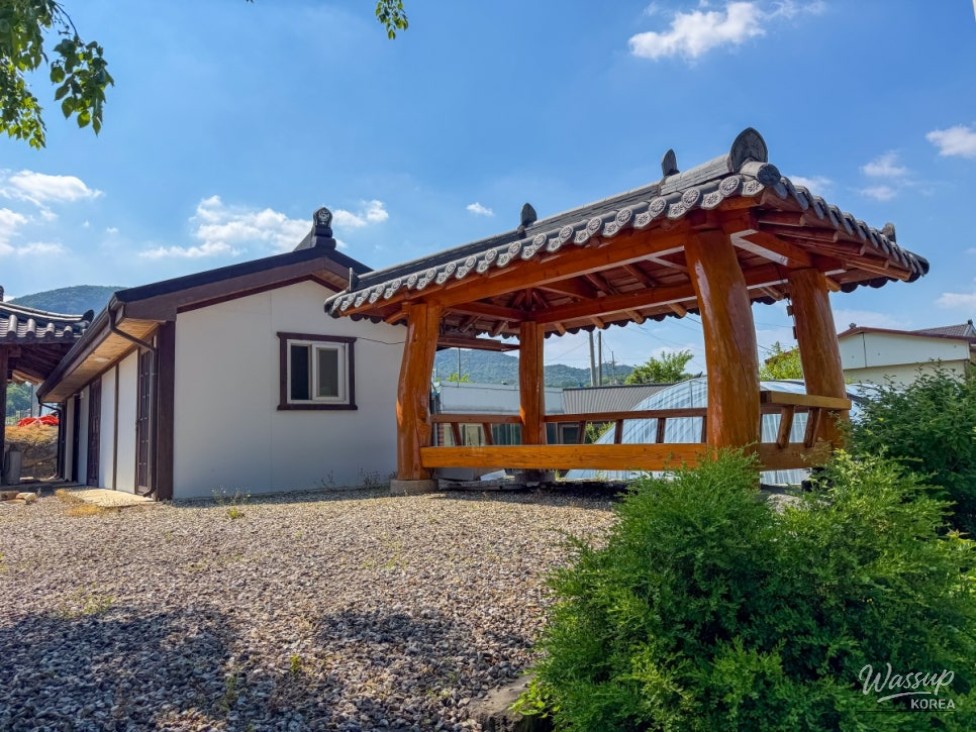
Beside the modern hanok-style building, there is a newly built ornate wooden pavilion. With thick wooden pillars painted in a vibrant orange, it contrasts beautifully with the traditional tiles.
The courtyard is covered with small pebbles, creating a delightful sound with each step.
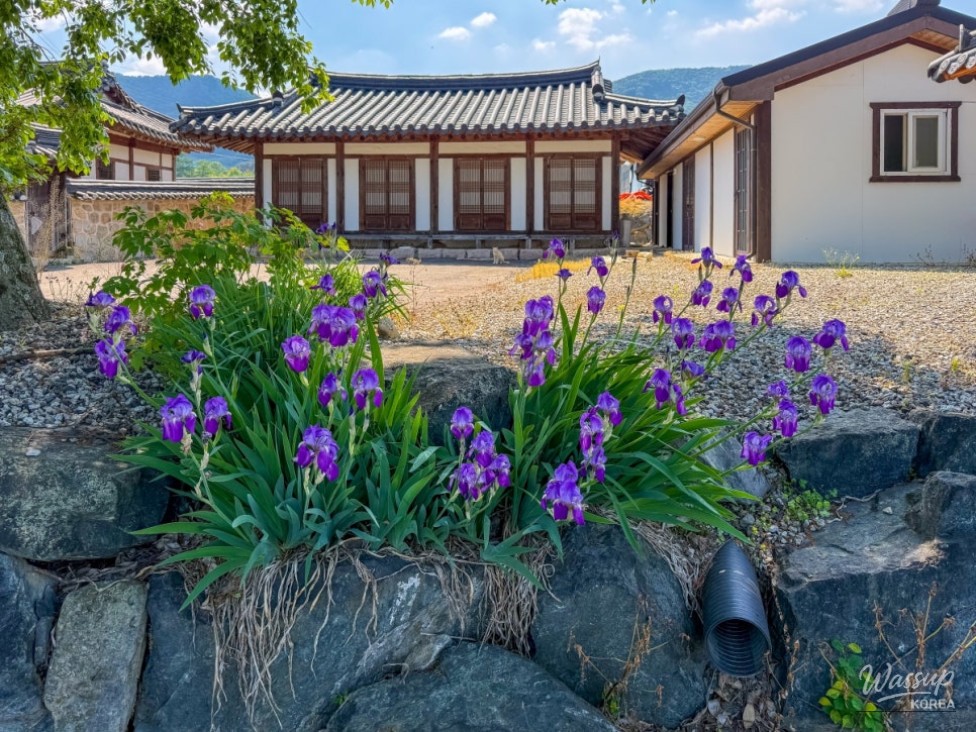
Between rough black landscaping stones, fresh green leaves emerge, leading to clusters of elegant purple irises blooming at the end. The vivid purple against the monochromatic backdrop of the traditional hanok brings the entire space to life.
Address: Oesari, Chilseong-myeon, Goeisan-gun, Chungcheongbuk-do


Source :https://blog.naver.com/goesan-gun/224306850113
No comments yet.