Walking Paths in Seoul: Bongeunsa Temple



Bongeunsa Temple, a serene spot near the subway in Seoul, offers beautiful walking paths.
Although it was cold, the forest paths sheltered me from the wind, making it feel less chilly.
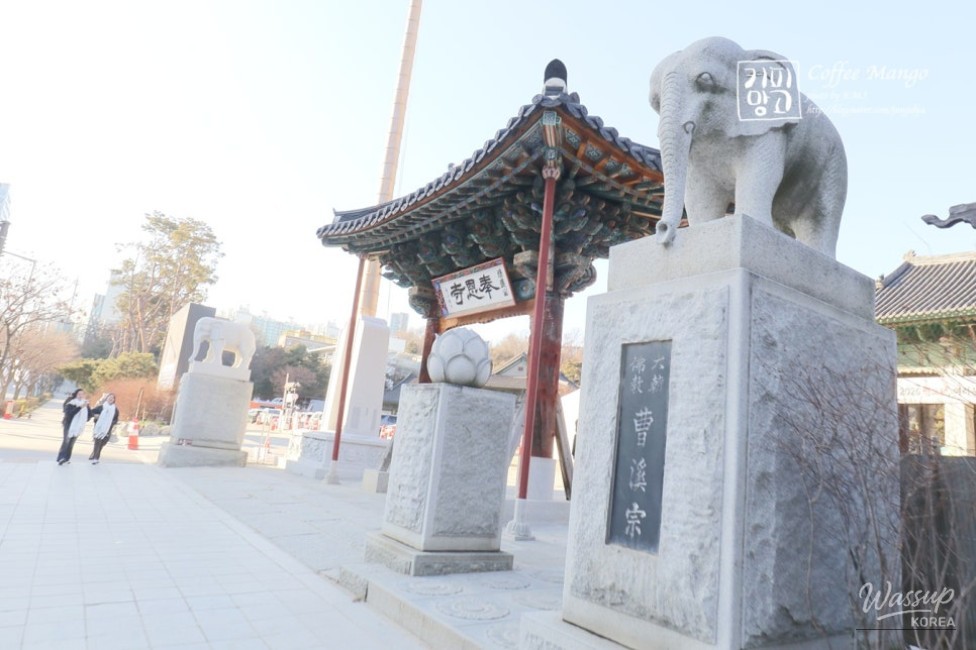
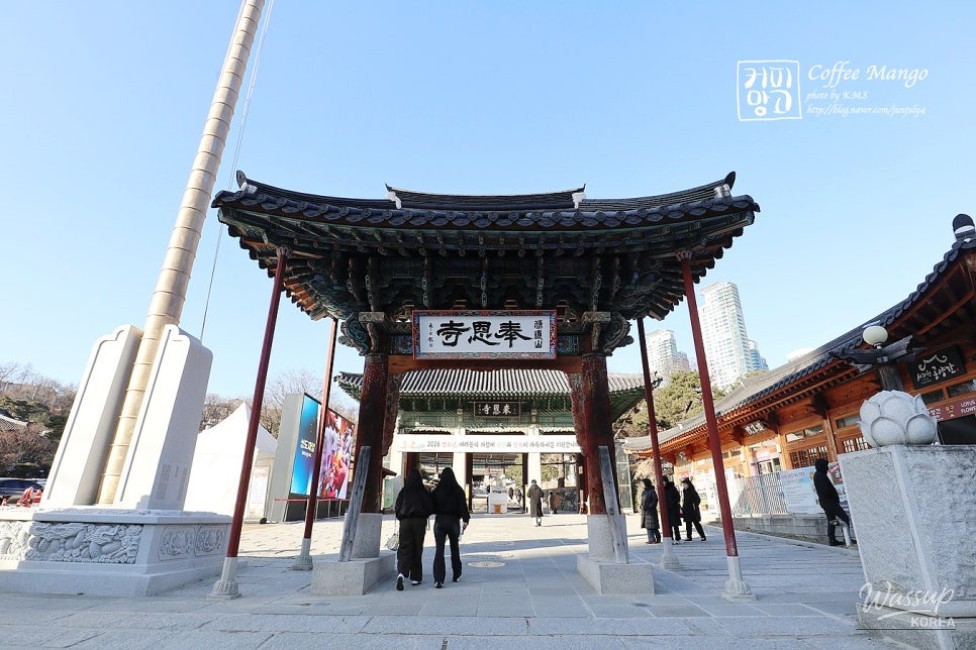
Located just outside Exit 1 of Bongeunsa Station, the temple features the Iljumun Gate, one of its oldest structures, built in the 1880s. Uniquely, this gate has a four-sided roof that slopes down at an angle, unlike the typical eight-sided roofs found in other temples.
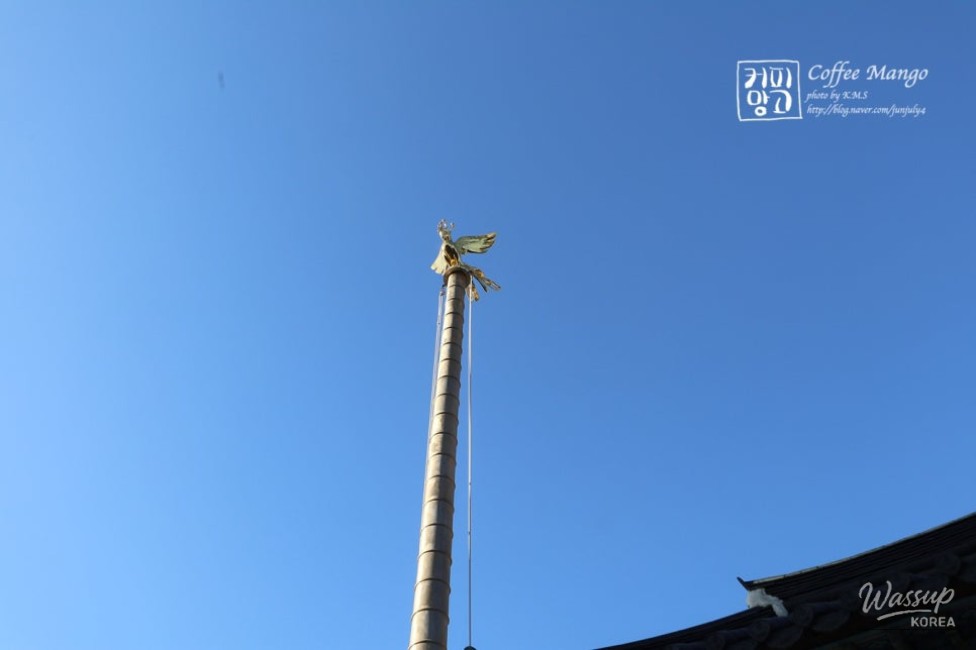
To the left of the Iljumun Gate stands the Dangganjiuju, where I noticed a phoenix at the top. Typically, these structures have a dragon head, but perhaps this reflects Bongeunsa's intention to capture the spirit of the phoenix, as suggested by its name.
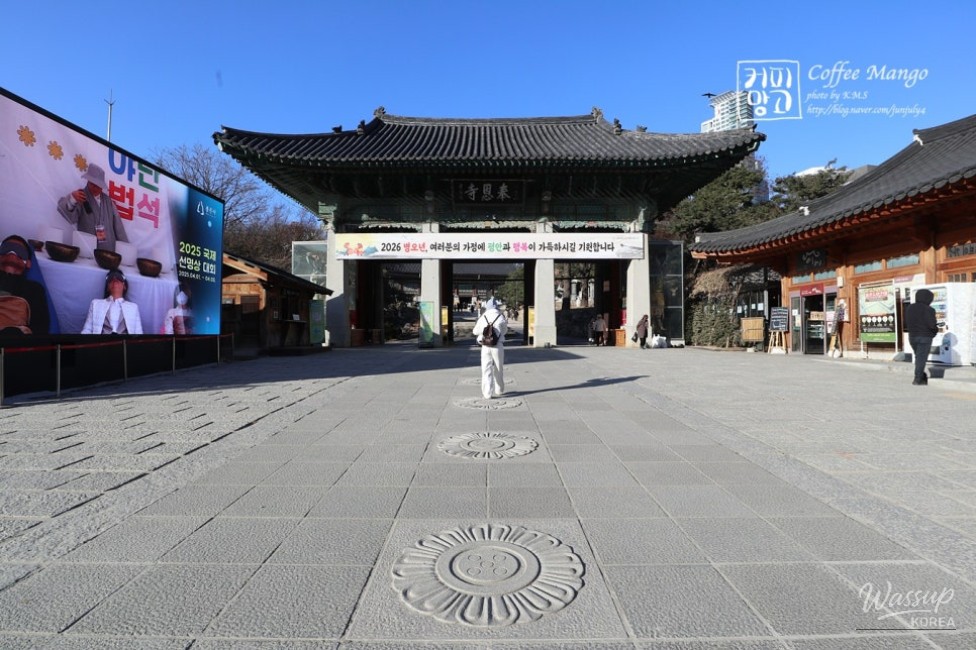
I also noticed a lotus pattern on the ground, which carries Buddhist significance. Each step taken here symbolizes the blossoming of enlightenment, wishing that all visitors to Bongeunsa leave behind their worries and cultivate wisdom.
The path between the Iljumun and the Jinyeomun marks the boundary between the secular and the sacred, inviting visitors to engage in walking meditation. Walking amidst the lotus patterns can have a calming effect on the mind.
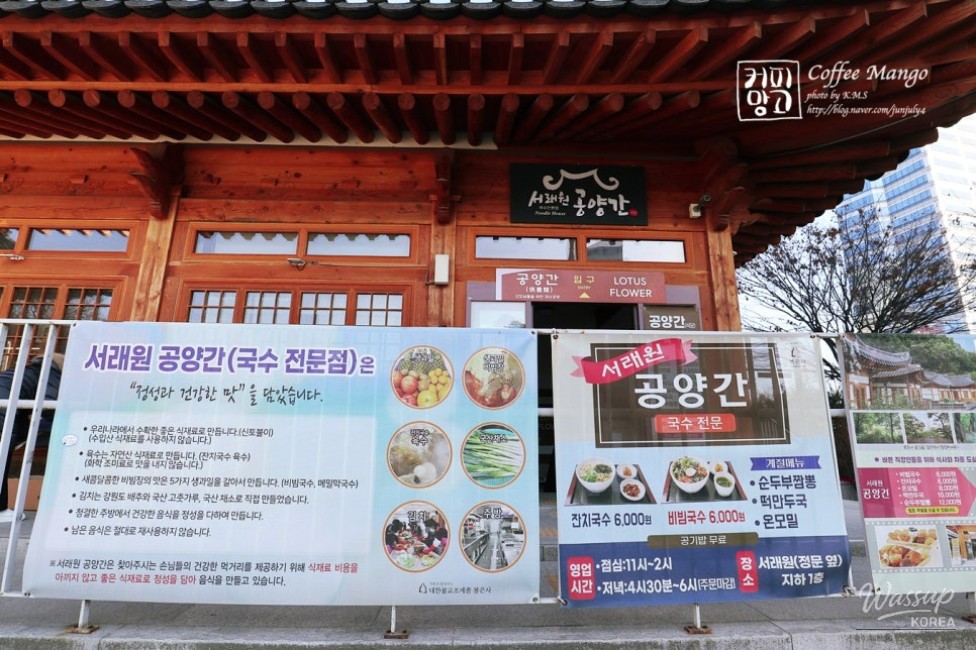
On the left, there is a dining area where I previously enjoyed a reasonably priced lunch.
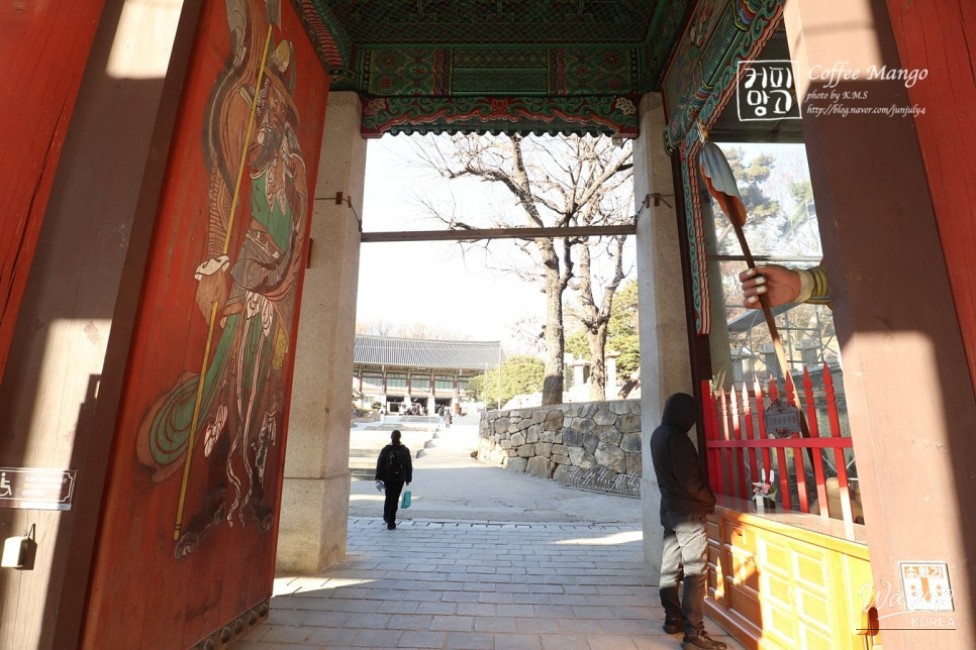
At the Jinyeomun, which serves as both the main gate and the gate of the Four Heavenly Kings, you will find statues representing these kings: Jikokuten (East), Zōjōten (South), Komokuten (West), and Daiitokuten (North). The gate also features the guardian deity, Vajrapāṇi, symbolizing the temple's protection.
As I walked around the temple, I found a tranquil space perfect for resting while listening to the birds. The view of the back of the Mireuksan (Mireuksan Great Buddha) was stunning.
The Mireuksan, standing at about 23 meters tall, is the highlight of the temple. During sunset, it radiates a tranquil beauty.
As I passed through the Mireuksan, I reflected on my walk through Bongeunsa Temple. I realized I had never properly explored the Daeungjeon (Main Hall), so I decided to take a look inside.
Inside the bell tower, I saw various ceremonial instruments, including a large bell and a wooden fish drum.
Before leaving, I visited the traditional tea house, where the serene atmosphere and beautiful view made it a perfect spot to enjoy tea, though they only served tea, not coffee.
As I walked back, I appreciated the peaceful surroundings and the lovely pine tree in front of the Mae-hwa-dang (Plum Blossom Hall).
Source :https://blog.naver.com/junjuly4/224166912546
No comments yet.