Walk Gyeongju: Street Food, Ancient Silla & a Night at Woljeonggyo
- Region
- Gyeonggi-do


The route
Walk Gyeongju: Street Food, Ancient Silla & a Night at Woljeonggyo
- 1 Hwangridan-gil Street 경북 경주시 태종로 746
- 2 Gyeongju Hwangridan 10-Won Bread Main StoreWalk 경북 경주시 포석로 1083
- 3 Daereungwon Ancient Tomb ComplexWalk 경북 경주시 황남동 31-1
- 4 Cheomseongdae ObservatoryWalk 경북 경주시 인왕동 839-1
- 5 Gyerim ForestWalk 경북 경주시 교동 1
- 6 Gyochon Traditional VillageWalk 경북 경주시 교촌길 39-2
- 7 Woljeonggyo BridgeWalk 경북 경주시 인왕동 921-1
Gyeongju is a city made for walking.
Once the capital of the ancient Silla Kingdom, the city is filled with royal tombs, historic observatories, old forests, traditional hanok villages, and beautifully restored landmarks. But modern Gyeongju has another side too — trendy streets, cafés, small shops, and local street food.
This walking route brings both sides together.
Start in lively Hwangridan-gil, taste Gyeongju’s famous 10-won bread, walk among the royal tombs of Silla, visit Cheomseongdae, pass through the legendary Gyerim Forest and Gyochon Traditional Village, and finish beside the illuminated Woljeonggyo Bridge.
No car needed. Just comfortable shoes and an afternoon in Gyeongju.
TODAY’S ROUTE
START 01. Hwangridan-gil Street (경주 황리단길)
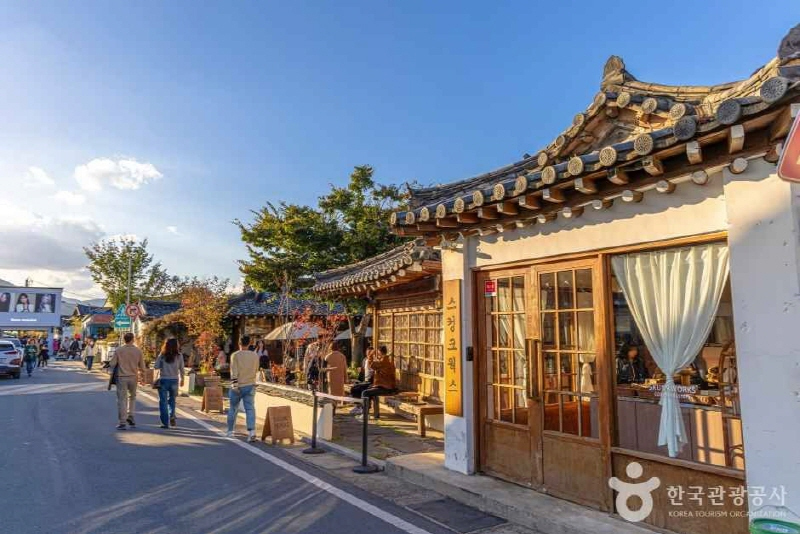
Begin your journey at Hwangridan-gil Street (경주 황리단길), one of the liveliest neighborhoods in modern Gyeongju.
The area is filled with renovated hanok buildings, cafés, restaurants, boutiques, souvenir shops, and small street-food stores. It is where the ancient atmosphere of Gyeongju meets the lifestyle of young Koreans today.
Don't rush through it.
Walk through the small streets, look inside the shops, and enjoy the contrast between traditional Korean architecture and modern cafés.
Before entering the ancient part of the city, however, there's one famous Gyeongju snack you should try.
SPOT 02. Gyeongju Hwangridan 10-Won Bread Main Store (경주황리단 십원빵 본점)
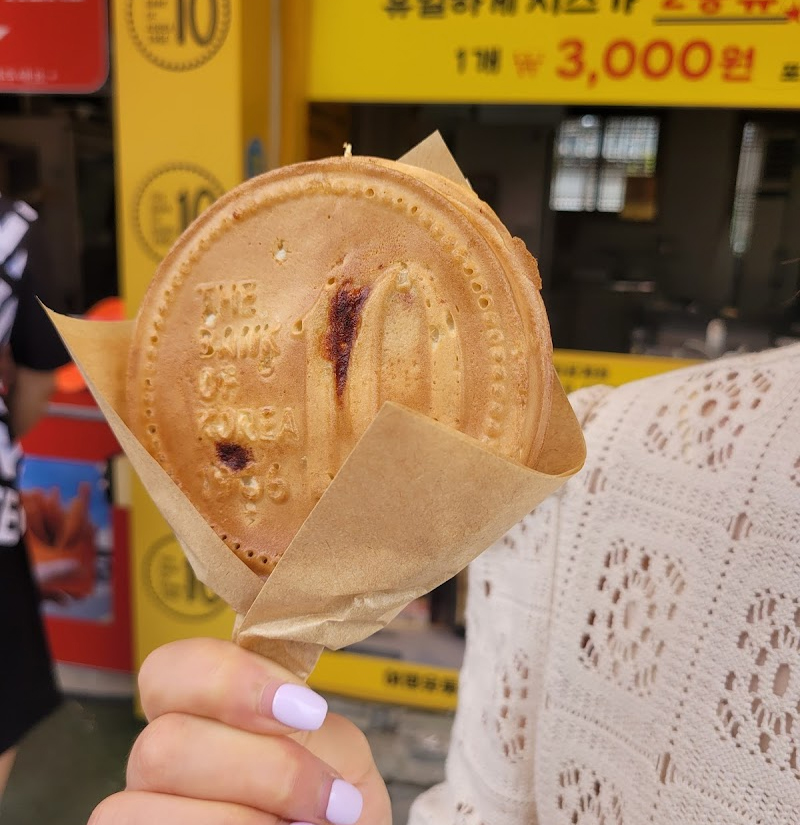
It's time for your first taste of Gyeongju.
10-Won Bread, or Sipwon-ppang (십원빵), has become one of the city's most recognizable street foods.
Despite its name, it doesn't cost 10 won.
The snack gets its name from its shape: a giant version of a Korean 10-won coin.
And there is a reason this snack belongs in Gyeongju.
The Korean 10-won coin features Dabotap Pagoda (다보탑), one of the famous stone pagodas of Bulguksa Temple in Gyeongju.
Break the bread apart while it's warm and you'll usually find melted cheese stretching between the two halves.
Take the classic photo of the giant "coin," enjoy your snack, and continue walking.
From modern street food, we're now heading more than a thousand years into the past.
SPOT 03. Daereungwon Ancient Tomb Complex (경주 대릉원)
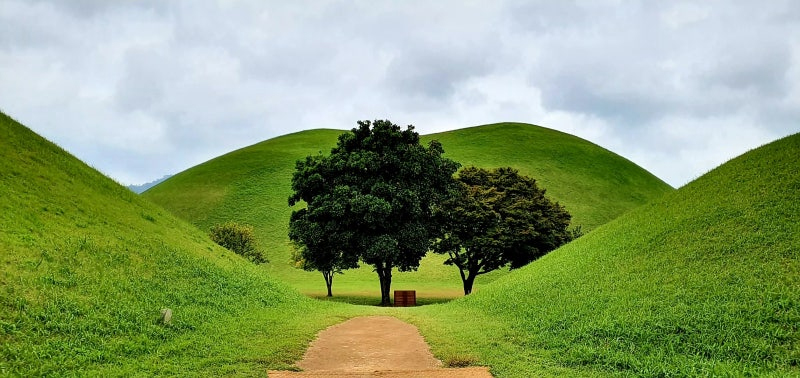
A short walk brings you to Daereungwon Ancient Tomb Complex (경주 대릉원).
The scenery changes dramatically.
Large, grass-covered hills rise from the ground throughout the park. But these aren't natural hills.
They are ancient royal tombs.
Gyeongju served as the capital of the Silla Kingdom for nearly a thousand years, and members of Silla's royal and aristocratic families were buried in enormous mound tombs like these.
Walk between them and you'll begin to understand why Gyeongju feels different from almost every other Korean city.
One of the best-known tombs here is Cheonmachong, where archaeologists discovered thousands of artifacts, including a magnificent Silla gold crown.
Take your time walking through the park.
You aren't simply looking at Korean history.
You're walking through the landscape where it happened.
SPOT 04. Cheomseongdae Observatory (경주 첨성대)
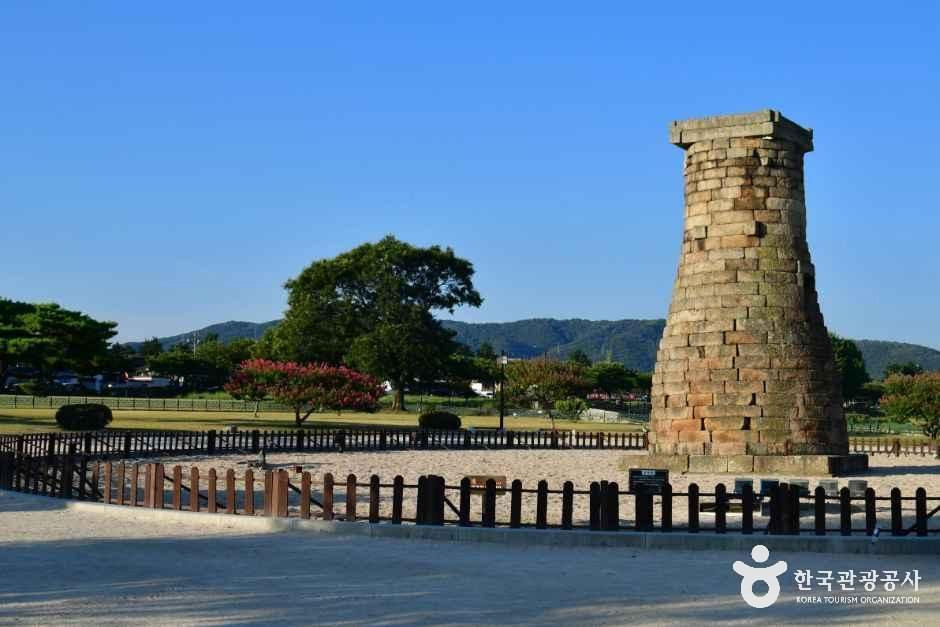
Continue toward one of the great symbols of Gyeongju: Cheomseongdae Observatory (경주 첨성대).
Built during the Silla period, this distinctive stone structure is widely recognized as one of East Asia's oldest surviving astronomical observatories.
It may look surprisingly small when you first see it.
But imagine standing here more than 1,300 years ago.
This was a kingdom observing the sky, tracking celestial movements and understanding the changing seasons.
The landscape around Cheomseongdae is also part of the experience. Open fields and seasonal flowers surround the ancient structure, making it particularly beautiful during spring and autumn.
Take your photo and continue south.
The next part of the journey leads beneath the trees.
SPOT 05. Gyerim Forest (경주 계림)

Enter Gyerim Forest (경주 계림) and Gyeongju becomes quieter.
The wide-open landscape surrounding Cheomseongdae gives way to old trees and shaded walking paths.
Gyerim isn't simply a beautiful forest.
It is closely connected with Silla history and legend, particularly the story of Kim Al-ji, traditionally associated with the origins of the Gyeongju Kim clan.
You don't need to know every Silla legend to appreciate this part of the walk.
Slow down.
Listen to the leaves and enjoy the shade.
In autumn, the forest becomes especially atmospheric as the leaves begin to change color.
Continue along the path and traditional tiled roofs will soon come into view.
SPOT 06. Gyochon Traditional Village (경주 교촌마을)
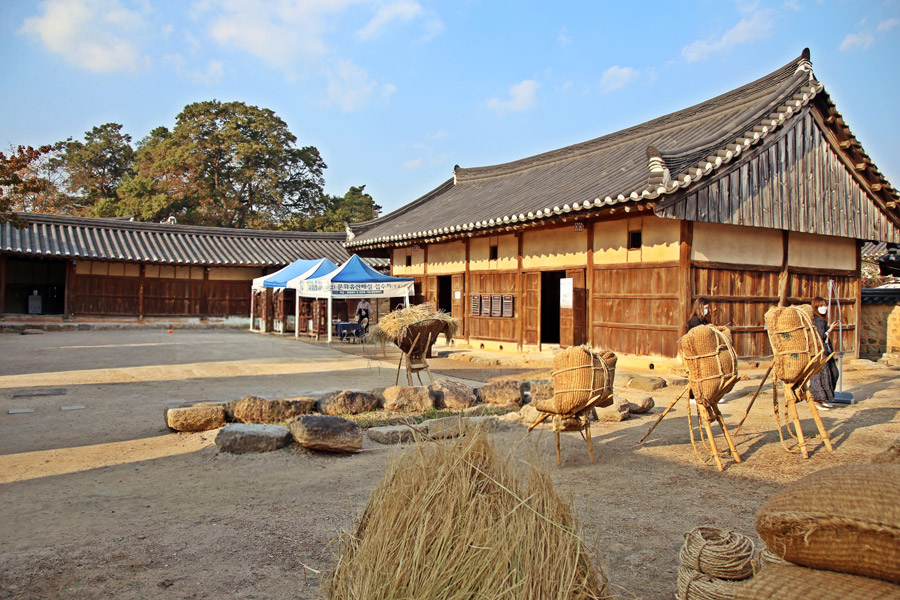
The next stop is Gyochon Traditional Village (경주 교촌마을).
Traditional hanok houses, stone walls, tiled roofs, courtyards, and narrow paths create another change of scenery.
Gyochon is closely associated with the Gyeongju Choi family and gives visitors another glimpse into the cultural heritage of the city beyond its ancient Silla monuments.
This is a good place to slow down again.
Walk through the village, explore the traditional architecture, and look for local snacks or drinks if you need a break.
If you began this route in the afternoon, the light should now be starting to change.
That's exactly what we want.
Because the final stop is best experienced after sunset.
Follow the path toward the river.
FINISH 07. Woljeonggyo Bridge (경주 월정교)

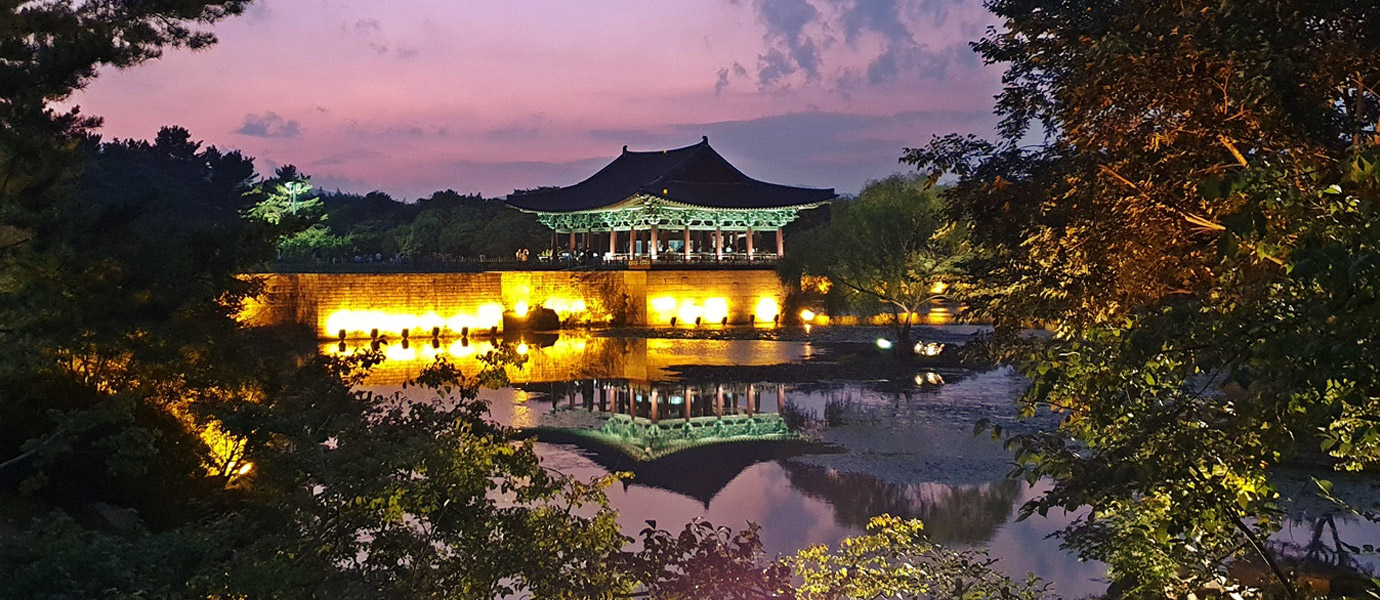
Your walking journey ends at Woljeonggyo Bridge (경주 월정교).
During daylight, the large traditional wooden bridge is already impressive.
But wait until the sun goes down.
As darkness arrives, lights illuminate the structure and the bridge begins to reflect across the water below.
This is one of the most beautiful ways to finish a day in Gyeongju.
Look back at where you've been.
You started among cafés and shops on Hwangridan-gil.
You tasted a giant 10-won coin filled with cheese.
You walked among the royal tombs of the Silla Kingdom.
You stood beside an ancient astronomical observatory.
You passed through a forest filled with Silla legends.
You wandered between traditional Korean houses.
And finally, you arrived at Woljeonggyo under the evening lights.
All of it on foot.
ROUTE COMPLETE
Gyeongju isn't a city you need to rush through.
Sometimes the best way to discover Korea's ancient capital is simply to start walking.
One street. One local snack. A thousand years of Korean history.
More from Road Trips


No comments yet.