The Tomb of King Gongyang: A Humble Reflection on Korea's Last Dynasty



[By Cha Jun-ho]
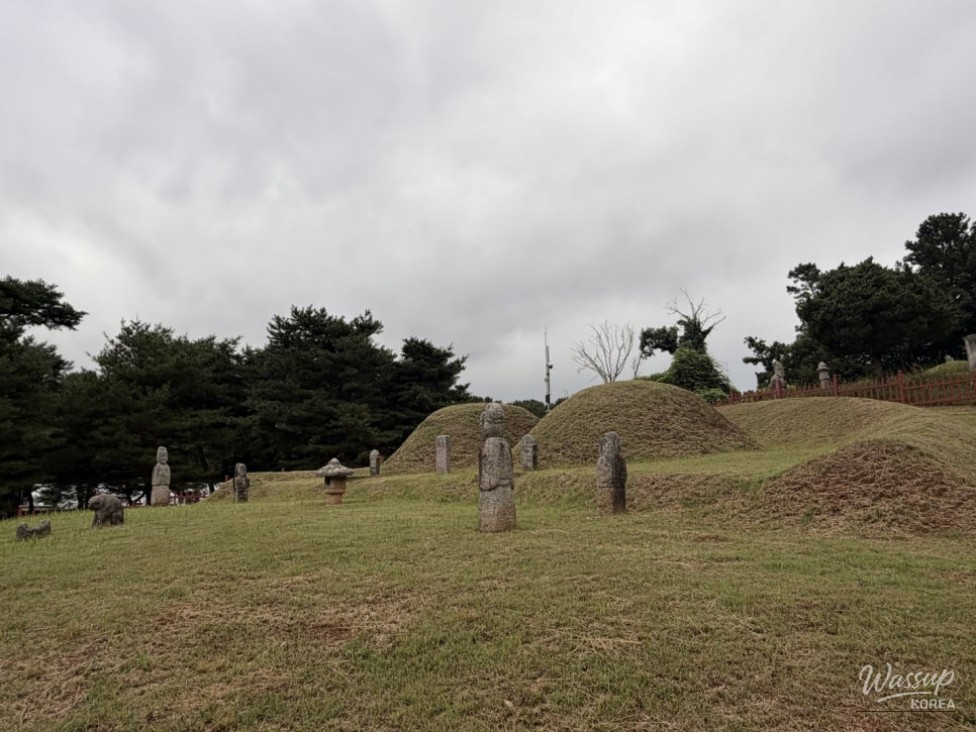
The view of the Gongyang Tomb © Cha Jun-ho
Walking through the fields of Goyang, one encounters the final story of Goryeo in a surprisingly quiet place. It is not a grand palace or a majestic structure, but a low hill with simple stone monuments and two burial mounds.
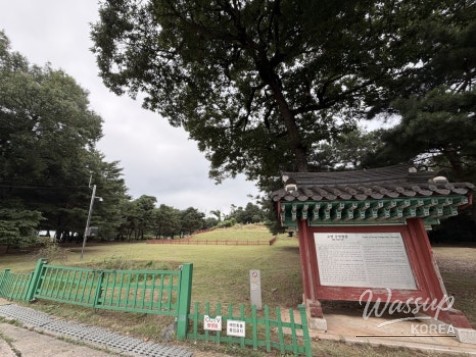
This visit was to the Gongyang Tomb in Goyang. Initially, I expected it to be quite large due to its name, but upon arrival, I was met with an unexpectedly modest appearance. As I gazed at the tomb nestled among the fields and trees, its simplicity lingered in my mind.
The Gongyang Tomb is the burial site of King Gongyang, the last king of Goryeo, and his queen, Sunbi Noh. Established in 1394 during the third year of the Joseon Dynasty, it was designated as Historic Site No. 191 on February 28, 1970. It is located in Wondang-dong, Deogyang-gu, Goyang City, Gyeonggi Province.
King Gongyang ascended to the throne in 1389, but the Goryeo royal family was already in turmoil. In 1392, with the founding of the Joseon Dynasty by Yi Seong-gye, the Goryeo dynasty came to an end, and King Gongyang was deposed, facing a tragic fate.
Standing before the tomb, this knowledge gave the two mounds a different significance. A king who could not choose his own era, a figure at the end of a dynasty. The story of King Gongyang seems to extend beyond the simple label of 'the last king of Goryeo.'
The Gongyang Tomb is a paired tomb, housing both King Gongyang and Queen Sunbi Noh. The surrounding area features simple stone monuments, including a stele, a stone lantern, and a stone turtle, all of which present a modest and unadorned appearance.
Goyang City explains that these stone artifacts reflect the traditional characteristics of Goryeo royal tombs. Standing in front of the tomb and looking at the surrounding landscape, I felt less the weight of a royal tomb and more the presence of a historical site that has endured through the ages.
As I explored the Gongyang Tomb, I also encountered stories intertwined with the local area. According to Goyang City's cultural tourism materials, during the decline of the Goryeo royal family, a monk recognized King Gongyang, who was fleeing in the vicinity of Gyeondalsan, and brought him food.
This anecdote is said to have led to the area being named 'Siksa-dong' (meaning 'meal village') in later years. It is fascinating how a sentence in a history book connects to the place names we live with today.
As I left the tomb, I paused for a moment to look back. It is neither grand nor particularly filled with attractions. Yet, it is a place that invites slow contemplation. A tomb that witnessed the end of an era. Here, within the ordinary landscape of Goyang, the quiet remnants of a dynasty’s last moments and one man's lonely life remain.
History sometimes feels closer in such humble spaces than in grand relics. If you are looking for a slightly special historical destination in Goyang, take a moment to slow down and visit the Gongyang Tomb. The time spent reflecting on the tomb will linger in your memory, just as the stories of an era resting there.




Source :https://blog.naver.com/gyeonggi_gov/224392937339
No comments yet.