The Story of Flowers Through Artifacts



Flowers are one of nature's most beautiful gifts.
They bloom with different colors and scents in each season,
capturing the hearts of people.
Our ancestors enjoyed flowers and incorporated them into their lives,
adding a sense of elegance to their daily existence.
An exhibition that explores the history of how flowers have permeated everyday life and culture is now on display.
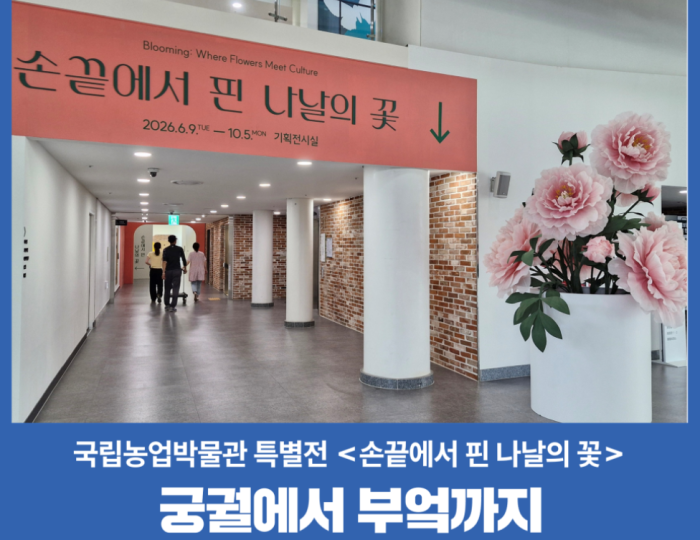
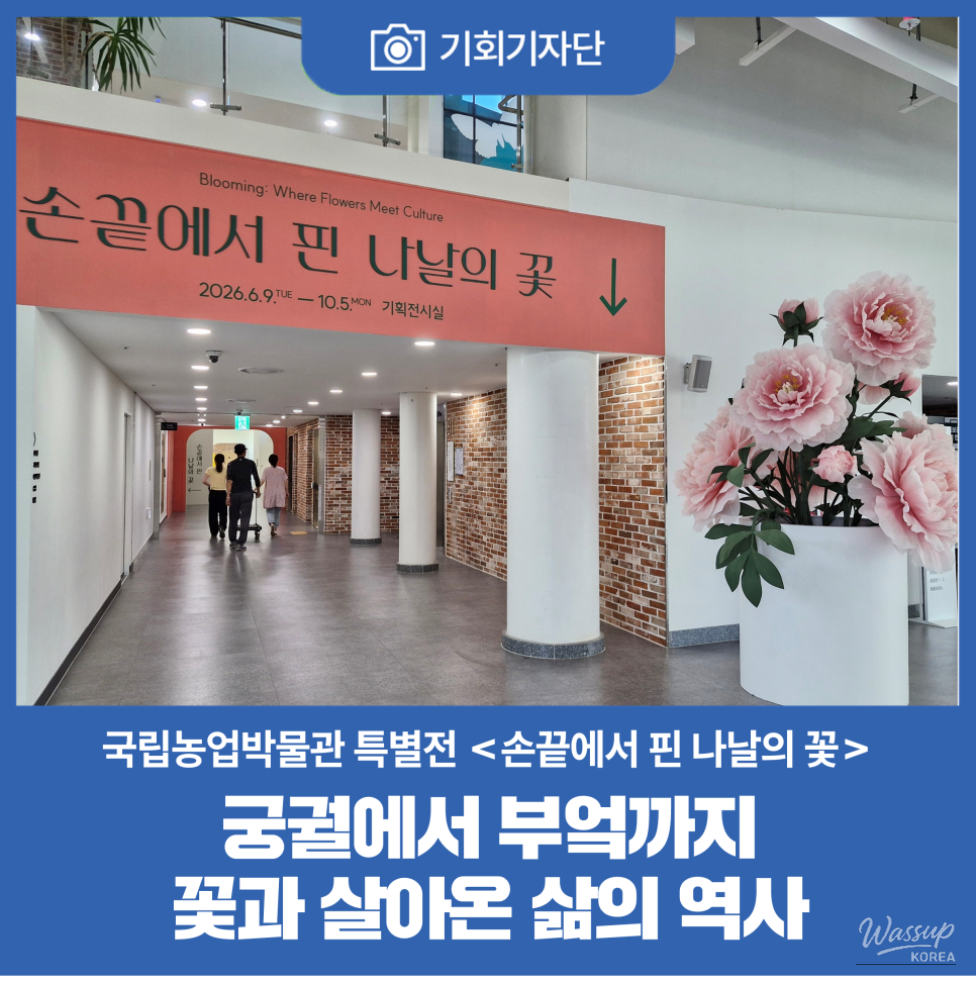
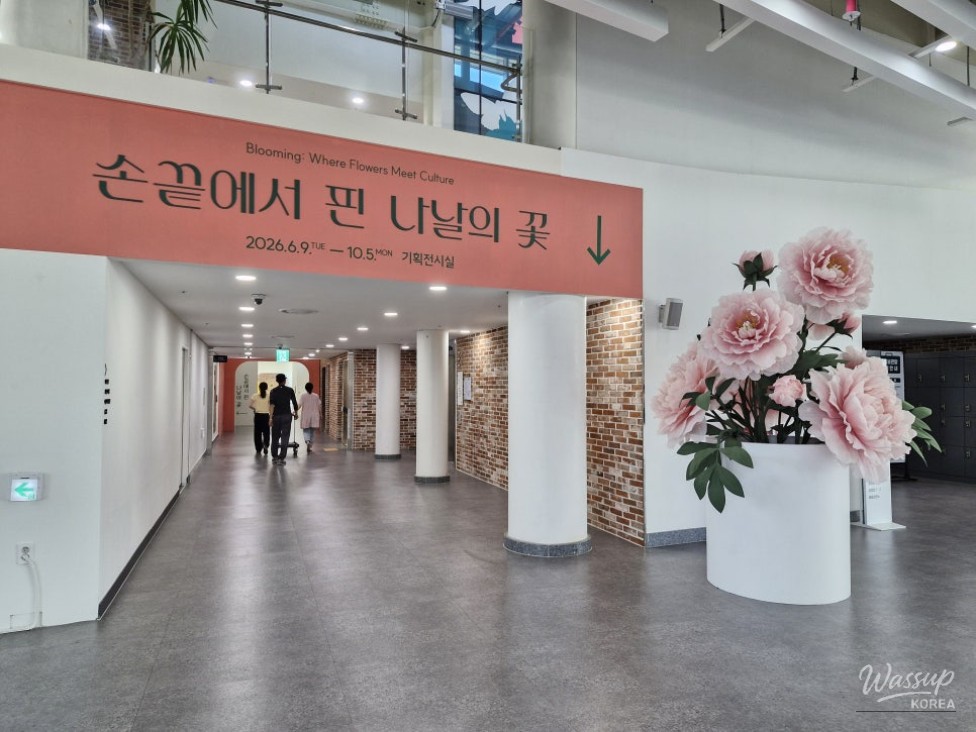
The National Agricultural Museum is hosting the exhibition Flowers of Daily Life Blooming from the Fingertips from June 9 to October 5.
This exhibition features 115 artifacts related to flowers,
including folding screens, daily items, paintings, and crafts.
It offers a glimpse into the lives and emotions of our ancestors who cherished and enjoyed flowers.
The royal artifacts reveal insights into court life and aesthetic sensibilities.
At the entrance, there is a special display using domestic flowers.
As you step into the exhibition space,
a media art presentation showcases blooming flowers.
The first section introduces the floral culture of the Joseon Dynasty's palaces.
Artifacts include royal plates adorned with flower patterns,
illustrating the court's lifestyle and aesthetic values.
The delicately carved floral designs reflect how closely the royal family cherished flowers.
This shows that flowers were an essential cultural element in palace life.
The exhibition also features content from the Gyeongguk Daejeon,
a legal code that encapsulates the laws and systems of the Joseon era.
It discusses the government office responsible for managing the palace gardens and plants.
Flowers were seen not just as decorations,
but as symbols of royal dignity and authority,
indicating the careful cultivation and management they received.
In the second section, Blooming Within the Fence,
the exhibition showcases how flowers integrated into everyday life.
Scholars of the Joseon era placed folding screens in their homes to elevate the space's quality,
expressing their values and ideals.
The screens feature peonies symbolizing wealth and success,
and chrysanthemums representing longevity and integrity.
The butterflies freely flying among the flowers signify a wish for prosperity and peace for the family.
The exhibition also includes the Bookcase Screen,
which decorates a scholar's study with beautifully painted flowers.
Each flower carries symbolic meanings,
demonstrating the scholars' dedication to self-cultivation and academic pursuits.
The third section, Blooming from the Fingertips,
explores how the flower culture, once limited to the nobility,
spread to the common people.
Flowers in folk paintings symbolize happiness and prosperity,
while insects accompanying the flowers represent the cycle of life and the order of nature.
Flowers were also used as healing materials,
as demonstrated in the exhibition's display of the Donguibogam,
showing their role in traditional medicine.
Visitors can interact with digital content that reveals the properties and uses of various plants.
The exhibition space is designed to ensure a rich experience for visitors,
with a natural flow guiding them from entrance to exit.
High-resolution images of artifacts are displayed throughout,
allowing viewers to appreciate details that may be missed in person.
Each piece features a QR code for visitors to scan and access expert commentary.
The exhibition aims to evoke memories of our ancestors cultivating flowers and harvesting bountiful yields.
It also hopes to convey warmth and beauty through the symbolism of flowers in various crafts.
The exhibition runs from June 9 to October 5, 2026, at the National Agricultural Museum.
Source :https://blog.naver.com/gyeonggi_gov/224316789423
No comments yet.