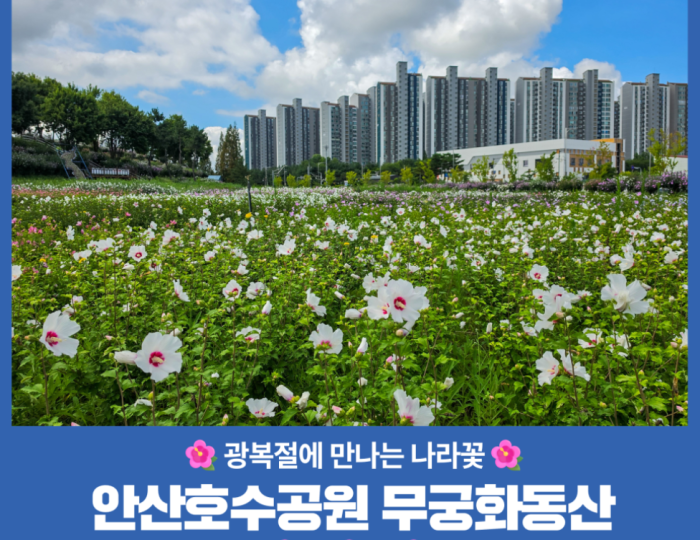
The Beauty of Hibiscus: A Symbol of Korea



[Reporter: Kim Deok-sik]
"Mugunghwa, the flower of our land." This flower, mentioned in the refrain of the national anthem, is also depicted in the country's emblem on passport covers. While many people eagerly seek cherry blossoms in spring and autumn foliage, few have made an effort to see the national flower.
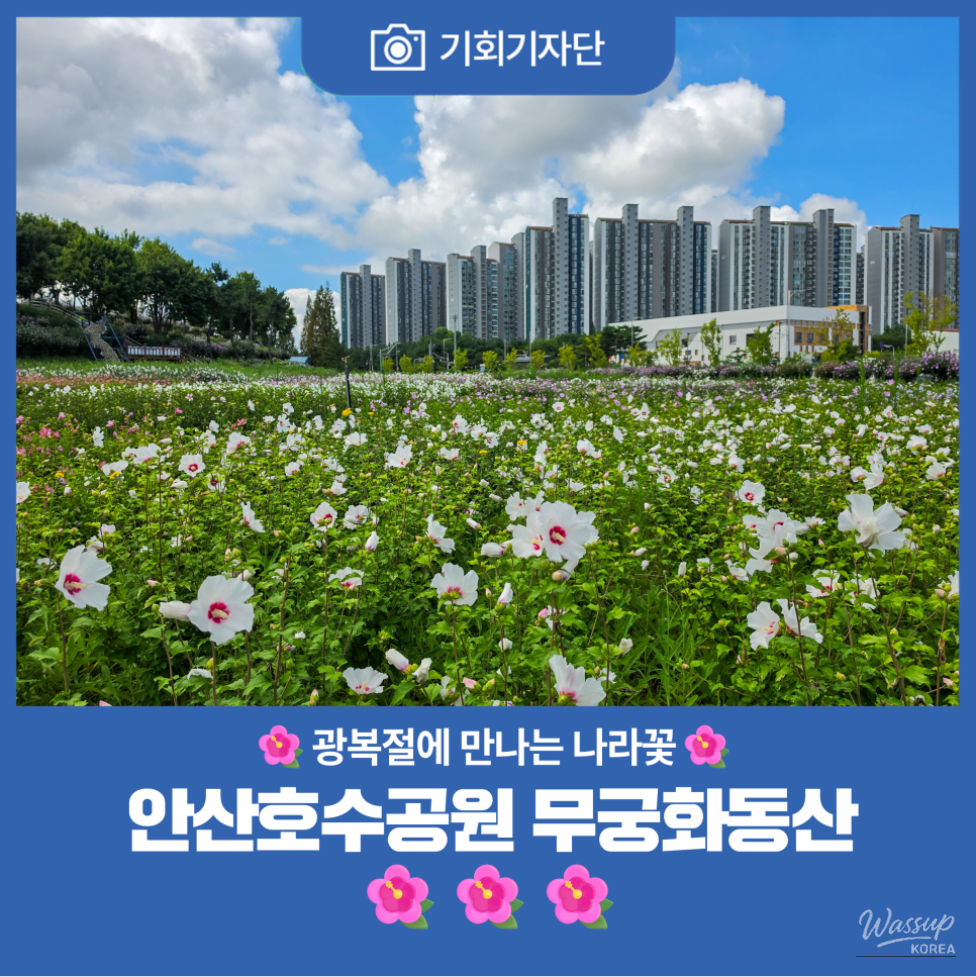
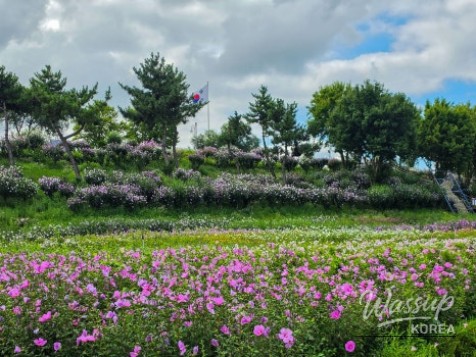
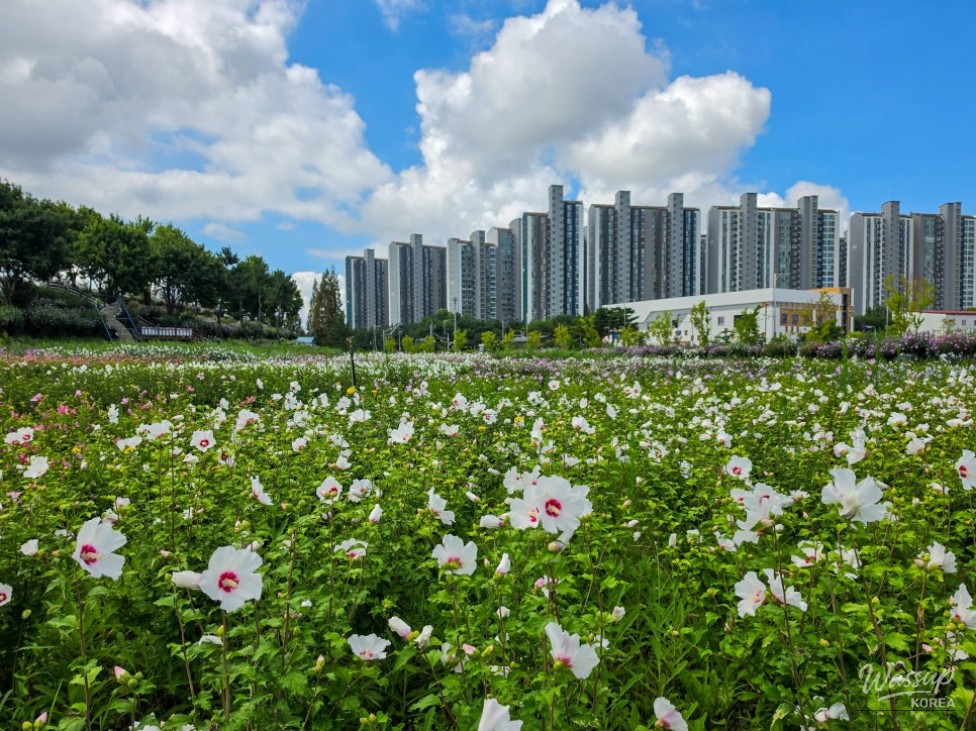
The Mugunghwa blooms for over a hundred days from July to October, with its peak during August, coinciding with Liberation Day. Did you know that there is a 20,000-pyeong Mugunghwa colony in Ansan Lake Park?
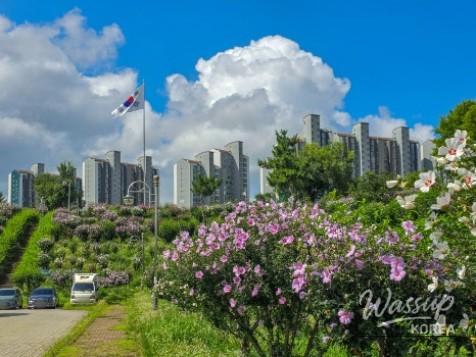
A Taegeukgi flutters atop the Mugunghwa hill. ⓒ Kim Deok-sik
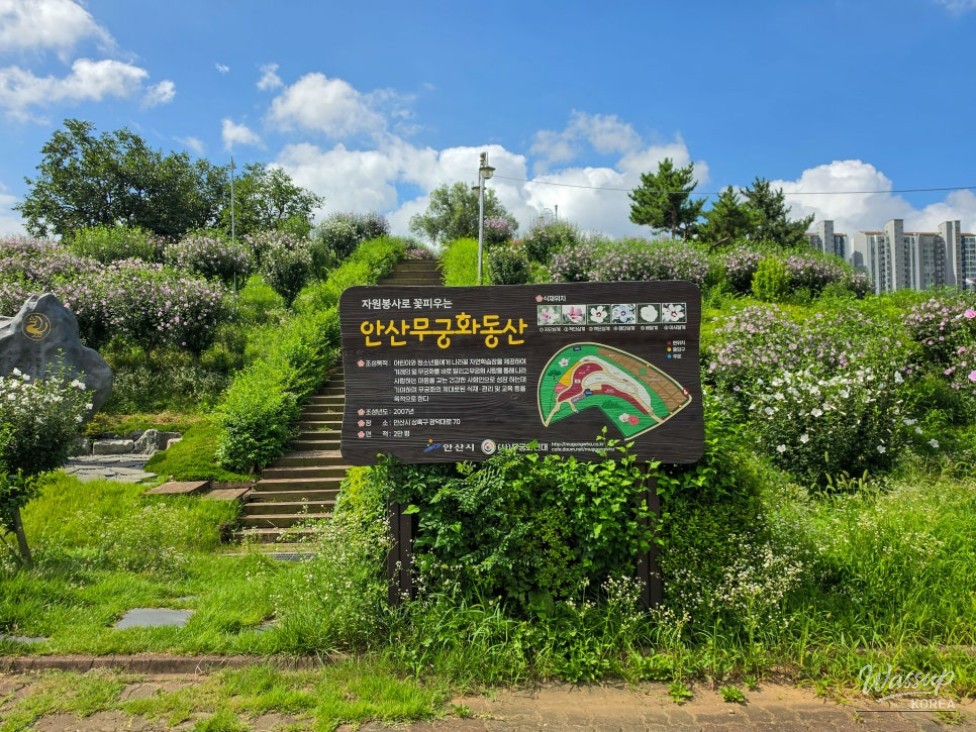
The hill, cultivated by volunteers, was first established in March 2007. It began with the planting of 700 trees on a small hill. The area has gradually expanded, and by 2024, a total of 15 planting sessions will have taken place, resulting in over 30,000 trees of more than 300 varieties.
The Mugunghwa Hill is maintained by citizens who actively participate in planting and watering the trees alongside the city of Ansan. The aim is to provide a natural learning space about the national flower for children and youth.
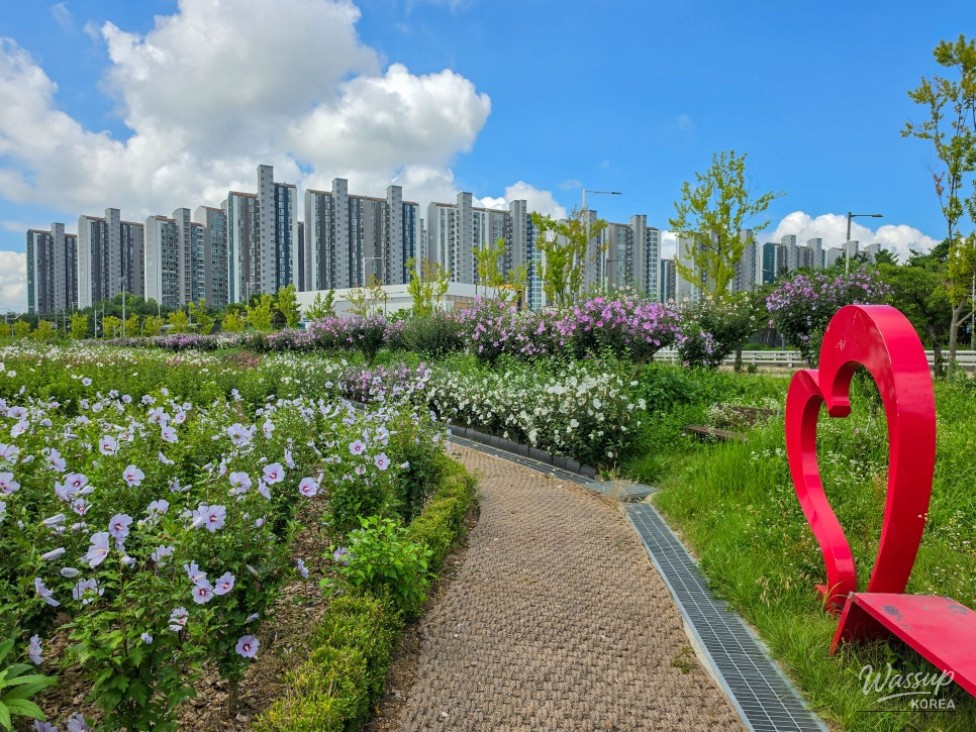
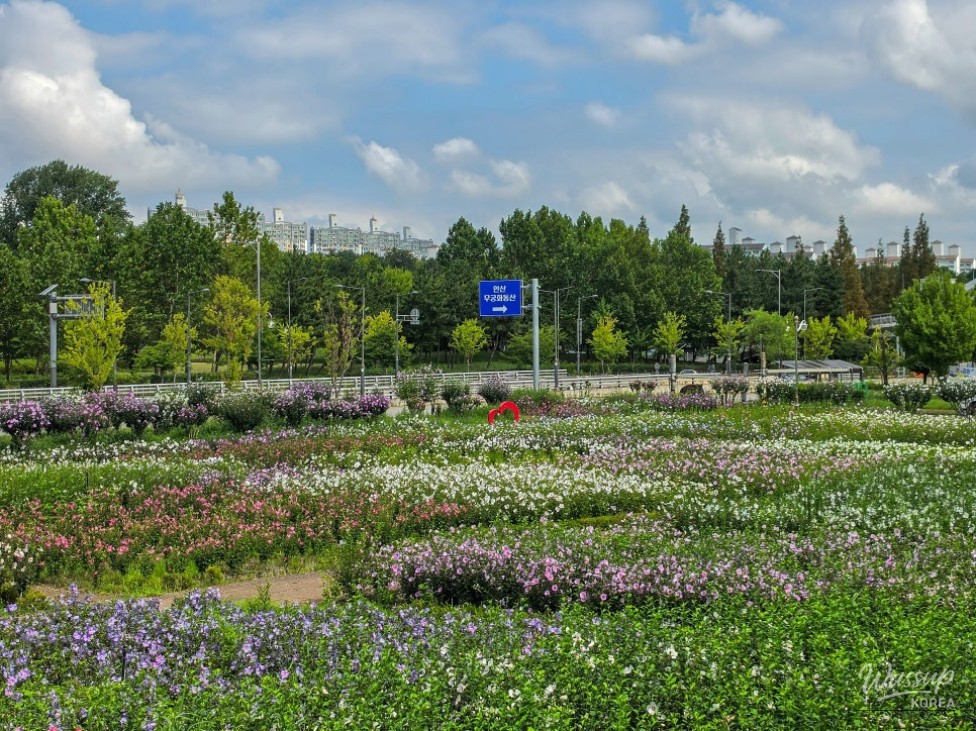
Under the hill lies a Mugunghwa theme park, developed from 2022 to 2023, featuring over 200 varieties across 1,600 pyeong.
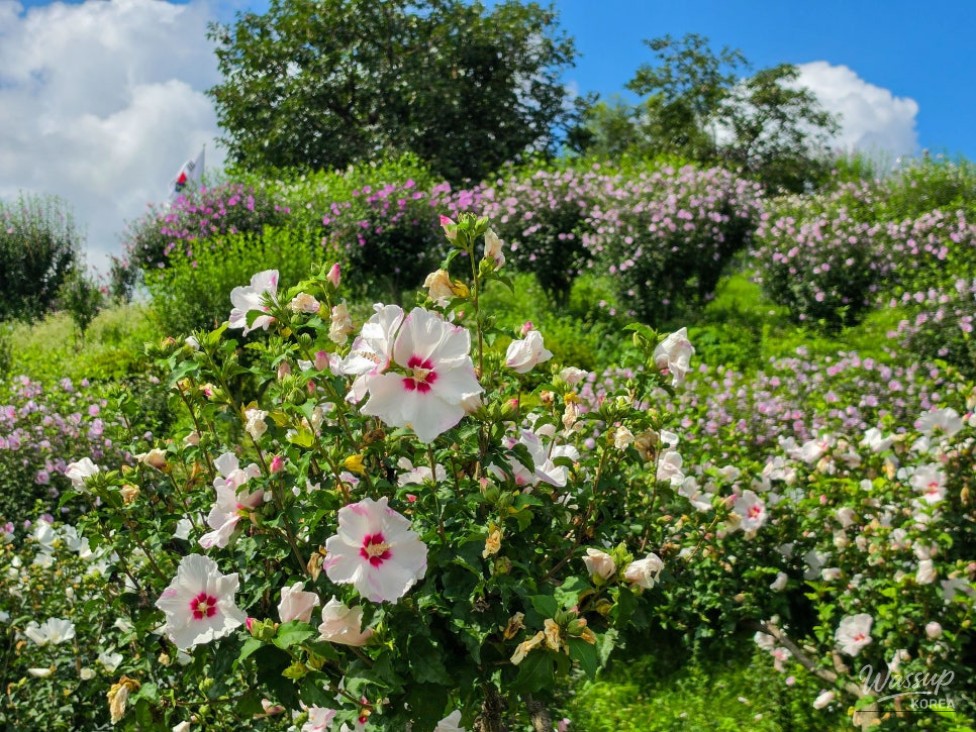
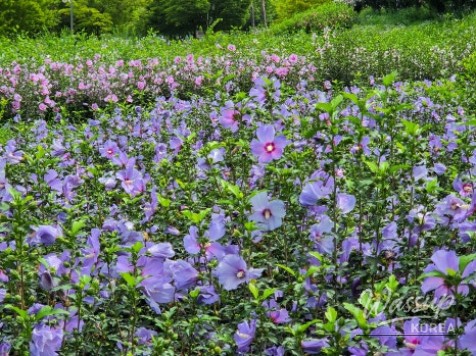
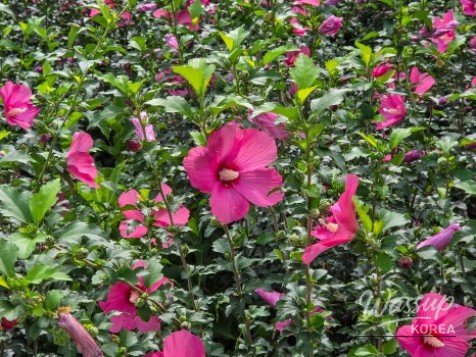
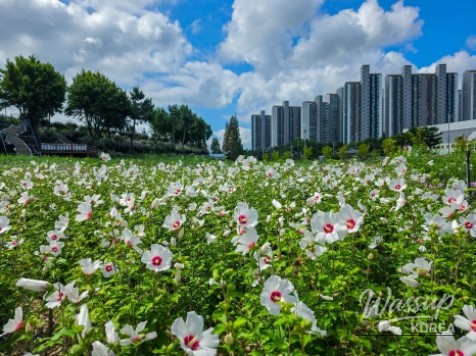
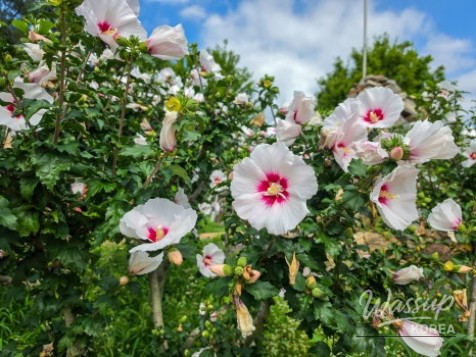
While many may remember the Mugunghwa as merely a "pink flower," a stroll through the Ansan Mugunghwa Hill reveals white, lavender, and deep pink blooms in different sections.
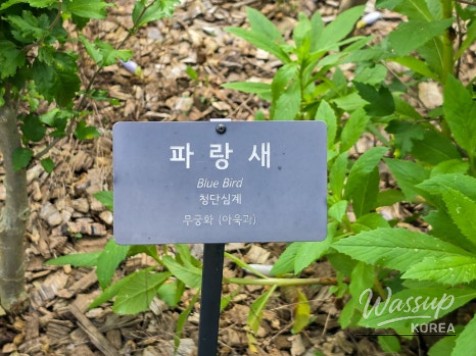
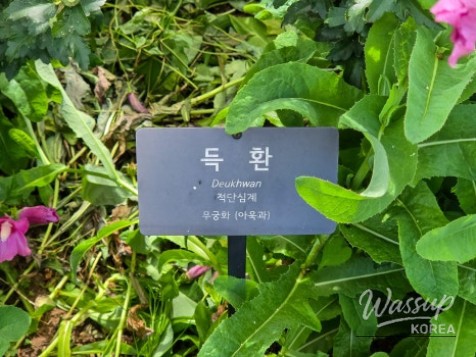
The Mugunghwa is categorized based on the red markings in the center of its petals, known as Dan-sim. Flowers without this marking are called Baedal, while those with it are further classified into Baek-dan-sim, Hong-dan-sim, and Cheong-dan-sim, depending on their petal colors.
Each variety has its own name, such as Baedal, Sowol, Hwarang, Samcheolli, and Hanseo, the latter of which shares its name with the renowned scholar Namgung Eok. It is fascinating how one flower can have so many names.
A bulletin board at the hill showcases a variety of Mugunghwa photos. Checking this board before viewing the flowers enhances the experience as different flowers catch your eye during the walk.
Despite the absence of official legislation declaring the Mugunghwa as the national flower, it has deep historical roots as a symbol of the Korean people. Its association began in 1896 during the laying of the foundation stone for the Independence Gate when students from Baewha School sang a song that included the line "Mugunghwa, the flower of our land." This phrase has since become synonymous with the flower and the nation.
During the Japanese occupation, the Mugunghwa faced persecution. The Japanese referred to it derogatorily, attempting to suppress its growth. Namgung Eok, who cultivated Mugunghwa seedlings in Hongcheon, was arrested in 1933, and 80,000 seedlings he had nurtured were destroyed, an event known as the "Mugunghwa Incident."
After liberation, the Mugunghwa returned as a national symbol, incorporated into the national flag and the badges of members of the National Assembly.
The efforts of volunteers in Ansan to nurture the Mugunghwa continue a century later.
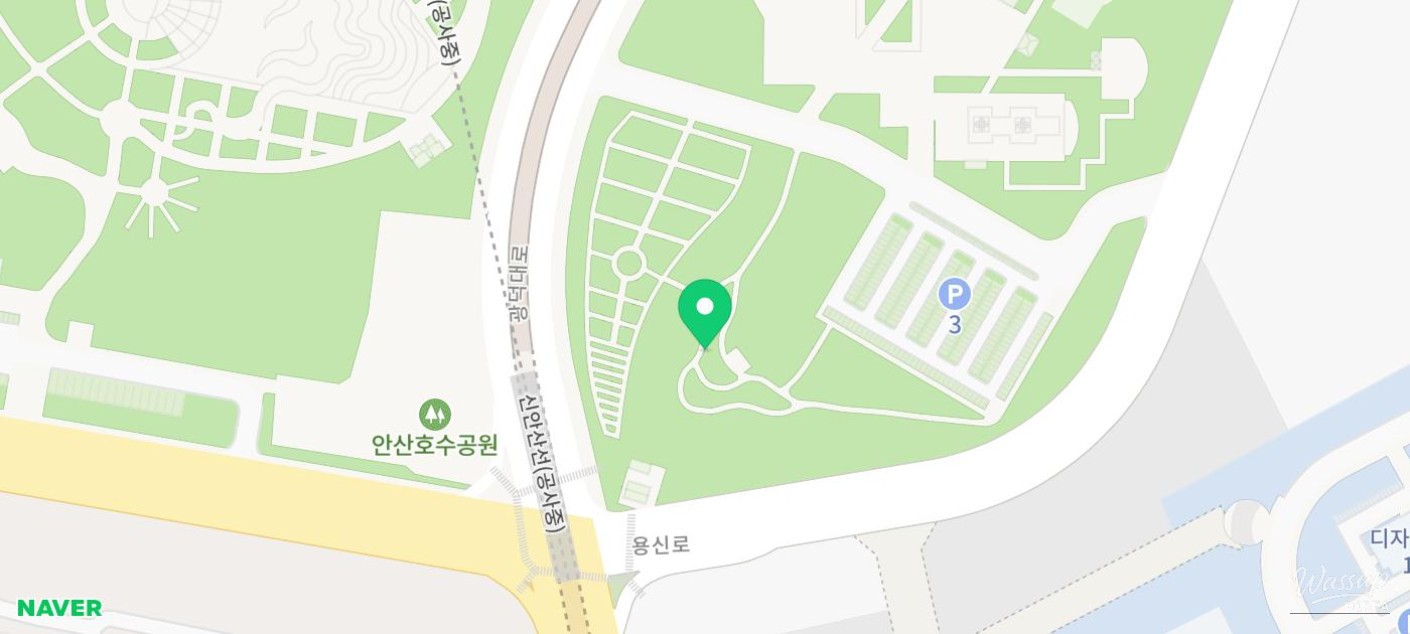
Visiting Information: The Ansan Mugunghwa Hill is adjacent to Ansan Lake Park, making it a pleasant combination for visitors. It is recognized as the 11th scenic spot among Ansan's twelve.
The park is open free of charge with no operating hours, although it is advisable to avoid visiting during the hottest part of the day due to limited shade. Early mornings or evenings are ideal for walking and photography.
The Mugunghwa blooms throughout August. If you have no plans for the Liberation Day holiday, consider visiting Ansan to see the national flower.

Source :https://blog.naver.com/gyeonggi_gov/224374944257
No comments yet.