Exploring the National Folk Museum in Paju



[By Cha Jun-ho]
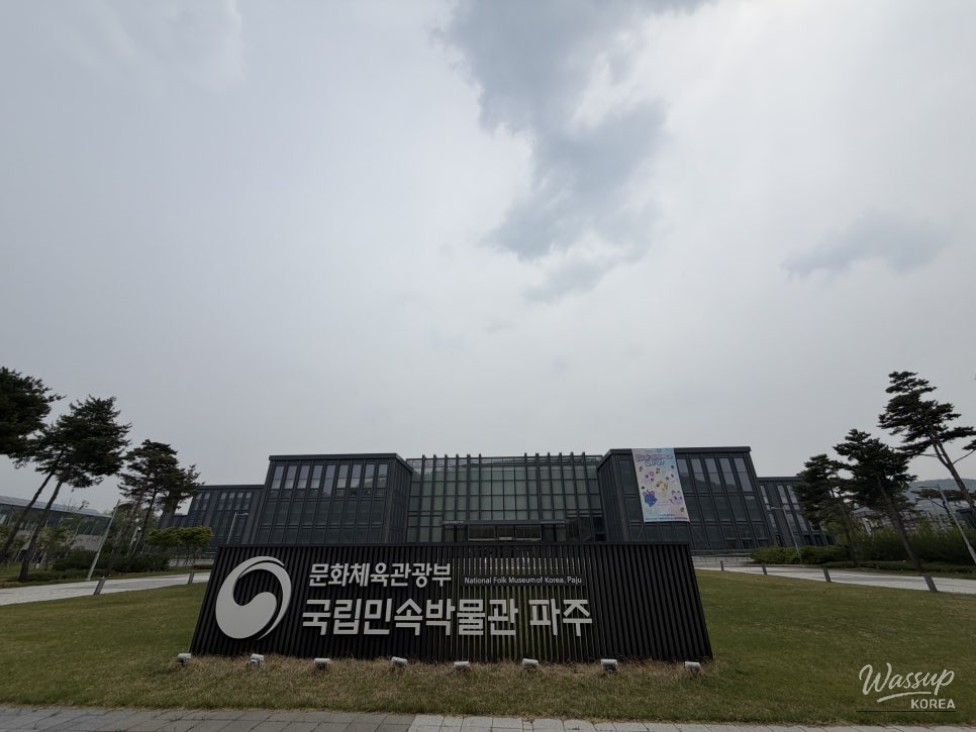
The National Folk Museum in Paju offers a unique experience that transcends a simple visit.
The journey to Paju always leaves a quiet resonance.
It is a city that touches the boundaries of various realms,
yet simultaneously, it is a space where culture permeates first.
In this flow, the National Folk Museum in Paju
is not just a destination,
but an experience of slowly confronting time.
As soon as you enter the space, you feel a sense of 'stillness.'
However, this tranquility is not emptiness;
it is a dense silence filled with countless stories.
This place serves as a repository of records,
while also being a space that brings memories to life.
The National Folk Museum in Paju has a distinct direction compared to the main branch in Seoul.
If the main branch functions as a research center,
Paju is designed as an 'expanded museum' focusing on exhibitions, education, and local culture.
With the significance of being the first national museum in northern Gyeonggi Province,
it has established itself as a cultural platform that breathes with the community.
This is not merely a space for displaying artifacts,
but an 'open structure' that connects people, culture, and the region.
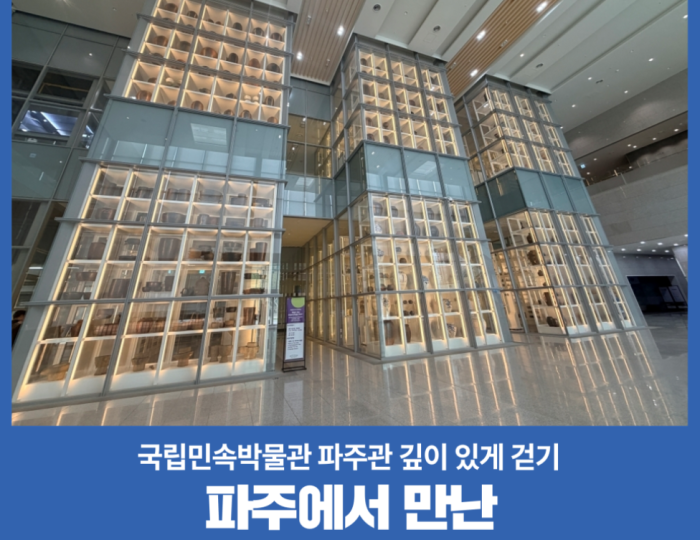
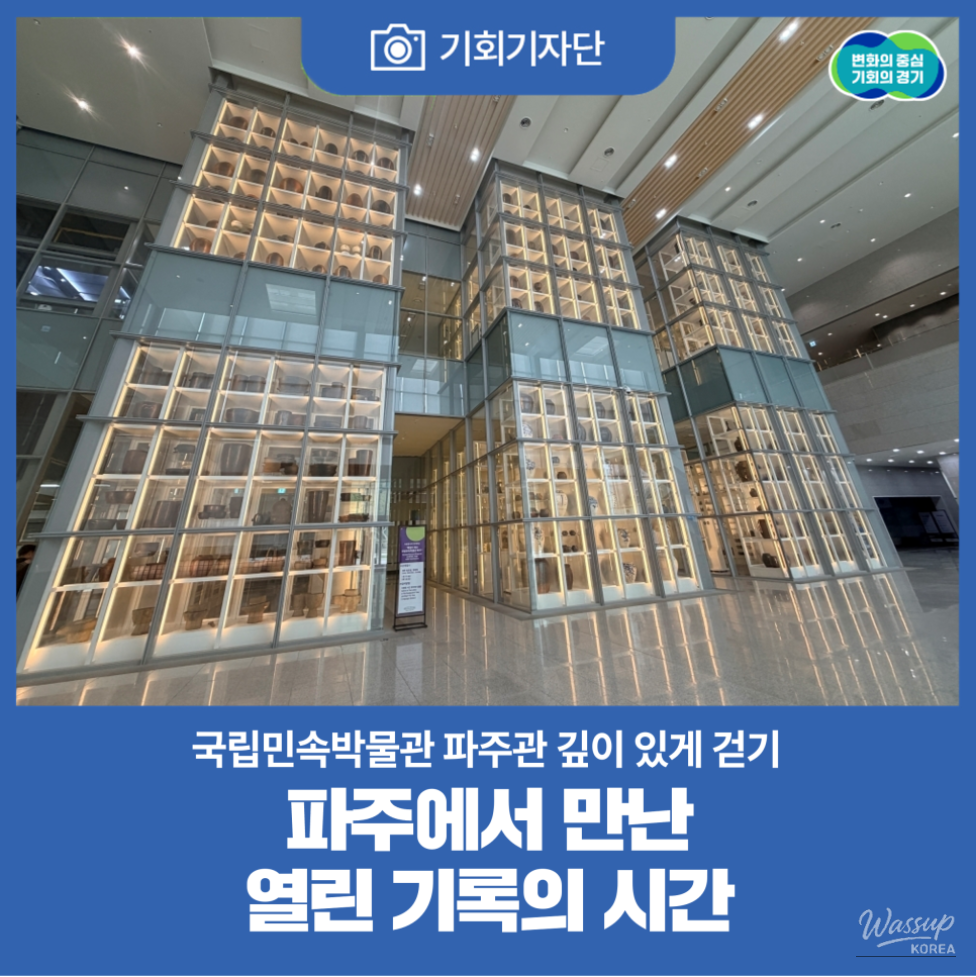
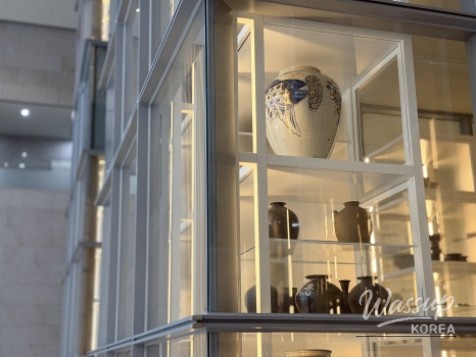
There are approximately one million folk materials stored here.
The vast collection encompasses both tangible and intangible materials,
systematically managed in 15 storage rooms,
and can be seen as a massive accumulation of time.
This number goes beyond mere scale; it shows how deeply
records of our lives, landscapes, and vanishing daily experiences
have accumulated.
Thus, this space feels more like a 'repository of time' than an exhibition hall.
The most impressive aspect is the operational method of 'Openness × Sharing × Utilization.'
By partially opening storage areas that seem like they should be closed,
and offering various educational and experiential programs that allow citizen participation,
records no longer remain in the past but expand into the present.
Visitors become participants in the flow of culture,
not just spectators of exhibitions.
In this regard, the Paju branch creates a distinctly different vibe from traditional museums.
Its proximity to the Heyri Art Village enriches the experience.
The sensations that begin in the museum extend to the art village,
creating a seamless narrative throughout the day.
Viewing exhibitions, walking, and lingering become a 'cultural stroll.'
This space is valuable as a healing destination,
allowing for a leisurely exploration.
The essence of Paju lies in its unique identity.
This city, marked by memories of division, is now forging a new identity
through culture, art, and records.
The National Folk Museum in Paju quietly connects the past, present, and future,
making it more than just a facility; it symbolizes the city's direction.
If you visit Paju,
take your time to walk through this space.
You are sure to encounter a scene that will linger in your memory.
Walking Tip: It is recommended to stroll slowly.
This place is not for quick consumption but rather for lingering and feeling.
Observing the overall flow of the space and the 'time accumulated in records' is more important than focusing on individual exhibits.
Source :https://blog.naver.com/gyeonggi_gov/224285490166
No comments yet.