Exploring the Flow of Tradition in Jeonju



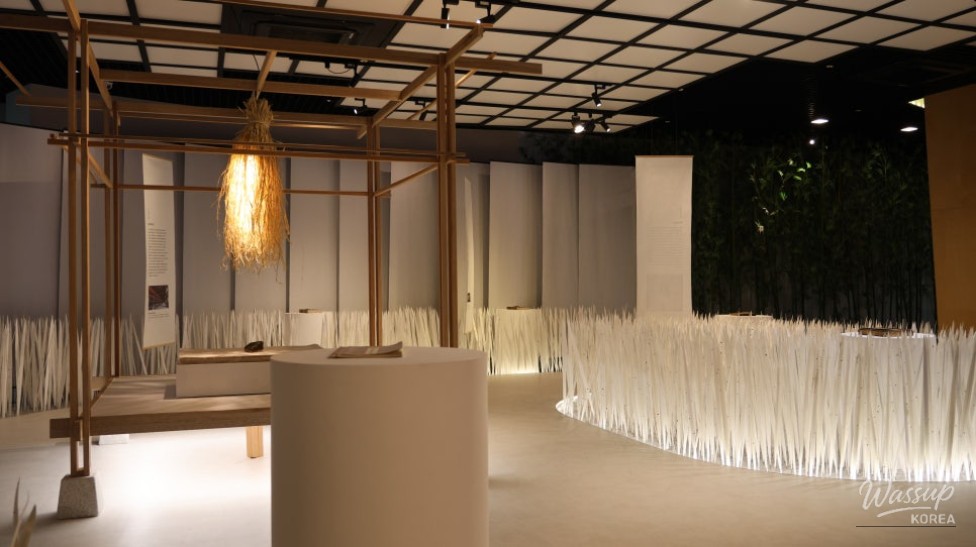
The Korea Traditional Culture Center is an institution established in Jeonju, a city recognized as a hub for traditional culture. It comprehensively addresses traditional culture based on Jeonju's historical background and cultural foundation, playing a role in systematically managing and disseminating it at the local level.
Rather than merely preserving tradition, the center operates with a focus on how it can connect with contemporary life.
The approach to traditional culture is relatively clear. It does not stop at merely reproducing our unique cultural heritage but also considers succession, development, and modern applicability.
To ensure that tradition does not remain confined to a specific generation or experts, the center is structured in a way that allows everyone to encounter and experience it in their daily lives. There is a continuous effort to present traditional culture in a way that is easy to understand rather than overly complicated.
The space is organized around the Traditional Culture Creation Center, Hanji Industry Support Center, and Korean Cuisine Creative Center. Each area has distinct roles while being interconnected within the broader flow of traditional culture.
At the Traditional Culture Creation Center, exhibitions and creative activities based on tradition take place. The Hanji Industry Support Center focuses on researching and utilizing Hanji from an industrial perspective. The Korean Cuisine Creative Center interprets traditional food culture through a modern lens, discovering and expanding Korean culinary content.
As you leisurely explore the exhibition space, it becomes clear that traditional culture is not a concept confined to a specific era but a living culture that continues to evolve today. The structure is designed such that traditional crafts, Hanji, and Korean cuisine influence and expand upon one another.
The exhibitions, experiences, and educational programs are organically connected, prompting visitors to think about how traditional culture relates to contemporary life.
The atmosphere in the center is calm and orderly. Although it deals with the subject of tradition, it feels stable rather than heavy. The guidance is straightforward, making it easy for first-time visitors to explore without feeling overwhelmed. Experiences that were previously encountered through photos or descriptions come to life in this tangible space.
Experience programs are also a crucial aspect of the Korea Traditional Culture Center. Rather than being a space solely focused on viewing, it offers programs that allow for direct participation, enabling a more realistic understanding of traditional culture. Activities like Hanji crafting and traditional culture education are designed to be accessible to a wide range of age groups.
From an industrial perspective, the center's role is evident. It supports the production and distribution of traditional crafts and conducts research and design development to expand the possibilities of Hanji. This foundation is significant as it ensures that tradition does not remain merely a cultural value but connects to real life and industry, reflecting a practical approach necessary for the sustainability of traditional culture.
The Korea Traditional Culture Center aims for the globalization of traditional culture as one of its key objectives. There are ongoing efforts to establish a foundation that allows traditional cultural content and premium brands to compete in international markets. This direction is reflected in the overall operation of the space, aiming to utilize traditional culture beyond local assets on a broader stage.
In terms of accessibility, the center is relatively easy to reach. Located in downtown Jeonju, it is not difficult to visit via public transportation, and those driving can use city roads. Operating hours, admission fees, and experience program schedules may vary based on exhibitions or programs, so it is advisable to check in advance. Some exhibitions are freely accessible, while participation in experience or educational programs may require separate registration or fees.
Surrounding the center are various cultural spaces and tourist attractions in Jeonju. After exploring the traditional culture space, visitors can easily stroll through downtown Jeonju or visit other cultural facilities. This allows for a natural flow that connects the traditions and present-day aspects of the city.
Overall, the Korea Traditional Culture Center does not view traditional culture as a static heritage but as a living culture that connects to contemporary life. It impressively allows visitors to experience and understand the value of tradition through direct observation and engagement.
If you wish to delve deeper into traditional culture during your visit to Jeonju, this center is a worthwhile and accessible addition to your itinerary. It offers a meaningful opportunity for those wanting to quietly explore how tradition can connect with today’s life.
Source :https://blog.naver.com/jbgokr/224177417167
No comments yet.