Exploring Jeonju Hanok Village: A Journey Through History and Nature


A short walk from Jeonju Hanok Village leads you to a space where the beginnings of the Joseon Dynasty and learning coexist.
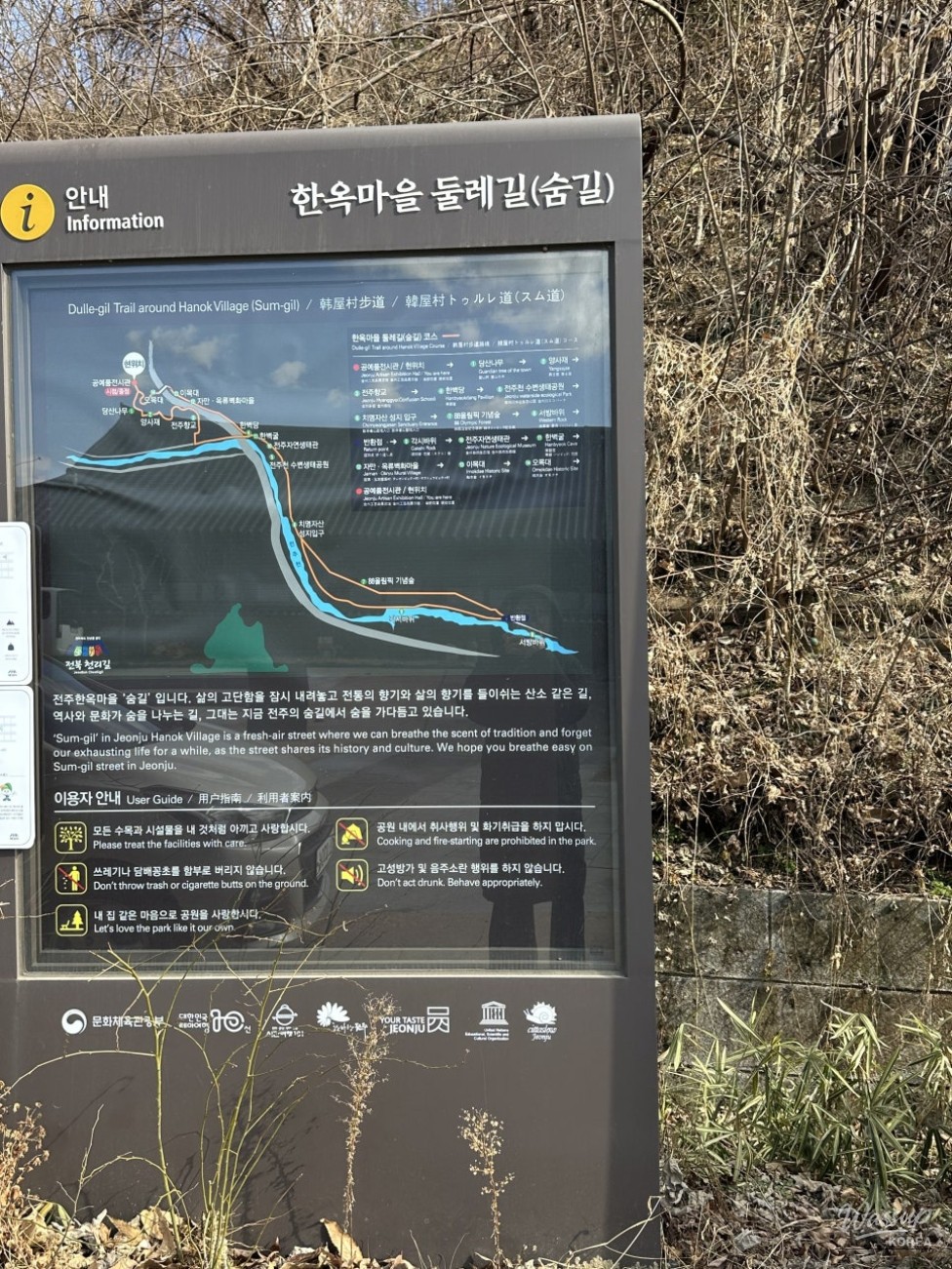
As you stroll along the Hanok Village trail (Sumsil), you'll first encounter a sign guiding you along the perimeter path. This marks the start of a peaceful walk away from the bustling tourist streets.
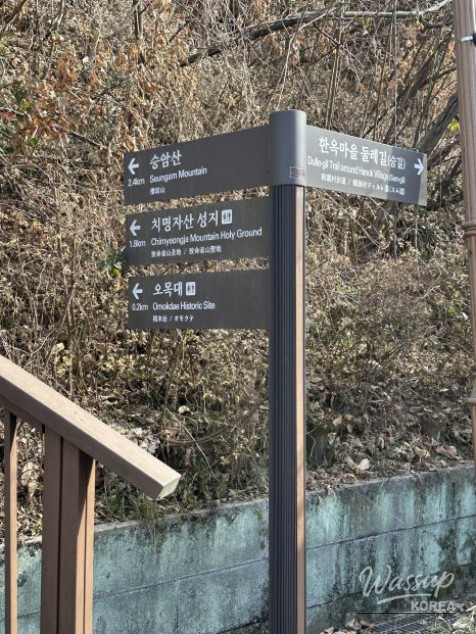
While walking, you'll notice a sign pointing towards Omokdae. Although the trail begins to ascend, it's not too steep, making it perfect for a leisurely pace.
In winter, the bare trees stand tall, but during summer, lush green paths await, and in autumn, vibrant foliage decorates the steps, promising a different scenic experience with each season.
As you climb the wooden deck stairs, you'll come across a sign for Omokdae, prompting you to slow your pace and take in the surrounding beauty.
Just a bit further, your view opens up as you reach Omokdae, where the entire Hanok Village can be seen from above. The sight of clustered tiled roofs is even more impressive from this vantage point.
Omokdae is a historic site where King Taejo of Joseon celebrated his victory over the Japanese pirates upon returning home. It is also designated as a cultural heritage site in Jeollabuk-do. A stone tablet erected in 1900 bears the handwritten words of King Gojong.
Opposite Omokdae lies Imokdae, believed to be the birthplace of Mokjo Lee Ansa, the fifth ancestor of King Taejo, allowing visitors to reflect on the roots of the Joseon Dynasty.
Next, head towards Jeonju Hyanggyo, located close to Omokdae. This traditional educational institution offers a completely different atmosphere and is well-known as a filming location for dramas like "Moonlight Drawn by Clouds" and "Sungkyunkwan Scandal."
A signboard provides information about Jeonju Hyanggyo, making it easier to understand the structure and significance of the space before exploring.
The grand and impressive Manhwaro is the first structure that catches your eye. This two-story pavilion serves as the main entrance to Jeonju Hyanggyo. Named with the meaning that 'all things are cultivated through Confucius' teachings, it was historically used for lectures and ceremonies, symbolizing the institution.
Beyond Manhwaro lies a spacious courtyard, providing a refreshing sense of openness.
As you enter deeper, signs direct you towards Daeseongjeon, Dongmu, and Seomu, marking the beginning of your exploration of the hyanggyo.
A centuries-old protective tree stands at the center of the space, embodying the long history of this place.
On the right, Dongmu houses tablets of Confucius's disciples and Chinese scholars, creating a serene atmosphere.
Adjacent to Dongmu is Daeseongjeon, where the tablets of Confucius and other sages are enshrined, and the Seokjeondaeje ceremony is held annually, continuing the tradition of Confucian rituals.
To the left of Daeseongjeon is Seomu, which also enshrines the tablets of scholars, offering a picturesque view of the old building against the sky.
Following the path between Daeseongjeon and Seomu leads you to a sign for Myeongnyundang.
In front of Myeongnyundang, another ancient protective tree stands, quietly enduring the test of time and enhancing the atmosphere of the space.
As you gaze at the weathered wooden pillars and grains, you may feel as though you've traveled back in time. Myeongnyundang, one of the oldest lecture halls for Confucian studies in Korea, has also served as a filming location for numerous dramas and movies.
Entering to the left of Myeongnyundang, you will find Gyesungsa, a special building that enshrines the tablets of Confucius and the father of the Five Sages, remaining unique to Jeonju Hyanggyo and Jeju Hyanggyo.
If you're planning a trip to Jeonju Hanok Village, I highly recommend taking a short stroll to explore Omokdae and Jeonju Hyanggyo. This course, blending history, nature, and tranquil walks, reveals another charm of Jeonju! Especially in autumn, the ginkgo trees at Jeonju Hyanggyo are stunning, leaving a lasting impression for visitors.

Source :https://blog.naver.com/jbgokr/224196938985
No comments yet.