Discovering the Hidden Treasures of Chilbo Mountain
- Original source
- blog.naver.com



[Reporter: Yoon Jae-yeol]
The Gyeonggi Province and the Gyeonggi Tourism Organization have launched a local travel program called 'Weekend in Gyeonggi,' which introduces new travel destinations every week. One of the events held was 'Back Mountain Week,' which started from the idea that traveling doesn't always mean going far away. This program encourages the rediscovery of familiar local mountains as special travel resources, promoting a new travel culture that embraces nature in our daily lives.
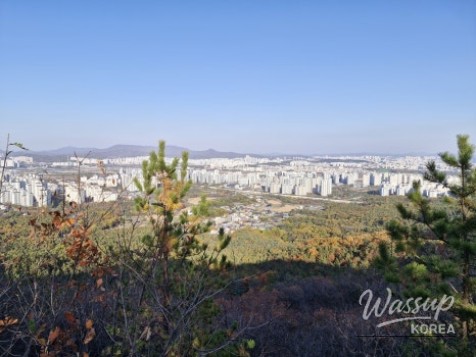
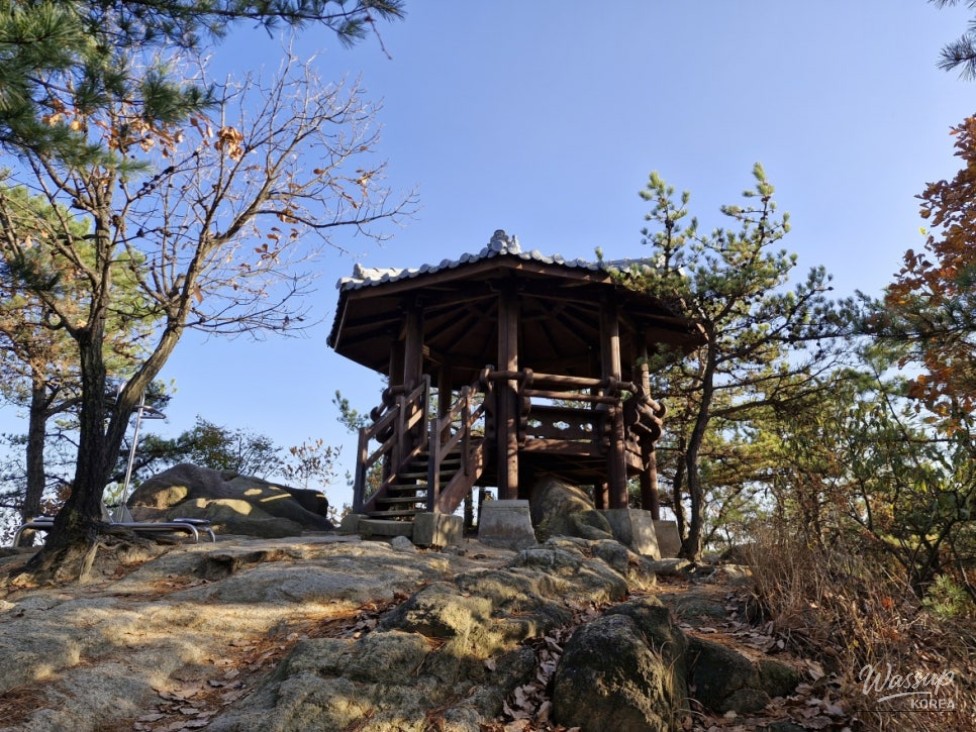
At the summit of Chilbo Mountain, overlooking the cityscape of Suwon.
Thanks to 'Back Mountain Week,' I have come to appreciate Chilbo Mountain, located between Suwon and Hwaseong. Standing at an elevation of 238.8 meters, it is an easily accessible mountain that warmly embraces the neighborhoods of Hoemaesil-dong, Geumgok-dong, and Dangsudong. For the locals, it is a precious natural space where they can enjoy the forest's atmosphere and the leisurely mountain trails at any time without special plans.
Chilbo Mountain offers seven hiking trails. The first trail starts from Chilbo Spring and leads to the summit before descending toward Cheonchan IC. Walking along the 6.2 km ridge, hikers can encounter various mountain landscapes and forest scenery. Although the journey is relatively long, there are several viewpoints along the way to rest.
For those arriving by car or bus, the second trail is recommended. As is common in mountain areas, there is a temple called Yonghwa Temple here, which features a uniquely shaped stone Buddha that guards the main hall. This rough-looking statue has an interesting legend associated with it.
The story recounts how a woman named Kim Silgae had a dream urging her to offer devotion to the stone Buddha. Regardless of the weather, she dedicated herself to the Buddha, prompting the villagers to build a hut for her devotion. After her passing, the villagers built a temple to honor her dedication. However, the person who painted the Buddha's eyes became blind, leading the villagers to remove the paint, preserving the Buddha's current appearance.
This tale illustrates how the sincere prayer of one woman sparked the community's attention and devotion, ultimately leading to the establishment of the temple. It highlights that Chilbo Mountain has long been a place of faith and life stories for the residents.
The trail from the entrance of Yonghwa Temple to the summit is about 1 km long but should not be underestimated due to its steep ascent. Despite the challenge, this path is popular due to the array of restaurants lining the way, each offering unique delicacies that attract visitors. There are also distinctive cafes that draw people from afar, allowing hikers to enjoy delicious food and a cup of tea before or after their hike.
Chilbo Mountain reveals different charms depending on the trail chosen. The path starting from behind Sangchon Middle School is relatively flat and lush, allowing for a leisurely walk. As one walks amidst the trees, a sense of calm envelops the mind.
As hikers progress, they may come across the Muhaksa Cave Temple, a space repurposed from a mine used during the Japanese occupation. Monks have transformed this cave into a place for prayer and meditation, turning a former labor site into a serene sanctuary.
Just beyond the temple lies the Chilbochima Wildlife Protection Area, designated to preserve the habitat of the endangered Chilbochima species. The area is fenced and features signs explaining the key species present.
Continuing up the trail, one can find the Gajun Rock, which symbolizes abundance. Legend has it that a greedy stone mason believed treasure lay within the rock and began to chip away at it, only to be struck by lightning. The moment he died, a golden rooster flew away, leading to the mountain being named Chilbo Mountain, which signifies eight treasures, including ginseng and gold.
In summary, Chilbo Mountain is not just a place for exercise or a stroll; it is a valuable asset that preserves ecological values and the culture and stories of the region. The forest helps mitigate urban heat and reduces fine dust, making it a treasure often overlooked by those nearby. It is time to recognize its value and commit to preserving it for future generations.






Source :https://blog.naver.com/gyeonggi_gov/224470195677
More from Place



No comments yet.