A Strong Support Network for Mental Health in Gyeonggi Province



[Reporter: Yoon Jae-Yeol]
Protecting the mental health of residents
In the midst of fierce competition and complex human relationships,
we unknowingly accumulate mental burdens.
While we continue our daily lives as if nothing is wrong,
many carry invisible wounds in their hearts.
These mental health issues often exceed what an individual can manage alone,
and there are clear limitations to solving them by oneself.
Support for the mental health of Gyeonggi residents
Mental health is not just an individual issue,
but an important challenge that society must address collectively.
In response, Gyeonggi Province is providing various supports
through the Mental Health Welfare Center to ensure residents do not face their struggles alone.
They are implementing a wide range of initiatives,
including mental health promotion, management of severe mental illnesses,
disaster psychological support, and suicide prevention.
Early detection of mental health issues and connecting individuals with appropriate support is a key focus.
Through systematic services like counseling and education,
residents are being helped to live stably within their communities,
and support is provided for their recovery back to daily life.
Reducing negative perceptions of mental illness through campaigns,
and creating a social environment where anyone can seek help is also a significant goal.
Robust support systems for mental health
Team Leader Kim Yoo-Cheol (Mental Health Nurse) stated,
"The Gyeonggi Mental Health Welfare Center collaborates with the provincial government
to enhance the quality of life for residents and build a healthy community.
We maintain a cooperative system with 31 city and county centers,
supporting each center to carry out their projects smoothly.
In crisis situations, our center also offers psychological counseling through professionals
and emergency responses for those in need.
We ensure continuous management by helping individuals receive assistance from local centers."
Kim emphasized that maintaining emotional balance and managing feelings
is crucial not only for personal happiness but also for the quality of social relationships.
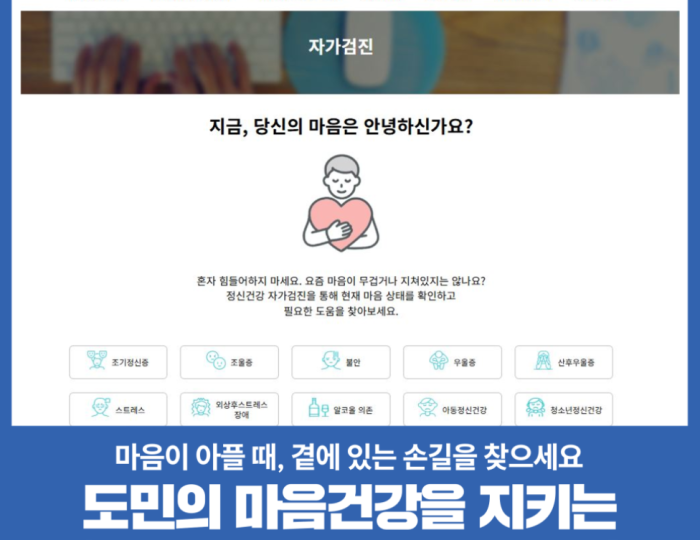
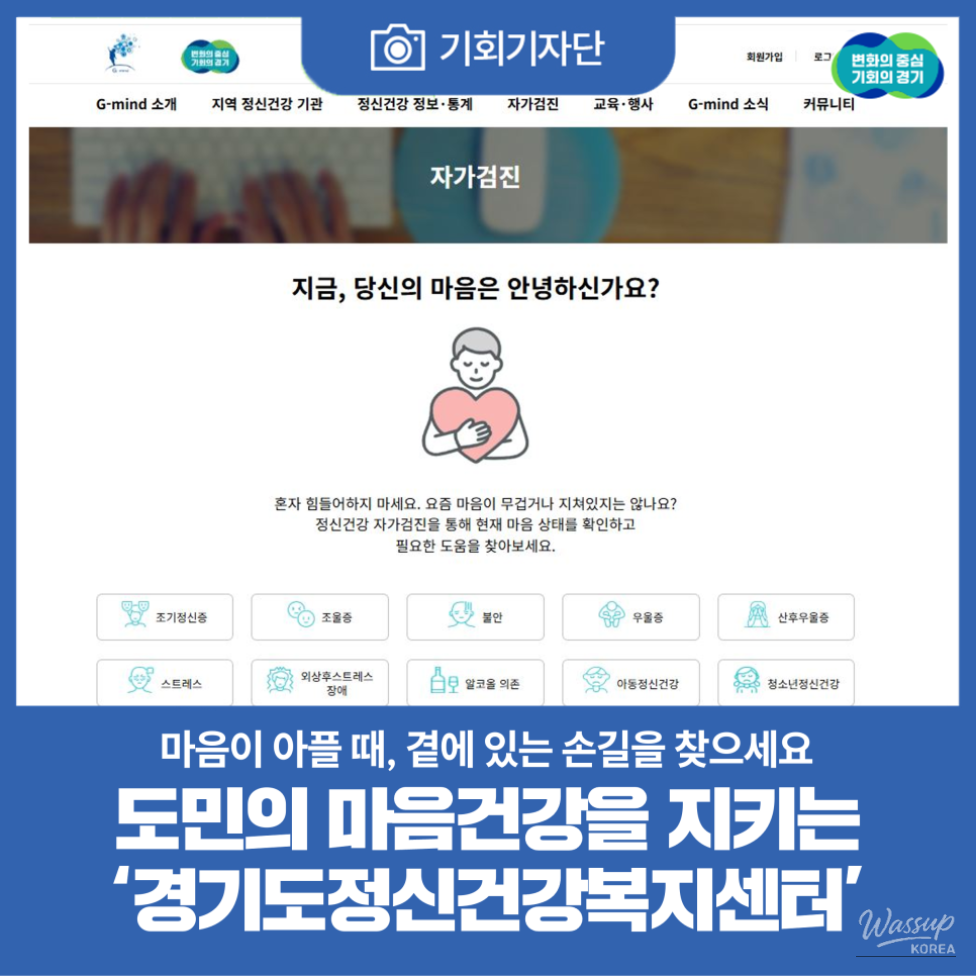
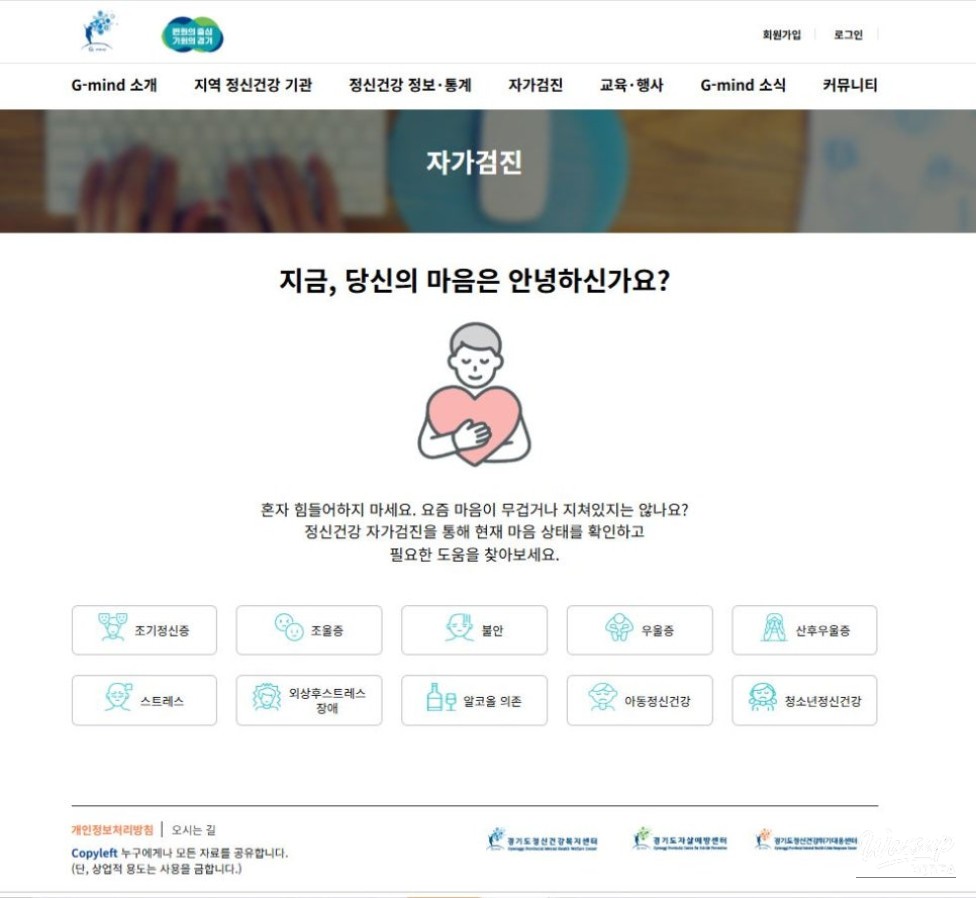
Self-assessments for mental health can be conducted on the Gyeonggi Mental Health Welfare Center's website,
allowing adults, children, and adolescents to evaluate their stress, depression, and anxiety.
After completing the self-assessment, those identified as high-risk can receive counseling through 'Talk-Talk-Call',
a system that provides integrated support from assessment to institutional connections.
If individuals wish to visit a medical institution for treatment after counseling,
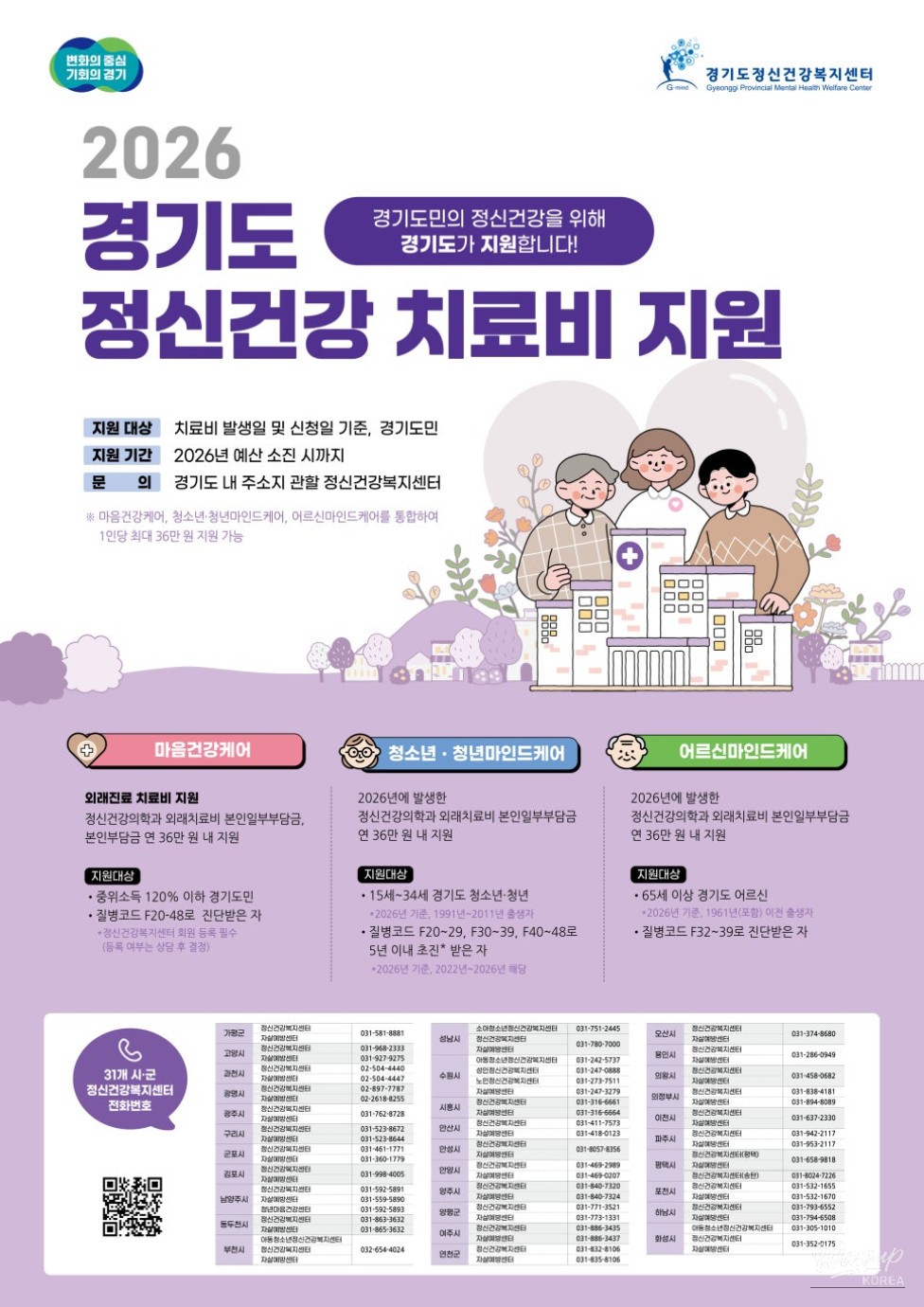
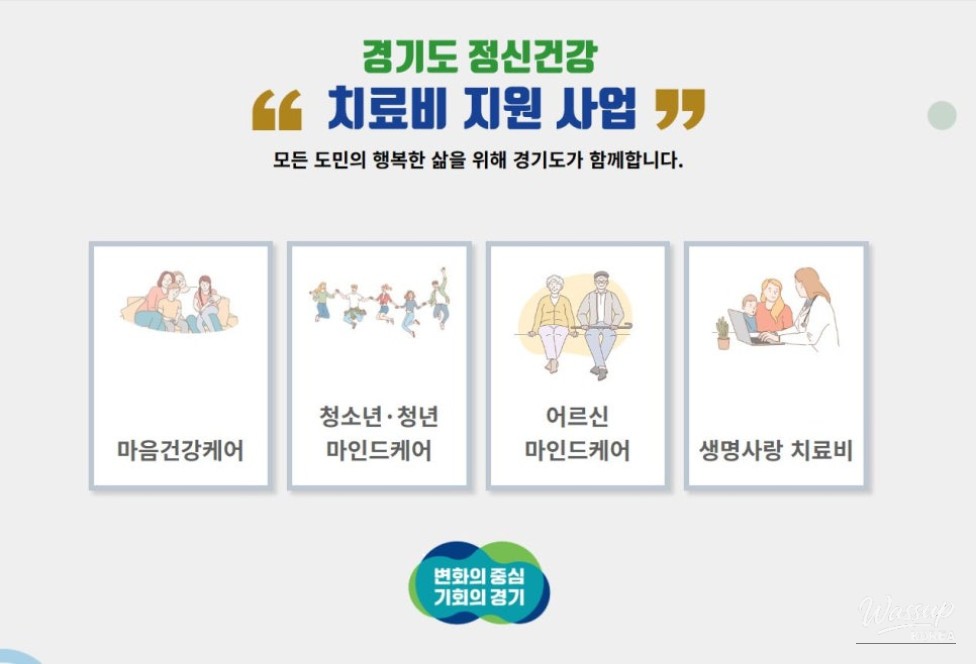
they can utilize the 'Mental Health Treatment Cost Support Program'.
This program aims to improve early detection of mental illnesses and access to treatment,
offering support for personal treatment costs up to 360,000 won annually.
Support is tailored for different groups, including 'Mind Care' for general residents,
'Youth and Young Adult Mind Care', and 'Senior Mind Care'.
For more details, please check the mental health treatment cost support website.
Examples of individuals who have benefited from these programs include a man in his 50s in Ansan
who returned to daily life through 'Mind Care' after experiencing economic loss
and severe delusions due to voice phishing.
Another case is a man in his 60s in Bucheon,
who resumed treatment after receiving financial support following a pause due to economic difficulties.
As seen in these cases, the Gyeonggi Mental Health Welfare Center serves as a strong support system
to help each resident maintain a healthy daily life.
Mental health may be invisible,
but it is a crucial factor that affects the quality of life.
To address this, the center engages in preventive education and ongoing promotional activities,
going beyond mere support to assist in recovery and social adaptation.
Team Leader Kim advises that small practices in daily life can greatly help maintain mental health.
"Regular routines and sufficient rest are important,
as well as communication and exercise with those around you.
It’s crucial to monitor emotional changes early,
and when in difficulty, I recommend checking your mental state through a simple test on the center's website
and seeking professional counseling if necessary."
It is vital to remember that you are not alone, especially when feeling overwhelmed.
Help is often closer than we realize,
and recovery begins with the small courage to reach out for assistance.
Source :https://blog.naver.com/gyeonggi_gov/224261513103
No comments yet.