A Journey Through Time: Exploring the Haman Museum


By Kim Myung-hoon, 14th SNS Reporter
Haman Museum
Operating Hours: 09:00 - 18:00 (Closed every Monday)
Parking: Free
Admission: Free
The Haman Museum in Gyeongsangnam-do offers a comprehensive exhibition of artifacts unearthed in Haman, spanning from the Ara Gaya period through the Goryeo Dynasty to modern times. It's a place where you can observe the culture of each era in a well-organized manner.
The Haman Museum features Exhibition Hall 1, Exhibition Hall 2, and a special exhibition room. Additionally, there's an outdoor experience area and an outdoor exhibition area.
Let's start by exploring Exhibition Hall 1. On the first floor, you'll find a children's experience room and a book cafe. If you're visiting with children, the experience room is a great place for them to enjoy.
The exhibition begins on the second floor, starting with a photo zone, followed by the Prehistoric Era Room, the Ara Gaya Room, the Three Kingdoms/Unified Silla Room, a small exhibition, and a media table.
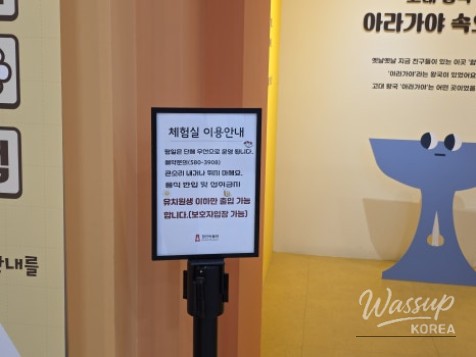
Note that the children's experience room on the first floor is only accessible to children under kindergarten age and is open from 10:00 to 17:00.
In the exhibition hall, starting from the photo zone, you can learn about Ara Gaya in Haman. You can see a timeline of Haman and the world at a glance.
Discover dinosaur footprints and fossils, evidence that dinosaurs once roamed the Korean Peninsula. Dinosaur footprints have also been found in Haman.
The Paleolithic era marks the period when humans created tools from stone. These intentionally crafted tools are known as chipped stone tools. Early Paleolithic tools were made by chipping stones four or five times, resulting in irregular shapes, large sizes, and heavy weight. In the Late Paleolithic era, stone tool-making technology advanced, allowing for the creation of relatively refined tools by trimming small flakes from the core stone. The first quartz core stone was collected in Yongsan-ri, Chilwon-eup, Haman.
As Paleolithic artifacts were collected from various locations in Haman, evidence of human habitation during this period increased. It is estimated that these artifacts date back to the Middle to Late Paleolithic period, approximately 130,000 to 12,000 years ago.
In the Bronze Age, tools indicative of an agricultural society were discovered. The exhibition showcases how dry-field farming and rice farming became the foundation for essential food production. People began building permanent houses and forming villages to live together. Various tools and house sites have been excavated, revealing pottery from this era.
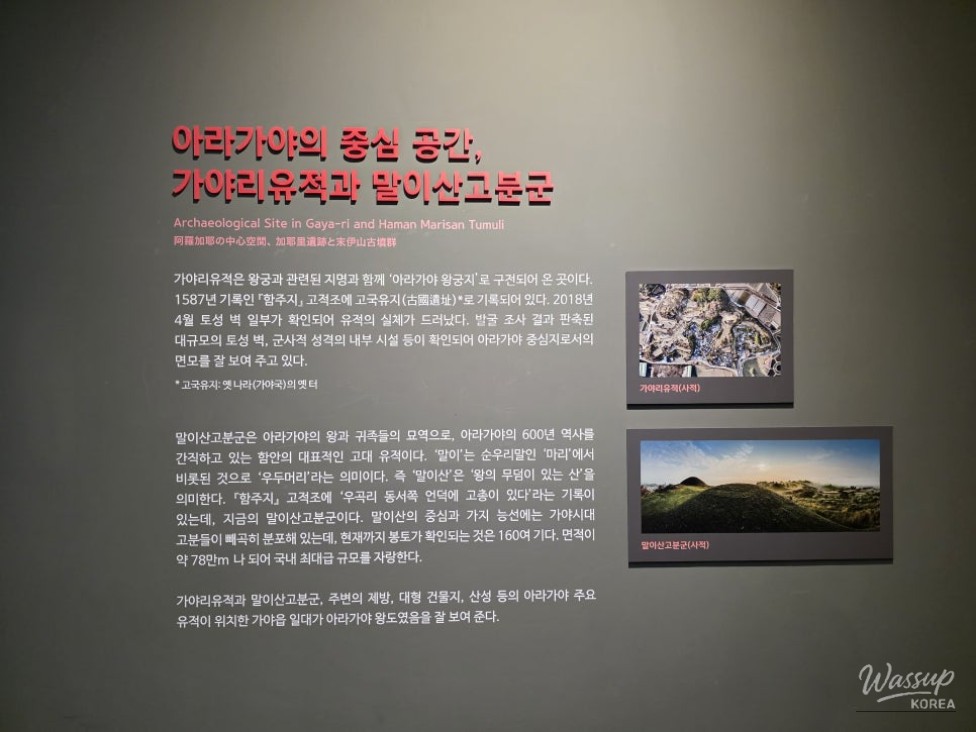
Through these various periods, Haman gradually transformed, leading to the birth of the Ara Gaya kingdom. Ara Gaya existed for 519 years, from 42 to 561 AD. Artifacts discovered alongside Ara Gaya pottery include weapons, armor, and even armor for horses.
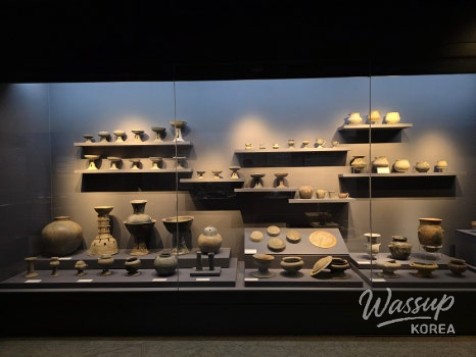
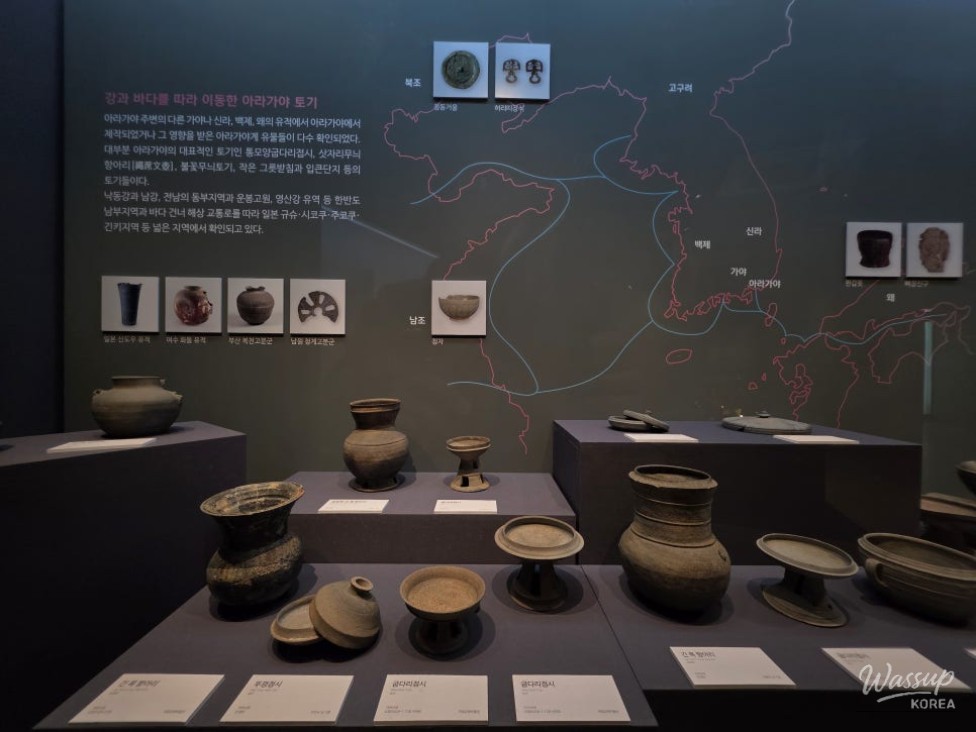
The Ara Gaya people were skilled potters, as evidenced by the numerous pottery pieces on display.
Ornaments and decorative items are also exhibited, demonstrating their craftsmanship.
Many artifacts made in Ara Gaya or of Ara Gaya origin have been found in other Gaya, Silla, Baekje, and Wa (Japan) sites. Ara Gaya was connected to not only neighboring countries like Silla and Baekje but also distant lands like Southern Dynasties of China, Wa, and Samyeon. Pottery accounts for the largest proportion of artifacts, followed by ornaments, weapons and ritual tools.
Next is Exhibition Hall 2. The first floor houses a conference room, curatorial research office, and accessible restrooms. On the second floor, there are a special exhibition room, a permanent exhibition room, an outdoor learning area, and an infant rest area.
The permanent exhibition room tells the story of Haman during the Joseon Dynasty.
After the Ara Gaya period, Haman was divided into Haman-gun and Chilwon-hyeon. This division continued through the Goryeo Dynasty and into the Joseon Dynasty. From the late 15th to early 16th centuries, Haman Eupseong (town wall) and Chilwon Eupseong were built to prevent invasions from the coast.
Hyanggyo (Confucian schools), Seowon (private academies), and Seodang (village schools) were established as educational facilities in the center of each town, and Sajikdan (altars to the gods of land and grain) and shrines were built for performing ancestral rites.
The lives and stories of the people of Haman are preserved in historical records such as the Hamjuji, Haman Chongsoerok, and Chilwonhyeon Eupji.
You can also view the Haman woodblock storage. The woodblocks are visible through a glass window.
There is also a video room where you can watch a video of Haman's Nakwha (falling flower) play.
Currently, the Haman Museum is hosting a special exhibition titled "The Story of Deer Gathered in Ara Gaya" in the special exhibition room. The exhibition runs from September 30, 2025, to March 29, 2026. I recommend visiting it.
The deer story exhibition is divided into four parts. Part 1, titled "We Are All Deer," tells the story of deer.
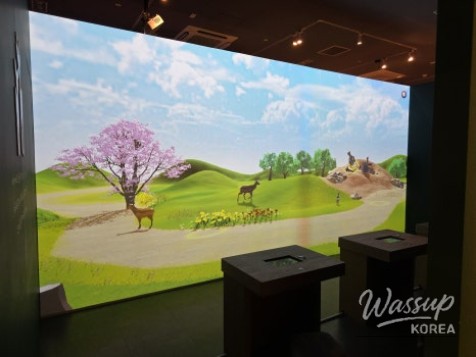
You can learn about the origins of place names related to deer. There is a space where you can color deer and complete missions. Deer are also mentioned in Korean medical texts that benefit our lives.
In particular, the Dongui Bogam (Principles and Practice of Eastern Medicine) is the world's first medical book to be listed as a UNESCO World Heritage Site, recognizing its importance. It describes Korean medicinal ingredients, diagnoses, prescriptions, and treatments. The text distinguishes between deer, roe deer, water deer, and musk deer, providing detailed descriptions of each part.
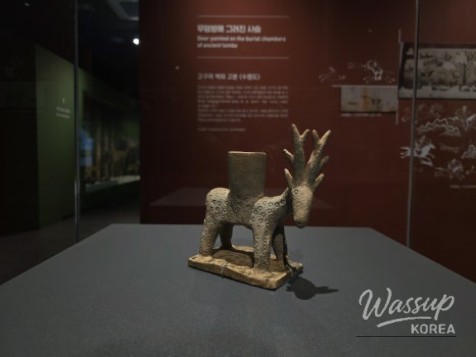
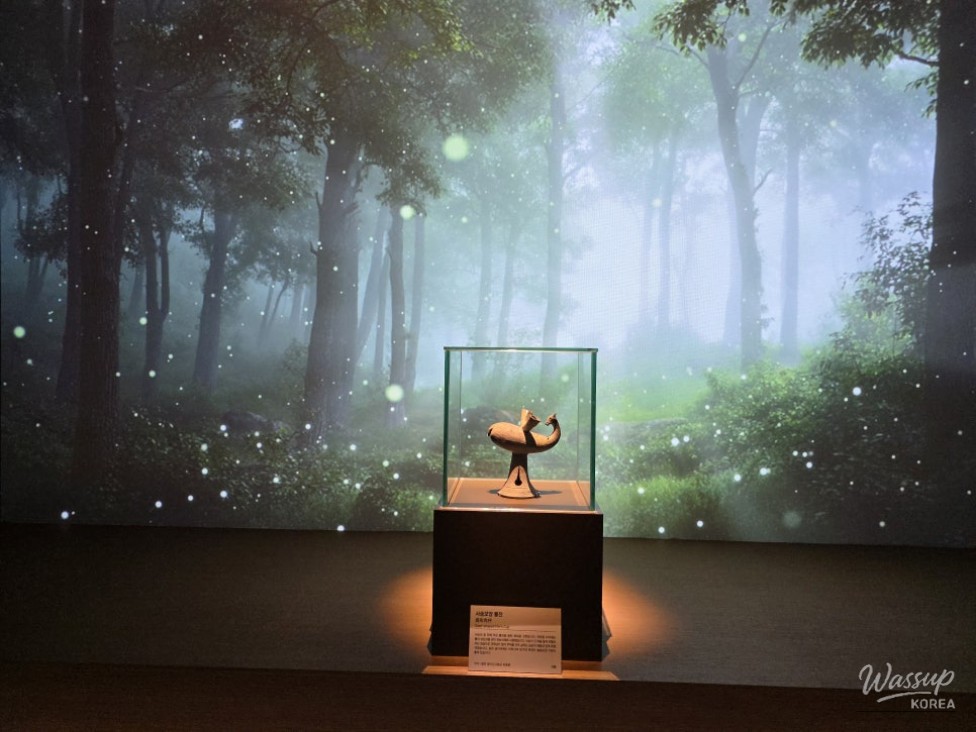
Deer are also used as models for pottery.
You can see various deer-shaped pottery pieces.
Notably, you can see the deer-shaped horn cup excavated from Tomb No. 45 in Maris Mountain. You can see pottery and various deer shapes.
The Haman Museum was a place where you could learn about pottery and Haman.













Source :https://blog.naver.com/arahaman/224077733654
No comments yet.