Remembering the Battle of Ungchi



In August, we recall the history of Ungchi, located along the mountain paths of Wanju.
Ungchi (熊峙) literally translates to 'bear pass,' a name that signifies a crossing once frequented by bears.
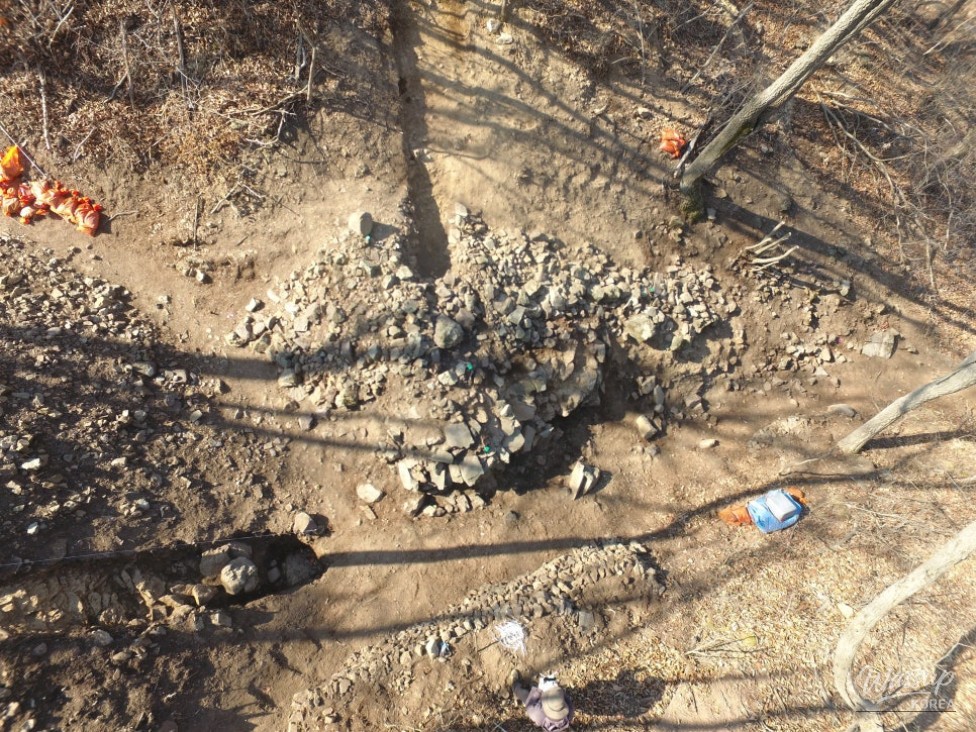
Today, it is a quiet mountain path surrounded by dense forest, but 434 years ago, this area was a battlefield where lives were risked to protect Jeonju and Honam.
When the Imjin War broke out in 1592, Japanese forces rapidly occupied major regions of Joseon.
As the Japanese troops seized Geumsan and advanced towards Jeonju, Jeolla Province found itself directly threatened by war.
Jeolla was a vital agricultural area and a key supplier of military provisions, making the defense of Jeonju synonymous with the defense of Honam.
The Joseon army and local militias fought to block the advance of the Japanese troops around Ungchi, leading to further skirmishes near Andeokwon.
Andeokwon is now identified as the area extending from Jeonju Goryeo Hospital to Geumsung Funeral Home.
This is why Ungchi holds special significance for the people of Wanju.
It is a place where a mountain path decided the fate of the nation, and that memory continues to live on in Wanju.
To enter Jeonju from Geumsan, one had to traverse a rugged mountainous region.
Ungchi was a crucial pass located right on that route.
Defending Ungchi was not merely about protecting a mountain path; it was about preventing the Japanese from entering Jeonju and safeguarding the heart of Jeolla.
At that time, figures such as Lee Bok-nam, the governor of Naju, and Jeong Dam, the magistrate of Gimje, led the Joseon forces alongside militia leader Hwang Bak against the Japanese.
The Joseon troops effectively utilized the challenging terrain to impede the Japanese advance.
While the outcome of the battle was not a clear victory, the strong resistance at Ungchi significantly complicated the Japanese troops' advance towards Jeonju.
Especially noteworthy is that both the regular army and local militias stood together on the battlefield, making the Battle of Ungchi not just a military clash, but a shared history of a community.
After the battle at Ungchi, the threat from the Japanese continued, and the Joseon army maintained defensive operations along the route to Jeonju.
In this context, Andeokwon played a crucial role as another defensive space protecting Jeonju.
Today, it is important to view the battles at Ungchi and Andeokwon not as separate events but as part of a broader 'Battle of Ungchi' narrative.
While the battle at Ungchi blocked the Japanese from entering Jeonju, Andeokwon served as a second line of defense against their advancing troops.
Though these battles occurred in different locations, the target the Joseon army aimed to protect was singular: Jeonju and Honam.
Among the notable figures in this context is Hwang Jin.
While Jeong Dam and others fought at Ungchi, Hwang Jin stood against the Japanese at Andeokwon to protect Jeonju.
Thus, the Battle of Ungchi is not an isolated incident; it marks the beginning and a symbolic event of the early defenses of Honam during the Imjin War.
When discussing the Battle of Ungchi, one cannot overlook the phrase 'If Honam is lost, the nation is lost.'
This expression has become widely recognized as a symbol of the patriotic spirit surrounding the Battle of Ungchi.
However, to understand its full significance, we must consider the defensive operations spanning Ungchi, Andeokwon, and Ichi.
In doing so, we can more clearly grasp why Honam was a strategically important area during the early stages of the Imjin War and how many fought to protect it.
This is why the film 'Hansan' also references the broader Battle of Ungchi.
On August 20, we remember the Battle of Ungchi at the Jeonbuk Provincial Government Office.
There is a special day dedicated to remembering the Battle of Ungchi, which falls on the 8th day of the 7th lunar month.
To commemorate the fierce battle that occurred on this day in 1592, Wanju has held memorials for the fallen heroes.
Following its designation as a national historic site, the memorial event has evolved into a joint ceremony involving Jeonbuk Province, Wanju, and Jinan.
This year, the memorial service will be held on August 20, corresponding to the 8th day of the 7th lunar month.
This event is significant as it extends the history of Ungchi beyond a specific region, allowing all citizens to remember it.
The individuals who stood at Ungchi 434 years ago, and those who fought at Andeokwon, were part of a singular historical flow.
Ungchi is not merely a site of a battle in 1592.
It represents the collective memory of those who fought together, transcending regional and social divisions in the face of national crisis.
On August 20, why not join us at the memorial service for the Battle of Ungchi at the Jeonbuk Provincial Government Office?
The site of the Ungchi historic site lies along the mountain paths of Wanju and Jinan, but the spirit of remembering our heroes resonates beyond regional boundaries, reaching all citizens.






Source :https://blog.naver.com/wanjugun/224391355891
No comments yet.