Exploring Hwanggungwoo: A Historical Gem in Seoul



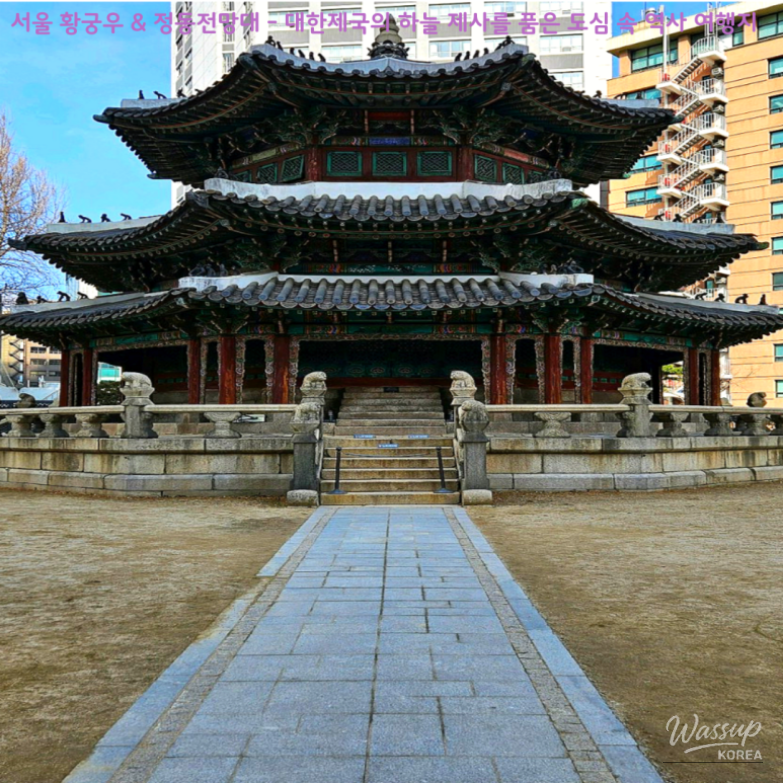
Hwanggungwoo, located in Sogong-dong, Jung-gu, Seoul, is an iconic historical site associated with the establishment of the Korean Empire. Nestled among skyscrapers and hotels, it creates a unique landscape where the past and present coexist, making it a serene spot for a historical tour in Seoul.
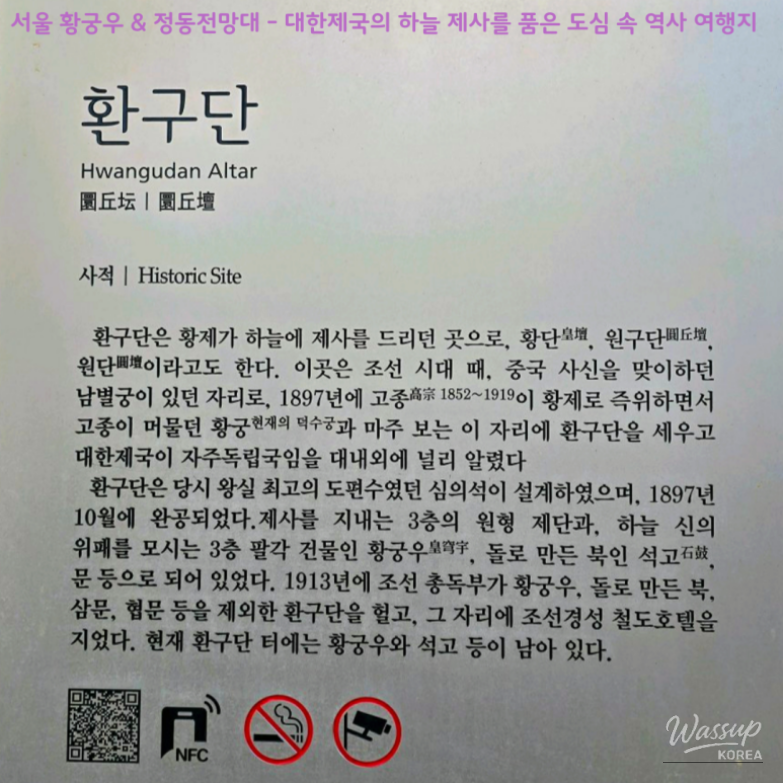
In 1897, King Gojong ascended the throne and proclaimed the Korean Empire, establishing Hwanggungwoo for heavenly rituals. Although most of the circular altar has disappeared, Hwanggungwoo remains an important symbol of the Korean Empire's desire for independence.
1️⃣ Architectural Beauty of Hwanggungwoo – Embodying the Grandeur of the Korean Empire
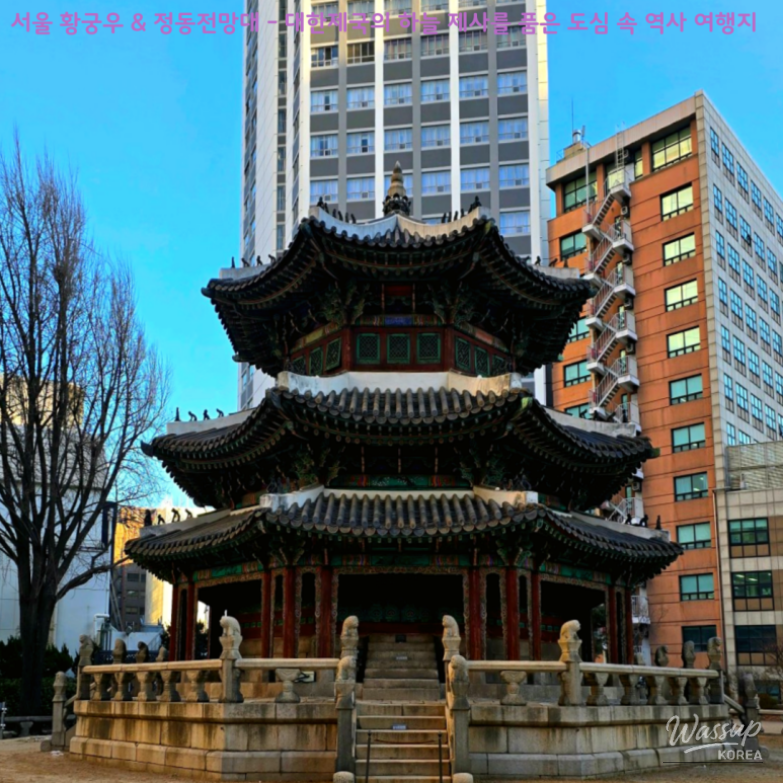
Hwanggungwoo is a traditional wooden structure with a three-story octagonal roof, featuring striking red pillars and delicate dancheong (traditional Korean decorative painting). While not large, its elegant and dignified appearance reflects the characteristics of royal architecture from the Korean Empire.
The interior housed the emperor's spirit tablet and served as a sacred site for national ceremonies. It is also a popular spot for photography, allowing visitors to appreciate traditional architecture up close.
2️⃣ Site of Hwan-gudan – The Birthplace of the Korean Empire
Hwan-gudan was the altar where King Gojong performed rituals upon his ascension and symbolizes the founding of the Korean Empire. Although most of the altar remains are gone, historical significance can still be gleaned through informational signs and remnants.
This site represents a transitional period from the Joseon Dynasty to the Korean Empire and is a must-visit on any tour of modern Seoul's history.
3️⃣ Jeongdong Observatory – A Hidden Gem Overlooking Deoksugung
Another great place to visit alongside Hwanggungwoo is Jeongdong Observatory. Located on the upper floors of the Seosomun Building, this free observation area offers panoramic views of Jeongdong and City Hall.
Particularly, the scenery of Deoksugung Palace, stone walls, and modern buildings creates a unique view that can only be seen in Seoul. Visitors can enjoy the tranquil palace landscape during the day and the vibrant city skyline at sunset, making it a recommended photography spot.
After exploring the history of Hwanggungwoo, visiting the observatory offers a meaningful moment to reflect on both the past and present of the palace's location.
Surrounding Activities:
Stroll along the Deoksugung Stone Wall – A representative walking path in Seoul filled with emotion.
Seoul Plaza & City Hall Area – Cultural events and exhibition spaces.
Myeongdong Street – Shopping and dining experiences.
Jeongdong-gil – Exploration of modern architecture and historical spaces.
Combining visits to Jung-gu, City Hall, and Jeongdong offers a well-rounded half-day historical tour.
Visiting Tips:
✔️ Free entry to Hwanggungwoo; estimated visit time is 20-30 minutes.
✔️ Recommended to include Deoksugung in your itinerary.
✔️ Optimal for photography in the morning or at sunset.
✔️ Understanding the historical background enhances the visit.
✔️ Accessible by foot from City Hall Station and Euljiro Entrance Station.
✔️ Free entry to Jeongdong Observatory.
✔️ Jeongdong Observatory hours: 09:30–17:30 (weekends), 13:30–17:30 (weekdays).
✨ Conclusion
Though small in size, Hwanggungwoo is a historically significant space symbolizing the beginning of the Korean Empire. It is a special place to pause and reflect on the past amidst the bustling city.
If you are planning a historical tour of Seoul or a stroll through Deoksugung, be sure to visit Hwanggungwoo and Jeongdong Observatory to experience the essence of the Korean Empire alongside the contemporary landscape of Seoul.
Source :https://blog.naver.com/wwccoo1/224193438921
No comments yet.