Discovering National Heritage with Cookie Run: A Fun History Experience for Kids



"Studying history with my child is not difficult when it's with Cookie Run!"
Say goodbye to the stereotype that history is boring.
This exhibition is not just a visual display; it's an educational journey of learning about national heritage names alongside beloved characters.
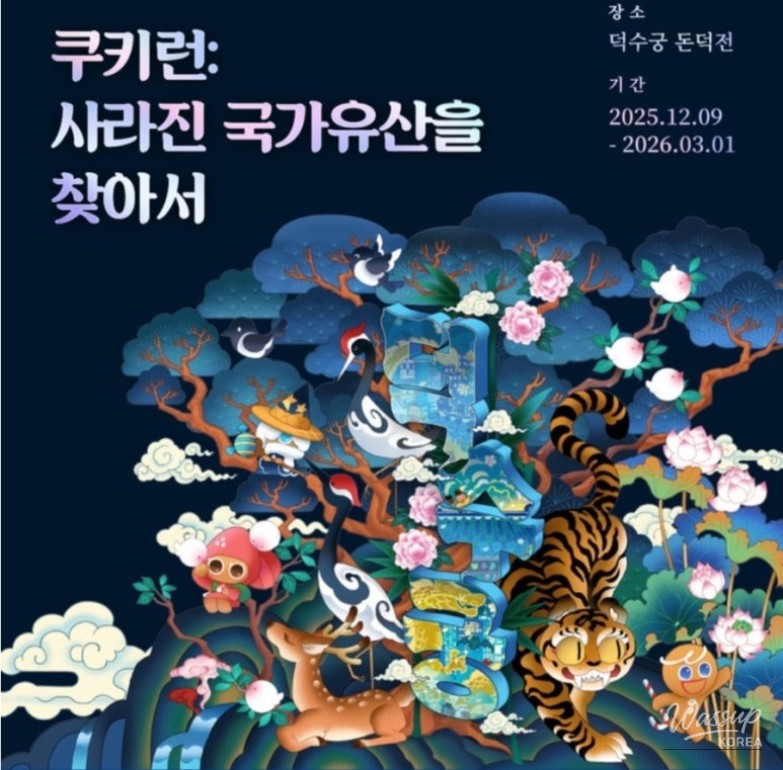
Event: 'Cookie Run: In Search of the Lost National Heritage'
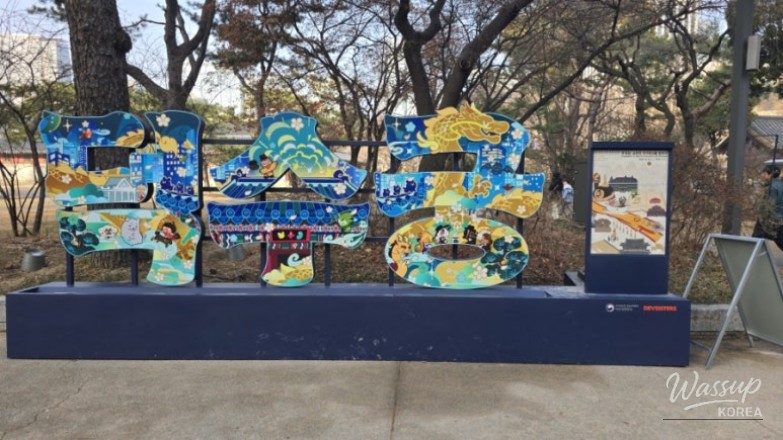
Location: Deoksugung Palace, Dondeokjeon (Enter through the path to the right of the entrance towards the Chinese Hall.)
Exhibition Period: Until February 15, 2026 (Closed on Mondays!)
Admission Fee: Free (Entrance fee for Deoksugung Palace for adults aged 25-64 is 1,000 KRW separately.)
Opening Hours: 9 AM to 5:30 PM (Last entry at 5 PM)
Public transportation is recommended, but parking information is available at the end.
Dondeokjeon at Deoksugung Palace offers a wonderful opportunity for children to learn the value of national heritage naturally.
Dondeokjeon (惇德殿) is not just a beautiful Western-style building; it is a special place imbued with the diplomatic aspirations of the Korean Empire and its poignant modern history.
This unique exhibition is held in Dondeokjeon, which was restored after 100 years.
Once a magnificent party venue for welcoming foreign guests, Dondeokjeon means "to accumulate virtue and to graciously welcome guests." As children enjoy the exhibition alongside the brave Cookie characters, their affection for our cultural heritage will grow.
This exhibition narrates the story of 'rediscovering our lost history.' The restoration of Dondeokjeon, demolished during the Japanese occupation and rebuilt after a century, is the most symbolic place to convey this message.
The plaque of 'Gyeongun Palace' is the former name of Deoksugung.
After Emperor Gojong declared the Korean Empire, the official name of the palace was 'Gyeongun Palace,' which signifies a place where auspicious destinies converge.
Dondeokjeon, the heart of Deoksugung and a symbol of imperial dignity, is the main hall where the emperor's enthronement and major national events were held.
Constructed in 1902 (Gwangmu 6) by Emperor Gojong to establish the status of the Korean Empire, it was rebuilt in 1906 after a major fire but reduced to a single-story structure due to the challenging circumstances of the time.
Experience the 'Yundo,' an ancient compass used for finding directions, created by National Intangible Heritage Master Kim Hee-soo and Cookie Run, beautifully engraved with 'Thousand-Year Tree Cookie' on its lid.
The emperor's throne, adorned with intricate carvings, symbolizes authority and showcases traditional woodworking skills.
The throne features dragon patterns symbolizing the emperor's absolute authority and sacredness, as well as plum blossom patterns representing the legitimacy of the Lee Dynasty and the Korean Empire.
The exhibition also showcases modern-style military uniforms worn by Emperor Gojong and royal figures, adorned with gold plum blossom embroidery and rank insignia.
Dondeokjeon means "to accumulate virtue and graciously welcome guests," embodying the warm and dignified outreach of the Korean Empire to the world.

Source :https://blog.naver.com/twocheon/224159909358
No comments yet.