The Sacred Site of the Seven Hundred Martyrs in Geumsan



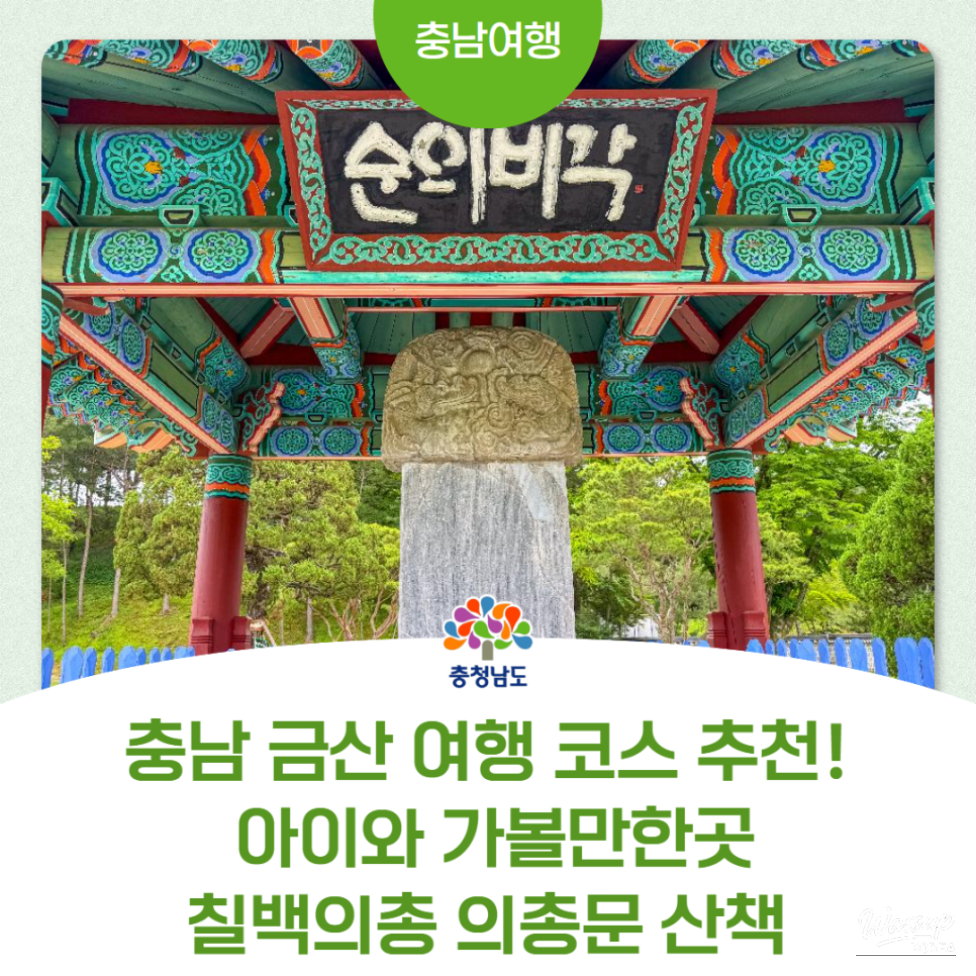
▲ Geumsan Chilbaek Memorial
Located at the foot of a low mountain in Geumsan, Chungcheongnam-do,
there lies a sacred site that holds a chilling page of history.
This is the 'Geumsan Chilbaek Memorial', designated as Historic Site No. 105.
Here rests the noble grave of General Jo Heon, who valiantly fought against the Japanese invaders during the Imjin War in 1592,
along with the commander Yeong-kyu and over 700 righteous martyrs who shared his spirit.
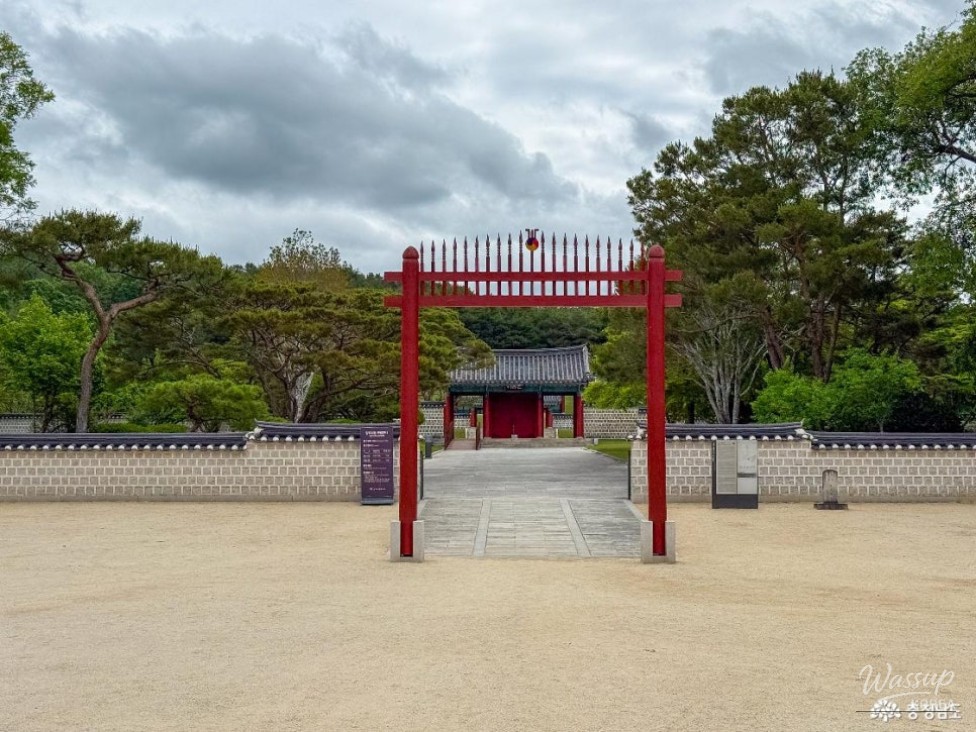
▲ Hongsalmun Gate
As you arrive at the Chilbaek Memorial, the first thing you will encounter is the vibrant red 'Hongsalmun',
radiating its colors between the blue sky and green trees.
Standing tall in the center of a wide, flat courtyard, the Hongsalmun signifies a sacred area dedicated to the souls of those who sacrificed their lives for the nation.
Beyond the Hongsalmun, a low stone wall and neatly arranged pine trees welcome visitors,
leading to the first entrance of the sanctum in the distance.
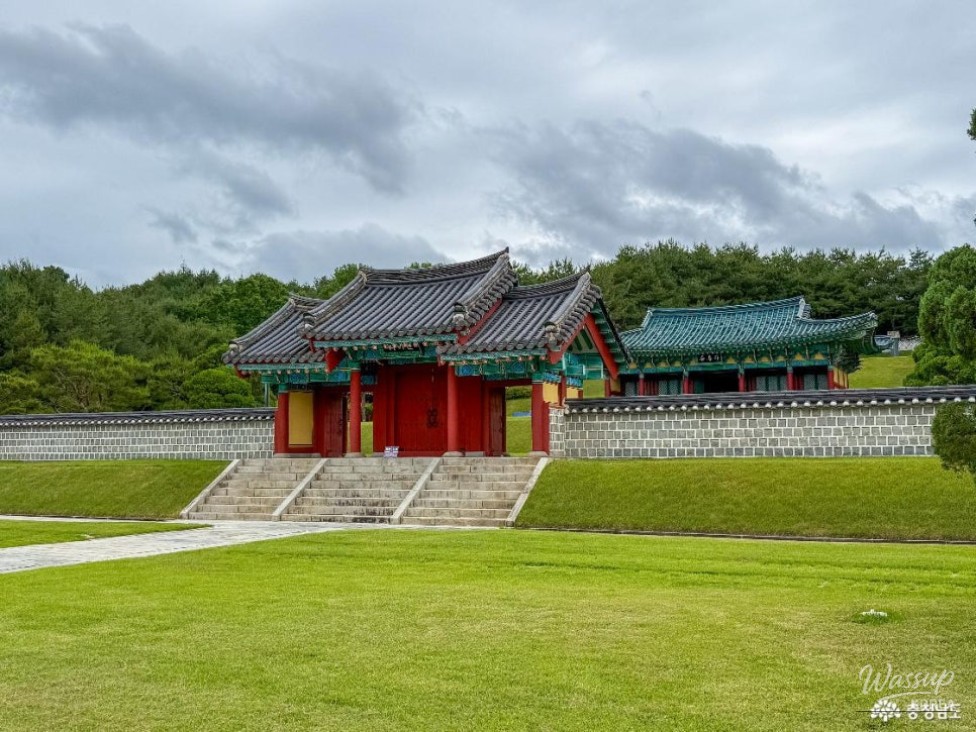
▲ Uichongmun Gate
Walking along the well-maintained stone path past the Hongsalmun, you will reach the Uichongmun Gate, which serves as the outer gate.
The long stretch of lawn, flanked by lush pine trees and carefully manicured landscaping, enhances the solemn atmosphere for visitors.
▲ Suni Shrine
Proceeding deeper into the grounds, a beautifully adorned shrine catches the eye of visitors.
This is the 'Suni Shrine for Jo Heon and the 700 Martyrs'.
Surrounded by red latticework, a massive marble monument is safely preserved inside.
A plaque bearing the name 'Suni Shrine' prominently hangs at the front,
indicating that this is a place to honor those who sacrificed their lives for righteousness.
This shrine was originally erected in 1603 (the 36th year of King Seonjo) to commemorate the achievements of Jo Heon and the 700 martyrs.
However, during the Japanese occupation, the monument faced severe trials.
The Japanese imperialists viewed this monument, which inspired the Korean people's desire for independence and patriotism, as a thorn in their side,
and ultimately destroyed it in 1940, desecrating the Chilbaek Memorial.
Yet, the deep-rooted memory of our people has not been erased.
After liberation, local residents and like-minded individuals gathered the scattered fragments of the monument
and painstakingly reassembled them into the form we see today.
▲ Jongyongsa
Climbing the stairs past the Suni Shrine, you will finally arrive at 'Jongyongsa', the core shrine of the Chilbaek Memorial.
Jongyongsa is a traditional structure characterized by its green tiles, ornate eaves, and exquisite craftsmanship,
harmonizing with the dense pine forest and green grass steps behind it, evoking both majesty and tranquility.
The name 'Jongyong' embodies the spirit of those who quietly and calmly sacrificed their lives for justice,
best expressing the resolve of the martyrs who never retreated even in the face of annihilation.
Inside the shrine, there is a space for visitors to light incense and pay homage to the spirits of the martyrs.
On the red altar, a basket of white and yellow chrysanthemums is placed with care.
Behind the incense burner, a wooden sign reads, "Let us wait for our turn with a reverent heart,"
encouraging visitors to adjust their attire and adopt a solemn demeanor.
In the innermost area, beneath the splendid decorations, a stepped altar holds black tablets of the martyrs,
with Jo Heon’s tablet in the center, flanked by those of significant figures and countless unnamed martyrs.
As the incense rises gently, a moment of silence evokes the heartbeats of those who united centuries ago with the single mind of saving their country.
▲ The Chilbaek Memorial
Behind Jongyongsa lies the essence and symbol of this sanctuary, the massive tomb known as the 'Chilbaek Memorial'.
This memorial is a grand joint tomb that far surpasses ordinary individual graves in scale.
In August 1592, Jo Heon’s troops and Yeong-kyu’s forces fiercely engaged in hand-to-hand combat against the overwhelming Japanese forces led by General Kobayakawa Takakage,
despite being outnumbered.
None fled until the last moment, ultimately meeting a tragic end.
After the battle, as the Japanese retreated, locals rushed to the battlefield,
but the bodies were so mangled and intertwined that identifying them was nearly impossible.
In their grief, they carefully gathered the remains of Jo Heon and the 700 martyrs to create a grand tomb,
which became the 'Chilbaek Memorial' we see today.
▲ The Suni Tower
The path to the Suni Tower is surrounded by tall conifers and dense trees,
enhancing the tower's white appearance.
This tower is a modern sculpture visualizing the noble spirit of the 700 martyrs,
which the region of Geumsan and all of South Korea should remember.
After exploring the Chilbaek Memorial grounds, or before beginning your visit, be sure to stop by the 'Chilbaek Memorial Museum'.
This museum systematically exhibits artifacts from the Imjin War, Jo Heon's writings, and weapons used by the righteous army,
helping visitors gain a historical understanding.
Under the dimly lit ceiling, square media display boxes line the floor, showcasing records of battles and lists of martyrs in illuminated form.
In the center of the exhibition hall, a life-sized statue of a righteous soldier sits quietly on a bench,
symbolizing the voluntary patriotism of the ordinary people who lived and cultivated this land.

Source :https://blog.naver.com/sinmunman/224307067478
No comments yet.