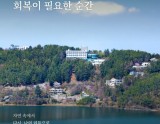
Exploring Yeongrang Hyo Park: A Journey Through History and Tradition
- Original source
- blog.naver.com



Located in the town of Myeoncheon, Dangjin, Yeongrang Hyo Park is a historical and cultural space that showcases ancient fortresses, traditional architecture, and local stories.
Near the Myeoncheon Fortress, Yeongrang Hyo Park is associated with the filial piety tale of Yeongrang, the daughter of General Bok Jikyeom, a key figure in the founding of the Goryeo Dynasty, as well as the story of Myeoncheon Dugyeonju.
The park's name reflects the story of Yeongrang, who dedicated herself to saving her ailing father. According to legend, when General Bok fell gravely ill, Yeongrang prayed fervently to find a remedy for him.
It is said that she received a revelation instructing her to brew alcohol using azaleas and spring water. Following this guidance, Yeongrang prepared the drink for her father, who subsequently regained his health.
This tale is also connected to the origin of Myeoncheon Dugyeonju, a traditional liquor made with azaleas, which is one of the region's representative specialties.
Yeongrang Hyo Park is significant not just as a relaxation spot, but as a place where stories of filial piety and traditional liquor culture are shared.
One notable feature of the park is Ansaem, a spring located within the old Myeoncheon Fortress, also known as the Flower Spring. This is the very water that Yeongrang is said to have used when brewing Dugyeonju for her father.
Knowing the legend transforms the perception of this seemingly ordinary spring. Today, it offers a glimpse into how people in the past sourced water for their daily needs and evokes stories related to Myeoncheon Dugyeonju.
Ansaem illustrates that the traditional liquor of Myeoncheon is not merely a local specialty, but also a vessel of local legends and historical memories.
The stories passed down by the community are intriguing, even in a single old spring. Another site to explore alongside Ansaem is Gunja Pavilion.
Gunja Pavilion features a small island in the middle of a pond with a pavilion built upon it, showcasing traditional landscaping that harmonizes water and architecture.
The history related to Gunja Pavilion dates back to the Goryeo Dynasty. In 1352, during the reign of King Gongmin, it is said that Kwak Chung-ryong, who governed the Myeoncheon area, created a pond east of the government office.
Later, in 1803, Myeoncheon County Governor Yoo Han-jae is known to have renovated the pond and constructed the island and pavilion.
The name Gunja Pavilion is derived from the lotus flower, which grows in mud yet remains untainted, symbolizing the virtues of a gentleman.
Gunja Pavilion is designated as the first local cultural heritage site of Dangjin City, allowing visitors to appreciate the area's historical value.
The charm of Gunja Pavilion lies not only in the pavilion itself but also in the scenery created with the pond.
When viewing the pavilion against the backdrop of the pond, one can feel the serene atmosphere unique to traditional gardens.
The colors of the surrounding trees and the pond change with the seasons, offering a different experience depending on the time of visit.
Yeongrang Hyo Park uniquely combines the story of Yeongrang with Ansaem and Gunja Pavilion.
When exploring the park, it is more meaningful to learn about the stories behind each location rather than just observing their appearances.
After recalling Yeongrang's story and discovering the origins of Myeoncheon Dugyeonju through Ansaem, visitors can enjoy the scenery of Gunja Pavilion and the pond.
This makes for a leisurely stroll without a complicated itinerary, allowing one to enjoy historical stories and natural landscapes.
After visiting Yeongrang Hyo Park and Gunja Pavilion, you can continue your journey along the Bamboo Wind Path.
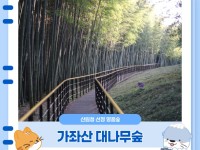
Located in the vicinity of Myeoncheon Fortress, the Bamboo Wind Path is a walking space where you can experience the unique atmosphere of the forest as bamboo grows along both sides of the path.
The path winding through the bamboo adds a natural touch to your historical exploration.
As you walk through the dense bamboo forest, you can appreciate the scenery created by the leaves and stems swaying in the wind.
The humble charm of the bamboo forest stands out more than extravagant facilities, making it a pleasant place to walk slowly and observe nature.
After exploring the fortress, pavilion, and old well, taking a moment to rest in the bamboo grove allows you to enjoy both historical exploration and a nature walk.
The Bamboo Wind Path naturally connects the historical and cultural spaces around Myeoncheon Fortress.
By learning about local legends at Yeongrang Hyo Park, appreciating the scenery of the traditional garden at Gunja Pavilion, and walking through the bamboo forest, you can experience the diverse charms of Myeoncheon all at once.
Source :https://blog.naver.com/dangjin2030/224453944523
More from Travel




No comments yet.