Exploring the Pilgyeongsa in Dangjin
- Original source
- blog.naver.com


The Pilgyeongsa, a tourist site in Dangjin, is a house designed and built by the renowned author Sim Hun, known for his novel "Evergreen".
It was a place I had always wanted to visit during my trip to Dangjin.
Although I had only heard the name before, I didn't really know what to expect when I arrived.
To my surprise, there were many charming sights to see, and I ended up staying longer than I had planned.
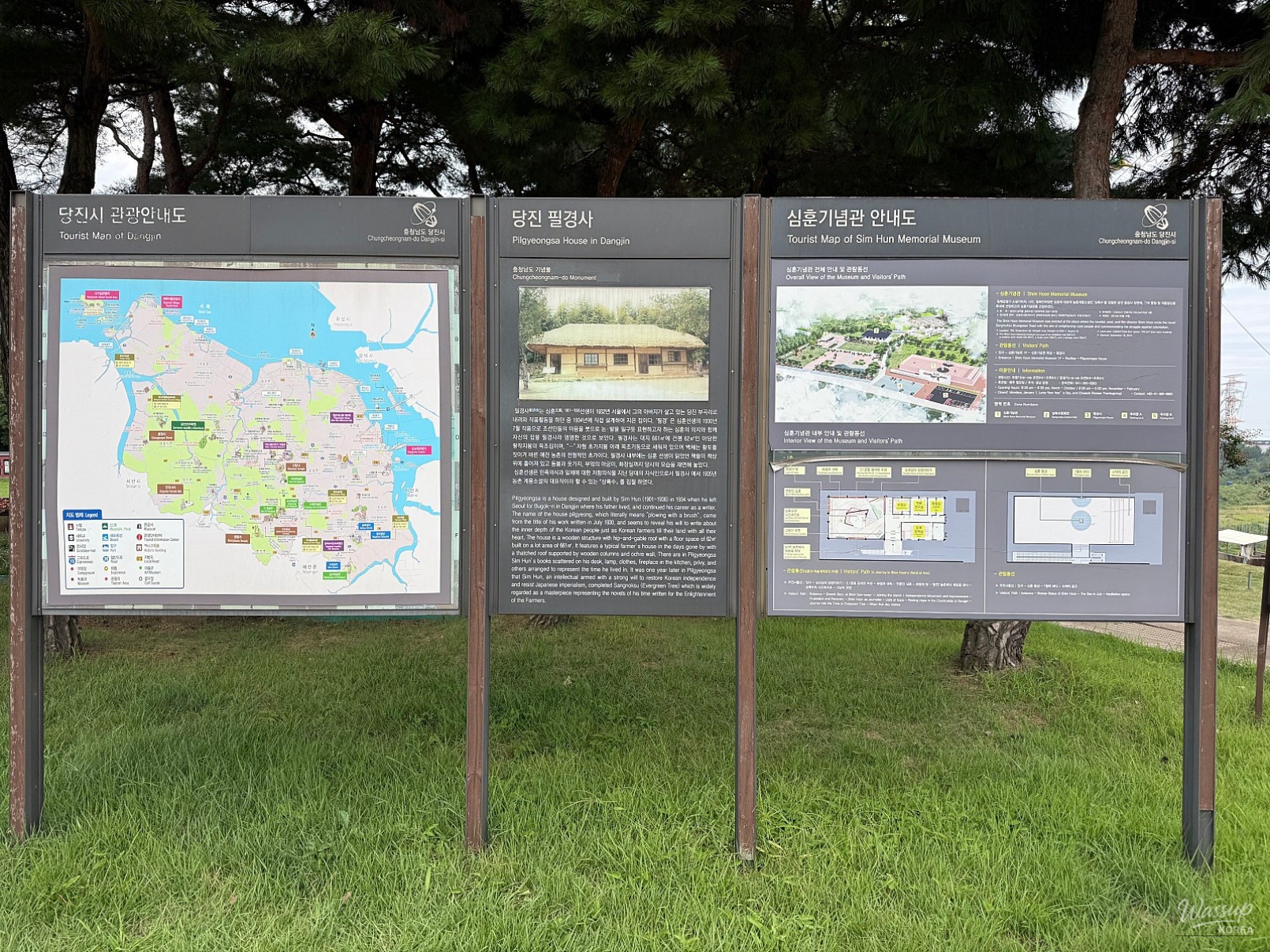
After parking my car, I walked in and found the "Dangjin City Tourist Map" and the "Sim Hun Memorial Hall Map" displayed side by side.
I checked the overall layout before heading towards the Pilgyeongsa.
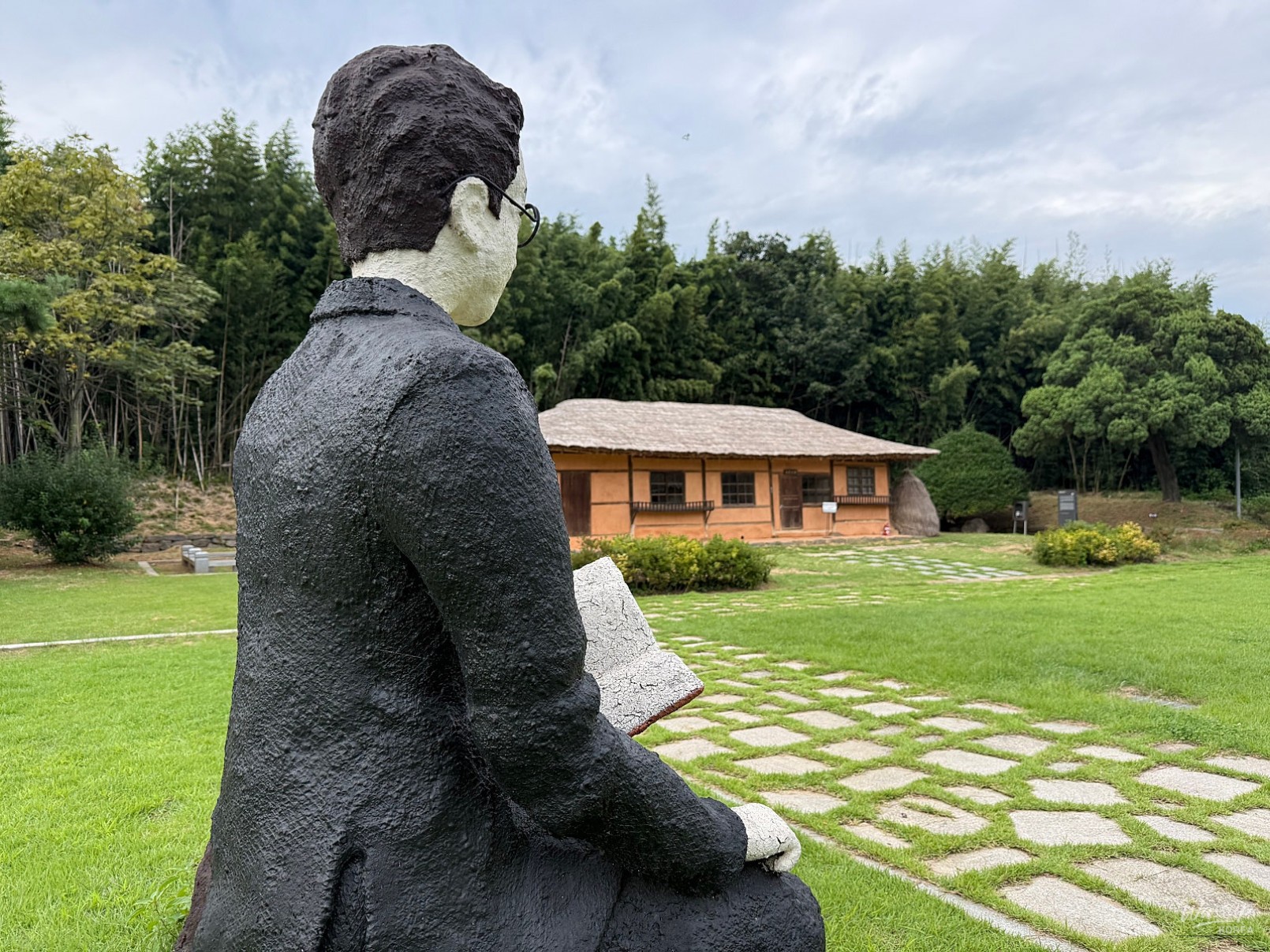
As soon as I entered the yard, I noticed a statue of a man wearing glasses, holding a book, gazing at the thatched house.
His thoughtful posture made me unconsciously follow his gaze towards the Pilgyeongsa.
As I walked further, I came across another statue of a man and woman ringing a bell beneath a red cross-shaped sculpture.
It seemed to represent characters from the novel "Evergreen," which was delightful to see.
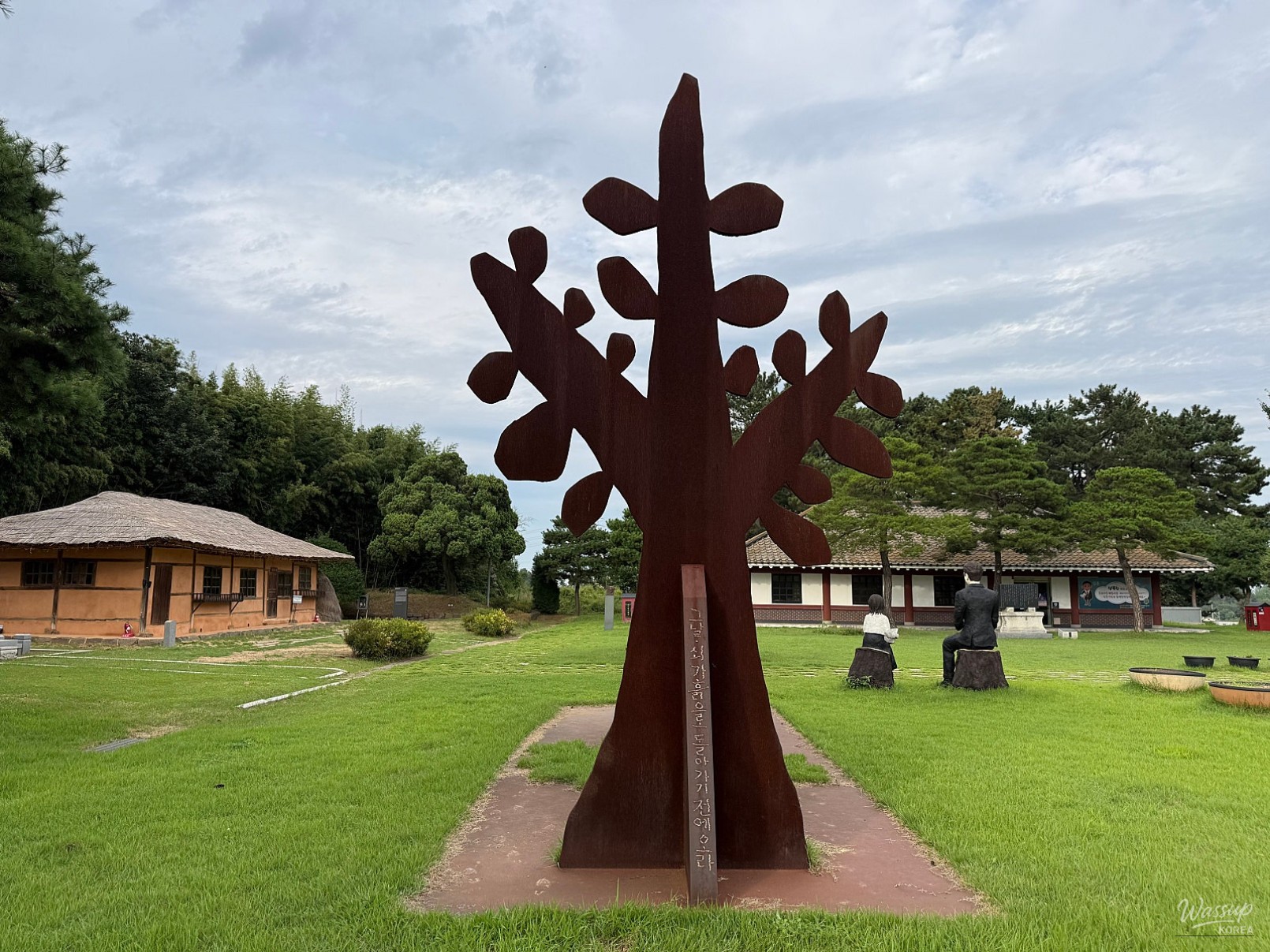
Next to it, a metal sculpture in the shape of a tree bore the inscription, "I won't turn back until that day comes," capturing the atmosphere of the place perfectly.
In one corner of the yard, there was a small memorial space made of granite.
Inside a stone railing that resembled a bench, there was a stele and a pedestal.
The stele engraved with Sim Hun's notable works caught my eye, and I found myself pausing to reflect in the quiet grassy area.
The Pilgyeongsa building itself was more modest than I expected.
It was a small wooden house with a thatched roof supported by wooden pillars and clay walls.
The roof was tightly woven with straw, and a large pile of straw stood in the yard, reminiscent of a traditional rural house.
The windows had wooden bars with glass, allowing a glimpse of the old furniture inside.
Although I couldn't enter, the interior was well-preserved and reflected its past.
Particularly striking were the pendulum clock and calligraphy hanging on the walls, reminiscent of his famous quotes.
It was said that he loved old writings, even searching for broken steles.
Walking across the room, I found an old writing desk and a wardrobe with worn documents.
Beyond the sliding door with paper screens, black-and-white photos and old books were neatly displayed.
It felt as if the teacher had just stepped out for a moment.
The Pilgyeongsa was built in 1934, and it is said that he wrote "Evergreen," a representative rural enlightenment novel, here in 1935.
The name "Pilgyeong" itself means to cultivate the fields with a brush, reflecting the teacher's commitment to writing as diligently as farming.
In 1919, he wrote a letter to his mother from prison, published the poem "When That Day Comes" in 1930, and was posthumously awarded the Order of National Foundation in 2000.
These significant milestones in his life were engraved, allowing me to naturally follow his journey in a short time.
After exploring the various statues, sculptures, and the humble thatched house, I felt as if I had walked alongside a person's life and era, rather than just visiting a literary site.
If you want to incorporate history and literature into your travel itinerary in Dangjin, the Pilgyeongsa is a meaningful stop worth your time.
Next time I visit Dangjin, I hope to capture the Pilgyeongsa in a different season.
I highly recommend the Pilgyeongsa for a meaningful travel experience.
Source :https://blog.naver.com/dangjin2030/224428219309
More from Travel






No comments yet.