Exploring the Jinju City Museum of Art: A Cultural Gem in Gyeongnam



A Perfect Indoor Date Spot in Gyeongnam
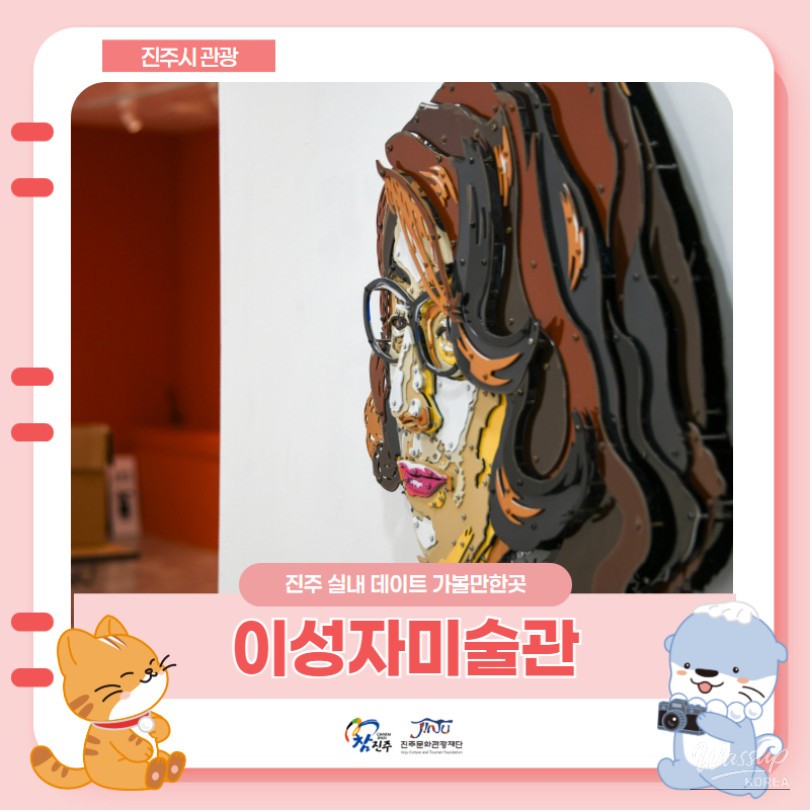
Jinju City Museum of Art
Jinju is home to a unique space where visitors can encounter the life and works of an artist recognized on the global stage: the Jinju City Museum of Art. This cultural venue showcases the works and artistic philosophy of Lee Seong-ja, a prominent female painter representing Korea, offering profound inspiration to both locals and travelers. Following Lee's journey between Korea and France allows us to naturally understand how an artist communicates with the world and grows through their experiences. Today, we introduce the Jinju City Museum of Art as a must-visit place in Jinju.
Lee Seong-ja (1918–2009) holds a unique position in the history of modern Korean art. Born in Korea, she moved to France during a tumultuous era, creating her own artistic language free from the constraints of specific countries or artistic movements. Her life between Korea and France gifted her a perspective that transcends boundaries, deeply influencing her body of work.
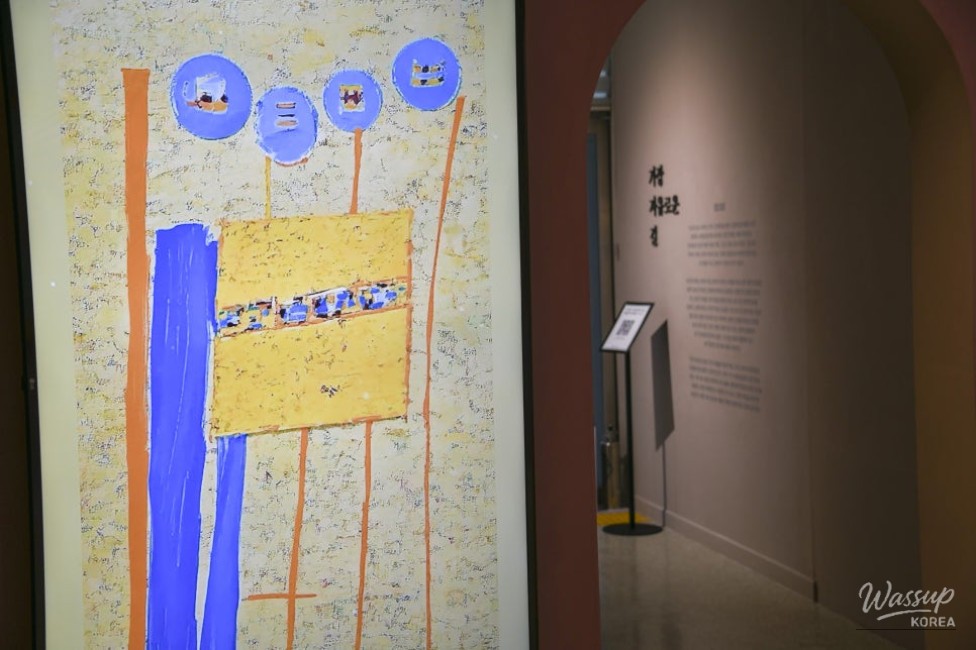
Recurring themes in her works include nature, femininity, the earth, and the universe. The various symbols representing divided surfaces, boundaries, and passages in her paintings serve as communicative devices connecting different worlds rather than merely depicting landscapes. The coexistence of Eastern worldviews and Western abstract art in her pieces offers viewers a fresh visual experience, showcasing the freedom and possibilities inherent in art.
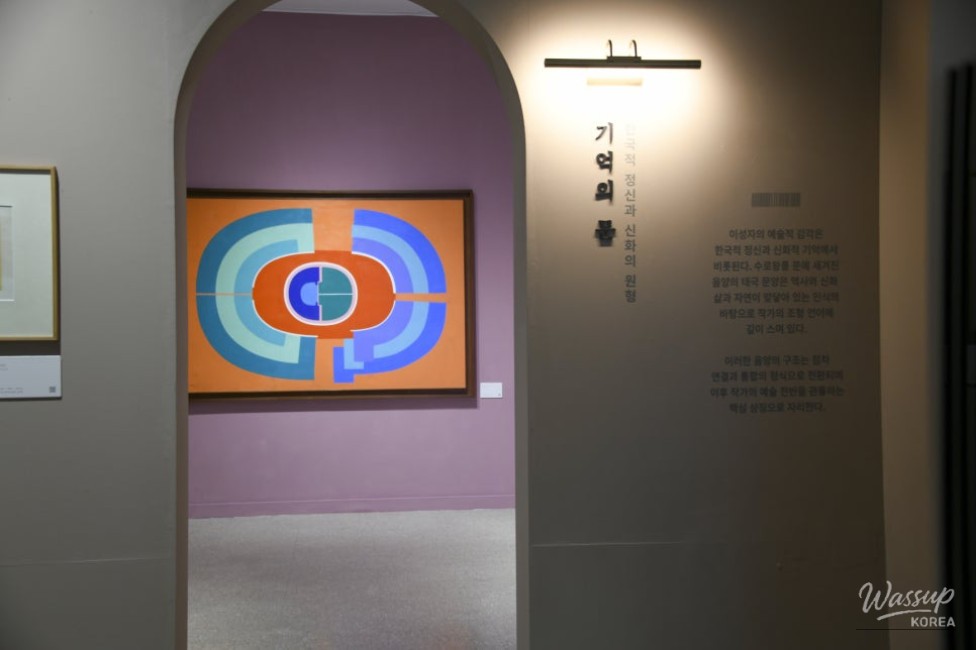
Lee's artistic roots stem from Korean spirituality and mythical memories. The yin-yang symbols found in the patterns of the tomb of King Suro in Gimhae are key to understanding her artistic universe. The recognition of the interconnectedness of history, myth, humanity, and nature became deeply embedded in her artistic language.
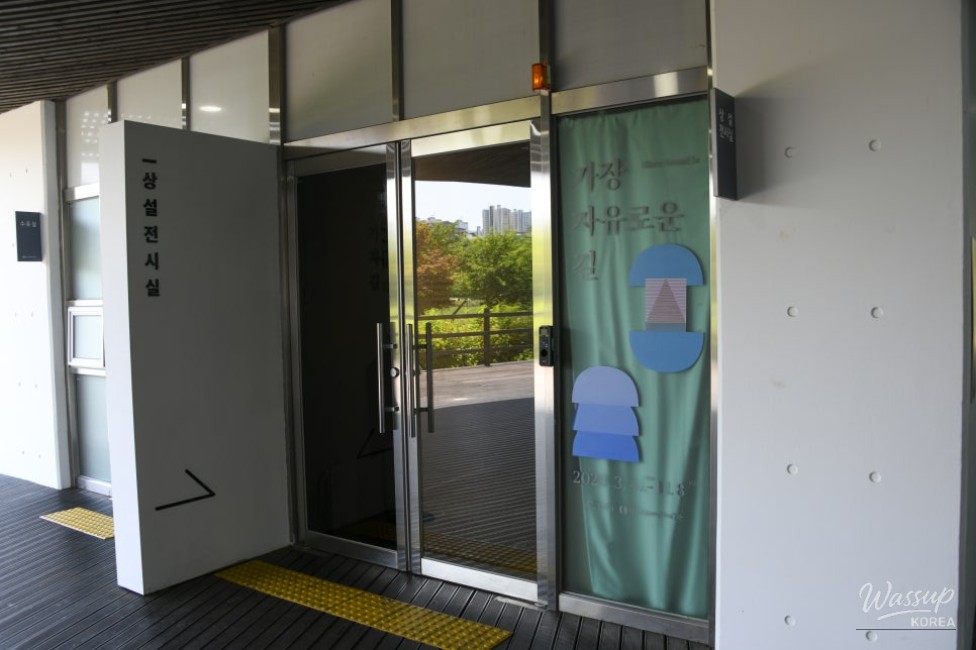
Upon entering the exhibition space, visitors can discover the recurring images of doors and boundaries throughout her works. These are not mere shapes; they represent symbolic passages connecting different dimensions.
The yin-yang structure symbolizes harmony rather than opposition. Lee captured the potential for different worlds to connect as one through her art based on this Eastern thought.
Rather than merely recalling past memories, the artist reinterpreted them with new meanings. By transforming Korean traditions and myths into modern artistic language, she constructed a unique body of work.
As visitors pass through the door of memory, they naturally experience the world seen through the artist's eyes. In a space where past and present, reality and ideals connect, one can feel the profound resonance conveyed by her works.
Her move to France marked a significant turning point in her life and art. Immersed in a new cultural and artistic environment, she continually explored her own expressive style, growing into a globally recognized artist.
While the unfamiliar environment posed challenges, it also became a driving force for creativity. She harmoniously combined Eastern and Western artistic values, developing her own distinctive artistic language.
As one follows the exhibition, the evolution of her works can be observed. In her early pieces, relatively simple forms appear, but over time, complex structures and symbols emerge, forming a deeper worldview.
Notably, the divided structures and symbols within the paintings act as mediators connecting different elements. This is not just a visual device but a symbol of communication bridging cultures and the relationship between humanity and nature.
Ultimately, her art seeks connections beyond the dichotomy of East and West, expanding into a broader dimension. Her works transcend borders and cultural boundaries, evolving into a universal language that resonates with everyone.
In her later works, Lee's focus shifts to a more expansive world. The perspective that once dealt with the earth and human life gradually extends to the universe and transcendental realms.
In her paintings, the earth represents the reality in which humans live, while the sky and universe symbolize infinite possibilities and transcendental order.
Through the harmony of yin and yang, the artist expressed a world where reality and ideals, material and spirit are interconnected. This worldview becomes more pronounced in her later works.
The 'Room of the Universe' within the exhibition space best illustrates this philosophy. Visitors experience a sense of embarking on an endless journey while appreciating the artworks.
Lee's works do not present specific conclusions but rather pose new questions, inviting viewers to imagine their own universe. This is why her art continues to resonate deeply even today.
Another charm of the Jinju City Museum of Art is its diverse experiential programs. The museum offers spaces where visitors can actively engage with art, not just observe it.
The Cosmos Room hosts a permanent experiential program, gaining great popularity among children and families, providing opportunities to engage with art in an enjoyable and accessible way.
In the media art experience space, visitors can encounter new forms of artworks that combine digital technology and art, allowing for a unique understanding of Lee Seong-ja's artistic world.
On weekends, various art experience programs are available, allowing both children and adults to enjoy the joy of creation.
Even those who find art challenging can naturally approach the world of her works through the experiential programs. The Jinju City Museum of Art holds special significance as a space where observation and experience harmoniously coexist.
The Jinju City Museum of Art is more than just an exhibition space; it is a place to encounter the life, philosophy, and relentless challenges of an artist. Lee Seong-ja's works, which connect Korea and France, the earth and the universe, and the past and the future, continue to inspire new ideas today. If you are planning a trip to Jinju, be sure to visit the Jinju City Museum of Art, where you can walk in the footsteps of a world-renowned artist. In each moment spent with her works, you will feel the most liberating power of art.

Source :https://blog.naver.com/pearl286/224319827558
No comments yet.