Exploring the Historical and Natural Beauty of Goesan's Hwayang Valley and Uam Song Si-yeol's Heritage



[Goesan Supporters]
Related to Hwayang Valley
Uam Song Si-yeol Heritage
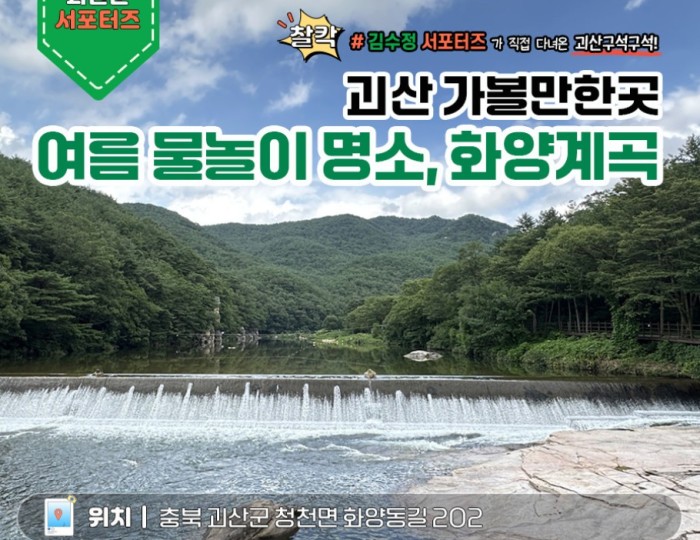
Located in Hwayang-dong, Cheongcheon-myeon, Goesan-gun, Chungcheongbuk-do, this area offers stunning natural scenery alongside traces of Joseon Dynasty history. While many visit to admire the beautiful valleys of Hwayang, there are also historical and cultural heritages that allow visitors to explore the life and scholarship of Uam Song Si-yeol. A stroll along Hwayang Valley is a perfect way to enjoy both nature and history.
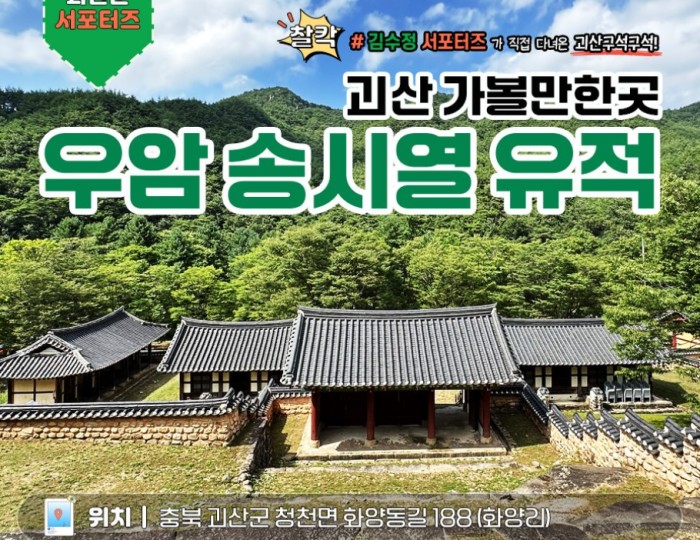
The Uam Song Si-yeol Heritage site is where the prominent Confucian scholar Uam Song Si-yeol studied and taught his disciples during the late Joseon period. Deeply fond of Hwayang-dong, he nurtured future scholars here and named various spots in the beautiful valley, leading to the name Hwayang Valley we know today. His legacy of embracing nature while pursuing knowledge is still evident throughout the site.
Born in 1607 and active until 1689, Song Si-yeol was a leading Confucian scholar and politician of the late Joseon period. He significantly influenced the development of Confucianism, inheriting the academic lineage of Kim Jang-saeng and Kim Jip, and played a crucial role in the advancement of Joseon society and scholarship by mentoring numerous disciples. His achievements continue to attract many visitors seeking to trace his footsteps.
Upon entering the heritage site, visitors pass through Yangchumun and Seonggongmun to reach Mandongmyo, a shrine built by his disciple Kwon Sang-ha in 1703, during the 29th year of King Sukjong's reign. This shrine houses the tablets of Ming Dynasty emperors who supported Joseon during the Imjin War, making it a significant cultural heritage for understanding the political and ideological background of that era.
From the top of Mandongmyo, one can enjoy a panoramic view of the lush forests of Sokrisan National Park and the breathtaking scenery of Hwayang Valley. The harmonious blend of valleys and traditional architecture offers a unique charm, allowing visitors to experience the coexistence of nature and cultural heritage in Goesan.
Below Mandongmyo stands the Mandongmyo Stele, which records the background of its establishment and the significance of the rituals performed there. Erected in 1747 by Lee Jae, it was restored in 1814 after being buried following the shrine's destruction during the Japanese occupation, preserving its historical value.
During the Japanese colonial period, facilities related to Mandongmyo faced significant hardships, including interrupted rituals and damage to the tablets and ceremonial items. However, in 1983, Goesan-gun discovered and restored the buried stele, preserving it in its current state.
The Hwayang Seowon is also located within the heritage site. Established in 1696, the Hwayang Seowon is a Confucian academy dedicated to commemorating Uam Song Si-yeol and continuing his scholarly legacy. It was once renowned nationwide but was demolished during the Seowon abolition decree, with the current building restored later. Inside, a portrait of Song Si-yeol is enshrined.
Opposite Hwayang Seowon, the Hwayang Seowon Stele remains, erected in 1716. This stele details the purpose of the academy's establishment and the figures honored there. It was buried during the abolition but rediscovered and restored after Korea's liberation, now designated as a cultural heritage site in Chungcheongbuk-do.
Hwayang Seowon also offers a two-day program for experiencing Confucian culture, allowing visitors to engage in traditional etiquette and the lifestyle of the academy, making it a meaningful experience for families and students alike.
When visiting Goesan's Hwayang Valley, take the time to walk to the Uam Song Si-yeol Heritage site rather than just enjoying the valley's beautiful scenery. It is a space where you can encounter the history and culture of the Joseon Dynasty amidst nature, enriching your Goesan travel experience.
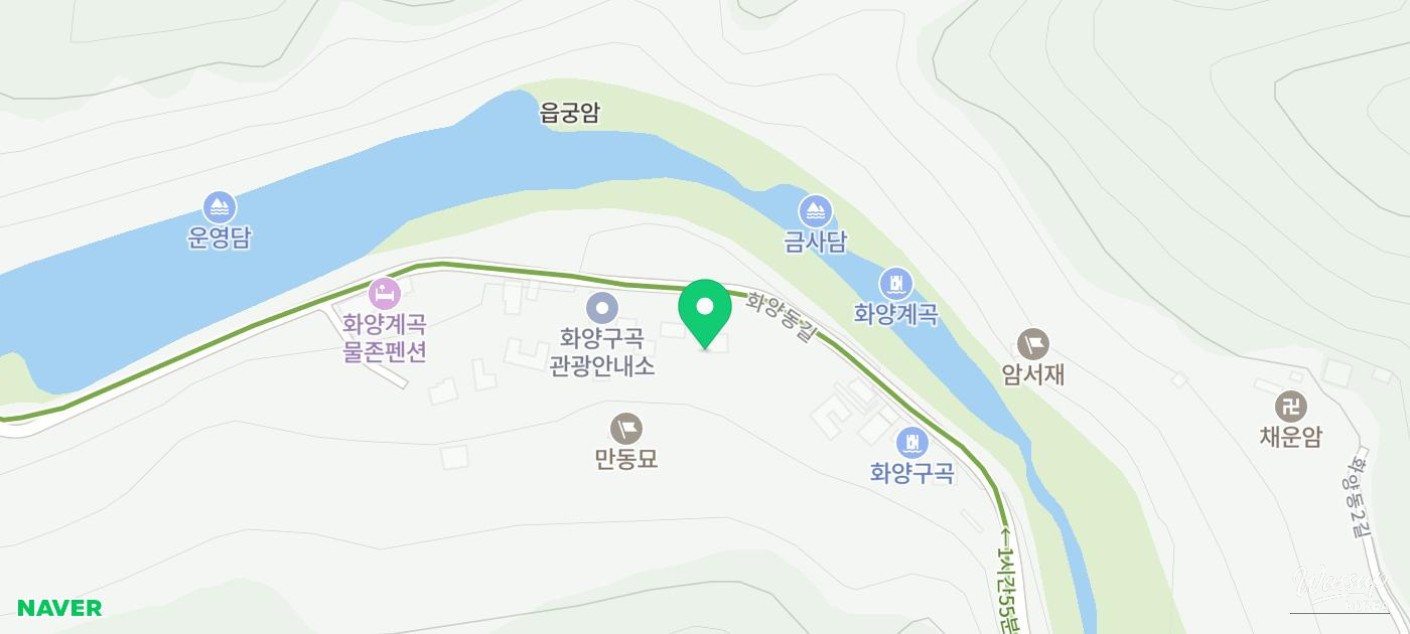
Directions
188 Hwayang-dong-gil, Cheongcheon-myeon, Goesan-gun, Chungcheongbuk-do


Source :https://blog.naver.com/goesan-gun/224366895600
No comments yet.