Exploring the Historical and Literary Heritage of Dangjin



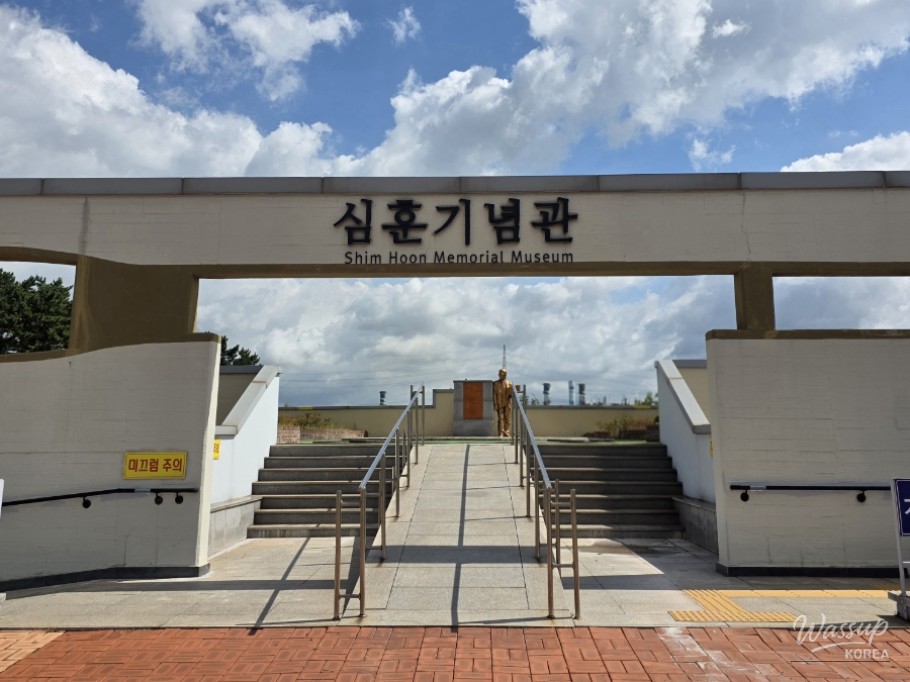
During my trip to Dangjin, Chungnam, I visited a tranquil space that truly resonated with me: the Pilgyeongsa and the Sim Hun Memorial Hall.
This place allows visitors to learn and experience the intertwined history and literature of Sim Hun, who was not only an independence activist but also a novelist, poet, and filmmaker.
Particularly, memories of scenes from the novel Sangnok-su, which I read in high school, came flooding back, making my visit even more meaningful.
The Story of Pilgyeongsa
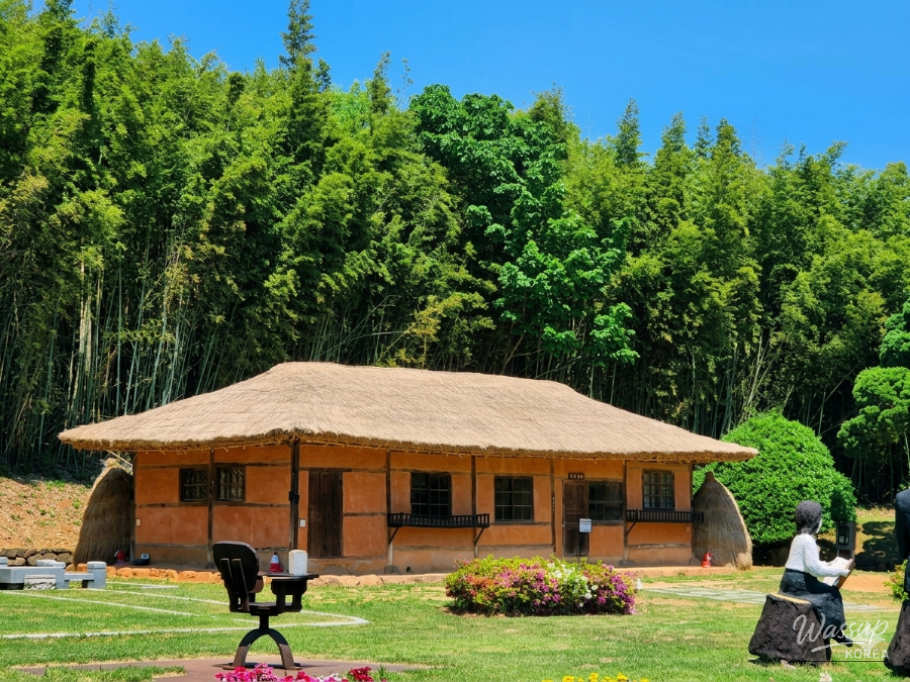
Pilgyeongsa is a house that Sim Hun designed and built in 1934 after moving from Seoul to his parents' home in Buguok-ri, Dangjin, to focus on his writing.
The name translates to 'a house that plows the fields with a brush,' symbolizing his dedication to literature. It is said that he wrote his masterpiece, Sangnok-su, here in 1935.
Today, it is preserved as Chungcheongnam-do Cultural Heritage No. 107.
The quaint thatched-roof house exudes a simple yet profound atmosphere.
The Calm Atmosphere of Sim Hun Memorial Hall
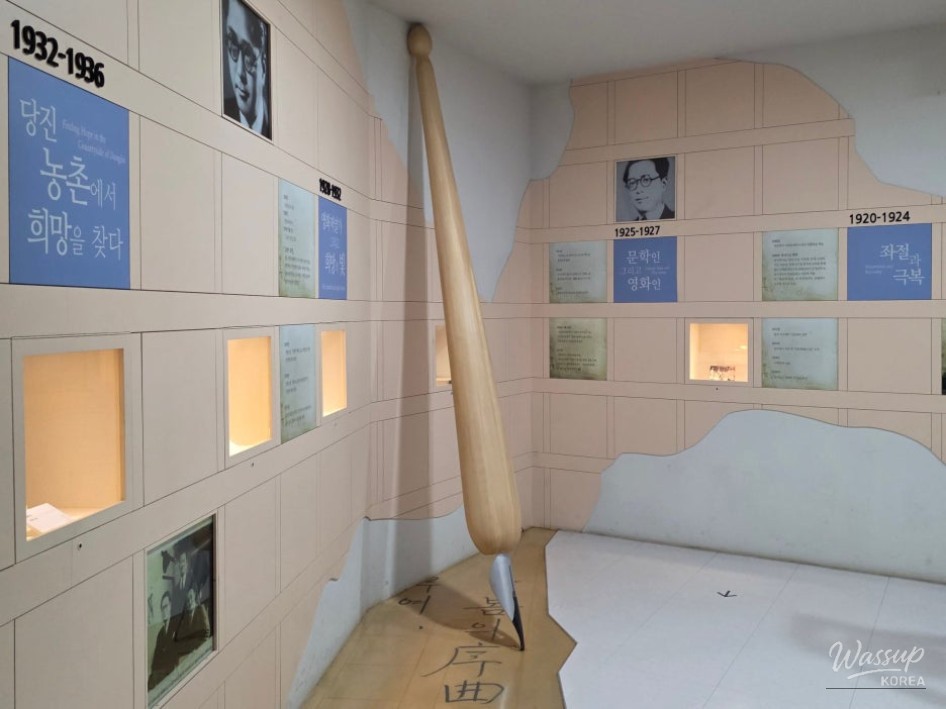
The interior of the Sim Hun Memorial Hall is overall calm and serene. It showcases Sim Hun's life from birth to death, along with significant events such as the March 1st Movement, his film activities, literary works, and anti-Japanese resistance spirit.
Exhibits are presented in various formats, including photos, videos, and models, making it a great place to explore with children.
This space is not just about reading; it allows for direct observation and experience, keeping visitors engaged.
Sim Hun, the Independence Activist
While Sim Hun is well-known as the author of Sangnok-su, he was also an independence activist during the Japanese occupation. During high school, he participated in the March 1st Movement and was arrested by the Japanese police, subsequently imprisoned in Seodaemun Prison.
A letter he sent to his mother from prison, despite its brevity, conveyed his strong resolve, leaving me deeply moved.
Reading about how he stood firm before Japanese prosecutors and judges resonated deeply with me.
Exhibits Related to Sangnok-su
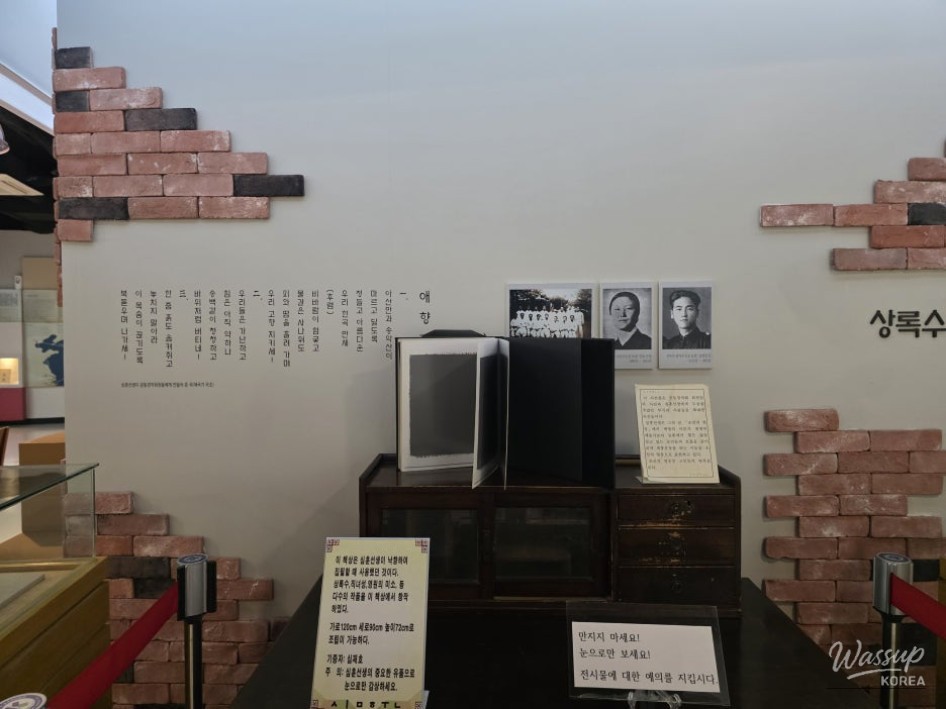
The exhibition hall features the first edition of Sangnok-su and related artifacts. As I viewed these items, memories from my school days came rushing back.
Notably, I saw the writing desk Sim Hun used, a space filled with literary struggles and the spirit of independence, leaving a lasting impression.
There was also a video showcasing his handwritten manuscripts, and observing each carefully crafted character conveyed the intensity of that era.
A Poem Celebrating Son Ki-jeong's Victory
One of the most striking parts of the exhibition was a poem Sim Hun composed spontaneously upon hearing about Son Ki-jeong's marathon victory at the Berlin Olympics. This piece encapsulates overwhelming joy and hope for the nation, and it is said to be one of his final works.
The heartfelt emotions of people from that time were palpable even within the short text, drawing me in for a long gaze.
Don't Miss the Outdoor Photo Zone
Outside, you can find statues depicting the characters Park Dong-hyeok and Chae Young-shin from Sangnok-su. Surrounded by lush greenery, it's a perfect photo spot.
A leisurely stroll around this area makes it a recommended drive course in Dangjin.
Visiting the Sim Hun Memorial Hall and Pilgyeongsa offers a chance to experience history, literature, and the spirit of independence. This serene space calms the mind, making it an excellent destination for a historical trip with children or a family outing in Dangjin.
Source :https://blog.naver.com/dangjin2030/224297934472
No comments yet.