Exploring the Hadduk Water Culture Museum



During my trip to Dangjin, I visited the Hadduk Water Culture Museum, which is not just a simple exhibition space but a special place where you can directly experience the agricultural techniques and lifestyle of our ancestors.
Established to commemorate the Hadduk Reservoir, one of the three major reservoirs of the Joseon Dynasty, the museum offers a glimpse into the history of water and agricultural culture.
It’s a great spot for historical experiences with children and is highly recommended as a hidden cultural destination in Dangjin.
The Hadduk Water Culture Museum is located in Hadduk-eup, Dangjin-si, Chungcheongnam-do. Construction began in 2000, and it opened in 2005, becoming a registered specialized museum in 2008.
The museum is designed not only to display artifacts but also to teach visitors about the wisdom of how our ancestors managed water and cultivated crops. It aims to preserve agricultural heritage that is gradually disappearing due to modernization and encourages hands-on learning experiences.
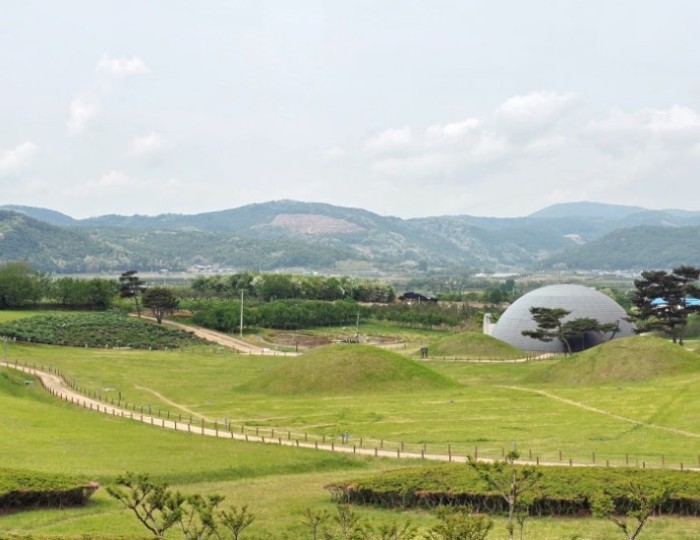
The Hadduk Reservoir, built by Gyeon Hwon during the late Unified Silla period, was a large-scale irrigation facility that supplied agricultural water to the Hadduk plain. With a height of about 7-8 meters and a total length of 1,771 meters, it was particularly known for the abundance of lotus flowers, blooming beautifully in summer.
Although the reservoir has now been transformed into rice fields, its scale and structure still reflect the technological prowess of the time. Unlike the straight embankment of the Gimje Baekgol Reservoir, Hadduk Reservoir features a curved design, taking into account the terrain, water flow, and storage capacity.
This historical significance was recognized when it was registered as a World Heritage Site by the International Commission on Irrigation and Drainage in 2017.
Today, Hadduk Reservoir is designated as Chungcheongnam-do Monument No. 70, covering an area of 103 hectares. It once supplied water to approximately 3 million pyeong of farmland and currently has eight sluice gates and one overflow channel.
Inside the museum, you can find historical maps featuring Hadduk Reservoir, illustrating its importance in agriculture and daily life at that time. The exhibition also details the excavation process of Hadduk Reservoir, revealing that it underwent up to five contractions and was reinforced with stone walls in 1913.
Various traditional agricultural customs related to farming culture are showcased in the museum, including the Giyuje ritual, performed to pray for rain during droughts, and the Dookje ceremony, held annually to pray for the stability of the embankments.
The museum also displays traditional irrigation tools such as the Yongdurae, a manual irrigation device, and the Tongcha, a waterwheel developed based on Japanese and Chinese technology.
The Hadduk Water Culture Museum is not just a place to view exhibitions but a venue to learn and feel the lifestyle and wisdom of our ancestors. It’s especially enjoyable for families looking to experience history together, making it a worthwhile stop during a trip to Dangjin.
Source :https://blog.naver.com/dangjin2030/224298869922
No comments yet.