Connecting the Past, Present, and Future of Cities
- Original source
- blog.naver.com



For a city to continuously thrive, the past, present, and future must be interconnected.
Merely tearing down the old or pursuing only the new makes it difficult to preserve the unique values of a city over time.
Walking through the old town of Dangjin in Chungcheongnam-do, I pondered this idea.
In the heart of Dangjin, you can find a space where time flows differently from industrial facilities or new towns.
This visit included the Dangjin Youth Town Narae and the remnants of the old Dangjin fortress.
On one side, young people are preparing for new ventures, while on the other, the history of the old city can be revisited.
The fact that spaces symbolizing different eras coexist in close proximity is fascinating.
First, I visited the Dangjin Youth Town Narae, a space for young people to experiment with their potential.
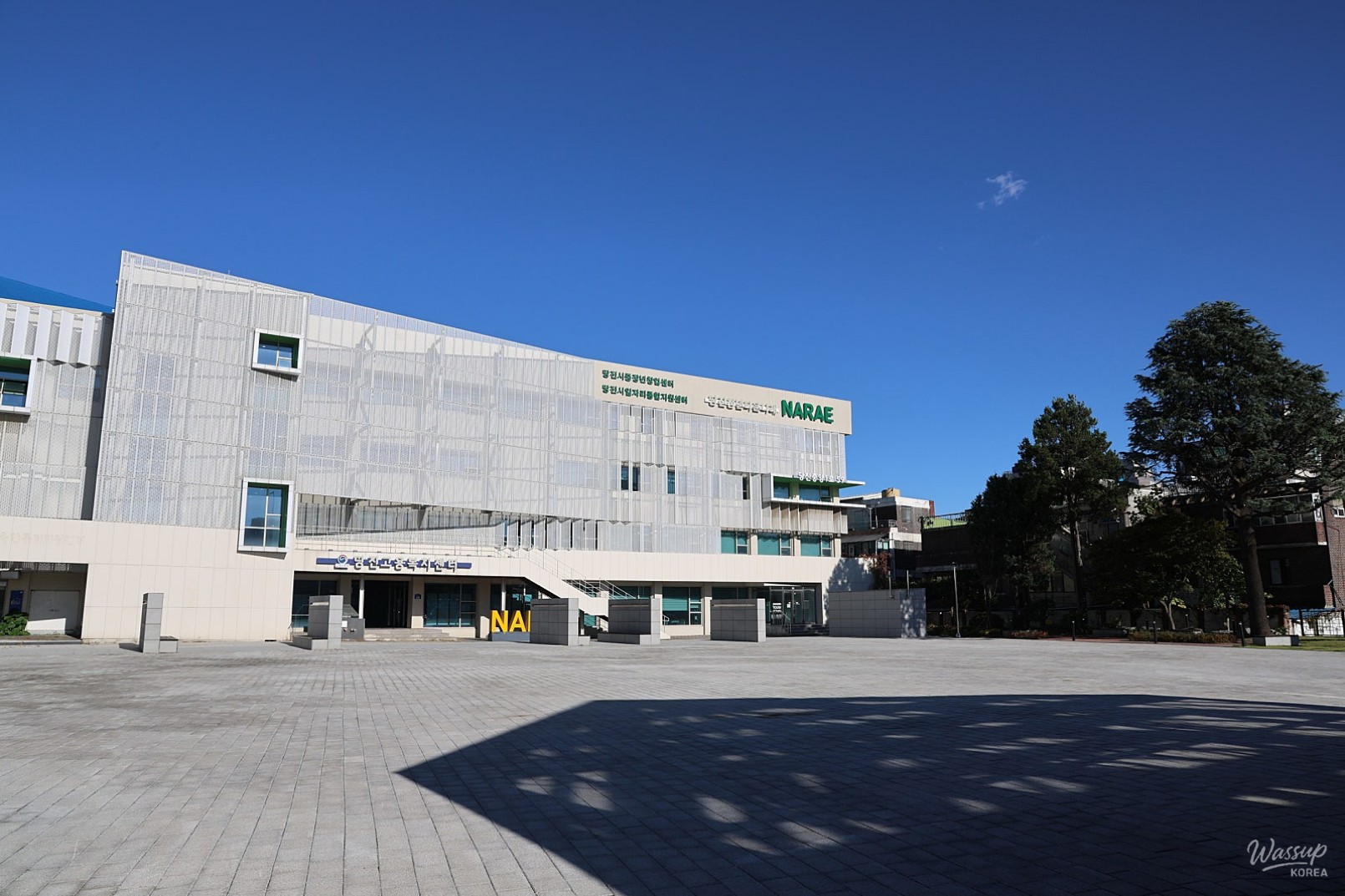
Located in the old town of Dangjin, the exterior of the Dangjin Youth Town Narae is striking.
The modern white building creates a different atmosphere compared to the surrounding old shops.
The large plaza, metallic finishes on the building's exterior, and the yellow NARAE sculpture reflect the character of this place.
What do young people need? Often, job opportunities, startup funds, and housing issues are the first topics discussed.
While these are all important, young people also need a physical space where they can test their ideas and have the opportunity to challenge themselves again, even after failure.
There should be a space for sharing thoughts, opportunities to learn new skills, and an environment to develop unfinished ideas.
The Dangjin Youth Town Narae is designed to fulfill these roles.
Expanded and remodeled from an existing youth center, it opened in 2020 to support youth entrepreneurship and various activities.
Inside, there are study rooms, community halls, educational spaces, studios, and startup incubation areas.
It is structured to facilitate not just studying but also employment, entrepreneurship, content creation, and networking.
As I entered, I noticed study rooms, waiting areas, and informational notices about various programs.
Sunlight streamed through the windows, and there were comfortable seating areas in the hallway for conversations.
For young people, entrepreneurship is a choice, but it also involves significant risks.
Having a good idea does not guarantee stable business operations.
Various conditions are necessary, including office rent, initial costs, product manufacturing, marketing, and market understanding.
The Dangjin Youth Town Narae supports young entrepreneurs not only with incubation spaces but also through mentoring, prototype development, marketing, and commercialization programs.
In 2026, they will continue to promote growth support for resident companies, providing opportunities for early-stage businesses to grow sustainably.
The city of Dangjin is also pursuing the restoration of the Dangjin fortress in 2026.
This restoration project is part of a movement to shed light on the historical spaces surrounding the old fortress.
However, it is essential to differentiate between the restoration of the fortress and the maintenance of the walls shown in the photographs.
The purpose of restoring historical spaces is not just to recreate their past appearance.
It is also to enable today's inhabitants to understand their community and contemplate the future.
Perhaps the history of a city reflects how people have lived, what they have sought to preserve, and how they have adapted to changes over time.
For young people, the experience of taking risks is more important than a single success in entrepreneurship.
Even failed ventures can provide valuable information for others and become the starting point for new businesses.
If an environment is created where young people can make various attempts, they can discover their potential without necessarily moving to a big city.
The remnants of the Dangjin fortress, right in front of the youth town, were once crucial for understanding the administrative and defensive functions of the Dangjin area.
The fortress does not simply mean walls to fend off outside invasions.
Inside the fortress were government offices that managed local administration and formed the center of community life.
Modern buildings, old shops, alleys of the old town, and traces of the Dangjin fortress may seem like independent places.
Yet, from a broader perspective, they are all part of the process of how the city of Dangjin has formed and evolved.
Many regional cities in our country have undergone similar transformations over time.
As new residential areas are developed on the outskirts and commercial facilities relocate, the old centers gradually become less frequented.
Pausing in front of the remnants of the old fortress, I noticed the newly renovated pedestrian space, railings, and informational signs, with old buildings and living spaces still nearby.
The mere presence of ruins does not make a place special.
It is only when citizens understand the significance of that space and can visit it regularly that it can truly become a historical asset for the community.
The old town is not a place of diminished value simply because it is old.
It holds memories of lives lived over time and embodies the culture and stories that represent the region.
When discussing urban regeneration, the crucial issue is how to connect these values with the demands of a new era.
While traveling in Dangjin, a question arose: How can regional cities maintain their competitiveness in the future?
Attracting industrial facilities or building new apartments is necessary, but that alone does not create a city where people want to stay long-term.
Young people starting their lives need opportunities, and those who have lived in the area for a long time need a stable foundation for their daily lives.
Newcomers need history and culture to help them understand the city.
The coexistence of youth spaces and historical spaces is meaningful in this regard.
The Dangjin Youth Town Narae is a place for future residents to test their potential.
The remnants of the Dangjin fortress provide a space for reflection on the time that previous generations lived in this area.
One looks towards the future, while the other tells the past.
However, the values that both spaces aspire to are not drastically different.
Ultimately, it leads to the question of how to create the city where people will live.
Walking through the old town of Dangjin, what remained more memorable than the flashy tourist facilities was this connection of time.
Good urban regeneration is not about erasing the past and filling it with the new, but about enabling new lives to continue atop the old time.
The recent visit to the Dangjin Youth Town Narae and the surrounding historical spaces allowed for contemplation of Dangjin's present and future.
I hope this place continues to offer opportunities for young people to challenge themselves and serves as a space for citizens to reflect on the memories of their region.




Source :https://blog.naver.com/dangjin2030/224471602665
More from Travel


No comments yet.