Beyond Cultural Experience: A Meaningful Journey for Social Integration



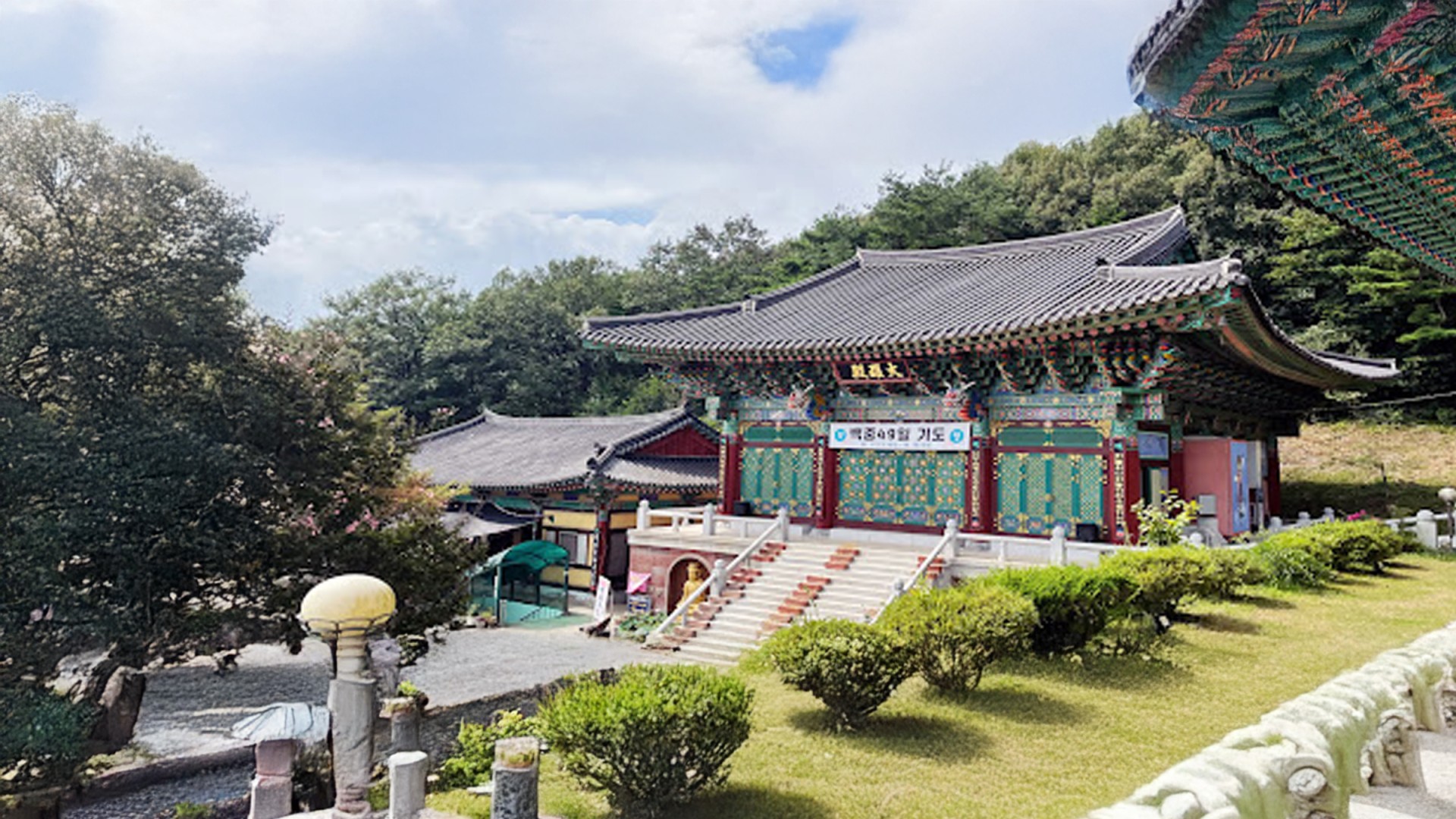
2-3 Hwagok-ri, Noseong-myeon, Nonsan-si, Chungcheongnam-do
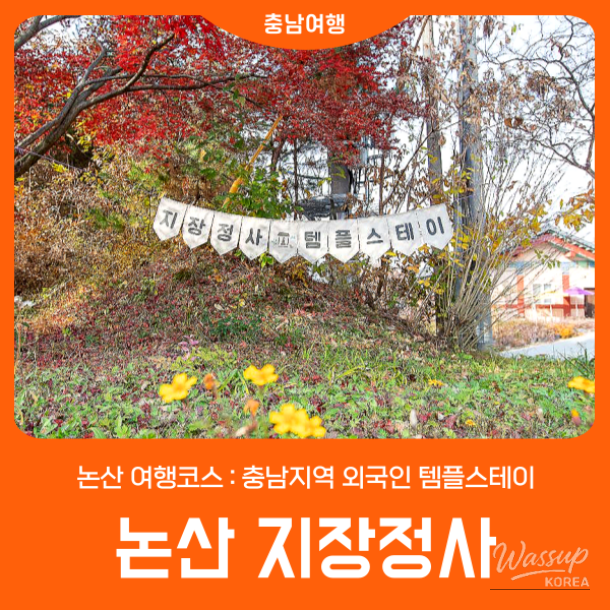
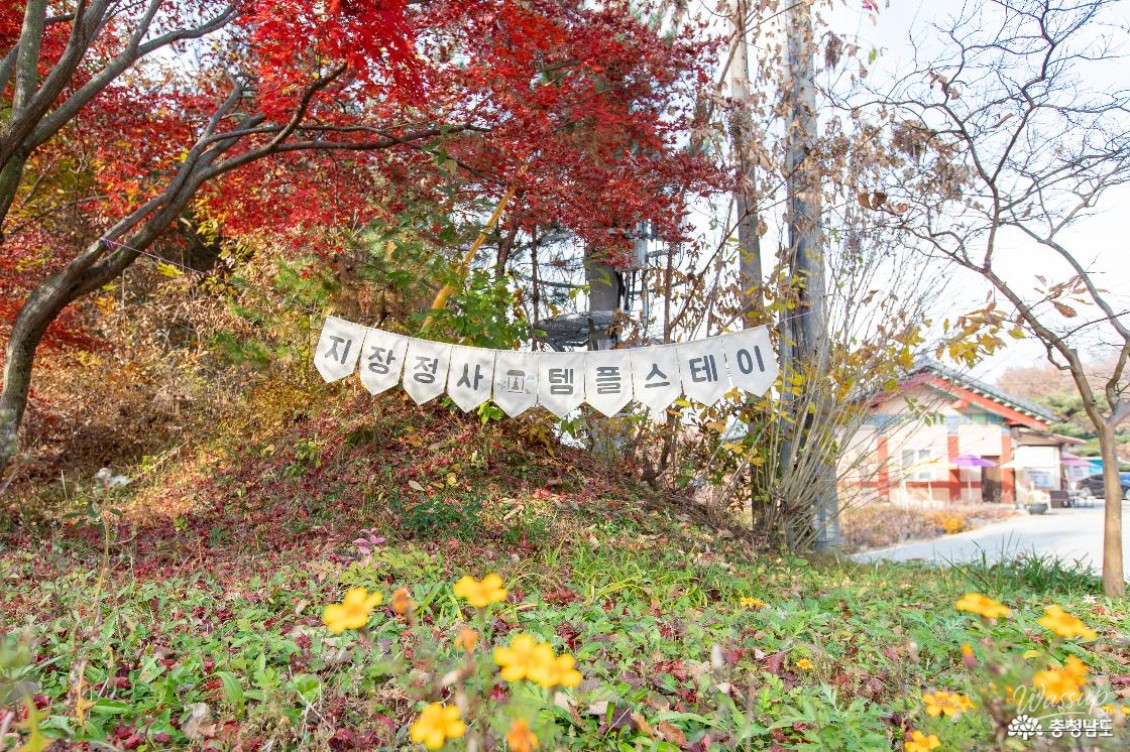
Today, I visited Jijangjeongsa Temple, located in Noseong-myeon, Nonsan-si, for a Templestay program. As Korean society officially enters a multicultural era, this Templestay with foreigners was more than just a cultural experience; it was a meaningful journey towards social integration. Foreigners from various countries, including Nepal, Vietnam, Mongolia, Uzbekistan, and Morocco, gathered in one place to share their languages and cultures while experiencing Korean Buddhist culture. Although their backgrounds were different, they all shared the same desire: to learn ‘how to live together through social integration.’
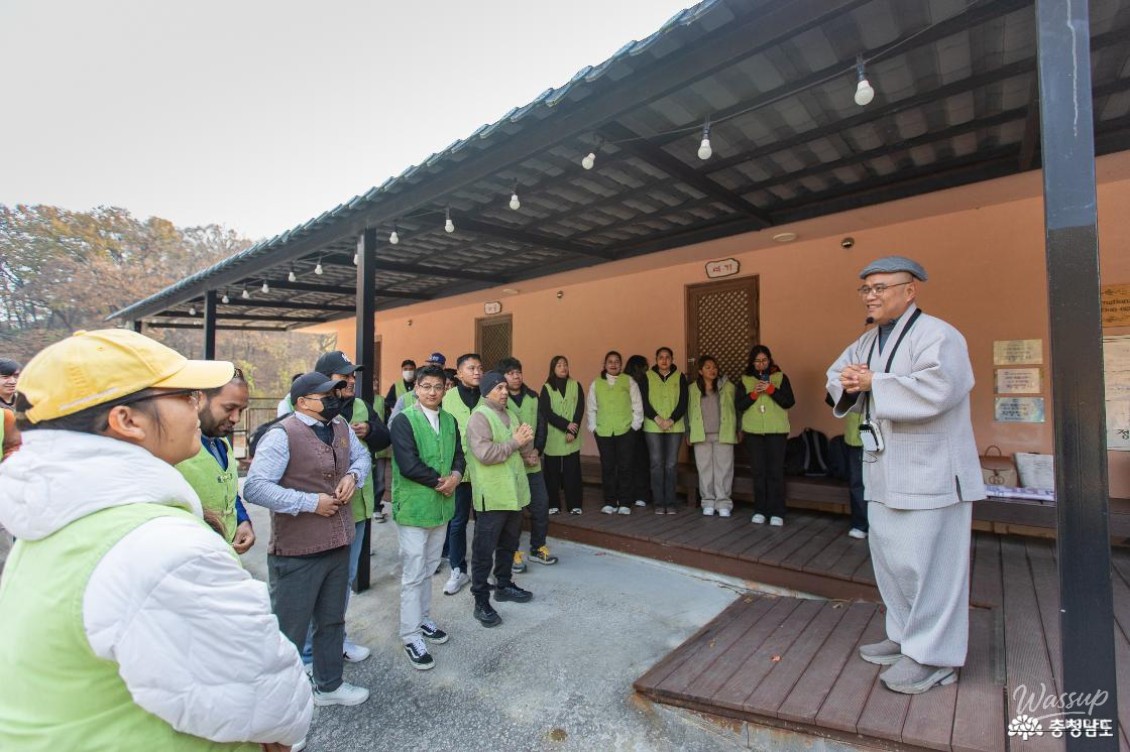
Upon arriving at Jijangjeongsa Temple, Venerable Il-A welcomed us with a warm smile. The monk's kind eyes and welcoming words eased the participants' tension. Everyone changed into Templestay attire, shedding the complexities of daily life and renewing their minds with the attitude of a practitioner.
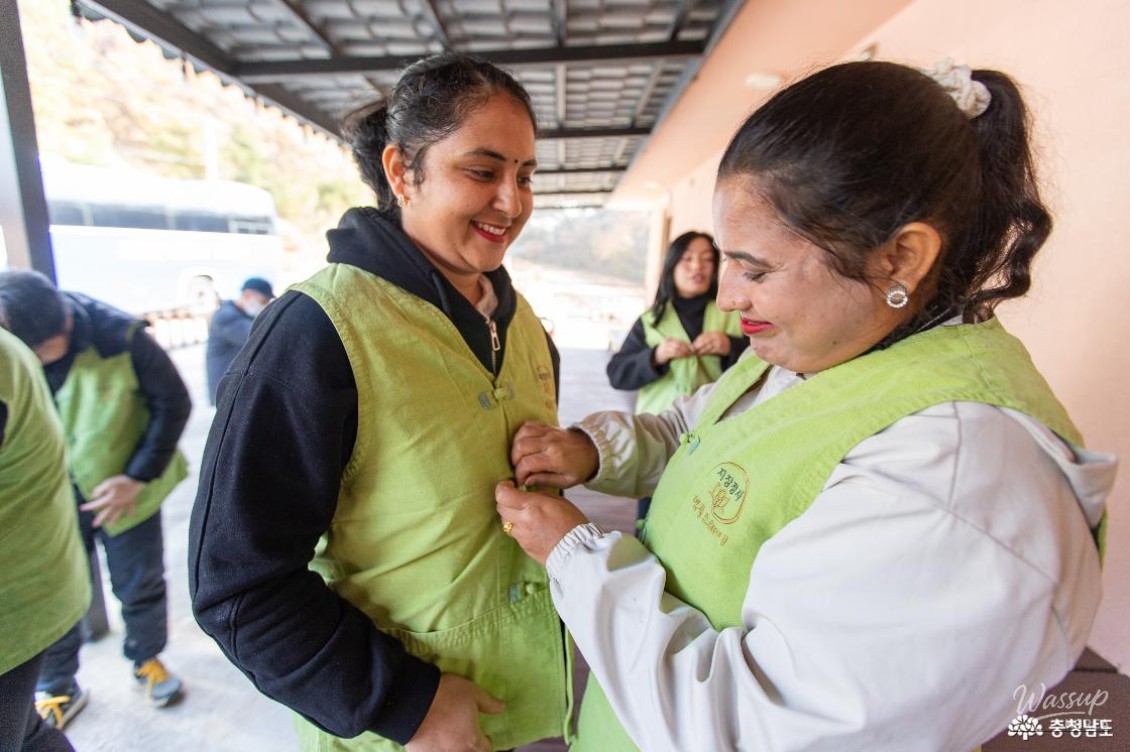
Foreign participants helping each other put on Templestay clothes.
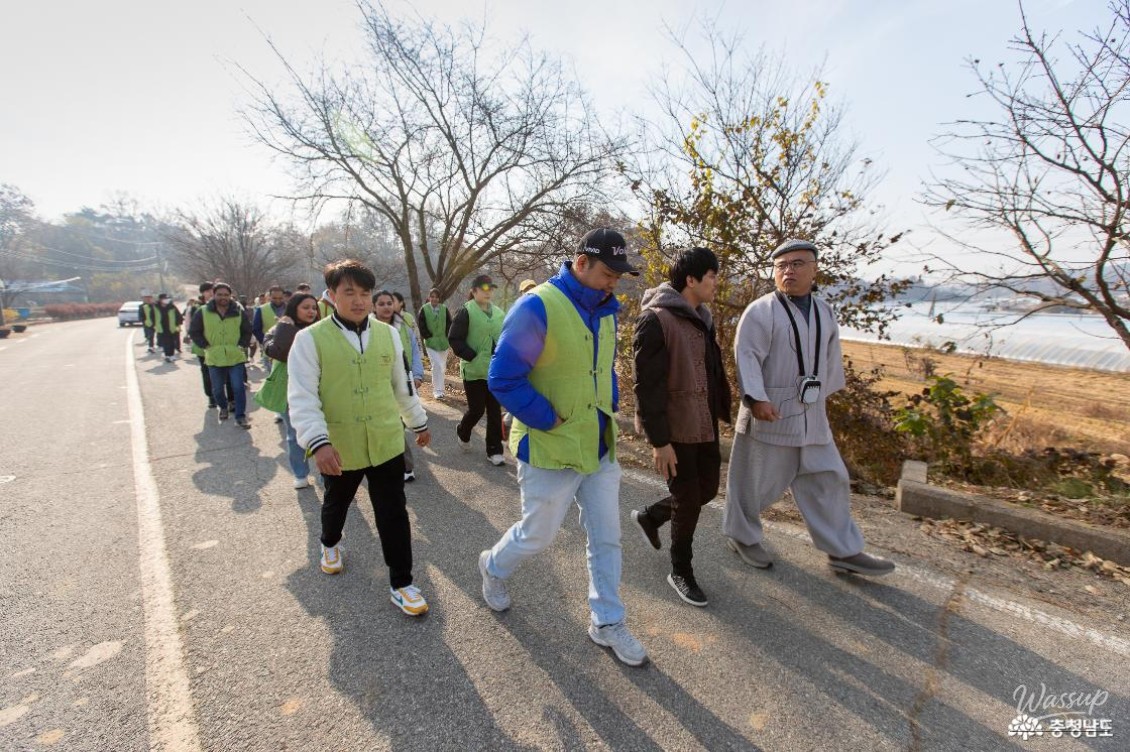
After changing, we took a meditative walk along the forest path surrounding the temple. While slowly moving our feet and calming our breath, participants from Nepal shared stories of the Buddha's birthplace. Their voices were filled with pride and reverence, and participants from other countries were deeply moved by the moment of sharing the roots of Buddhism together.
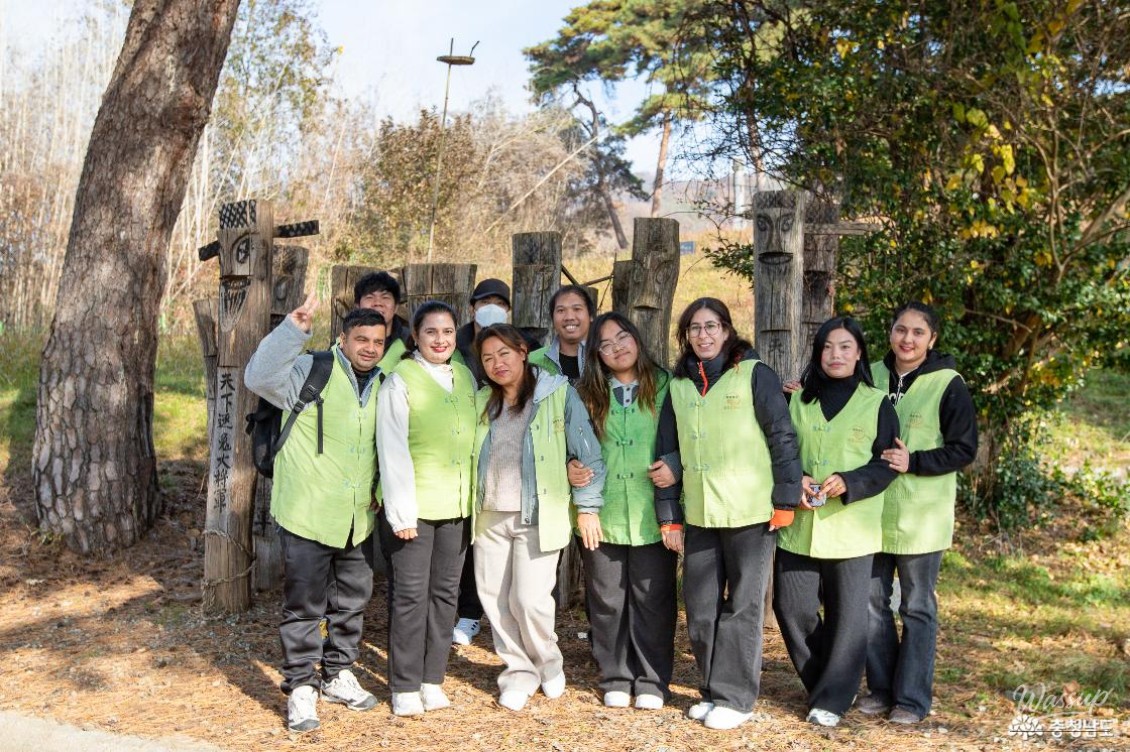
While walking, we visited Jangseung Village in Noseong-myeon. The Jangseung (totem poles) standing at the entrance of the village showcased Korean traditional beliefs and community culture. Foreign participants asked interesting questions about the expressions and meanings of the Jangseung, and took pictures. I told the foreigners that Jangseung are guardian deities that protect the village, explaining Korean culture.
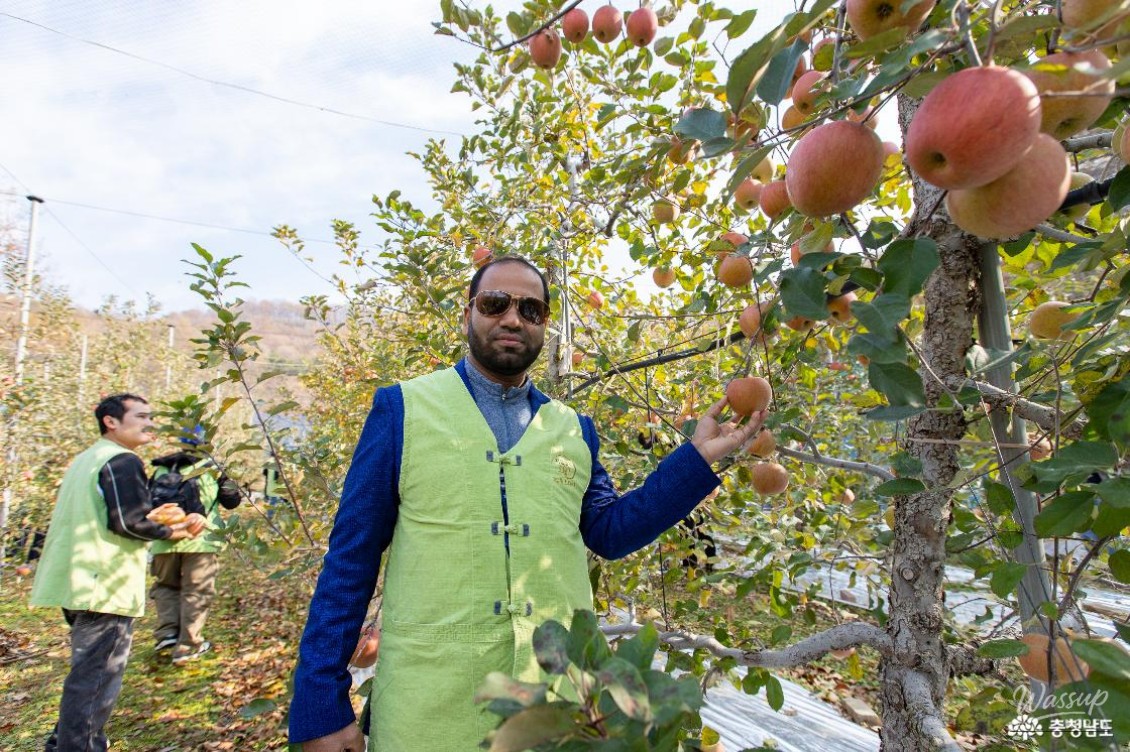
We experienced apple picking in an apple orchard filled with autumn sunlight. Foreign participants picked pairs of ripe red apples, directly feeling the results of a year's hard work. The sensation of holding an apple in their hands symbolized the joy of harvest, and they felt their own lives ripening like the apples.
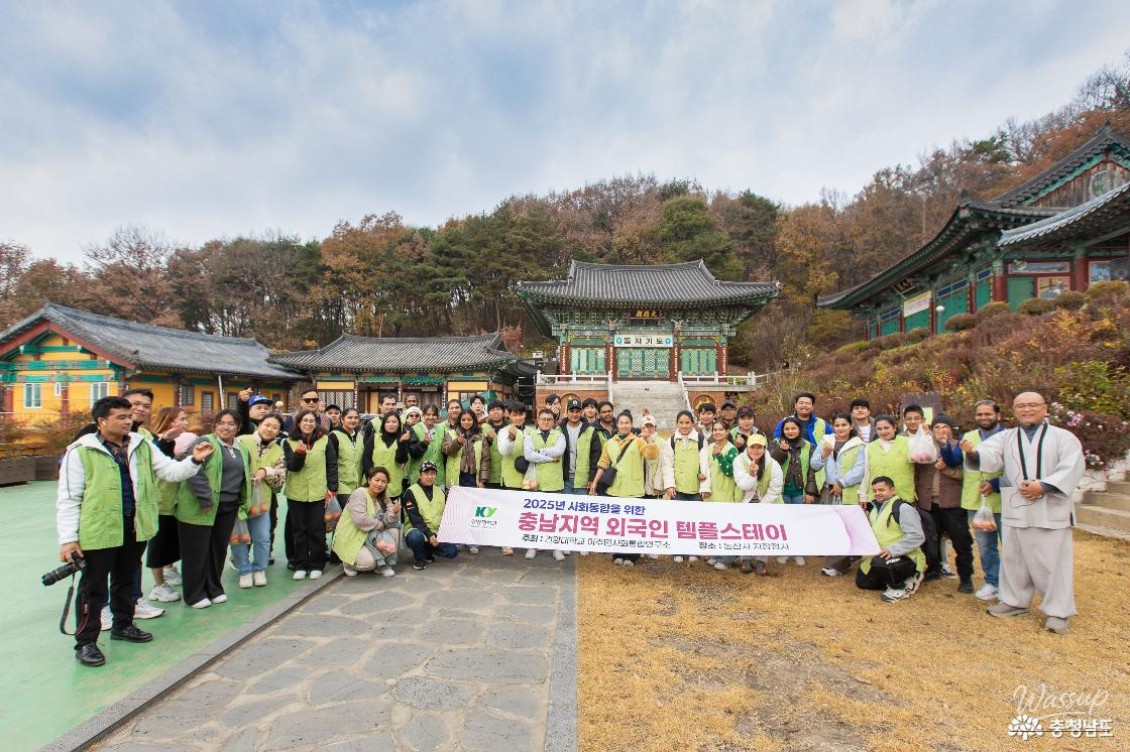
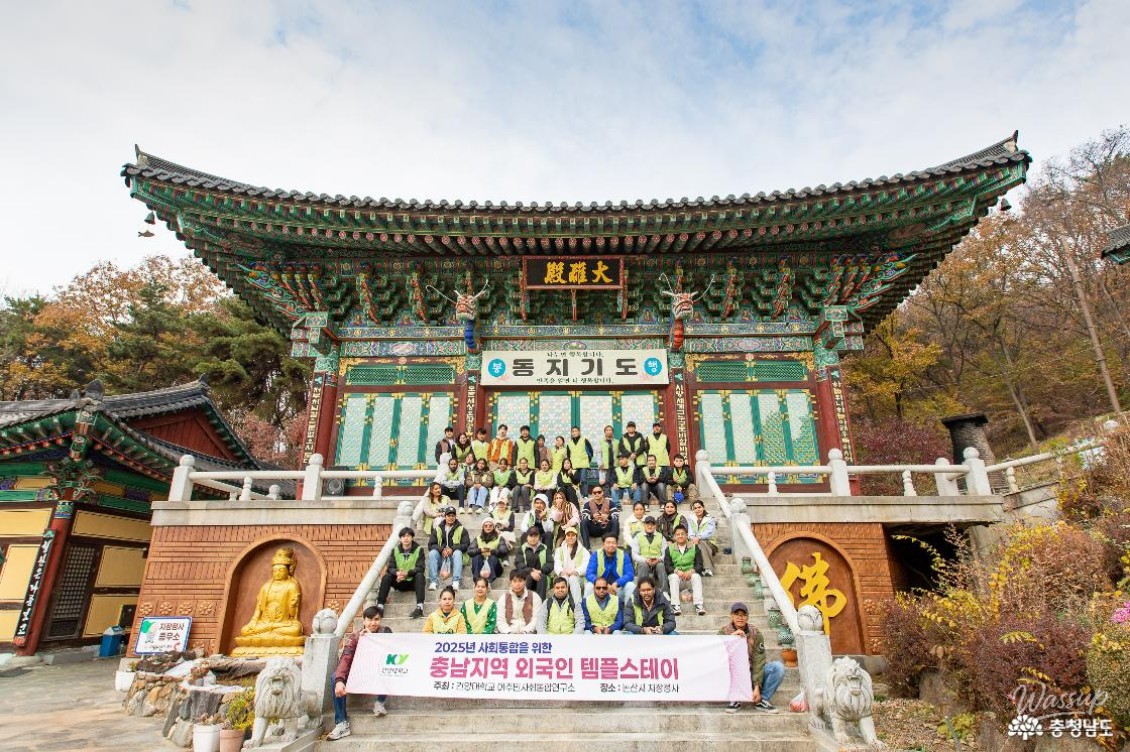
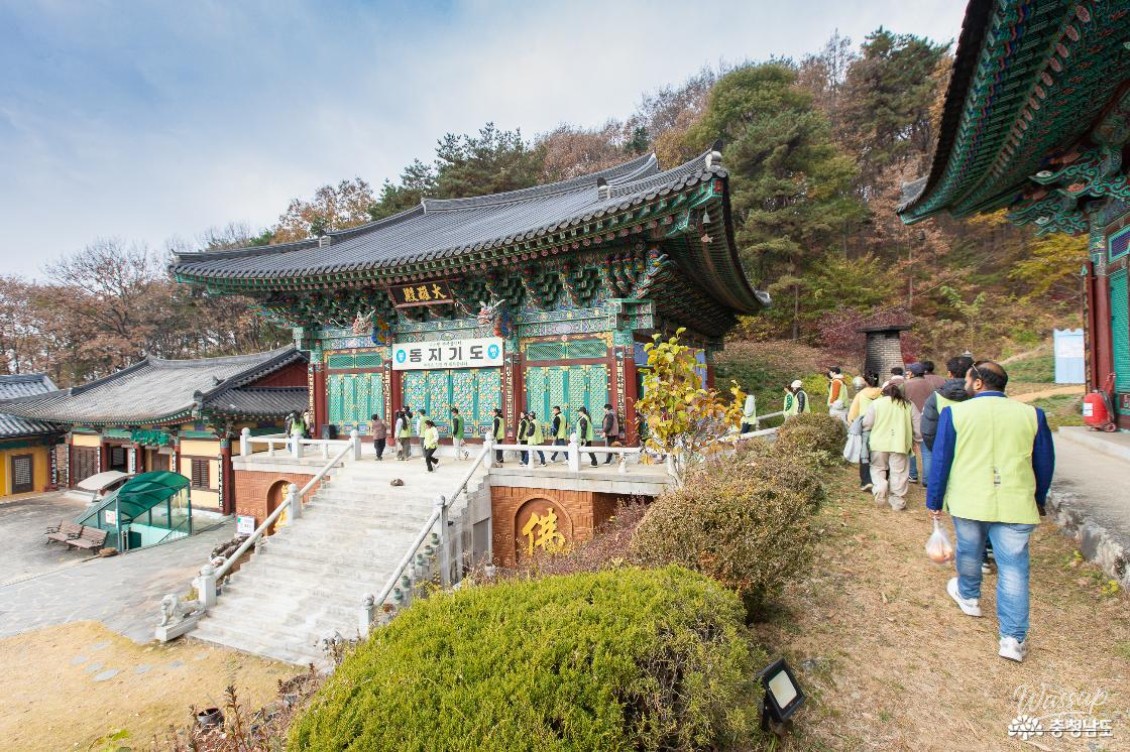
Group photo at the main hall of Jijangjeongsa Temple in Noseong-myeon, Nonsan-si.
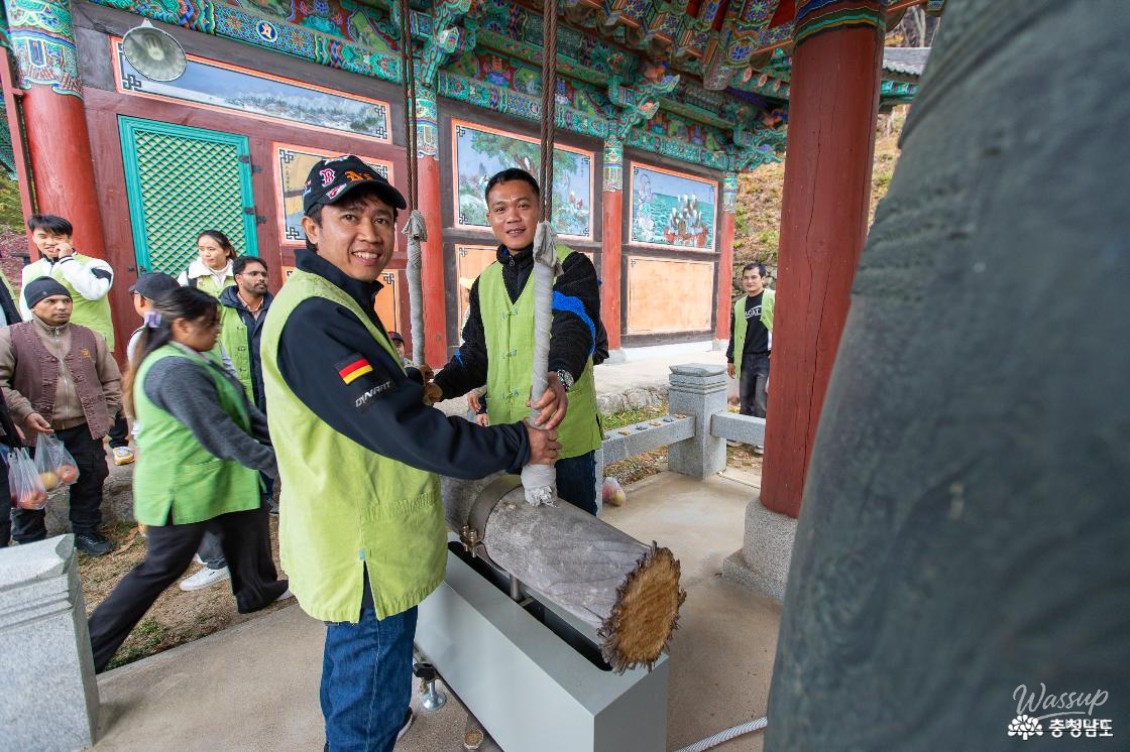
Returning to Jijangjeongsa Temple, we participated in the bell-striking ceremony. With each strike of the bell, it felt as if our individual wishes were being conveyed to the heavens. The foreign participants wished for their lives and dreams in Korea, and I prayed for harmony in a multicultural society. The desire for a ‘Korean Dream’ resonated with the sound of the bell, binding everyone's hearts together.
Foreign participants moving to the main hall.
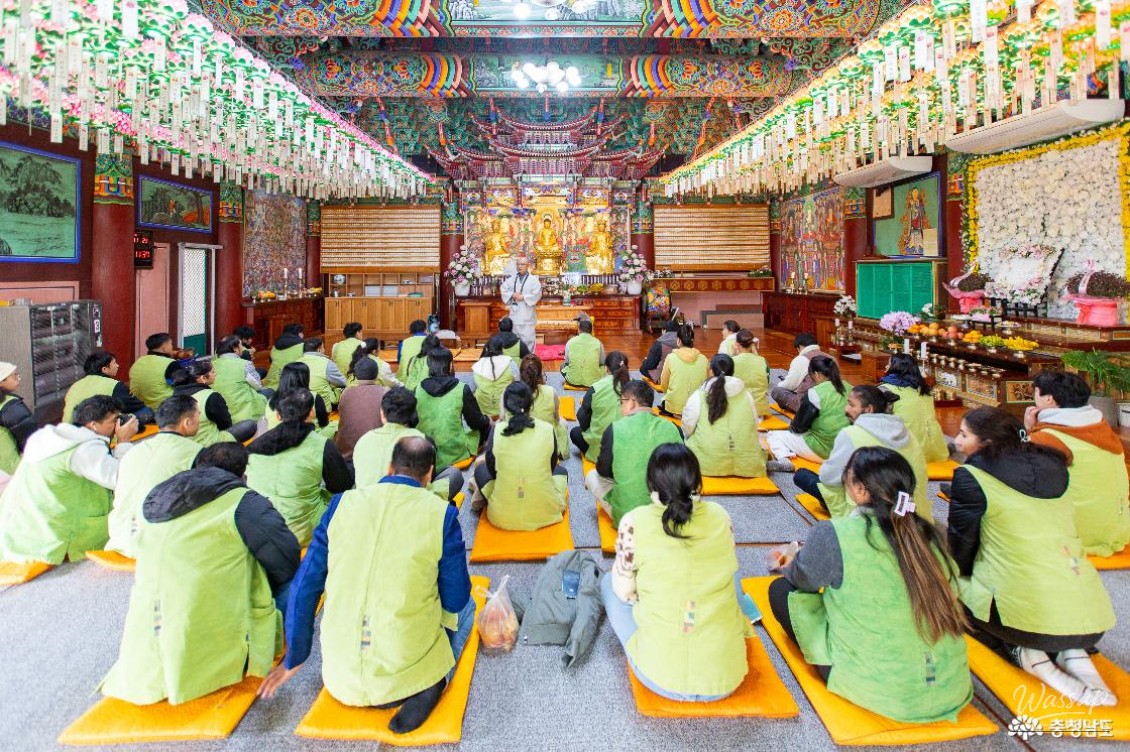
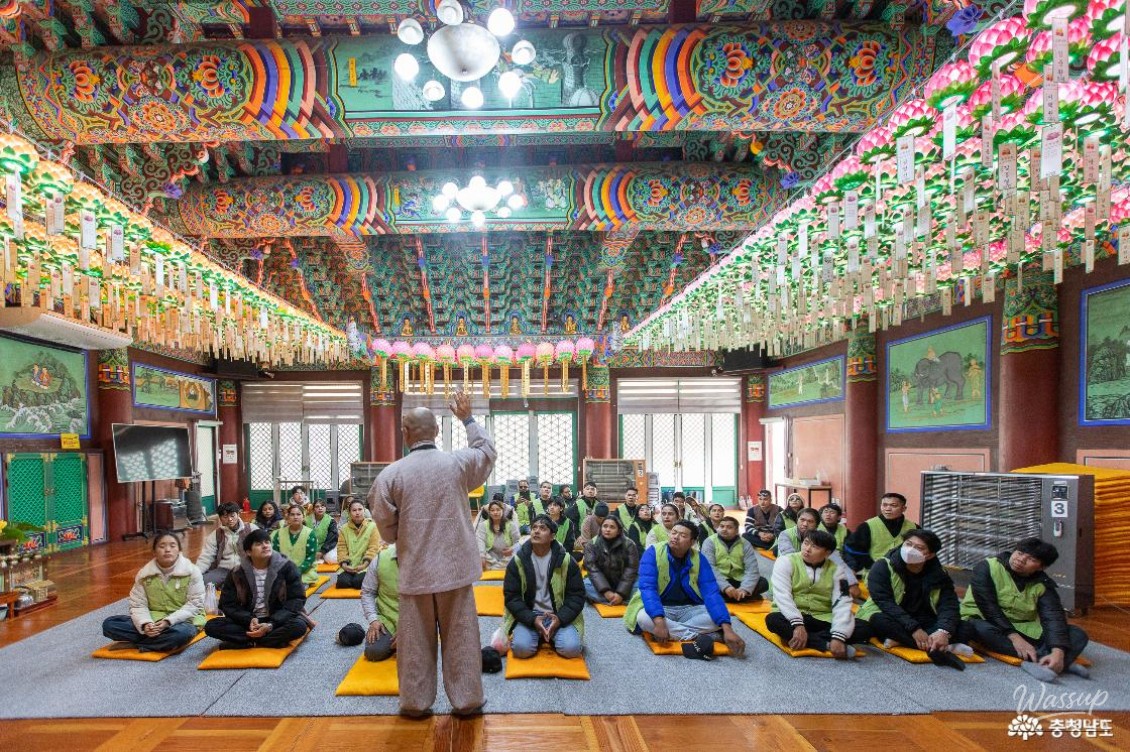
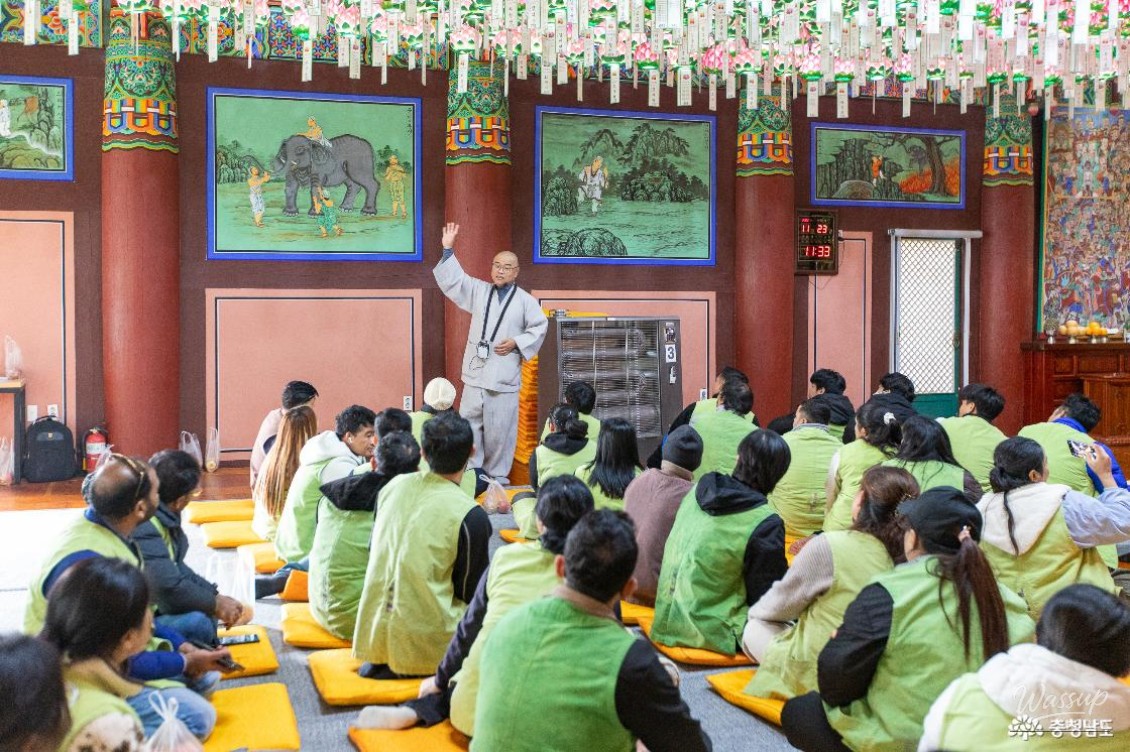
In the main hall, a lecture on Korean Buddhist culture followed. We learned about the meaning of the colorful Dancheong (traditional decorative coloring on wooden buildings), the teachings of Buddhism, and the story of ‘Blind Men and an Elephant,’ learning about the diversity and inclusiveness of truth. Participants deeply empathized with the message that even if their perspectives and experiences differed, the essence of truth is ultimately one.
Venerable Il-A lecturing on the Dancheong culture of Buddhist temples.
Foreigners listening to the story of the Blind Men and an Elephant.
In Buddhism, the story of ‘Blind Men and the Elephant’ is a metaphor for the limitations of humans who only partially understand the truth. Just as several blind men touch an elephant and describe it differently, people only recognize the truth fragmentarily according to their experiences and perspectives. This story makes us realize that we can distort the truth if we do not see the whole, and teaches us that we can reach a correct understanding only when we respect and synthesize various perspectives. Wouldn't communication be possible only when we abandon our prejudices and stereotypes about each other's cultures?
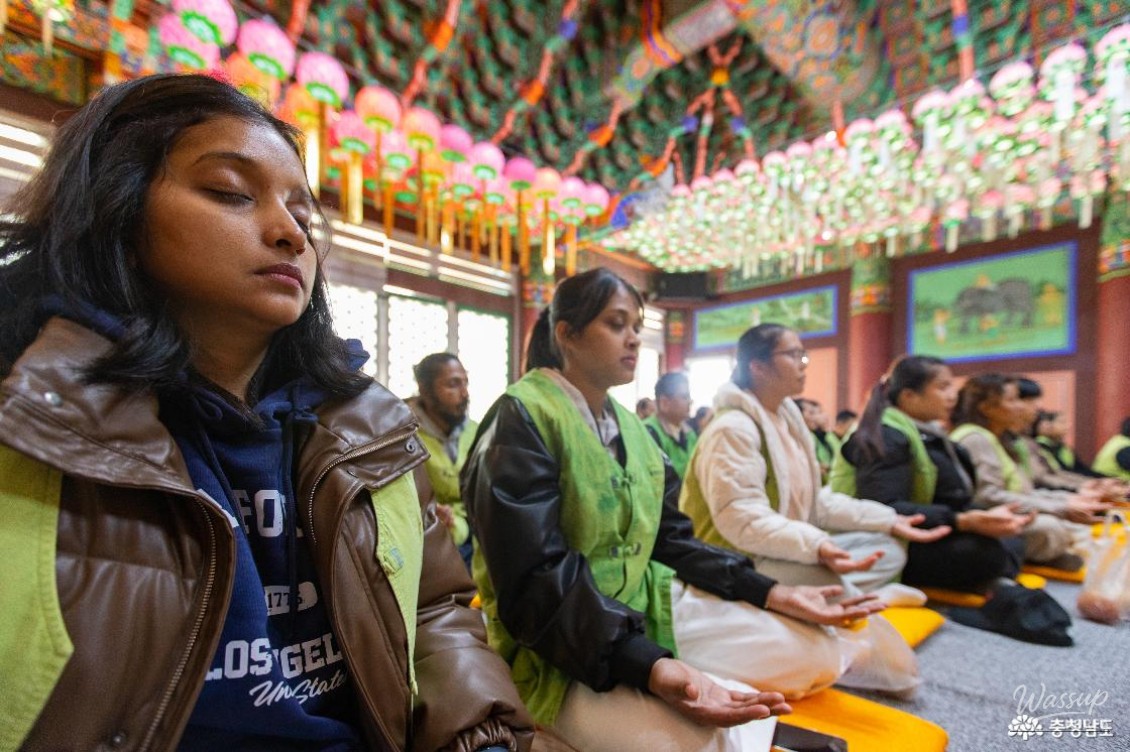
During the quiet meditation time, each person looked into their own inner selves. Closing their eyes and focusing on their breathing, the foreign participants reflected on their lives in a foreign land and contemplated their roles in a multicultural society. Meditation gifted peace of mind to everyone who had been living busy lives.
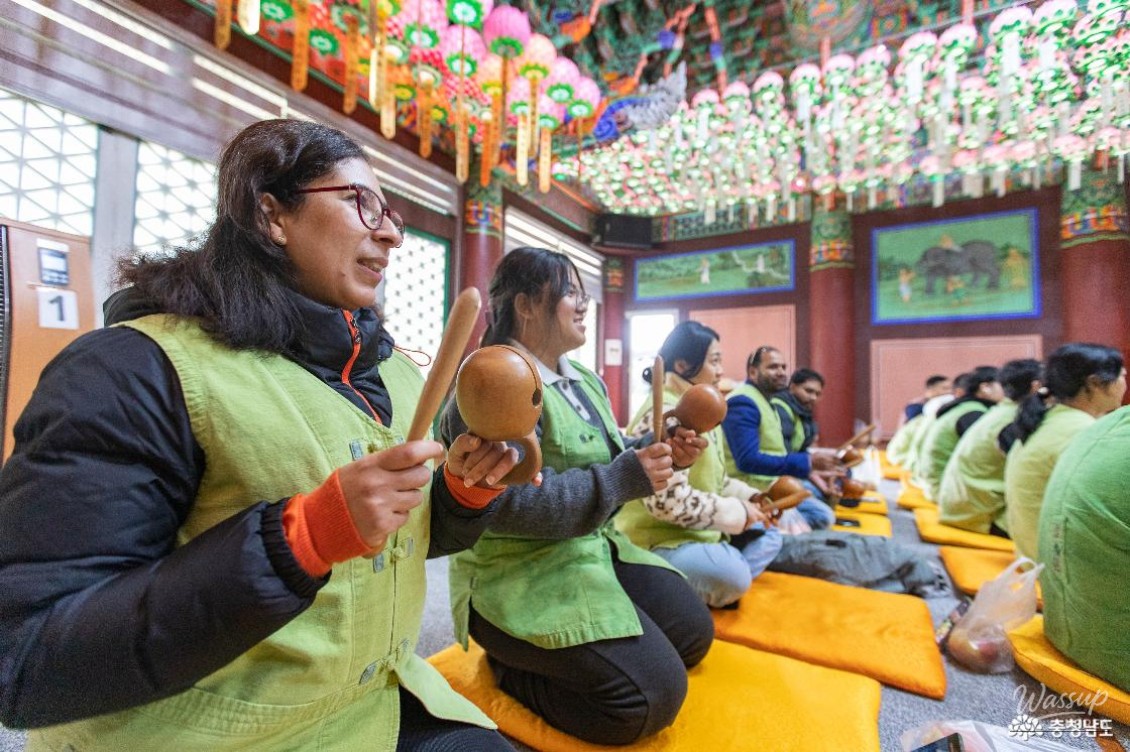
There was also an experience of directly striking a wooden percussion instrument. Participants nodded at the explanation that the reason why the wooden percussion instrument resembles a fish is that it symbolizes being always awake. They felt that the sound of the wooden percussion instrument was not a simple resonance, but contained the meaning of awakening oneself and awakening the community.
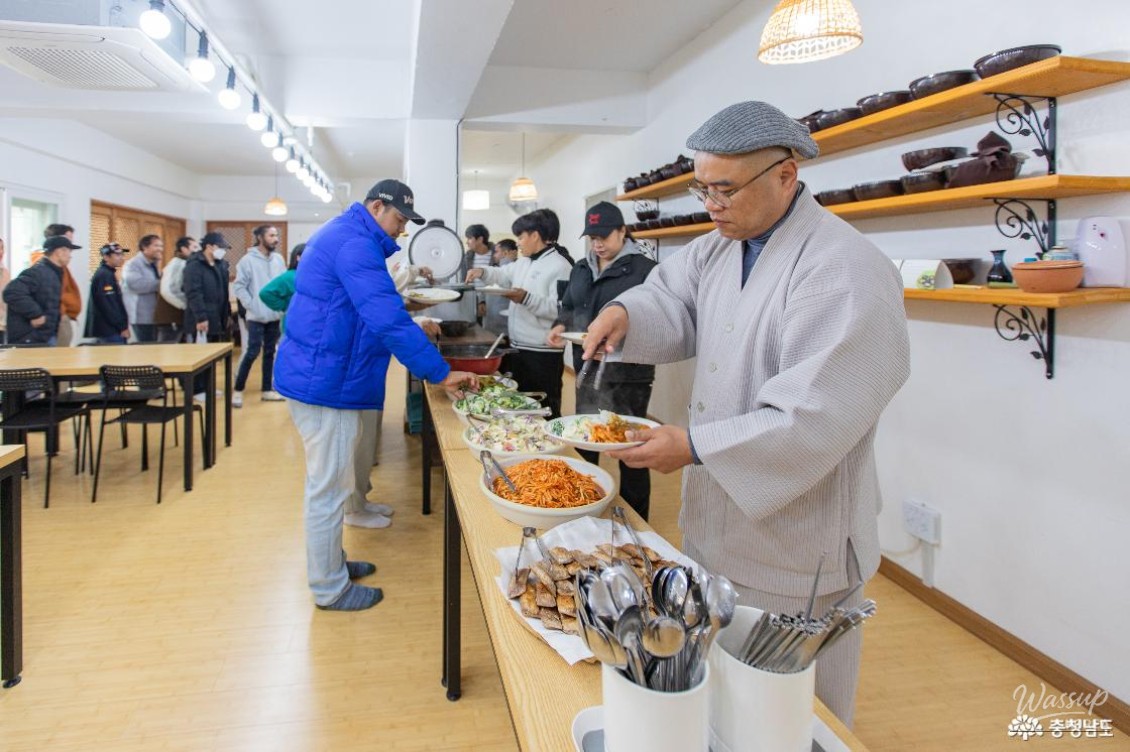
Finally, we shared food through the communal meal experience. People from different countries sat around one table and shared a meal, feeling the true meaning of sharing and community. In the temple, food symbolizes sharing, respect, and gratitude. Therefore, the communal meal experience served as a bridge to understanding and respecting each other's cultures.
The Templestay at Jijangjeongsa Temple was not just a cultural experience, but a place of social integration where foreigners from various countries could mingle and understand each other within Korean society. By experiencing the teachings of Buddhism and Korean traditional culture, and understanding the diverse cultures of foreign participants, we had time to achieve social integration beyond differences. Participants respected each other's differences and sought ways to live together in Korean society.
Templestay Specialized Temple Jijangjeongsa
Address: 103 Hwagokangil, Noseong-myeon, Nonsan-si, Chungcheongnam-do
Templestay Inquiries: Jijangjeongsa Temple Website (http://www.jijang.co.kr/)





Source :https://blog.naver.com/sinmunman/224090797752
No comments yet.