Visiting Hwangudan: A Glimpse into Korea's Imperial Past
54 Sogong-ro, Jung-gu, Seoul
환구단



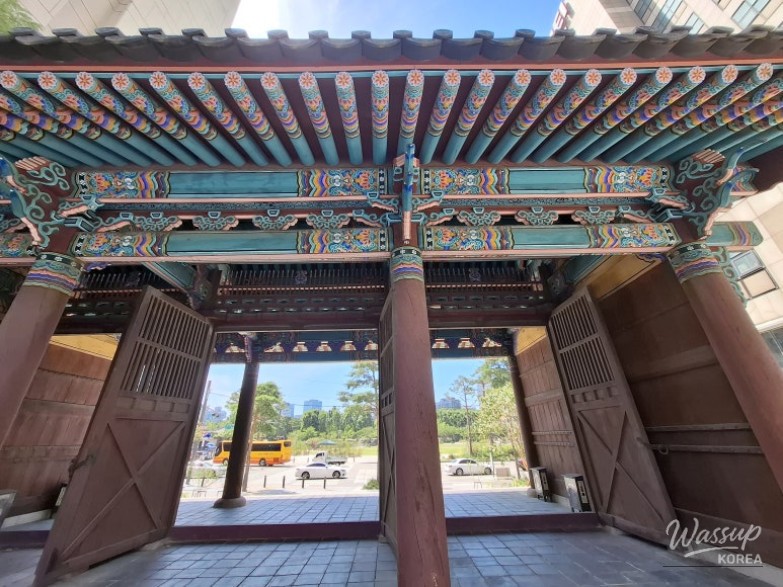
Located directly across from Seoul City Hall, Hwangudan Altar (환구단)—also known as Wongudan—stands as a powerful yet bittersweet symbol of the Korean Empire. Built in 1897 by Emperor Gojong, this sacred site was where the emperor performed ancestral rites to heaven, asserting Korea's status as an independent imperial nation. Today, the remaining structures, primarily the Hwanggungwoo pavilion and the Seokgo stone drums, offer a quiet place for reflection amidst the bustling modern skyline of Sogong-dong.
Recent restorations, including the removal of iron fences in late 2023 and the return of the original main gate, have helped restore the site to a more dignified form. While much of the original altar was demolished during the Japanese colonial period to make way for a railway hotel, the surviving architecture—featuring octagonal pillars and eight-clawed dragons—retains its imperial grandeur. Exploring this site is not just a walk through a "hotel garden," but a journey into the heart of Korea's modern history and its struggle for sovereignty.
The Wandering Main Gate: A Story of Restoration
The main gate of Wongudan has a remarkable history of survival. Originally demolished in the late 1960s during hotel construction, it was lost for decades until it was discovered in 2007 serving as the entrance to the Green Park Hotel in Gangbuk-gu. After being identified, it was relocated and restored to its current position in 2009. Seeing the gate wide open today, free from its previous iron fencing, feels like a significant step toward reclaiming its original identity.
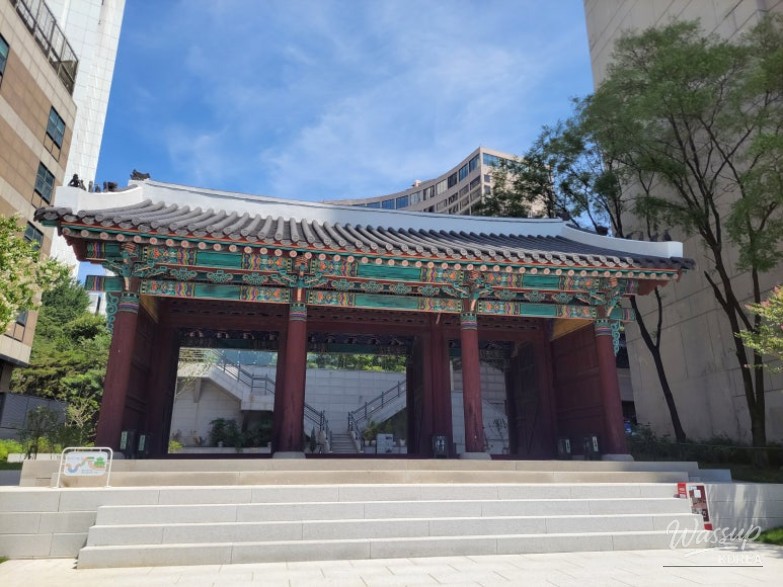
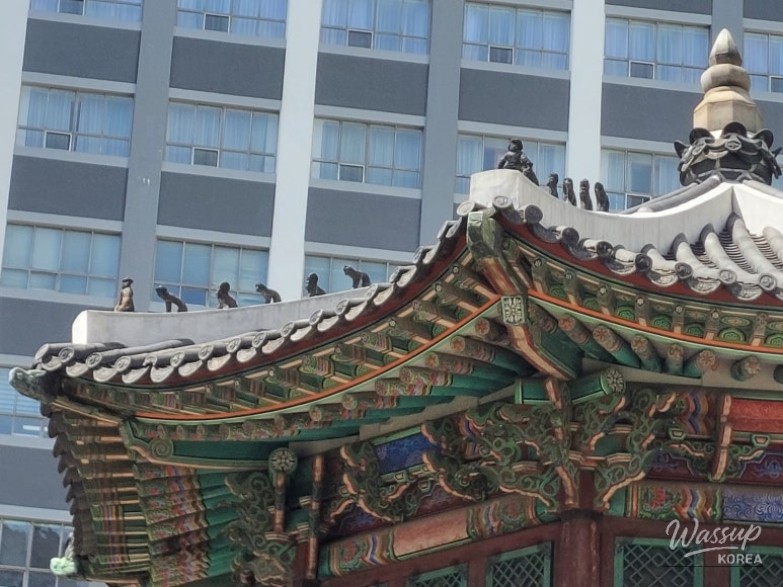
The name itself carries some academic debate, with both Hwangudan and Wongudan being used interchangeably to mean "circular altar." While the Cultural Heritage Administration officially uses 'Hwangudan,' the main gate is labeled 'Wongudan Main Gate.' Regardless of the name, the five small figurines (*japsang*) perched on its roof serve as traditional guardians for this sacred space.
Hwanggungwoo: The Sacred Octagonal Pavilion
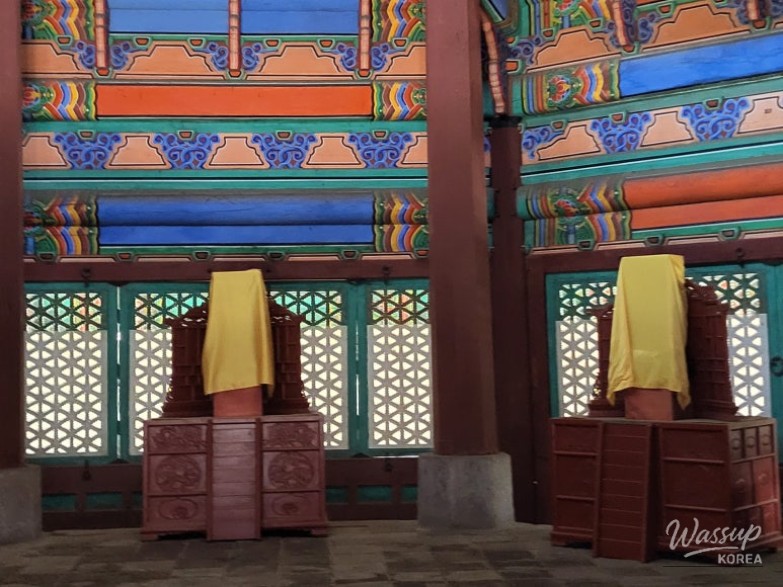
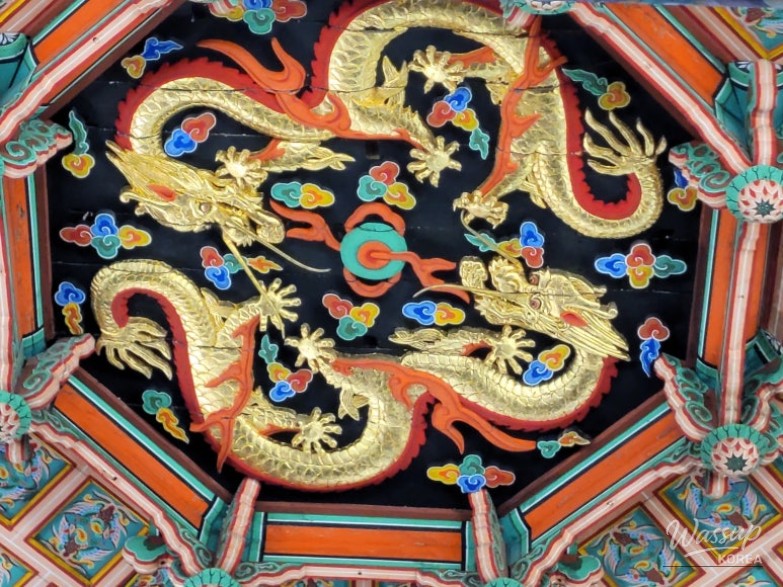
The most striking surviving structure is Hwanggungwoo, an octagonal three-story pavilion built in 1899 to house spirit tablets. Though it appears to be three stories from the outside, the interior is a single open space reaching up to a magnificent ceiling. On a rare occasion when the doors are opened, one can catch a glimpse of the two eight-clawed dragons carved into the ceiling—a detail that intentionally surpassed the seven-clawed dragons of Gyeongbokgung to symbolize imperial independence.
Architectural Details and Imperial Dignity
Every element of Hwanggungwoo reflects refined beauty. The pillars are octagonal, matching the building's base, and the doors are decorated with delicate flower patterns (*soseul kkotssal*). Between the outer pillars, you can find carvings of waves and lotuses (*pareongak*), which represent purity and vitality. The stone three-door gate and the *dapdo* (stairway) engraved with dragons were once reserved exclusively for the emperor's path.
The Stone Drums: Commemorating an Emperor
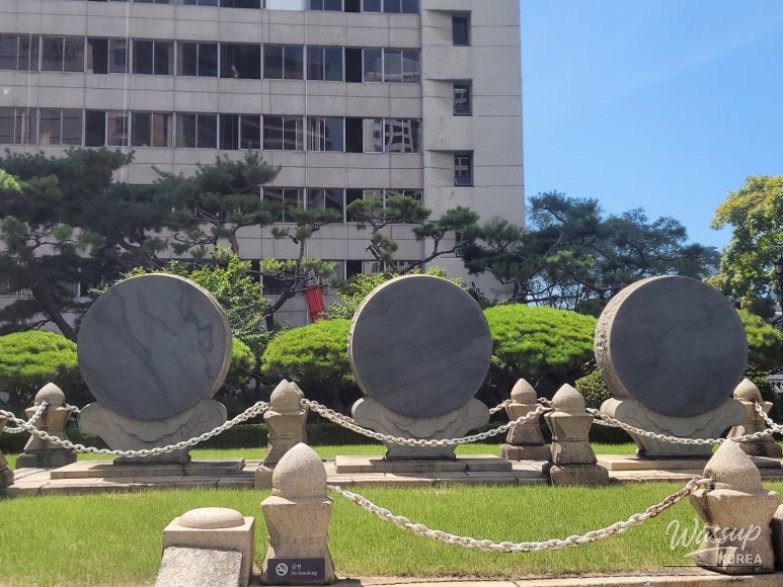
Adjacent to the pavilion are the Seokgo, or stone drums. These three monuments were created in 1903 to celebrate the 40th anniversary of Emperor Gojong’s accession. Each drum is intricately carved with dragon patterns and symbolizes the musical instruments used during heavenly rites. Like much of the site, they were exposed to the elements after the surrounding pavilion (*Seokgogak*) was demolished during the colonial era.
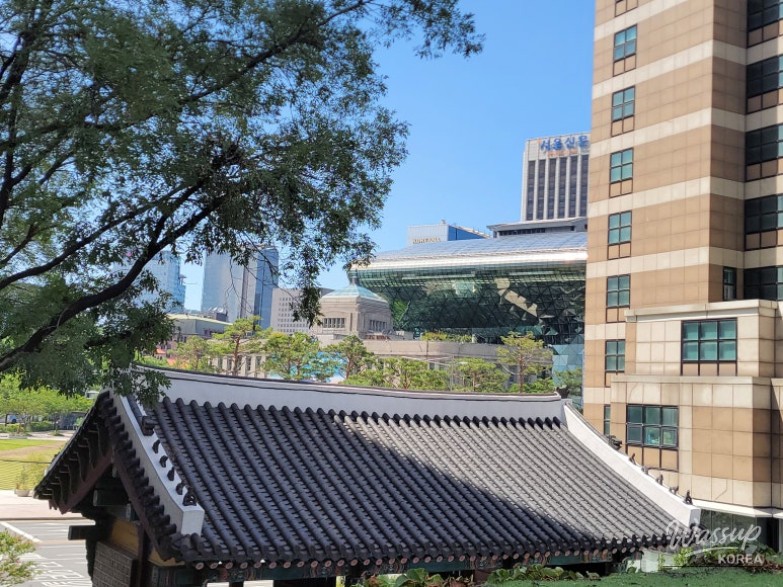
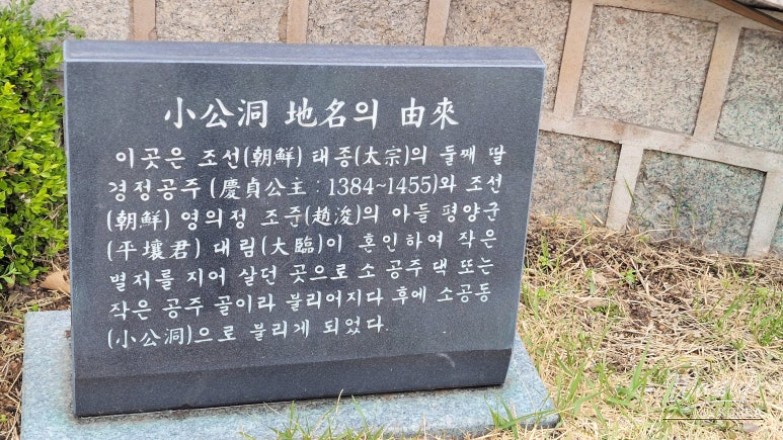
It is somewhat poignant that these symbols of national pride now sit within the grounds of the Westin Chosun Hotel. To many, they might seem like decorative garden ornaments, but their historical weight far exceeds their current setting. The very name of the neighborhood, Sogong-dong, stems from this site’s history as the former residence of Princess Gyeongjeong, known as 'Sogongju.'
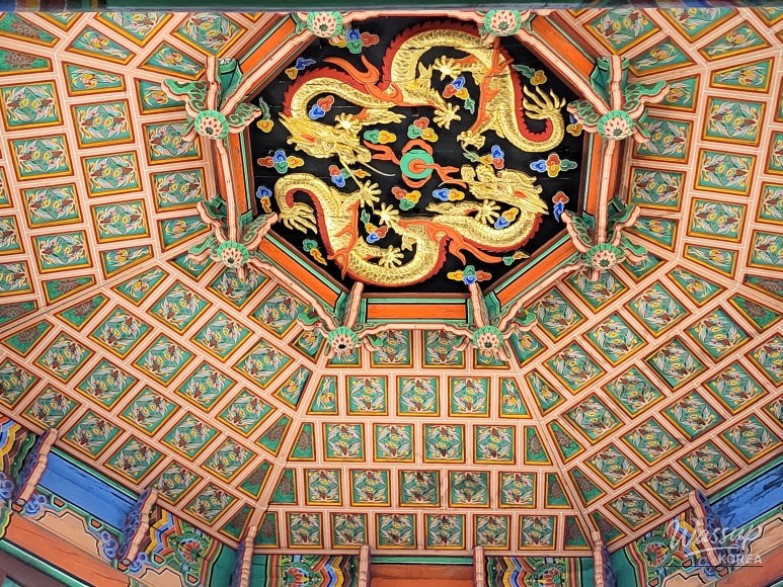
Photo Gallery: Traces of the Korean Empire
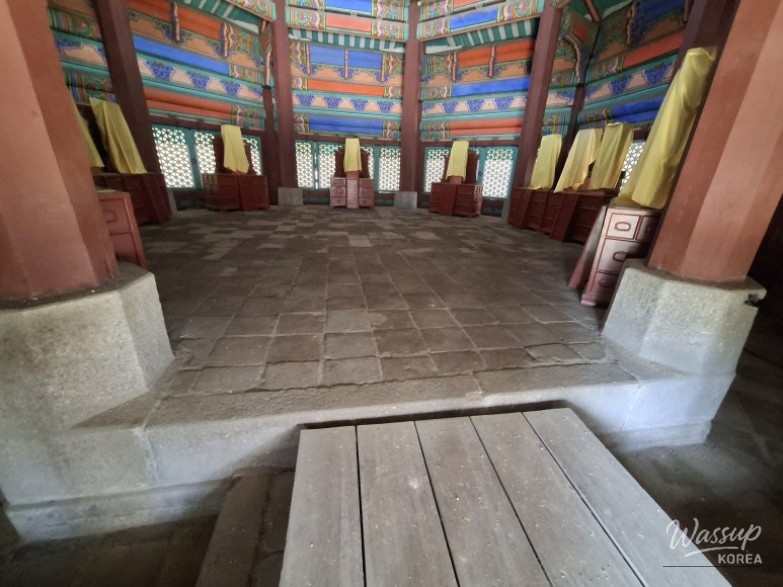
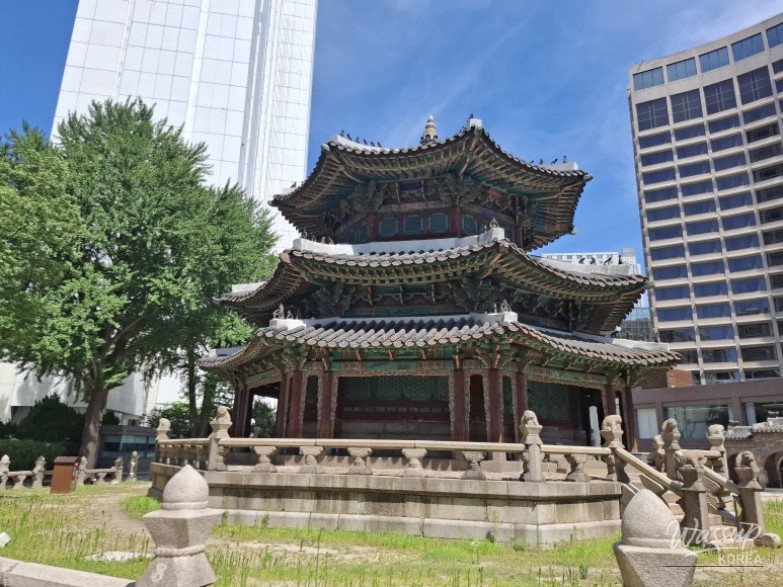
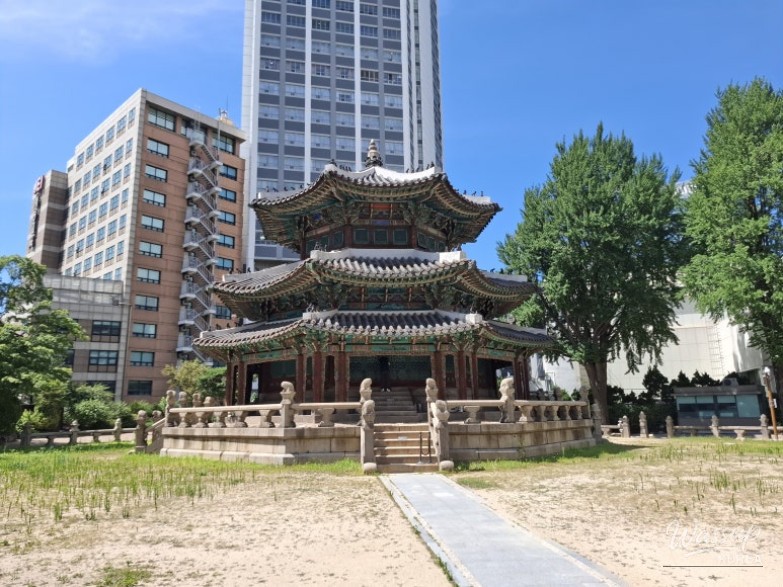
Walking through Hwangudan offers a rare chance to contemplate the layers of Seoul's history, from royal residences to imperial altars and modern luxury. Have you ever noticed this "hidden" historical site while walking near Seoul City Hall? Which part of its story—the wandering gate or the imperial dragons—resonates with you the most? If you are planning a visit, would you like to know more about nearby historical spots like Deoksugung Palace or the best time to see Hwanggungwoo's interior?
No comments yet.